Books
Books
in random order

The Rambling Figures of Mani Kaul
Arindam Sen, Stoffel Debuysere
Published on the occasion of the program Soft Notes on A Sharp Scale — The Rambling Figures of Mani Kaul, produced as part of the Courtisane festival 2018, as well as the associated Mani Kaul programme organized by the Essay Film Festival 2018, in collaboration with the Otolith Group.

And Death Shall Have No Dominion / Killing ‘The Mother’
Victoria Guerrero-Peirano, Honora Spicer
And death shall have no dominion / Killing ‘The Mother’ charts death inside healthcare bureaucracy through brutal, surreal and fragmentary poetic prose, grappling with the capitalist devastation of systems of social care and how writing might enact forms of conception in the face of such conditions. Victoria Guerrero-Peirano has been recognized as one of the most singular and powerful voices of contemporary Peruvian poetry.

Responses to Untitled (eye with comet) By Paul Thek
Responses to Untitled (eye with comet) (c.1985) by Paul Thek is the sixth and final anthology in a series that gathered responses to works of art made during a period of the ongoing AIDS Crisis, from the identification of the virus in 1981 to the introduction of life-saving drugs in 1996.
In this sixth iteration, responses were sought to the painting Untitled (eye with comet) by Paul Thek. The work was found in his storage after his death from AIDS in 1988.
List of contributors in order of appearance:
E.R. De Siqueira
Ben Estes
João Motta Guedes
Lucy Swan
Jon Rainford
Louis Shankar
Amy Evans Bauer
Hattie Morrison
Sammy Paloma
AN Grace
James Horton
Nick Wood
Sophie Paul
Jae Vail
Elizabeth Zvonar
Lars Meijer
Clay AD
Michel Kessler
Pablo Miguel Martínez
Emma Harris
Dylan McNulty-Holmes
Kitya Mark
Katherine Franco
Ainslie Templeton
Alistair McCartney
John Brooks
Jesse Howarth
jimmy cooper
Felix Pilgrim
Nicholas Chittenden Morgan
Murphy O’Neir
Rachel Cattle
Isabel Nolan
Susan Finlay
Ted Simonds
Brooke Palmieri
Kate Morgan
Ashleigh A. Allen
Diogo Gama
JP Seabright
Hugo Hagger
Amanda Kraley
Brendan Cook
Matt Bailey
Charlotte Flint
Rodney Schreiner
Lucy Price
Morgan Melhuish
Jordan Weitzman
Jaakko Pallasvuo
Alex Fiorentino
Harald Smart
Marguerite Carson
loll jung
Richard Porter
Nicholas Kalinoski
Hedi El Kholti
Edmund Francis English
Ted Bonin

addictive no an adjective
A text on speaking, listening and being understood made in conversation with iOS speech-to-text software.

The Romance of Happy Workers
The Romance of Happy Workers swaggers through a world of cowboys, conquistadors, comrades, and housewives with mock-Russian lyric sequences and Keatsian swoon. Political and iconoclastic, Anne Boyer’s poems dally in pastoral camp and a dizzying, delightful array of sights and sounds born from the dust of the Kansas plains where dinner for two is cooked in Fire King and served on depression ware, and where bawdy instructions for a modern “Home on the Range” read:
"Mix a drink of stock lot:
vermouth and the water table.
And the bar will smell of IBP.
And you will lick my Laura Ingalls."
In Boyer’s heartland, “Surfaces should be worn. Lamps should smolder. / Dahlias do bloom like tumors. The birds do rise like bombs.” And the once bright and now crumbling populism of Marxists, poets, and folksingers springs vividly back to life as realism, idealism, and nostalgia do battle amongst the silos and ditchweed.
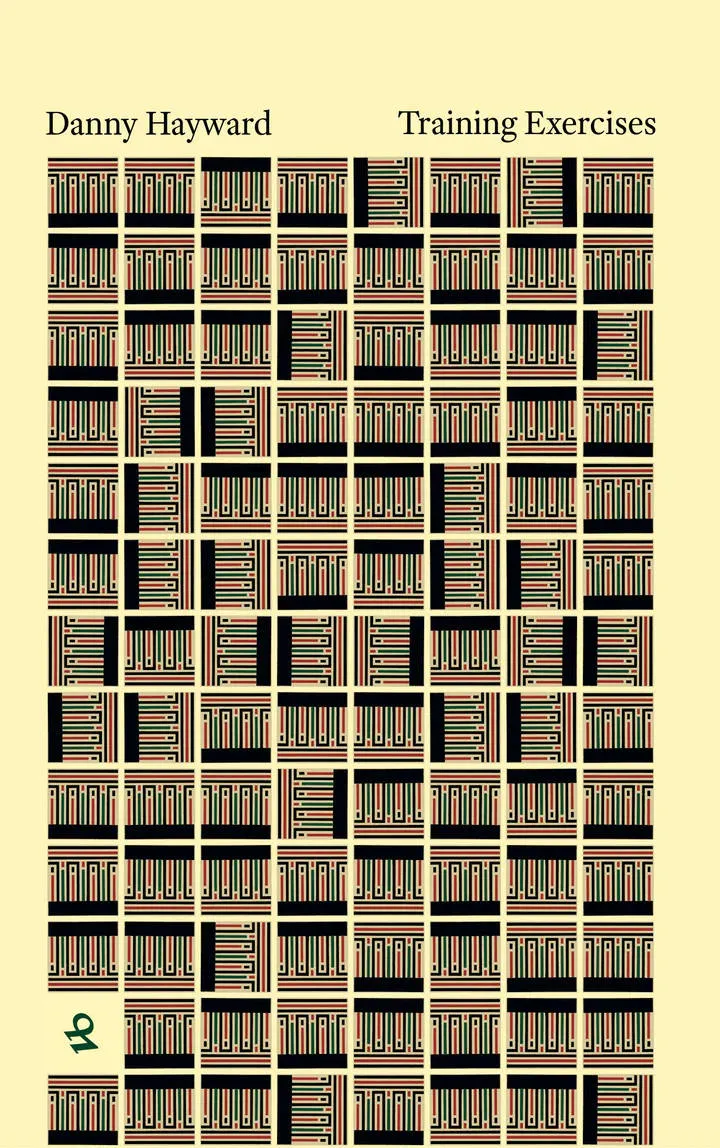
Training Exercises
Organized violence committed on ordinary speech’ is therapy for those who don’t believe in literature as value. Training Exercises is an unpacking of that dictum: seven short essays, letters, reports and anti-biographies written to overcome the feeling of resistance to the defacement of what strikes us as true. An anti-purge written out by lipstick or hammer, scrawled over the top of itself and run through a translation program that turns everything upside inside down, its pieces include: a polemic against catharsis; a letter to the poet Dom Hale on his book Seizures; and a series of on-the-spot reports on the UK Illegal Migration Bill, East London poetry readings, the politics of the war in Ukraine, and a conversation about the meaning of damage in contemporary literature.
‘First you learn to write down your ideas, then you learn again how to write all of your lurid political and intellectual and intimate disappointments and all of your childhood hopes over the top of them’. Jack Spicer scrawled the name of his book in pink lipstick on the cover of the academic journal he had published in: Training Exercises scrawls itself on top of that.

Drag King Dreams
Max Rabinowitz, a butch lesbian bartender at an East Village club, is shaken when her friend, a transvestite, is murdered. As the community of cross-dressers, drag queens, lesbians, and gay men stand together in the face of this tragedy, Max taps into the activist spirit she thought had disappeared.
Leslie Feinberg is an editor, writer, and political organizer. Stone Butch Blues, Feinberg's first novel, is an internationally acclaimed classic of trans literature. It won the Lambda Award and the American Library Association Lesbian and Gay Book Award. Feinberg's other works Trans Liberation, Trans Gender Warriors, and Transgender have also been at the forefront of the trans movement. Feinberg lives with her wife, Minnie Bruce Pratt, near New York City.

Testimony From A West Bank Village: ‘Illegal Life’ Under Occupation
Resistance dispatch 002
In 2024, the documentary No Other Land, co-produced by Palestinian and Jewish activists from Masafer Yatta drew internattional attention at film festivals, bringing the long-standing occupation, demolitions, and violence in the region into broader public view.
The starting point of this publication emerged from an impromptu decision to draw a family tree covering roughly five hundred villagers of Umm al-Kheir. The author follows two threads simultaneously: one traces verifiable institutional and geographic transformations, tracking how a community is systematically rendered illegal through planning regimes and court rulings; the other comes from lived encounters, oral testimony, and the moments when people entrusted me with their names, their kinship ties, and their past.
Printed by Bleed Print

Prisoner of Love
Starting in 1970, Jean Genet—petty thief, prostitute, modernist master—spent two years in the Palestinian refugee camps in Jordan. Always an outcast himself, Genet was drawn to this displaced people, an attraction that was to prove as complicated for him as it was enduring. Prisoner of Love, written some ten years later, when many of the men Genet had known had been killed, and he himself was dying, is a beautifully observed description of that time and those men as well as a reaffirmation of the author’s commitment not only to the Palestinian revolution but to rebellion itself. For Genet’s most overtly political book is also his most personal—the last step in the unrepentantly sacrilegious pilgrimage first recorded in The Thief’s Journal, and a searching meditation, packed with visions, ruses, and contradictions, on such life-and-death issues as the politics of the image and the seductive and treacherous character of identity. Genet’s final masterpiece is a lyrical and philosophical voyage to the bloody intersection of oppression, terror, and desire at the heart of the contemporary world.

The German Library Pyongyang
From December 11, 2015, until April 10, 2016, the German Library in Guangzhou, China, became The German Library Pyongyang, a reimagining of an initiative of the Goethe-Institut that originally operated in North Korea between 2004 and 2009. This temporary intervention by Sara van der Heide is an imaginary transformation of the current geography of the German Library in Guangzhou. Van der Heide’s project is a contemporary version of the Goethe-Institut’s original library initiative in North Korea, devised as a vessel to discuss national cultural policy in a post-Cold War and postcolonial era that looks critically toward the parallel histories of Germany and the two Koreas. The German Library Pyongyang offers a space for critical questions, but it also functions as a context for transcending thinking that is prescribed by the lines of the nation-state, language, and geography. The several artistic, linguistic, and graphic interventions in the library merge with the continuing activities of the German learning center in Guangzhou, and all institutional printed matter in Chinese is replaced by Korean.
This publication brings together the four original exhibition booklets in German, Korean, English, and Chinese. An additional reader is included with critical reflections as well as documentation of the exhibition and the organized seminar.
Design by Dongyoung Lee
English/German/Korean/Chinese

Hardly War
Hardly War, first published in the USA in 2016 and finally published in the UK in 2025, splices the personal and political to dizzying effect in a poetry fluid with forms and genres including reportage, memoir, opera libretto, archival photos and drawings. Using artefacts from Choi’s father, a professional documentary photographer during the Korean and Vietnam wars, she explores her paternal relationship and heritage. Here poetry and geopolitics are inseparable twin sisters, conjoined to the belly of a warring empire.
Choi’s KOR-US Trilogy (Hardly War and the subsequent DMZ Colony and Mirror Nation) brings us a new poetic language to learn. Suggestive and subtle in its connections and allusions, there is an exhilarating freedom in its playful form, all while looking straight at the brutality of colonialism and dictatorship.

Seeing for Ourselves
Why do we yearn to be seen when we are already far too visible? How do we want to be perceived, and how are we exposed? Could we ever really see for ourselves?
In memoir, vignettes, poetry and essays, Suhaiymah Manzoor-Khan records her observations from the stands at the dizzying circus of being seen and unseen. She surveys the criminalising stadium of civic life, the open-air arenas of family, friendship and grief, the performative pageantry of the public eye and the unclad secrets of the self in solitude, paying attention to what’s on show and what goes undetected.
Perhaps the strangest, most exciting possibilities are opened when we surrender to another kind of sight. Submitting to the gaze of the Unseen and the All-Seeing, Manzoor-Khan invites us to close our eyes and discover what it would mean to look with our souls instead.
Suhaiymah Manzoor-Khan is a poet and writer whose work disrupts assumptions about history, race, violence and knowledge. She is the author of Tangled in Terror and the poetry collection Postcolonial Banter; a co-author of A FLY Girl’s Guide to University; and a contributor to the anthologies Cut from the Same Cloth? and I Refuse to Condemn. She is based in Leeds and is currently writing for theatre.

Untitled
Sasha Phyars-Burgess’ first monograph, Untitled. Spanning three bodies of work, this 200-plus page monograph includes poems by Ser Alida and Aurora Masum-Javed, a conversation between Sasha Phyars-Burgess, Juliana Huxtable and Carolyn Lazard, and essay by Bill Gaskins. Designed by Studio Lin.
As recipient of the second annual Capricious Photo Award, Sasha is a vital, emerging voice in contemporary photography, engaging the charged line between documentary and fine art. Her work ranges from affecting studies on diaspora, family and place to revolving social phenomenons in which energy, beauty and power meet.
The second annual jury panel was helmed by Capricious Founder and Publisher Sophie Mörner and Associate Publisher Anika Sabin alongside Lauren Cornell, Katherine Hubbard, JOFF, Matt Keegan, Guadalupe Rosales, Ka-Man Tse, and Lyndsy Welgos.

Grand Rapids
Installed alongside the Grand River in downtown Grand Rapids, Michigan, Alexander Calder’s public sculpture La Grande Vitesse has come to symbolize the city. Tess moves there from Ypsilanti, Michigan in 2001—the same year that her mother dies, when everything begins to move, for her, in slow motion. Thrust into adolescence nearly rudderless, fifteen-year-old Tess is intoxicated, angsty, and sexually awake. A decade later, inspired by diary entries and TV reruns, she remembers this summer in the suburbs as the one that redefined her. Its echoes of death are frozen in time like the waves represented in the Calder sculpture or the concrete steps leading down to the churning river. She comes to see Grand Rapids as a collection of architecture and emblems, another home to which she cannot return.
Natasha Stagg is the author of Sleeveless: Fashion, Image, Media, New York 2011–2019 and Surveys: A Novel, both published by Semiotext(e). Her work has appeared in Artforum, Bookforum, Texte Zur Kunst, n+1, Spike Art, Flash Art, Dazed, V, Vice, 032c, and other publications.

Works from the Collection of Holly Van Houten
Werkplaats Typografie presents a catalog of Works from the Collection of Holly van Houten. Spanning multiple decades and personally selected from around the world, the collection includes over a thousand items that memorialize the life of this candidly private, bohemian connoisseur. Carefully examined by our specialists, a curated selection of rarities, antiquities, oddities, and works of art is available in this catalog, which accompanied an exclusive auction held during Printed Matter’s LA Art Book Fair in May 2025 in Los Angeles, Van Houten’s beloved city.
Project by: WT Year 25 & Year 26 for LA PMABF led by Hannes Drißner, Lisa Lagova, Nuno Beijinho
Designer: Hannes Drißner, Lisa Lagova, Nuno Beijinho. Objects photographed by Augustinas Milkus and Jordi de Vetten

Painting Photographs
TBW Books is pleased to announce the publication of Painting Photographs, a new book by Creative Growth Art Center artist Alice Wong. Wong's bold interpretation of vintage vernacular photographs breathes new life into family album kitsch and cliché shots of plants and landscapes, transforming them into a hyper-color plane of vivid abstraction. Using paint markers to enhance and obscure the formal qualities of appropriated imagery, Wong's hand brings energy to each underlying image, recalibrating the viewer's eye and sparking appreciation for otherwise still compositions. With fluid mark-making and a striking approach to color-blocking, Wong's craft merges with the photographic process to create work that feels at once of times past and completely contemporary.
Creative Growth Art Center is the oldest and largest nonprofit art studio for artists with developmental disabilities in the United States. Since 1974, Creative Growth has played a significant role in increasing public interest in the artistic capabilities and achievements of people with disabilities, providing a professional studio environment for artistic development, gallery exhibition and representation.

Having a party (hope you will be there)
"Having a party (hope you will be there)", is a catalogue of an exhibition organized by Mickael Marman and D&TLG at CFAlive in Milan with artists from the black European diaspora, including original contributions, photos of the show, as well as a brand new intro text by Olamiju Fajemisin.

University of California Press
Sleeping with the Dictionary
Harryette Mullen's fifth poetry collection, Sleeping with the Dictionary, is the abecedarian offspring of her collaboration with two of the poet's most seductive writing partners, Roget's Thesaurus and The American Heritage Dictionary. In her ménage à trois with these faithful companions, the poet is aware that while Roget seems obsessed with categories and hierarchies, the American Heritage, whatever its faults, was compiled with the assistance of a democratic usage panel that included black poets Langston Hughes and Arna Bontemps, as well as feminist author and editor Gloria Steinem.
With its arbitrary yet determinant alphabetical arrangement, its gleeful pursuit of the ludic pleasure of word games (acrostic, anagram, homophone, parody, pun), as well as its reflections on the politics of language and dialect, Mullen's work is serious play. A number of the poems are inspired or influenced by a technique of the international literary avant-garde group Oulipo, a dictionary game called S+7 or N+7. This method of textual transformation—which is used to compose nonsensical travesties reminiscent of Lewis Carroll's "Jabberwocky"—also creates a kind of automatic poetic discourse.
Mullen's parodies reconceive the African American's relation to the English language and Anglophone writing, through textual reproduction, recombining the genetic structure of texts from the Shakespearean sonnet and the fairy tale to airline safety instructions and unsolicited mail. The poet admits to being "licked all over by the English tongue," and the title of this book may remind readers that an intimate partner who also gives language lessons is called, euphemistically, a "pillow dictionary."

Sore 3
Mathilde Heuliez, Lisa Lagova and 1 more
Sore is a serial anthology that brings together authors whose writing practices oscillate between the genres of diary keeping and fiction. For the second issue of Sore, ten contributors – both authors and visual artists – were invited to collectively develop their work through a series of informal critiques over the course of five months.
With contributions by Adriana Lasheras Mabanta, Billy Morgan, Damien Troadec, Kate Tyndall, Kea Bolenz, Inka Hilsenbek, Milo Christie, Louis Mason

The Circle: Chronologie pour une constellation
A visual and text based investigation led by Moroccan artist Bouchra Khalili during many years following the traces left by the Mouvement des travailleurs arabes, a group fighting for the rights of the Arab workers in France at the turn of the 1970s.
Khalili focused her attention on the theatre groups Al Assifa and Al Halaka who were created in this political environment. The publication unfolds from The Circle (2023), a video installation shown for the first time at the 15th Sharjah Biennale (2023), at Macba (2023) and at the Luma Foundation (in Arles in 2023-2024 and Zurich in 2025).
The book is published in conjunction with Bouchra Khalili's exhibitions as guest visual artist of the Festival d'Automne in Paris in 2025.
Texts by KJ Abudu, Bouchra Khalili, Mohamed Amer Meziane, Abdellali Hajjat ; interviews with Saïd Bouziri, Hedi Akkari, Smaïne Idri, Mustapha Mohammadi, Philippe Tancelin, Mia Radford, Lucas Yahiaoui.

knot body
Bringing together poetry, essay, and letters to “lovers, friends and in-betweens,” Eli Tareq El Bechelany-Lynch confronts the ways capitalism, fatphobia, ableism, transness, and racializations affect people with chronic pain, illness, and disability. knot body explores what it means to discover the limits of your body, and contends with what those limitations bring up in the world we live in.
knot body was shortlisted for the QWF First Book Prize. Their second collection of poetry, The Good Arabs (Metonymy Press), won the 2022 Grand Prix du Livre de Montréal.
“For me, the power of knot body stems from its courage and unique voice in writing the ache, the ache of chronic pain, the ache of faulty diagnoses and bodily misreadings, and, equally, the ache for honest answers on how to love each other in all our dignity. Eli Tareq El Bechelany-Lynch is an artist and philosopher of talent, generosity, and heart.” – David Chariandy, author of Brother (Penguin Random House)
“In this moment, when trans, racialized and disabled bodies are met with violent and polarizing commentary within the public sphere, Eli Tareq El Bechelany-Lynch offers us the uninterrupted intimacy of knot body. As self-communional as Kiese Laymon’s Heavy and Terese Marie Mailhot’s Heart Berries, they amplify and queer the epistolary memoir genre. Each letter is emotionally and thematically complete and, too, each letter decidedly speaks to the next. Readers may ruminate on the sharp and sensual inquiry offered by each individual letter, or read cover-to-cover and be present to the gorgeously-engaged, call-and-response quality of knot body as a whole.” – Amber Dawn, author of My Art is Killing Me (Arsenal Pulp Press)
“knot body is such a generous tapestry of tenderness—a collection that brilliantly utilizes the direct address in a way that is not universal, but still beautifully communal. I reached the end of this collection and breathed in a newer, better world.” – Hanif Abdurraqib, author of A Fortune for Your Disaster (Tin House)
Eli Tareq El Bechelany-Lynch is a queer Arab poet living in Tio’tia:ke, unceded Kanien’kehá:ka territory (Montreal). Their work has appeared in The Best Canadian Poetry 2018 anthology, GUTS, carte blanche, the Shade Journal, The New Quarterly, Arc Poetry Magazine, Room Magazine, and elsewhere. They participated in the Banff Centre’s ‘Centering Ourselves’ BIPOC residency, and they were longlisted for the CBC Poetry Prize in 2019. Their second collection of poetry, The Good Arabs, was published by Metonymy Press in 2021.

BFTK #6: Tentative — Incomplete — Inconsistent
Andrew Walsh‐Lister, Matthew Stuart
This instalment of Bricks from the Kiln doubles as issue #6 of the journal and as an exhibition catalogue for the thematic show ‘BFTK#6: Tentative — Incomplete — Inconsistent: A Catalogue of the Disappeared, Destroyed, Lost or Otherwise Inaccessible’. Presenting objects, artworks, artefacts, models, events and animals that no-longer — or never did — exist in physical form, the exhibition explores themes of death, destruction and reincarnation, examining persisting interests in notions of ephemerality and permanence, memory and record, preservation and erasure, creation and reconstruction.
How do we remember and memorialise? How is space given to the unrecorded? How do we experience the out of reach, concealed, unseen, undiscovered? How can the dematerialised be materialised again, through the mediation of writing, image and sound?
THE ALMOST HORSE
Helen Marten
(inside front / back cover)
‘STILL IN ALL HEARTS, IN ALL BELLIES, IN ALL TOES’:
A BELATED REVIEW OF FESTIVAL DE FORT BOYARD
Matthew Stuart & Andrew Walsh-Lister
(pp.6–8)
EDDYSTONE
Rachael Allen
(pp.11–18)
TO MAKE THE STONE STONY
Emily LaBarge
(pp.21–26)
WHEREFORE AM I NOW?
Lucy Mercer
(pp.29–40)
WESTON: THE TOWN THAT WAS, AND THEN WASN’T
Crystal Bennes
(pp.43–52)
NOTES TO ACCOMPANY VIOLENT INNOCENCE (2019)
Will Harris
(pp.55–64)
GHOST, POCKETS, TRACES, NECESSARY CLOUDS
Matthew Stuart
(pp.66–69)
CONNECTIVITY OF TOUCHING
Ali Na & Mindy Seu in conversation
(pp.71–76)
PEARL
Rose Higham-Stainton
(pp.79–84)
NOTES FROM NEW MEXICO
Jennifer Hodgson
(pp.87–98)
THE MOOG OF AHMEDABAD
Paul Purgas
(pp.101–108)
IN WHICH DECIBELLA ESCAPES AUDITION
Sarah Hayden
(pp.111–122)
D.C.B.: A PARTIAL RETROSPECTIVE
Juliet Jacques
(pp.125–136)
PINBALL REMAINS: ON THE PINBALL ISSUE OF THE SITUATIONIST TIMES
Ellef Prestsæter
(pp.139–150)
TOMB III – CADMIUM (2021)
Gilbert Again
(pp.152–154)
NON-DESCRIPT ANIMAL
David Hering
(pp.157–161)
Cover & Bookmark artwork by Helen Marten

Impossible Princess
Impossible Princess is the third collection of gay short fiction by PEN Award–winning San Francisco–based author Kevin Killian. A member of the “new narrative” circle including Dennis Cooper and Kathy Acker, Killian is a master short story writer, crafting campy and edgy tales that explore the humor and darkness of desire. A former director of Small Press Traffic and a co-editor of Mirage/Periodical, Killian co-wrote Jack Spicer’s biography, Poet Be Like God, and co-edited three Spicer books, including My Vocabulary Did This To Me: Collected Poems. His latest book, Action Kylie, is a collection of poems devoted to Kylie Minogue.

Time has fallen asleep in the afternoon sunshine
Appendix #3: Orality
Victoria Pérez Royo, Léa Poiré and 1 more
Time has fallen asleep in the afternoon sunshine Appendix #3 Orality includes contributions by Simon Asencio, Bruno De Wachter, Peter Szendy, Clara Amaral, Itziar Okariz, Jude Joseph, Léa Poiré and Mette Edvardsen.
Time has The Appendixes #1–4 is an editorial series by Mette Edvardsen, Léa Poiré and Victoria Pérez Royo that developed out of the project Time has fallen asleep in the afternoon sunshine. For a two-year residency at Les Laboratoires d’Aubervilliers* (2022–23), they came together as a small work group, shaping the work process, hosting presentation formats and making this publication series on paper as four cahiers.
The cahiers comprise a collection of commissioned texts and contributions created for this context, selected documents and traces from work sessions and encounters organized during their residency, texts read together and republished for this occasion, a collection of references, notes in progress, unfinished thoughts and loose fragments – on paper, between pages.
The Appendixes are organized around four themes: (1) The gesture of writing, (2) How to organize a library, (3) Orality and (4) Translation. In addition to being published on paper, the editorial series also consisted of other formats of presentations, exchanges and meetings organized as workshops, fieldwork, performances, conferences, collective readings and oral publications, taking place during their residency at Les Laboratoires d’Aubervilliers and in the vicinity.
The Appendixes is the work that continues, material that adds on, some of it perhaps too long or too detailed, unfit or unfinished. The four themes that their research is formulated around originate in specific experiences and questions from the practices of Time has fallen asleep in the afternoon sunshine (2010 – ongoing), and also the large publication on the project ‘A book on reading, writing, memory and forgetting in a library of living books’ (2019). The research was both a means of exploring these themes in greater depth and also of bringing them into contact with other artists and researchers working on similar or related subjects. The Appendixes offered them both the contexts and the pretexts for things to happen (in time, in space, on paper).
The Appendixes #1–4, published in these cahiers, do not present an overview or a summary of all of the activities and presentations that took place during the two years at Les Laboratoires d’Aubervilliers. What these cahiers offer is a space in which to hold some thoughts together and to share them in this form. It is one more step along the way, extending the research and work already begun and that will now continue.