Performing Arts
Performing Arts

Manuals of no-how #2—The and
Various
A book that says a school, provisional and for nothing. A collection of p(o)edagogical manual, in which exercises can be read as works — works, as instructions or scores.
Imperfect dictation, or twisted ekphrasis, so that something may happen again — in another body, another voice, another time.
With contributions by Isabel Carvalho, Tomás Cunha Ferreira / Vapor Praia, João Polido, Clara Amaral, Sílvia das Fadas / Cinema Fulgor, Marta Ângela & Nu Nu Pinto / Marte i Núpiter, Okbooks! (Elsa Baslé, Leyre Léon, Chloé Gourvennec) & Mila Landreau, Pedro Barateiro / Spirit Shop, Meg Stuart, Vera Mantero, João Fiadeiro, André Lepecki, Ana Jotta, Arnaldo Antunes, and with the participants of The and's Edition: Oona Wilkinson, Sara e Tralha, Thijs Vleeschouver, Joana de Sá, Anton Ripon, Inês Barros, Anatole Prost, Maxence Junin, Nuno Beijinho, Ieva Ģertrūde Vītoliᶇa, Laura Gama Martins, and Will Gibbs.

Manuals of no-how #2—Errata
Various
A book that says a school, provisional and for nothing. A collection of p(o)edagogical manual, in which exercises can be read as works — works, as instructions or scores.
Imperfect dictation, or twisted ekphrasis, so that something may happen again — in another body, another voice, another time.
With contributions by Olga Mesa, Francisco Ruiz de Infante, Mette Edvardsen, Clara Amaral, Pedro Barateiro, Samuel Nyholm, André Lepecki, and the participants of Errata's Edition: Guilherme Figueiredo, Alice Serrazina, Guiherme Curado, Mafalda Riobom, Fábio Pombo, Alena Koleso, Gaspar Cohen, Andreia Matos, Stéphane Lambion, Ieva Ģertrūde Vītoliᶇa, Agathe Mathel, Malva Askerup, and Laura Gama Martins.
A book by Sara Vaz & Marco Balesteros, Provisional School for Nothing.

Manuals of no-how #2—Rien
Various
A book that says a school, provisional and for nothing. A collection of p(o)edagogical manual, in which exercises can be read as works — works, as instructions or scores.
Imperfect dictation, or twisted ekphrasis, so that something may happen again — in another body, another voice, another time.
With contributions by Sara Graça, Tomás Cunha Ferreira / Vapor Praia, Isabel Carvalho, Von Calhau!, Maki Suzuki, Manuel Raeder, Cracked Bolos, André Lepecki, and with participants of Rien's Edition: Mila Landreau, Maren Weertman, Ashley Périer, Beatriz Baião, Chloé Gourvennec, Aleixa Inácio, Frederico Teixeira, Elsa Baslé, Márcia Mendonça, Calvin kudufia, Ana Reis, Leyre León Álvarez, Catarina Constantino, and Moritz Schottmüller.
A book by Sara Vaz & Marco Balesteros, Provisional School for Nothing.

Catalogue Raisonné
This is the very first book on the influential American choreographer and dancer Trajal Harrell. In an entertaining, far-reaching conversation with curator Daniel Baumann, Harrell covers all of his choreographies and performances, as well as his influences, successes, and failures, addressing how he transforms and transgresses the history of dance.
The conversation with Swiss curator Daniel Baumann unfolds along the multiple trails blazed by Harrell's career. It brings into sharp focus not only the artist's interests and influences but also his own creative practice, encompassing both successes and failures. With disarming frankness and a tangible sense of vulnerability, Harrell walks the reader through the history of dance: He explains how he fought with it, how it has shaped him (and vice versa), and how he has gradually carved out a space of his own within it.
Edited by Daniel Baumann.
Interview with Trajal Harrell by Daniel Baumann.

Movement Research Performance Journal
Issue #57 - Work
Josh Lubin-Levy, John Arthur Peetz and 1 more
Issue 57 of the Movement Research Performance Journal (MRPJ) takes up the keyword “work.” Given that Movement Research has a history of being an organization of artists laboring for and with one another, we invited contributors to consider, revise, or push against questions like: how are things working today? What is the condition of labor in the field of dance and performance? What does it mean to be or have a body that works, on which work is (or isn’t) projected? How do idealizations of the laboring body and/or the ethos of collective practice relate to or obscure the lived experience of making dance works, working in dance, or balancing artistic production with the productive demands of one’s so-called “survival job”? To work in dance (or the arts in general) is indisputably to be exploited. But the contributors to this issue both directly and obliquely take up the experience of working as both enervating and energizing (in often contradictory ways), and draw from their different experiences of working work’s uneven distribution across the globe, the abelism that belies work’s regimentation, and the on-going struggle to find solidarity among arts workers.
More than thematically linked, the issue’s three sections also reflect a desire to address how this publication itself asks artists to work. Artist-run since 1990, the burden of administering a publication like the MRPJ was (perhaps) once outweighed by the promise of what this kind of project could do to shape the field of dance and performance. Today, that editorial and administrative labor dovetails all too well with what has become naturalized as an expectation of practicing artists—that they write about what they are doing or want to do in grant applications, that they create content to be used both for educating and marketing to audiences, and that they develop a discourse that signifies the value of their work in relation to any number of fields other than dance.
For Issue 57, the MRPJ editorial team (Josh Lubin-Levy, John Arthur Peetz, and Nicole Bradbury) gave the keyword “work” to three artists designated as “Contributing Editors” (nora chipaumire, Jerron Herman, and Alex Rodabaugh). nora, Jerron, and Alex were each invited to invite three to five other participants to join the discussion but also encouraged to pass on the administrative and editorial labor to the MPRJ staff.
Issue 57 is only the beginning of thinking about how the structure of a journal on and by artists needs to adapt to an era in which content creation exists in overdrive.

Movement Research Performance Journal
Issue #61 - Dramaturgy
Ligia Lewis, Joshua Lubin-Levy
Theories of dance dramaturgy can be found in a growing body of literature on the field (see our incomplete reading list in this issue). But for Issue #61 of the Movement Research Performance Journal the editors decided stay in the not-knowing by inviting contributions from those whose work touches on dance dramaturgy with curiosity, anxiety, anarchy, as well as a conviction for the intimacy it requires and a resistance to its history of institutional/state authority.
At the heart of the issue is a special section by Contributing Editor Ligia Lewis. Across Lewis’ works there are not only a range of dramaturgs, but the role of dramaturgy shifts and morphs in relationship to the differing works and over time. The reinvention of the dramaturg that Lewis’ work articulates is something that has proliferate throughout the field of contemporary dance. The rest of the issue includes a range of texts, some from practicing dramaturgs, others from to those who have reluctantly accepted this title, and still more who reject the role outright — all exploring a simple question: why has there been an explosion of interest in, perhaps even desire for, dramaturgs in contemporary dance? The explosion I’m thinking of is not about a growing professionalization of dance dramaturgy (though that is certainly happening…). I mean simply that more dance and performance artists are including dramaturgs as part of their process, and at the same time seem to be continually reinventing what the dramaturg is meant to do. What can we make of the desire for the dramaturg as well as the desire to continually reinvent this figure and its function?

Shakespeare and Ethics
Shakespeare’s plays are full of philosophical ideas, but they are rarely examined systematically. In this pamphlet philosopher Colin McGinn analyzes the plays to distill Shakespeare’s ideas about ethics. McGinn concludes that the “plays are about good and evil,” and that Shakespeare is “a great moral psychologist,” who expertly stages how his characters are defined by their moral qualities (their naturalistic virtues and vices).

Movement Research Performance Journal
Issue #62 - We Exist in the Ambivalence of Those Motherfuckers
Anh Vo, maura nguyen-donohue and 1 more
What began as a project responding to the fiftieth anniversary of the ‘end’ of the Vietnam War became a project of inhabiting the Movement Research Performance Journal (MRPJ) from within the landscape of contemporary Vietnamese performance art. The result, Issue #62, is a window onto a community of insiders who reflect a set of concerns, questions, historical trajectories, and aesthetic legacies that differ from what has more often been foregrounded in our U.S./New York City-centric publication. Like other documents of this kind, which endeavor to portray a performance scene that will be foreign to many readers, the texts from this group of intergenerational, contemporary artists demonstrate a careful navigation of the dialectics of inside and outside, self and other, performer and audience, seeing and being seen, that informs every exchange across cultural difference.
The texts are also not monolithic, suggesting a range of relations to the Vietnam of the past and present, from within Vietnam’s national borders and among the diaspora. Especially for contributors living and working in Vietnam, writing has also been a practice of choreographing words within a political landscape where to speak publicly, in itself, is a performance of negotiated risk. Embracing the complexities of these differing positions has been the focus of our editorial process—one that has asked the editorial team to embrace the limits of our own knowledge, to recognize we will not be able to recognize all valences others may discover in these texts, and not to edit these layers out of the works that follows.

Bodies and Technologies
Various
Bodies and Technologies is a collection of texts that inspire modes of attunement to how technologies condition and rewire the experience of our bodies. To ask how different embodied ways of being in the world can disrupt the behaviour and performance of technologies, this reader compiles material from the If I Can’t Dance reading group in Amsterdam as part of Edition XI–Bodies and Technologies (2022–24).
The reader includes texts by M. Jacqui Alexander, Alok, Gloria Anzaldúa, Tina M.Campt, Kai Cheng Thom, Arturo Escobar, BrandonLaBelle, Ursula K. Le Guin, Resmaa Menakem, Adrienne maree brown, Kate Morales, Rolando Vázquez Melken and Gloria Wekker, and with a sonic contribution by artist Ciro Monoarfa Goudsmit.
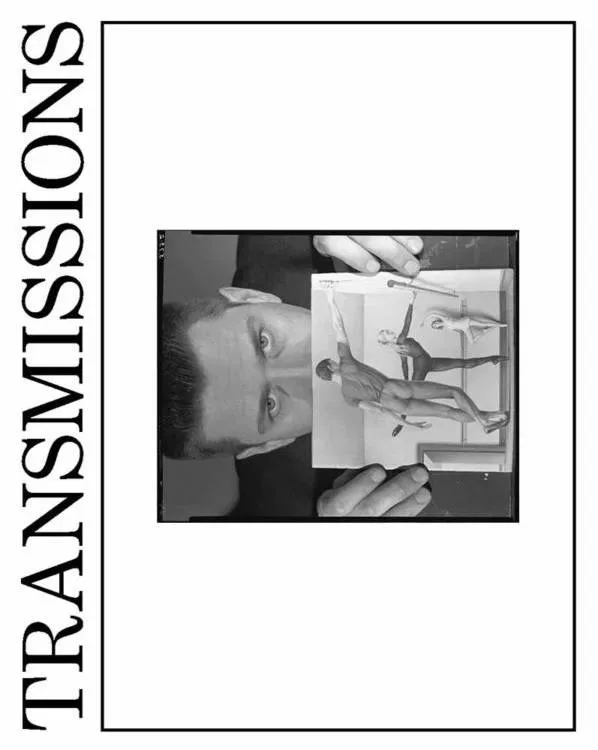
Transmissions
An aesthetic and social history of art and dance in mid-20th-century New York interpreted by contemporary artist Nick Mauss.
Over the past decade, Nick Mauss (b. 1980) has pursued a hybrid mode of working that melds the roles of curator, artist, and scholar. This catalogue leans heavily into the scholarship side of his practice, building on his 2018 Whitney Museum exhibition with a closer look at the relationship between modernist ballet and the New York avant-garde. In the 1930s through 1950s, ballet was introduced to a popular audience in New York and was simultaneously influenced by developments in Europe in painting, photography, fashion, music, and poetry. Mauss reflects on this period of rich cross-media production and synergy, ultimately arguing for the inseparability of dance and art history.

Whitney Museum of American Art
Edges of Ailey
Alvin Ailey is one of the most celebrated choreographers of the twentieth century. The creator of iconic works such as Blues Suite, Revelations, and Cry, he is widely recognized for the dance company he founded in 1958 when he was just twenty-seven years old. Ailey imagined and cultivated a platform for modern dance through his innovative repertoire, interdisciplinary sensibility, and support of dancers and choreographers. This expansive volume situates Ailey within a broader social, creative, and cultural context, looking at the artists who influenced and collaborated with him, the spaces and scenes he frequented, the dynamic themes within his dances, and how his vision and work changed contemporary dance.
Essays by artists, scholars, and critics cover topics ranging from the Black church, the South, and the Great Migration to nightclubs, musical influences, and queerness. With more than four hundred images including photographs of works Ailey choreographed, archival materials such as notebooks, sketches, letters, and never-before-published behind-the-scenes photos, and conversations about the legacy of the company with Sylvia Waters, Judith Jamison, and Masazumi Chaya as well as several contemporary dancers and scholars, this study offers an unprecedented full picture of one of the twentieth century’s leading artists and the way his work continues to inspire today’s generation of dancers.
Contributions by Horace D. Ballard, Harmony Bench, Kate Elswit, Aimee Meredith Cox, Thomas F. DeFrantz, Malik Gaines, Jasmine Johnson, Joshua Lubin-Levy, Uri McMillan, Ariel Osterweis, J Wortham, CJ Salapare, Kyle Abraham, Claire Bishop, Masazumi Chaya, Brenda Dixon-Gottschild, Jennifer Homans, Judith Jamison, Sylvia Waters, Jamila Wignot and Jawole Willa Jo Zollar

Drawing the Surface of Dance: A Biography in Charts
Soloing on the page, choreographer Annie-B Parson rethinks choreography as dance on paper. Parson draws her dances into new graphic structures calling attention to the visual facts of the materiality of each dance work she has made. These drawings serve as both maps of her pieces in the aftermath of performance, and a consideration of the elements of dance itself.
Divided into three chapters, the book opens with diagrams of the objects in each of her pieces grouped into chart-structures. These charts reconsider her dances both from the perspective of the resonance of things, and for their abstract compositional properties. In chapter two, Parson delves into the choreographic mind, charting such ideas as an equality in the perception of objects and movement, and the poetics of a kinetic grammar. Charts of erasure, layering and language serve as dynamic and prismatic tools for dance making. Lastly, nodding to the history of chance operations in dance, Parson creates a generative card game of 52 compositional elements for artists of any medium to cut out and play as a method for creating new material. Within the duality of form and content, this book explores the meanings that form itself holds, and Parson's visual maps of choreographic ideas inspire new thinking around the shared elements underneath all art making.
ANNIE-B PARSON is a choreographer and artistic director of Big Dance Theater. Parson has also made choreography for rock shows, marching bands, symphonies, movies, museums, objects, augmented reality, and people: David Byrne, David Bowie, St. Vincent, Mikhail Baryshnikov, Wendy Whelan, Laurie Anderson, Nico Muhly, Jonathan Demme, and the Martha Graham Dance Co. SIOBHAN BURKE writes on dance for the New York Times and other publications. She teaches at Barnard College.

Homo Novus grāmata / The Book of Homo Novus
Since its founding in 1995, International Festival of Contemporary Theatre Homo Novus has reshaped the course of theatre development and fostered a vibrant environment for international exchange within our theatre community. The Book of Homo Novus reflects on these achievements, gathering together the initiatives and ideas the festival has launched and continues to nurture within theatre and the wider field of contemporary art.
This bilingual publication brings together over 50 contributors — artists, creators and participants of the festival — who offer personal memories of Homo Novus, outline important theoretical themes, and envision the future of theatre in visual form.
This book is not a memoir inviting readers to revel in past accomplishments. Rather, it positions three decades of experience as a lens through which to consider future trajectories. The interdisciplinary and international nature of Homo Novus has enabled Latvia and the Latvian language to enter broader dialogues on contemporary theatre and festival culture. The book addresses, among other themes, the festival’s role in the development of new theatrical languages, spaces, and audiences, as well as the ethical dimensions of theatre-making — subjects that have thus far been only marginally examined within Latvian cultural discourse.
Text by: Gigi Argiropulu, Inta Balode, Džonatans Barouzs, Beka Bergere, Lauris Bernāns, Kjāra Bersani, Daniels Blanga Gubajs, Silvija Botiroli, Krista Burāne, Cigans, Džej Džordan, Kirils Ēcis, Endijs Fīlds, Izabella Fremo, Lisa Džilardino, Helgarde Hauga, Satu Herala, Inese Immure, Marta Keila, Pēteris Krilovs, Linda Krūmiņa, Gundega Laiviņa, Sodja Zupanca Lotkere, Marija Luīze Meļķe, leva Moore, Oskars Moore, Tobijs Moore, Vija Moore, Eva Ņekļajeva, Ilze Olingere, Santa Remere, Smaidiņš, Laura Stašāne, leva Struka, Imanuels Šipers, leva Štro, Akira Takajama, Baiba Tjarve, Karu Treij, Henrieta Verhoustinska, Guna Zariņa, Henriks Eliass Zēgners

Andrea Geyer: Dance in a Future with All Present
This most substantive monograph yet published on the work of German-born, New York–based multimedia artist Andrea Geyer focuses on her recent explorations of the marginalized yet pivotal role that women have played in the formulation of American modernism, tracing and honoring the ephemeral acts, initiatives, and stories that shaped it. Featuring full-color images of Geyer’s artworks and research materials, including documents, found photographs, and previously unpublished photographs by the artist, Dance in a Future with All Present offers insight into Geyer’s art and the multiple histories of modernism.
Includes texts by Matthew Jeffrey Abrams, Andrianna Campbell, Juli Carson, Barbara Clausen, Lynne Cooke, Dean Daderko, Saisha Grayson, Sharon Hayes, Megan Heuer, Danielle A. Jackson, Alhena Katsof, Kristan Kennedy, Thomas J. Lax, Ralph Lemon, André Lepecki, Renate Lorenz, Josiah McElheny, Fred Moten, Kristin Poor, Yvonne Rainer, Gabriela Rangel, Jeannine Tang, and Soyoung Yoon.
Copublished with Portland Institute of Contemporary Art in 2019.
Edited by Alhena Katsof, Karen Kelly, and Barbara Schroeder.
Design by Dante Carlos.

Les Diaboliques Parlures
Les Diaboliques Parlures rassemble trois textes qui nous font découvrir une voix contemporaine majeure de la poésie et du théâtre queer. Ces œuvres, à la croisée du poétique, du politique et de l’intime, explorent le désir, la vulnérabilité, la marginalité et l’identité masculine et queer.
L’Ardeur déploie une langue brûlante pour interroger le désir, la passion et la communauté des outsiders, transformant l’ardeur en force vitale et émancipatrice.
One Night at the Golden Bar offre une écriture intimiste où le romantisme kitsch devient vecteur de poésie et de réflexion sur la vulnérabilité, l’amour et la monstruosité de l’humain.
Analphabet, quant à lui, questionne le langage, l’expression et les limites de la communication, confrontant le lecteur à la puissance de la langue et à sa capacité à révéler l’identité.

German Staatstheater
In GERMAN STAATSTHEATER, thirteen performers set up a world in which stress, ambition and absurdity follow each other at a rapid pace. The creators Rosie Sommers and Micha Goldberg are inspired by the monumental German state theatre: a tradition full of great emotions, huge player ensembles and serious dedication. They use that intensity as a springboard to investigate how workload and expectations put our bodies — and our society — under high voltage.
Rosie Sommers (°1995) is a theatre maker. She graduated from the KASK. Until 2022 she worked in Volksroom, an off-space for performance art (Anderlecht, Brussels) and is active in the music scene with the girls band Forsissies. Rosie worked with theatre makers such as Thomas Ryckewaert, Bosse Provoost, Amanda Piña, Phoebe Berglund, Benjamin Abel Meirhaeghe, Gaël Santisteva, Nathan Ooms, Anna Franziska Jaeger, Micha Goldberg, Sophia Rodríguez, Tomas Gonzalez, Igor Cardellin and De Warme Winkel.
Micha Goldberg (°1983) is a Norwegian performer and theatre maker. He studied physical theatre at the Accademia Teatro Dimitri in Switzerland and attended a master’s degree at the RITCS in Brussels. He worked with Sophia Rodriguez, Ivo Dimchev, Lea Moro, Rosie Sommers, Simon van Schuylenbergh, Jozef Wouters and Simon Baetens. In 2016 he founded Micha’s Amateur Theater Group (for professionals), who made a retrospective at the Batard festival as early as 2018. From 2013 to 2022 he was co-host of Volksroom (Brussels).

Dance History(s): Imagination as a Form of Study
Annie-B Parson, Thomas F. DeFrantz
Authored by twelve diverse American dance artists in the form of twelve small booklets, Dance History(s): Imagination as a Form of Studyapproaches and celebrates dance history as a subjective, artistic inquiry. It reimagines and radicalizes our understanding of dance throughout human history through the voices of working choreographers. Simultaneously, the project is dedicated to the power of an artist-centric view of history itself, thus placing the dance history back into the body, where it began. Here, history occurs in vertical layers of time and space and moves into the street, the football field, the yard, the screen, the memory, the womb, the sky, and the future.
Text by mayfield brooks, thomas f. defrantz, maura nguyễn donohue, Keith Hennessy, Bebe Miller, Okwui Okpokwasili, Eiko Otake, Annie-B Parson, Javier Stell-Frésquez, Ogemdi Ude, Mariana Valencia, and Andros Zins-Browne

Verlag der Buchhandlung Walther König
Movement Notation
Eshkol and Wachmann focused dance on its basic element: the movement of the human body. They treated the different parts of the body as separate instruments, similar to the musical instruments of an orchestra–each with its own rules for the movements to be performed. This new edition of the 1958 publication is supplemented by contributions from Eshkol’s companions and further archive material, which contextualizes and supplements the history of the 'EWMN’s‘ origins and embeds it in contemporary discourses on dance and movement.
The publication is published in the context of the performance 'Pause: The Noa Eshkol Chamber Dance Group‘ at KW Institute for Contemporary Art (August 2023), as well as the exhibition 'Noa Eshkol: No Time to Dance‘ at the Georg Kolbe Museum (15 March–25 August 2024). The new edition was developed together with the 'Noa Eshkol Foundation for Movement Notation‘.

About Playwriting (A Lecture)
This book is part of Nico Boon’s doctoral thesis at the Associated Faculty of the Arts (KU Leuven/LUCA School of Arts). His research started out as an investigation into the legacy of the well-made play, but soon morphed into a more paradoxical, ambiguous, and tentative inquiry. In About Playwriting (A Lecture), Boon approaches playwriting as a practice of continuous improvisation, in which chance, rhythmic intuitions, auditory awareness, bodily impulses, shapeshifting, and experimenting are more important than fixed narrative structures, or clear meanings, or distinct boundaries. He views playwriting as a transgressive enterprise that always refuses to choose a definitive form. This is Book 1 in a series of works about playwriting.
“If you look
under your hood,
you will see that
in the middle of
the intricate landscape
that we call
the human brain,
there lives…
a little seahorse.”
"The thing is:
a clock is not time,
a map is not a landscape,
a mirror is not an eye.
And a plot is not a play."

The Brotherhood
Carolina Bianchi, Thomas Resendes
The Brotherhood fait suite à La Mariée et Bonne nuit Cendrillon qui avait provoqué une onde de choc lors de sa première à Avignon où Carolina Bianchi amenait des réflexions sur la performance et la théâtralité, sur un lit d'histoires de viols brutaux et de meurtres de femmes.
Dans ce deuxième chapitre de la Trilogie des chiennes, Carolina Bianchi se penche sur la complexité de certains « pactes de masculinité », notamment sur les origines de la fraternité entre les hommes, mettant en lumière les codes mutuels violents qui contribuent à normaliser et perpétuer le viol et la violence sexuelle à travers leur lexique. Carolina Bianchi utilise les principes du théâtre pour articuler des voies possibles à cette discussion, créant des liens forts entre la représentation et le traumatisme réel, les structures de pouvoir dans l'art et la poésie radicale, les origines de la misogynie et une sexualité en crise. La structure de cette réflexion se révèle être un piège, affaiblissant l'auteurité de Bianchi et la transformant en un personnage qui subit les conséquences d'avoir scruté cette « fraternité » de si près.
Texte portugais (Brésil) traduit par Thomas Resendes.
-
The Brotherhood follows La Mariée and Bonne nuit Cendrillon, which caused a shockwave when it premiered in Avignon, where Carolina Bianchi explored reflections on performance and theatricality against a backdrop of stories of brutal rapes and murders of women.
In this second chapter of the Trilogie des chiennes, Carolina Bianchi examines the complexity of certain “pacts of masculinity,” particularly the origins of male brotherhood, highlighting the violent codes of conduct that contribute to normalizing and perpetuating rape and sexual violence through their lexicon. Carolina Bianchi uses the principles of theater to articulate possible avenues for this discussion, creating strong links between representation and real trauma, power structures in art and radical poetry, the origins of misogyny, and a sexuality in crisis. The structure of this reflection turns out to be a trap, undermining Bianchi’s authority and transforming her into a character who suffers the consequences of having scrutinized this “brotherhood” so closely.
Translated by Thomas Resendes.

Le Sacrifice comme acte poétique
Angélica Liddell, Christilla Vasserot
Mise en scène, écriture – pièces de théâtre, poésie, récits, journaux – et présence sur scène : tout est lié chez Angélica Liddell. L’art et la vie, la fiction et la biographie, la création poétique et la réflexion théorique entretiennent les uns avec les autres des liens évidents et complexes. Ce volume inclut une série de textes qui, depuis une perspective théorique, éclairent en partie la pratique théâtrale de leur auteur, contribuant à la construction d’une poétique toujours inachevée, basée sur une expérience vitale.
Dans cet essai recueillant douze conférences et entretiens, Angélica Liddell évoque la création artistique ainsi que son processus dramaturgique très organique et très violent car « la violence poétique est nécessaire pour combattre la violence réelle ».
-
Direction, writing—plays, poetry, stories, journals—and stage presence: everything is interconnected in Angélica Liddell’s work. Art and life, fiction and biography, poetic creation and theoretical reflection maintain obvious yet complex connections with one another. This volume includes a series of texts that, from a theoretical perspective, shed light on the author’s theatrical practice, contributing to the construction of an ever-unfinished poetics rooted in lived experience.
In this essay, which brings together twelve lectures and interviews, Angélica Liddell discusses artistic creation as well as her highly organic and violent dramaturgical process, for “poetic violence is necessary to combat real violence.”

Troubling the Stage – The Choreographic Work of Marlene Monteiro Freitas
Five dance pieces and an iconographic imaginary in convulsion: making the most of these ingredients, Alexandra Balona engages with the work of Cabo Verdean choreographer and dancer Marlene Monteiro Freitas.
This book offers a lens onto the dazzling oeuvre of a choreographer whose boldness shakes the foundations of every theater she enters. It centers on five emblematic works: Guintche (2010), Paradise—Private Collection (2012), Jaguar (2015), Bacchae—Prelude to a Purge (2017), and Mal—Embriaguez Divina (2020). It follows Monteiro Freitas's creative methodology, weaving references from her personal archive together with works from art history, navigating between ideas and possibilities in the manner of an atlas bearing the weight of the world. From wonder emerges a mode of attentive reading; one capable of observing and, out of fragments, revealing the methods, processes, and mechanisms of art. The texts in this book are "small critical machines for reading the unreadable."
Troubling the Stage: The Choreographic Work of Marlene Monteiro Freitas is both a study and an encounter; a powerful crossing of choreography with critical thought. It invites readers, scholars, and audiences alike to experience the intensity, violence, joy, and humanity of one of today's most uncompromising choreographic voices.

Mouvement #128
Various
How the right wing is ruining culture, part II; in Sicily, humanitarian flotillas bound for Gaza are on the US Army's radar; Alice Diop and the Black Venus; Iraqi singer Sajda Obeid unites the country; theater according to Sylvain Creuzevault; the British left reveals fascism...
Founded in 1995, Mouvement is a French “indisciplinary cultural magazine”, published quaterly.

Mouvement #129
Various
The new “left-wing Catholics”; education under Trump and the American brain drain; theater, porn, and bullfighting with Lorraine de Sagazan; an X-ray journey with the nuclear nomads; soccer, Gen Z, and algorithmic governance in Morocco; Pedro Rhino, cinema at the end of the neocolonial mirage...
Founded in 1995, Mouvement is a French “indisciplinary cultural magazine”, published quaterly.