rile*books

Search books

Search books by title, author, publisher, keywords...

Cover of Movement Notation

Verlag der Buchhandlung Walther König

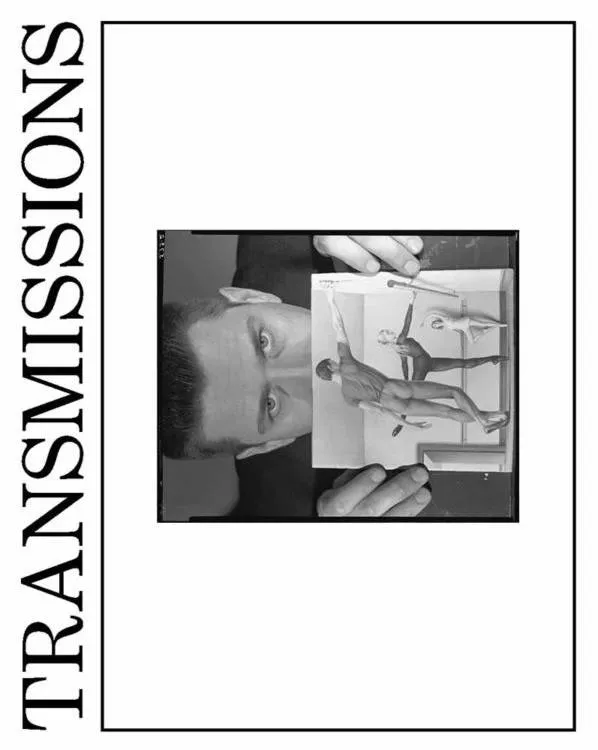
Movement Notation

Noa Eshkol, Abraham Wachmann

€35.00

Eshkol and Wachmann focused dance on its basic element: the movement of the human body. They treated the different parts of the body as separate instruments, similar to the musical instruments of an orchestra–each with its own rules for the movements to be performed. This new edition of the 1958 publication is supplemented by contributions from Eshkol’s companions and further archive material, which contextualizes and supplements the history of the 'EWMN’s‘ origins and embeds it in contemporary discourses on dance and movement. 

The publication is published in the context of the performance 'Pause: The Noa Eshkol Chamber Dance Group‘ at KW Institute for Contemporary Art (August 2023), as well as the exhibition 'Noa Eshkol: No Time to Dance‘ at the Georg Kolbe Museum (15 March–25 August 2024). The new edition was developed together with the 'Noa Eshkol Foundation for Movement Notation‘.

Published in 2024 ┊ 203 pages ┊ Hardcover ┊ Language: English

recommendations

Cover of in the coherence, we weep

Verlag der Buchhandlung Walther König

in the coherence, we weep

Kameelah Janan Rasheed

“in the coherence, we weep is both an artist book and an exhibition. The project is about the critical potential of incoherencies. It is an attempt to map methodology across media, while welcoming glitches that allow for moments of critical self-reflection and knowledge production. Developed in parallel, the book and exhibition critically reflect on each other’s approaches. It looks at strategies for how text can be alive and vibrant across various architectural contexts as well as those used in the artist’s family archive, particularly annotation, redaction, indexing, blurring, and learning through reading and writing.” - KW Institute for Contemporary Art

“Multilayering was in that sense an important aspect, which got translated with the material and the design by choosing papers with differents gradients of transparency, as well as interfering and overlapping text layouts. We also designed the cover with a blue scratch off drawing on top of another artwork, so every book might change a bit over time depending on the use. This reflects the artist‘s idea of including the audience and an ever changing oeuvre, where the relation between pieces become important too.” - Studio Pandan

Texts by Dr. Christina Landbrecht, Krist Gruijthuijsen, Sofie Krogh Christensen, Chang Yuchen, Ladi'Sasha Jones

This artist book is published on the occasion of Kameelah Janan Rasheed’s Schering Stiftung Award for Artistic Research 2022 solo exhibition at KW Institute for Contemporary Art (2023).

Cover of Cologne art fair 1977

Verlag der Buchhandlung Walther König

Cologne art fair 1977

Michael Krebber, Jack Smith

Jack Smith presented his performance Irrational Landlordism of Bagdad as part of the Cologne Art Fair fringe in the summer of 1977. Many other events were documented photographically and can now be found in the Cologne Art Fair archives - not so Smith's performance.

This book shows him in his fair stall and during his performance for the first time. The pictures are perfect documents of a completely eccentric transaction by this pioneering director and performance artist.

Cover of Treatise of a Coat

Verlag der Buchhandlung Walther König

Treatise of a Coat

Helen Marten

Featuring coloured pencil, watercolour, ink, airbrush, acrylic and graphite, alongside other more unusual media like sand, silicone or olive oil, this book is a sumptuous, visual document of Marten's drawing and painting practice on paper. Designed as an unruly "artist's book", Treatise of a Coat has multiple physical and linguistic folds. The title is a forcing of the homonymic similarities of coat: the literal jacket that is unfurled to expose the naked and unruly shame of human forms; the fur or hair of an animal; the verb-function of to coat, with its intentional building up of visual desire - the acts of lacquering, spreading, enclosing, flooding, directing, or husking that line and colour expedite when creating an image. The constituent materiality of this book is designed with the physicality of making a work on paper in mind.

Cover of Past Words

Verlag der Buchhandlung Walther König

Past Words

Prem Krishnamurthy

Essays €30.00

Past Words is three books in one: a collection of previously published texts and two exhibition-like experiments: A Year with Prem Krishnamurthy at the KW Institute for Contemporary Art, Berlin, and Endless Exhibition at the Kunsthal Gent. These parts are iinterconnected but distinct, not least because each is designed by a different designer—Ann Richter, David Knowles, Mark Foss & Valentijn Goethals. Together, they chart the past—and future—of a peripatetic performance of a practice, taking stock of a fifteen-year period through writing, a medium that 1s both primary and secondary. This writing is about design, about curating, about exhibition-making, and about how all three are themselves forms of storytelling. They allow us to draft narratives that stand just to the side of accepted realities, to sneak wild ideas into the world with the hope they may—with time—turn into facts. 

Based in Berlin and New York, designer and curator Prem Krishnamurthy (born 1977) is head of the artist group Department of Transformation and of the design consultancy Wkshps. In 2015 he was the recipient of the Cooper Hewitt’s National Design Award for Communication essDesign. As both creator and curator, Krishnamurthy aims to discover “how art & design can be agents of transformation for individuals, communities and institutions.” 

With an introduction by Krist Gruijthuijsen.

Cover of Unlawful Assembly

Verlag der Buchhandlung Walther König

Unlawful Assembly

Lucy McKenzie, Alan Michael

Fiction €20.00

A collection of interrelated short stories by Lucy McKenzie and Alan Michael. First published in private limited edition, it was intended as a cheap holiday read to titillate and entertain summer visitors to the Mediterranean island of Stromboli, and as a piece of site-specific work; the location of the action and the place in which it is read being the same.

The visual art subsequently generated by Unlawful Assembly includes work by Josephine Pryde, with whom the artists collaborated to produce this second edition’s cover image.

Cover of Maisa in Webland

Set Margins'

Maisa in Webland

Maisa Imamović

Design €25.00

What does ‘user-friendly’ website mean if, on it, online behaviors like stalking, teasing, and ghosting — once considered peripheral — are now central to survival, care, and belonging? How to thrive without becoming an “Interdisciplinary Unicorn”: the state’s most beloved user-citizen fluent in multiple registers of production, optimization, and self-branding? How in this beautiful world is one supposed to log off, when surveillance and privacy erosion have been normalized? And how, oh how, could users possibly think of building the alternatives, when cool and cringe online acts, all activate the platform’s reward system: the unleashing of emoji-filled praise? How to resist the platform’s toxic seduction? 

Haunted by screenshots of early cyberfeminist websites and in dialogue with digital sages, web scripts, and business interests, media artist, web developer, and author Maisa Imamović embarks on a philosophical and practice-based crusade through the internet’s surface and its shadows. To expose the various ways of thriving online without surrendering to optimization, the book explores imperfect uses of perfect software, preservation of precarious web infrastructures, tactical content strategies, and experiments with autonomous financial systems — all wrapped in educational efforts to sustain criticality amid automation. Through these traversals beneath the scroll, Maisa finds her Webland: speculative, broken, and oftentimes, poetic infrastructure where logic destabilizes, binaries dissolve, and meaning evades monetization. But can a non-extractive internet exist beyond metaphor? Can poetry rewire protocol? Or will her sanctuary be absorbed into the very architectures it resists?

"In Maisa in Webland, Maisa Imamovic evokes the multidimensional, spontaneous human elements of the early web, using interviews, case studies, critical theory and fiction as her organic materials. She peeks behind the screen and through time to trace the subtle erosion of the web’s early utopian ideals to its cold and extractive present. Imamovic bravely wades through the swampy digital muck that mediates our everyday reality, examining its invisible psychic scaffolding with academic rigor, and a big dose of humor and heart. Was it an inevitable entropy, or an aberration? How and when did we get so off-course? Can we return? Do we want to? In Maisa’s Webland, we might very well be doomed, and maybe that’s a good thing. When the center of this tangled web no longer holds, something new can take shape.” - Nada Alic, author of Bad Thoughts

Cover of 17 Movements

Damaged Goods

17 Movements

Jozef Wouters

17 Mouvements collects traces of a project that Decoratelier - the workspace and arts platform of Jozef Wouters - did in the fall of 2022 around the ‘5 blocs’ area in Brussels (Rempart Des Moines/Papenvest).

When Nuit Blanche invited them to build a gym, Camille Thiry and other Decoratelier associates did not want to design another generic muscle cage. Together with the neighbourhoods inhabitants, they built 17 distinct movement spaces, each tailor-made to an individual’s size, needs, dreams and aches. The gym equipment has meanwhile been removed from public space, but this eponymous book (ed. by Jozef Wouters) combines notes and reflections (language: French) by Camille with beautiful photography by Enzo Smits, documenting the ingenious and unique negotiations that were a part of this collaboration.

Cover of Black Revelry: In Honor of ‘The Sugar Shack’

If I Can't Dance

Black Revelry: In Honor of ‘The Sugar Shack’

Derrais Carter

An experiment in book making, which takes up the form of the LP record as a starting point for re-configuring the haptics of the printed book. Presented as a collection of unbound pages inside a gatefold record sleeve, the publication includes a pressed record, as well as written, visual and sonic contributions from scholars, poets, artists, choreographers and DJs.

Through the logic of the detail, each contributor imaginatively (re)produces Ernie Barnes’s iconic painting The Sugar Shack as an archive of personal histories and a universe of intergenerational connections. Held together as an album, it is a performance to be made at home, which invites readers/listeners to feel art’s histories and to be in them with their bodies.

d.a. carter with contributions by Taylor Renée Aldridge; Samiya Bashir; La Marr Jurelle Bruce; DJ Lynnée Denise, Jennifer Harge, Duane Lee Holland, Jr., William H. Mosley, III, Zoé Samudzi, S*an D. Henry-Smith, Melanie Stevens and Phillip B. Williams.