rile*books

Search books

Search books by title, author, publisher, keywords...

Explore

Categories
Visit
Collections
Publishers
Back in stock
Any books
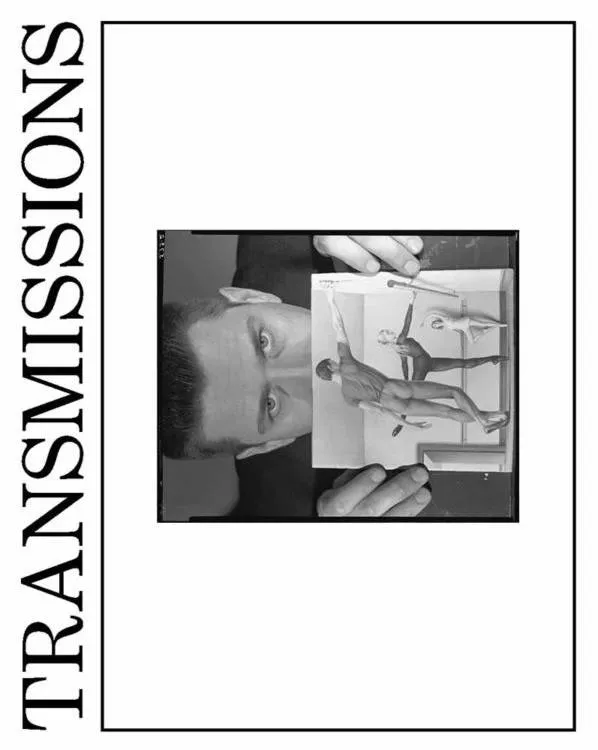
Cover of Transmissions

Dancing Foxes Press

Transmissions

Nick Mauss

€35.00

An aesthetic and social history of art and dance in mid-20th-century New York interpreted by contemporary artist Nick Mauss. 

Over the past decade, Nick Mauss (b. 1980) has pursued a hybrid mode of working that melds the roles of curator, artist, and scholar. This catalogue leans heavily into the scholarship side of his practice, building on his 2018 Whitney Museum exhibition with a closer look at the relationship between modernist ballet and the New York avant-garde. In the 1930s through 1950s, ballet was introduced to a popular audience in New York and was simultaneously influenced by developments in Europe in painting, photography, fashion, music, and poetry. Mauss reflects on this period of rich cross-media production and synergy, ultimately arguing for the inseparability of dance and art history.

Published in 2019 ┊ 190 pages ┊ Language: English

recommendations

Cover of Tina Girouard: Sign-In

Dancing Foxes Press

Tina Girouard: Sign-In

Tina Girouard

From the 1970s until her death, Louisiana-born artist Tina Girouard (1946–2020) was a dedicated experimental artist, collaborator and art worker. Alongside her individual creative endeavors, she nurtured and was a part of numerous influential artist communities and organizations in New York, Louisiana and Haiti, including the Anarchitecture Group, the interdisciplinary cohort of 112 Greene Street, the restaurant Food, the Kitchen, P.S. 1 and the Festival International de la Louisiane. Her acts of upkeep, including domestic labor traditionally associated with “women’s work,” blurred the boundaries between artmaking and what she called life-making. Sign-In is the first comprehensive monograph on her interdisciplinary oeuvre. It gathers documentation of her work in video, performance, drawing, textile, wall works and installation, tracing Girouard’s practice and legacy across genres and geographies.

Edited by Andrea Andersson with Jordan Amirkhani
With new essays by Andrea Andersson, Jordan Amirkhani, Anaïs Duplan, Pamela M. Lee, Aruna D’Souza, and Lumi Tan

Cover of Les Goddesses/Hemlock Forest

Dancing Foxes Press

Les Goddesses/Hemlock Forest

Moyra Davey

This book is based on two related projects that take form as text, photography and film. Les Goddesses (2011) collapses the lives of Davey and her five sisters with those of the daughters of Mary Wollstonecraft, the 18th-century feminist writer and activist. Hemlock Forest (2016) weaves references to Wollstonecraft, Chantal Akerman and Karl Ove Knausgaard with her own family stories. During the making of Hemlock Forest, Akerman took her own life. Her death soon engulfed Davey's awareness, prompting a broader exploration of Akerman's and her own biographies, amid more universal themes of compulsion, artistic production, life and its passing.

Texts by Moyra Davey and an introduction by Aveek Sen
Design by Filiep Tacq

Cover of Dance History(s): Imagination as a Form of Study

Dancing Foxes Press

Dance History(s): Imagination as a Form of Study

Annie-B Parson, Thomas F. DeFrantz

Authored by twelve diverse American dance artists in the form of twelve small booklets, Dance History(s): Imagination as a Form of Studyapproaches and celebrates dance history as a subjective, artistic inquiry. It reimagines and radicalizes our understanding of dance throughout human history through the voices of working choreographers. Simultaneously, the project is dedicated to the power of an artist-centric view of history itself, thus placing the dance history back into the body, where it began. Here, history occurs in vertical layers of time and space and moves into the street, the football field, the yard, the screen, the memory, the womb, the sky, and the future.

Text by mayfield brooks, thomas f. defrantz, maura nguyễn donohue, Keith Hennessy, Bebe Miller, Okwui Okpokwasili, Eiko Otake, Annie-B Parson, Javier Stell-Frésquez, Ogemdi Ude, Mariana Valencia, and Andros Zins-Browne

Cover of Andrea Geyer: Dance in a Future with All Present

Dancing Foxes Press

Andrea Geyer: Dance in a Future with All Present

Andrea Geyer

This most substantive monograph yet published on the work of German-born, New York–based multimedia artist Andrea Geyer focuses on her recent explorations of the marginalized yet pivotal role that women have played in the formulation of American modernism, tracing and honoring the ephemeral acts, initiatives, and stories that shaped it. Featuring full-color images of Geyer’s artworks and research materials, including documents, found photographs, and previously unpublished photographs by the artist, Dance in a Future with All Present offers insight into Geyer’s art and the multiple histories of modernism.

Includes texts by Matthew Jeffrey Abrams, Andrianna Campbell, Juli Carson, Barbara Clausen, Lynne Cooke, Dean Daderko, Saisha Grayson, Sharon Hayes, Megan Heuer, Danielle A. Jackson, Alhena Katsof, Kristan Kennedy, Thomas J. Lax, Ralph Lemon, André Lepecki, Renate Lorenz, Josiah McElheny, Fred Moten, Kristin Poor, Yvonne Rainer, Gabriela Rangel, Jeannine Tang, and Soyoung Yoon.

Copublished with Portland Institute of Contemporary Art in 2019.
Edited by Alhena Katsof, Karen Kelly, and Barbara Schroeder. 
Design by Dante Carlos.

Cover of Remembering a Dance – Part of Some Sextets 1965/2019

Lenz Press

Remembering a Dance – Part of Some Sextets 1965/2019

Yvonne Rainer

A re-examination of Yvonne Rainer's Parts of Some Sextets, a radical performance and pivotal piece in the American choreographer's career, which led her to theorize her conception of dance in the 1960s, before being revived in 2019.

Parts of Some Sextets, Yvonne Rainer's 1965 performance for ten people and twelve mattresses, represents a turning point in the American choreographer's oeuvre. "My mattress monster," as Rainer calls it, was built in her formative years with the experimental downtown New York group Judson Dance Theater. In this work, she asserted her exploration of "ordinary" actions as well as her disregard for narrative constructions to create an intricate choreography that unfolded with a new scene every thirty seconds.

More than half a century after its premiere, Rainer, in collaboration with choreographer and dancer Emily Coates, directed the 2019 revival of the piece for the Performa 19 Biennial in New York, grappling with the changing contexts of a new presentation of her radical performance. Remembering a Dance: Parts of Some Sextets, 1965/2019 delves into every aspect of this dance, from its original manifestation to its reconstitution.

This book, designed by visual artist Nick Mauss, includes previously unpublished archival images and documents from the 1965 stagings at the Judson Memorial Church in New York and the Wadsworth Atheneum in Hartford, Connecticut. Texts by Emily Coates, RoseLee Goldberg, Jill Johnston, Kathy Noble, Yvonne Rainer, David Thomson, Lynne Tillman, and Soyoung Yoon, as well as a new interview with Rainer, pose questions about the trajectories of artworks, performers, and audiences, all while tracing the life—and afterlife—of a dance.

Edited by Emily Coates. 
Texts and contributions by Emily Coates, RoseLee Goldberg, Jill Johnston, Kathy Noble, Yvonne Rainer, David Thomson, Lynne Tillman and Soyoung Yoon; conversation between Yvonne Rainer, Emily Coates and Nick Mauss.

Cover of The Poeticians

Self-Published

The Poeticians

Pontus Pettersson

Poetry €5.00
The Poeticians is a publication of the performance of the collection of clothes and poetry called Writing Wounds To Heal by Swedish choreographer Pontus Pettersson. Made in velvet silk with the poetry burned out in the fabric exposing the texts, the poetry exposes both itself and the skin of the performer. Throughout the durational piece the performers are doing Pontus Petterssons cat practice and is one of the main ingredients of the project as well as the clothes/poems. The Poeticans is also a choreo-curational event that hosts different choreographic proposals inside of it. It is seen as module or installation where pieces, objects, performers can be inserted rather than a performance that executes and performs the same over and over. It was created as an extension of Pontus interest in poetry and choreography where hospitality and proximity is seen as key concepts in the development and execution of the event.
Cover of Jennifer Lacey & Nadia Lauro – Dispositifs chorégraphiques

Les Presses du Reel

Jennifer Lacey & Nadia Lauro – Dispositifs chorégraphiques

Alexandra Baudelot

Un essai consacré au travail de la chorégraphe et danseuse Jennifer Lacey et de la plasticienne et scénographe Nadia Lauro, qui rend compte de l'univers visuel des deux artistes au travers de nombreuses illustrations.

Dans cet essai, Alexandra Baudelot s'attache à saisir l'ensemble des œuvres co-écrites par la chorégraphe Jennifer Lacey et la plasticienne et scénographe Nadia Lauro, en observant de quelle manière elles s'architecturent les unes aux autres pour constituer des extensions inédites d'une forme artistique vers une autre.

Elle les observe à la manière de parcours envisagés comme des supports d'expériences cherchant à déborder constamment ses propres cadres de représentation. Ceci afin de saisir les politiques mises en jeu pour penser le corps, sa place dans un environnement fictif ou quotidien, son impact dans les enjeux chorégraphiques contemporains et ses liens avec notre époque.

L'espace de cet essai se prête également à l'univers visuel des deux artistes qui se livrent ici à un jeu de construction entre l'exploration d'images d'archive, de déclinaisons de projets inédits et périphériques aux pièces publiques, d'illustrations, et d'exposition d'un portfolio de dessins.

Originaire de New York, la chorégraphe et danseuse Jennifer Lacey est établie à Paris. Depuis 1991, elle a développé son propre travail chorégraphique qui a été présenté aux États-Unis (P.S. 122, The Kitchen) et en Europe (Klapstuk Festival, Vienna Festival, Danças na Cidade, Biennale d'art contemporain de Lyon, Big Torino). Depuis qu'elle réside en France, elle a créé et présenté plusieurs œuvres : $Shot (Lacey / Lauro / Parkins / Cornell), Châteaux of France no. 2 et no. 3, un projet conçu en collaboration avec Nadia Lauro, et Prodwhee!, une série de courts modules. En 2002, elle a été accueillie en résidence aux Laboratoires d'Aubervilliers. Jennifer Lacey a collaboré à différents projets avec de nombreux artistes : Loïc Touzé, Boris Charmatz, Emmanuelle Huynh, Benoît Lachambre, Catherine Contour et Latifa Laâbissi. Elle développe actuellement ses créations au sein de l'association Megagloss.

Nadia Lauro est artiste visuelle et scénographe basée à Paris. Elle développe son travail dans divers contextes et conçoit des environnements, des installations visuelles et des costumes pour différents projets chorégraphiques. Outre Jennifer Lacey, elle collabore notamment avec les chorégraphes Ami Garmon, Vera Montero, Benoît Lachambre, Frans Poelstra, Barbara Kraus, figures de la danse contemporaine en Europe. En 1998, elle fonde avec l'architecte paysagiste Laurence Crémel l'association Squash Cake Bureau – scénographie et paysage au sein de laquelle elle conçoit des installations paysagères et du mobilier urbain. Elle a également créé la scénographie de plusieurs défilés de mode.

Cover of I am Four Quartets by T.S Elliot

Time has fallen asleep in the afternoon sunshine

I am Four Quartets by T.S Elliot

Sébastian Hendrickx

For the project Time has fallen asleep in the afternoon sunshine a group of people/ performers memorize a book of their choice. Together they form a library collection consisting of living books. After years of learning by heart and reciting for readers, some of the books have now been written down from memory to create new editions, versions resulting from this process. This book is one of those books, chosen by one person, learned by heart and recited many times, and now written down again from memory. This edition is not a re-edition of the original text. It is a re-writing of the text after the process of reading, memorizing and reciting, with all the alterations that might have occured in the course of this process.

www.timehasfallenasleepintheafternoonsunshine.be

Cover of Language is a map of failures: Messy thoughts on reading, writing and dressing up

Afternoon Editions

Language is a map of failures: Messy thoughts on reading, writing and dressing up

Runa Borch Skolseg

Afternoon Editions no. 3: Language is a map of failures. Messy thoughts on reading, writing and dressing up by Runa Borch Skolseg.

In May 2019, Time has fallen asleep in the afternoon sunshine relocated its base to the Oslo Biennale headquarters in Myntgata, with a room of its own and ongoing activities. Runa Borch Skolseg visited the space at several occasions before its final closure, in 2021. Her invitation to write for the Afternoon Editions bridges the move from one room to another, and is a reflection on how fashion can be a world of fantasy, and drama, a language we all communicate through. With a personal narrative she makes readings of clothes, literature and writing, and how they merge and enrich each other.

Cover of Edges of Ailey

Whitney Museum of American Art

Edges of Ailey

Alvin Ailey, Adrienne Edwards

Monograph €65.00

Alvin Ailey is one of the most celebrated choreographers of the twentieth century. The creator of iconic works such as Blues Suite, Revelations, and Cry, he is widely recognized for the dance company he founded in 1958 when he was just twenty-seven years old. Ailey imagined and cultivated a platform for modern dance through his innovative repertoire, interdisciplinary sensibility, and support of dancers and choreographers. This expansive volume situates Ailey within a broader social, creative, and cultural context, looking at the artists who influenced and collaborated with him, the spaces and scenes he frequented, the dynamic themes within his dances, and how his vision and work changed contemporary dance. 

Essays by artists, scholars, and critics cover topics ranging from the Black church, the South, and the Great Migration to nightclubs, musical influences, and queerness. With more than four hundred images including photographs of works Ailey choreographed, archival materials such as notebooks, sketches, letters, and never-before-published behind-the-scenes photos, and conversations about the legacy of the company with Sylvia Waters, Judith Jamison, and Masazumi Chaya as well as several contemporary dancers and scholars, this study offers an unprecedented full picture of one of the twentieth century’s leading artists and the way his work continues to inspire today’s generation of dancers.

Contributions by Horace D. Ballard, Harmony Bench, Kate Elswit, Aimee Meredith Cox, Thomas F. DeFrantz, Malik Gaines, Jasmine Johnson, Joshua Lubin-Levy, Uri McMillan, Ariel Osterweis, J Wortham, CJ Salapare, Kyle Abraham, Claire Bishop, Masazumi Chaya, Brenda Dixon-Gottschild, Jennifer Homans, Judith Jamison, Sylvia Waters, Jamila Wignot and Jawole Willa Jo Zollar