rile*books

Search books

Search books by title, author, publisher, keywords...

Explore

Categories
Visit
Collections
Publishers
Back in stock
Any books
Cover of Tina Girouard: Sign-In

Dancing Foxes Press

Tina Girouard: Sign-In

Tina Girouard

€45.00

From the 1970s until her death, Louisiana-born artist Tina Girouard (1946–2020) was a dedicated experimental artist, collaborator and art worker. Alongside her individual creative endeavors, she nurtured and was a part of numerous influential artist communities and organizations in New York, Louisiana and Haiti, including the Anarchitecture Group, the interdisciplinary cohort of 112 Greene Street, the restaurant Food, the Kitchen, P.S. 1 and the Festival International de la Louisiane. Her acts of upkeep, including domestic labor traditionally associated with “women’s work,” blurred the boundaries between artmaking and what she called life-making. Sign-In is the first comprehensive monograph on her interdisciplinary oeuvre. It gathers documentation of her work in video, performance, drawing, textile, wall works and installation, tracing Girouard’s practice and legacy across genres and geographies.

Edited by Andrea Andersson with Jordan Amirkhani
With new essays by Andrea Andersson, Jordan Amirkhani, Anaïs Duplan, Pamela M. Lee, Aruna D’Souza, and Lumi Tan

Published in 2025 ┊ 385 pages ┊ Language: English

recommendations

Cover of Transmissions

Dancing Foxes Press

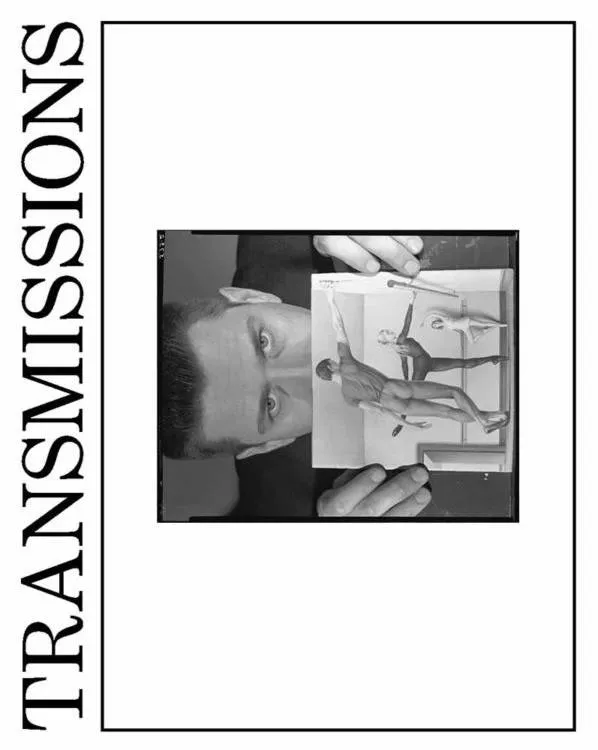
Transmissions

Nick Mauss

An aesthetic and social history of art and dance in mid-20th-century New York interpreted by contemporary artist Nick Mauss. 

Over the past decade, Nick Mauss (b. 1980) has pursued a hybrid mode of working that melds the roles of curator, artist, and scholar. This catalogue leans heavily into the scholarship side of his practice, building on his 2018 Whitney Museum exhibition with a closer look at the relationship between modernist ballet and the New York avant-garde. In the 1930s through 1950s, ballet was introduced to a popular audience in New York and was simultaneously influenced by developments in Europe in painting, photography, fashion, music, and poetry. Mauss reflects on this period of rich cross-media production and synergy, ultimately arguing for the inseparability of dance and art history.

Cover of Les Goddesses/Hemlock Forest

Dancing Foxes Press

Les Goddesses/Hemlock Forest

Moyra Davey

This book is based on two related projects that take form as text, photography and film. Les Goddesses (2011) collapses the lives of Davey and her five sisters with those of the daughters of Mary Wollstonecraft, the 18th-century feminist writer and activist. Hemlock Forest (2016) weaves references to Wollstonecraft, Chantal Akerman and Karl Ove Knausgaard with her own family stories. During the making of Hemlock Forest, Akerman took her own life. Her death soon engulfed Davey's awareness, prompting a broader exploration of Akerman's and her own biographies, amid more universal themes of compulsion, artistic production, life and its passing.

Texts by Moyra Davey and an introduction by Aveek Sen
Design by Filiep Tacq

Cover of Dance History(s): Imagination as a Form of Study

Dancing Foxes Press

Dance History(s): Imagination as a Form of Study

Annie-B Parson, Thomas F. DeFrantz

Authored by twelve diverse American dance artists in the form of twelve small booklets, Dance History(s): Imagination as a Form of Studyapproaches and celebrates dance history as a subjective, artistic inquiry. It reimagines and radicalizes our understanding of dance throughout human history through the voices of working choreographers. Simultaneously, the project is dedicated to the power of an artist-centric view of history itself, thus placing the dance history back into the body, where it began. Here, history occurs in vertical layers of time and space and moves into the street, the football field, the yard, the screen, the memory, the womb, the sky, and the future.

Text by mayfield brooks, thomas f. defrantz, maura nguyễn donohue, Keith Hennessy, Bebe Miller, Okwui Okpokwasili, Eiko Otake, Annie-B Parson, Javier Stell-Frésquez, Ogemdi Ude, Mariana Valencia, and Andros Zins-Browne

Cover of Andrea Geyer: Dance in a Future with All Present

Dancing Foxes Press

Andrea Geyer: Dance in a Future with All Present

Andrea Geyer

Performance €30.00

This most substantive monograph yet published on the work of German-born, New York–based multimedia artist Andrea Geyer focuses on her recent explorations of the marginalized yet pivotal role that women have played in the formulation of American modernism, tracing and honoring the ephemeral acts, initiatives, and stories that shaped it. Featuring full-color images of Geyer’s artworks and research materials, including documents, found photographs, and previously unpublished photographs by the artist, Dance in a Future with All Present offers insight into Geyer’s art and the multiple histories of modernism.

Includes texts by Matthew Jeffrey Abrams, Andrianna Campbell, Juli Carson, Barbara Clausen, Lynne Cooke, Dean Daderko, Saisha Grayson, Sharon Hayes, Megan Heuer, Danielle A. Jackson, Alhena Katsof, Kristan Kennedy, Thomas J. Lax, Ralph Lemon, André Lepecki, Renate Lorenz, Josiah McElheny, Fred Moten, Kristin Poor, Yvonne Rainer, Gabriela Rangel, Jeannine Tang, and Soyoung Yoon.

Copublished with Portland Institute of Contemporary Art in 2019.
Edited by Alhena Katsof, Karen Kelly, and Barbara Schroeder. 
Design by Dante Carlos.

Cover of Essays

Essay Press

Essays

Dorothea Lasky

Essays €18.00

Poetry as both a form and genre has many possibilities to exist within; however, poetry too often is burdened by the imperative to have an argument and a set of imagery and meanings that are preconceived and placed within the poem. In this way, poetry gets conflated with writing a thesis or project, and the poet simply the presenter of perfectly argued language. When poets attempt to bridge the gap between genres and write within the contemporary essay form, they are tasked to construct perfect arguments there as well and avoid the associative and aesthetic logic that makes poems important. The term essay itself was coined by Michel de Montaigne in the 1500s — it comes from the French word essai, which means to test or experiment with what one knows as a learning tool, and is in partial opposition to the terms we use to discuss the essay now

ESSAYS calls on thinkers and writers to move beyond this linear thinking into the realm of what an essay by someone like Montaigne might do. His essays do as they say they will—they test out ideas, they are unafraid to get messy in their execution, they are brave enough to go forward into the uncharted waters. In them, it’s completely beside the point to get back to where they started, let alone where they’d say they would go. They are simply beside the point. It’s true.

ESSAYS, edited by Dorothea Lasky, is a book of essays on the essay, which enact and query these directives. The volume collects essays by poets Ariel Goldberg, Ken Chen, Wayne Koestenbaum, Tracie Morris, Anaïs Duplan, Raquel Salas Rivera, Brandon Shimoda, Cecilia Vicuña, Fred Moten, and Mónica de la Torre.

Cover of Jennifer Lacey & Nadia Lauro – Dispositifs chorégraphiques

Les Presses du Reel

Jennifer Lacey & Nadia Lauro – Dispositifs chorégraphiques

Alexandra Baudelot

Performance €25.00

Un essai consacré au travail de la chorégraphe et danseuse Jennifer Lacey et de la plasticienne et scénographe Nadia Lauro, qui rend compte de l'univers visuel des deux artistes au travers de nombreuses illustrations.

Dans cet essai, Alexandra Baudelot s'attache à saisir l'ensemble des œuvres co-écrites par la chorégraphe Jennifer Lacey et la plasticienne et scénographe Nadia Lauro, en observant de quelle manière elles s'architecturent les unes aux autres pour constituer des extensions inédites d'une forme artistique vers une autre.

Elle les observe à la manière de parcours envisagés comme des supports d'expériences cherchant à déborder constamment ses propres cadres de représentation. Ceci afin de saisir les politiques mises en jeu pour penser le corps, sa place dans un environnement fictif ou quotidien, son impact dans les enjeux chorégraphiques contemporains et ses liens avec notre époque.

L'espace de cet essai se prête également à l'univers visuel des deux artistes qui se livrent ici à un jeu de construction entre l'exploration d'images d'archive, de déclinaisons de projets inédits et périphériques aux pièces publiques, d'illustrations, et d'exposition d'un portfolio de dessins.

Originaire de New York, la chorégraphe et danseuse Jennifer Lacey est établie à Paris. Depuis 1991, elle a développé son propre travail chorégraphique qui a été présenté aux États-Unis (P.S. 122, The Kitchen) et en Europe (Klapstuk Festival, Vienna Festival, Danças na Cidade, Biennale d'art contemporain de Lyon, Big Torino). Depuis qu'elle réside en France, elle a créé et présenté plusieurs œuvres : $Shot (Lacey / Lauro / Parkins / Cornell), Châteaux of France no. 2 et no. 3, un projet conçu en collaboration avec Nadia Lauro, et Prodwhee!, une série de courts modules. En 2002, elle a été accueillie en résidence aux Laboratoires d'Aubervilliers. Jennifer Lacey a collaboré à différents projets avec de nombreux artistes : Loïc Touzé, Boris Charmatz, Emmanuelle Huynh, Benoît Lachambre, Catherine Contour et Latifa Laâbissi. Elle développe actuellement ses créations au sein de l'association Megagloss.

Nadia Lauro est artiste visuelle et scénographe basée à Paris. Elle développe son travail dans divers contextes et conçoit des environnements, des installations visuelles et des costumes pour différents projets chorégraphiques. Outre Jennifer Lacey, elle collabore notamment avec les chorégraphes Ami Garmon, Vera Montero, Benoît Lachambre, Frans Poelstra, Barbara Kraus, figures de la danse contemporaine en Europe. En 1998, elle fonde avec l'architecte paysagiste Laurence Crémel l'association Squash Cake Bureau – scénographie et paysage au sein de laquelle elle conçoit des installations paysagères et du mobilier urbain. Elle a également créé la scénographie de plusieurs défilés de mode.

Cover of Sforzando - Pastels 2020 - 2022

Goswell Road

Sforzando - Pastels 2020 - 2022

David West

At midday, March 17th, 2020, Macron’s government decided to place France in suspended animation. Total confinement. The first in a series of strict debilitating lockdowns to combat the spiralling Covid-19 pandemic. This first confinement lasted 55 days. It ended on 11th May 2020. The first part of a dramatic trilogy.

One month in, in April 2020, David West picked up a box of pastels that used to belong to his mother. He had had them for many years but never used them. New to the medium, locked in his Paris studio, he sets himself to the task. Naturally, violence ensues. Folk horror. Animals are disembowelled. Faceless sexualised female bodies perform. Screaming faces educate. Covered figures stand motionless. Shadows. Hooded beings populate. Stabbing, scratching, fading, softening, sforzando. Crescendo. Schadenfreude.

Occasional respite comes when West ventures outside - andante - but the externalised screaming pushes him back in. Hagazussa. Ghosts from West’s past, real and unreal, appear and disappear, figures and shapes, compositional arcs, a slimy snaking emerald hand parts the waves for colour to gush forth a new language verde fosforescente, worm purple, rosa shocking, vermillion, cobalt, ultra-black.

This book reproduces a small selection of some 300 works, in chronological order, in an attempt to document time, evolution, revolt, epiphany and joy. Joy in colour, horror, form, symphony, and finally, West’s visions of a new utopia. Marcato. Decrescendo.

Softcover (21cm x 29.7cm)
100 Pages
50 copies
Signed and numbered by David West

Cover of Recto verso – An Anthology of Works and Writings by Asier Mendizabal

Paraguay Press

Recto verso – An Anthology of Works and Writings by Asier Mendizabal

Asier Mendizabal

A comprehensive retrospective of the Spanish artist's work, covering his major exhibitions (Manifesta, Reina Sofia, MACBA, Raven Row, etc.) and including all of his texts published as fanzines over a period of twenty years, a new critical essay by Kim West, and a wide-ranging conversation.

Conceived as a compilation of works and writings of the last two decades, this book is structured as an alternating succession of four different registers: four recurrent modes. A long-form interview, a series of questions from different collaborators, documentation of a selection of projects, and a compilation of the facsimilia of the brochures published by the author since 2008. The aim of this concatenation of recurring sections is to delay the linear progression suggested by the narrative of a compilation, by the apparent causal string of decisions, ideas, references and works displayed as an accumulative "biography" of the artist's practice. However, this being a bound book, the suggestion of an interwoven relation between all the works, regardless of when, where or how they were made, must submit to the order locked by the sewn spine of its signatures, the folder of bound pages that forms each section of a book.

Designed by Filiep Tacq, the book includes an essay by Kim West and a long-form interview by Beatriz Herráez, punctuated by questions from Filiep Tacq, Lisa Tan, Jon Mikel Euba, Antonio Menchen, Alex Valijani, Johanna Gustafsson Fürst, Itziar Okariz, Olatz Otalora, Antonia Majaca, Pablo Lafuente and Koenraad Dedobbeleer.

Cover of A Psalm for the Third Wind

Self-Published

A Psalm for the Third Wind

Damien Troadec

Poetry €25.00

Book: 11.7 × 18 cm
Book and Glove: 13.5 × 31.5 cm

Presented in a monster glove

Three broken halves of one god walk a city that wants them dead
Their bodies speak in static hunger and rust
Something follows breathing through their mouths
Read it Bleed from it


In A Psalm for the Third Wind, a film script written from 3 perspectives, Damien Troadec is aiming to address in parallel narrative the struggle of having multiples inner voices and the danger of following their distinct desires. One question is raised without any light at the end of the tunnel, confronting the reader to a conflict : THE COMFORT OF MISERY OR THE PAIN OF CHANGE ?

Cover of Birthday

Zolo Press

Birthday

Bridget Mullen

Bridget Mullen is the ruler of an unruly roost. Between 2021 and 2023, she gave birth to forty-seven paintings, each twelve-by-nine inches: kin ugly and cute, monstrous, fleshy, repulsive, droopy-eyed, and sneering as they cross the universal threshold into the no less frightening world that awaits. Birthday reunites Mullen's uncanny litter alongside a conversation between the artist and Lucas Blalock.

The paintings in New York-based artist Bridget Mullen's Birthday series utilize two distinct parameters to guide the creation of the iterative works: a vertical orientation at an intimate scale of 12 x 9 inches and a visualization of perhaps the ultimate creative act—the moment of birth. Through this consistent scale and thematic hyper focus, the artist employs endless formal variations in composition, color, and paint application. The result is a series of paintings that share a common structure yet champion individuality.

Contrasting colors provoke a visible tension, one that is at times compressed and, in other moments, elastic. Suddenly, abstract shapes come into focus as human anatomies, capable of expressing emotion. Undulating lines of various thicknesses and layered colors squeeze together, revealing peculiar faces and gestures that emerge from a central point. The repetition of thin lines creates a visual stutter of pigment, alluding to the passage of time or rapid movement.
The works in Birthday build on Mullen's practice, combining color, decisive mark-making, intuition, and experimentation to conjure psychedelic configurations. Sculptural dimensionality and flatness, representation and abstraction, and solidity and fluidity, serve not as dichotomies within these works, but as two complementary halves of a whole. Together, the forms and figures of the Birthday series are imbued with a sense of life, pregnant with agency and potential.