Books
Books
in random order

À perte de mère – Sur les routes atlantiques de l'esclavage
Saidiya Hartman traces the history of the Atlantic slave trade by recounting a journey she took along a slave route in Ghana. Following the trail of captives from the hinterland to the Atlantic coast, she reckons with the blank slate of her own genealogy and vividly dramatizes the effects of slavery on three centuries of African and African American history.
Saidiya Hartman, professor of English and comparative literature at Columbia University, is a scholar of African American literature and cultural history.
Preface by Maboula Soumahoro.
Translated from the English (American) by Maboula Soumahoro (original title: Lose Your Mother. A Journey Along The Atlantic Slave Route, Farrar, Straus and Giroux, 2007).

Steak Zine
Steak Zine is the new issue of Cake Zine. Cake Zine is a literary print magazine exploring art, history, and pop culture through food.
For this pocket-sized special issue, Cake Zine is setting off into carnivorous territory. Serving up 208 pages of non-fiction and fiction exploring the cultural impact of red meat, including:
The last days of Acropolis, Portland’s beloved strip club-steakhouse, by Sophia June
A profile on the women going viral by eating raw meat online by Ella Quittner
A night at a fictionalized steakhouse kaleidoscoped through the roles of maître d’, bartender, server, chef, and guest, by Leah Abrams, Isle McElroy, Lillian Fishman, Stephanie Wambugu, and Hannah Kingsley-Ma
Examinations of the enduring escapism of Outback Steakhouse and Fogo de Chão by Ruby Robina Saha and Adam Dalva
A trip through Nebraska to trace how historic stockyard closures in the late 1990s have affected those serving up beef in the Beef State, by Jamal Dauda
A wistful look back at a romance fueled by ribeye and red leather booths, by Emma Specter
NDA-risking testimony from a lab tech at a plant-based food start up who went from vegetarian to carnivore in the noble name of research, by AUTHOR REDACTED
Tracing the roots and uncertain future of Hong Kong’s sizzling steak by Madeline Leung Coleman
Plus the steak heists prompting retailers to put meat behind lock and key, the body horror of cannibalist cinema, revisiting molecular gastronomy’s embrace of meat glue, the social tensions behind ordering well-done meat, the trauma of growing up on an Australian cattle ranch, and much more.

F.R. David - Inverted Commas
F.R.DAVID is a typographical journal, edited by Will Holder, dealing with the organisation of reading and writing in contemporary art practises. This 13th issue of F.R.DAVID is edited with Riet Wijnen, and has its origins in her Registry of Pseudonyms, an online database which accounts for who is who and why who is who. ‘Inverted Commas’ follows ‘pseudonym’ through names, naming, bodies, brains, self, author, other, reader, labour.

Spike #86 – Salad Days!
Spike #86 is turning to the wild season of youth – life’s Salad Days.
Forget all the Boomer panic about a generational crisis; the kids are alright, living out our hyperconnected present to its strangest limits. New kinds of aesthetics, of activism, of entrepreneurship; new images as much as new perspectives on what images are; and, above all, a new, very quantum attitude towards fact and fiction, history and the future: young people are modeling how to be in our very confused times – and producing some of the most interesting forms of culture we’ve ever seen.
Featuring a Zoomer’s guide to the Slopgeneration; an essay of on being young at art in the Instagram age; a rundown of contemporary art’s nepo babies; reality checks on culture’s obsessions with youth and dying young; portraits of couture-sculptor Tenant of Culture, Turner Prize-nominated photographer Rene Matić, e-waste sculptor Brian Oakes, and Austrian painter Lukas Posch; send-ups of teenage fiction’s ecstatic weirdness and youth-quakers’ political promise; a critique from Silicon Valley of the industrialization of young risk-taking; art’s perfect Los Angeles metaphor; and a splash of back-page advice: “You shouldn’t be fun at twenty-one. You should be tortured.”

Firespitter
Like the jazz rhythms that inspired and punctuated her practice, Jayne Cortez improvised her way through and across disciplines, bridging poetry and performance with music and the visual arts to create a unique body of work. Consciously rupturing the boundaries between art and politics, Cortez’s practice uneasily fits within literary movements of the 20th century, residing everywhere and nowhere between the Black Arts Movement, Surrealism, feminism, and early performance art. As intersectional as it is interdisciplinary, her work is consistently visceral and fearless, acting as a powerful expression of collective rage on behalf of the disenfranchised and dispossessed. In the words of historian Robin D.G. Kelley, “her poetry was never ‘protest’ but a complete revolt, a clarion call for a new way of life.”
The appearance of Firespitter (Nightboat, 2025), a 600-page-plus collected poems, is immensely valuable and long overdue . . . Hers [Jayne Cortez’s] is a voice—both on and off the page—that speaks with authority, curiosity, and an unshakeable faith in the power of poetry to change consciousness and change lives. - David Grundy, Poetry Foundation

CUNY Center for the Humanities
Lost & Found: The CUNY Poetics Document Initiative, Series III
John Wieners, Lorine Niedecker and 3 more
Lost & Found: The CUNY Poetics Document Initiative publishes unexpected, genre-bending works by important 20th century writers. Unearthed from personal and institutional archives in the United States and abroad, these materials are edited by doctoral students at the Graduate Center, CUNY.
SERIES III is a collection of 8 chapbooks that authenticate Edward Dahlberg's claim that "There is more political energy in friendship than in ideology."
Langston Hughes & Nancy Cunard cement their personal relationship by penning notes across the ocean throughout the Spanish Civil War. After meeting at Black Mountain, John Wieners & Charles Olson remain in close correspondence until months before Olson's death. In "Old Father, Old Artificer," part lecture and part evocation of Charles Olson, Diane di Prima helps to establish how key figures in "New American Poetry" were processing their own past, while the breathless Olson lecture by Ed Dorn erodes the fictive dualism that pits poetic theory against practical action. In his letters, Michael Rumaker invites you to share his life, its radiant pursuit of love, "dirty realism," literature, and lasting community, and Joanne Kyger booms "communication is essential" in her Letters to & from. In Homemade Poems, a gift-book mailed to a friend in 1964, Lorine Niedecker insists that the handmade chapbook is the material continuation of the poems so carefully nestled in its pages.
Breaking up the monolith of the historical lens, Series III continues to track individuals as they tell their stories, cast their lifelines, and position themselves in relation to the times they lived in—and the times we live in—through intimate journals, letters, lectures, and friendships. Edited, annotated, and with accompanying essays, The London Review of Books calls this "a serious and worthy enterprise." Diane di Prima calls the series "a gold mine" and Joanne Kyger writes: "What a brilliant cast of characters. Just exactly what one (myself) would like to read."
SERIES III includes:
Lorine Niedecker: Homemade Poems (John Harkey, editor)
John Wieners & Charles Olson: Selected Correspondence (Parts I & II) (Michael Seth Stewart, editor)
Diane di Prima: Charles Olson Memorial Lecture (Ammiel Alcalay and Ana Božičević, editors)
Edward Dorn: The Olson Memorial Lectures (Lindsey Freer, editor)
Michael Rumaker: Selected Letters (Megan Paslawski, editor)
Letters to & from Joanne Kyger (Ammiel Alcalay and Joanne Kyger, editors)
Langston Hughes, Nancy Cunard & Louise Thompson: Poetry, Politics & Friendship in the Spanish Civil War (Anne Donlon, editor)

Confidences / Oracle
Oracles don’t require belief—they now theatrically suspend disbelief. No longer advisors of world policy, they run Locus Solus, a town that has come to ramble around an eponymous theatre and chocolate factories. Theo, a centuries-old vampire intent on remaining contemporary through performance, visits Locus Solus, which is hosting Praise Estate, an international theatre festival. He uses the festival as an opportunity to stay with Gean, his oracle boyfriend, who is there visiting family. Theo has a fetish for the future, fixated on the one thing he is in no shortage of.
Confidences / Oracle is a lover’s trip to a weeklong theatre festival. A vehicle for recontextualising recent performance scripts and texts, Oracle is the third instalment in Ivan Cheng’s Confidences series, which intertwines vampires and performance as sites for circulation and recognition.

Being a Chair. Essays on Choreographic Poetry
Imagine words approaching a dance eyes closed or sleepwalking, words adrift beyond what can be envisioned beforehand, prompting writer and reader alike into a zone where time multiplies, where bodies grow footnotes and paper skin, savour the taste of language, attune their ears to the wavelength of blue. In a string of brief essays on her practice of writing choreographic poetry and scores, Janne-Camilla Lyster offers reflections on time, memory and the senses, on translation, punctuation and rhythm, on mistakes and crevasses, on the impossible and yet other things. What does it take to enter another form of existence, say, a chair?
Janne-Camilla Lyster is a writer, dancer and choreographer. She has published poetry, novels, essays and plays.

Snaturamenti
A workbook by Flatform on displacement, conceived and curated by Giuliana Prucca.
The book is published under four different covers and with four different layouts, randomly distributed.
Founded in 2006 and based in Berlin and Milan, Flatform is a video and media arts collective, at the border between experimental cinema and contemporary art, that creates time-based works, film events, and installations, most of which revolve around landscape and biopolitics. Distributed by Light Cone in Paris and by Video Data Bank in Chicago, works by Flatform have competed in major film festivals including Cannes, Rotterdam, Venice, Toronto, and have been shown worldwide in art venues such as Centre Pompidou, Haus der Kulturen der Welt, Hirshhorn Museum, MAXXI Museum, Eye Filmmuseum, Wexner Center for the Arts and Garage Center for the Arts.
Co-published by Light Cone and Avarie.

Having a party (hope you will be there)
"Having a party (hope you will be there)", is a catalogue of an exhibition organized by Mickael Marman and D&TLG at CFAlive in Milan with artists from the black European diaspora, including original contributions, photos of the show, as well as a brand new intro text by Olamiju Fajemisin.
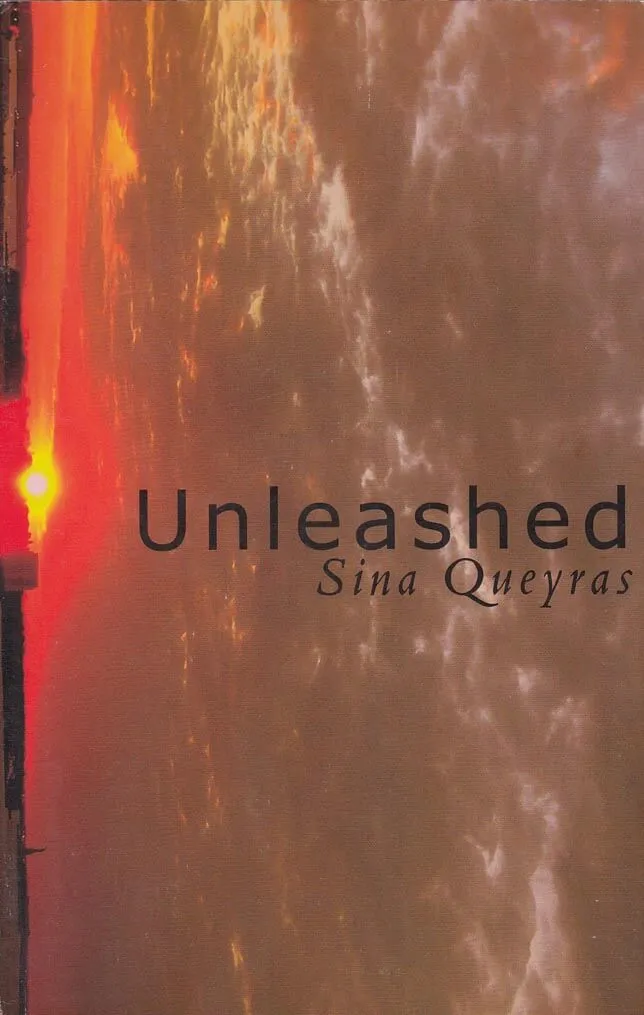
Unleashed
05/09/04 Now she is blogging. Now she is sitting on the black couch listening to the sirens wail and the rain fall. Now she is thinking of oysters. Now she is wondering why this is worth sharing. Now she is thinking, how decipher what is worth reading? Who is to say? Sifters. She thinks we have become a nation of sifters. So began a three-year experiment in blogging. An experiment begun for many reasons—a way for an expat to keep in touch with fellow Canadian writers and artists, a way to come to terms with the increasing relevance of the internet in literary lives, and a way to figure out why, after decades of gains, women writers are still grossly underrepresented in critical dialogues.
With an afterword by Vanessa Place.


The History Of Breathing
In the tradition of poets such as Charles Olsen, Alice Notley and Sappho, Allison Grimaldi Donahues poetry connects the history of breath and language with narratives about the discovery and loss of our own voice.
The Etruscan language knew no blank spaces, no breaks between words—its texture resembled an uninterrupted flow of speech; more singing than speaking, form rather than content. Only in the dictum of the pause, the meaningful fragmentation of the breath and the staccato of the Atemwende (Paul Celan) does language become comprehensible rhythmic expression.
In a world full of slogans and catchphrases, Allison Grimaldi Donahue defends the poetological demand of Sound over Content! The History of Breathing weaves linguistics and poetry, verse and song, meaning and sound into a dense narrative about breathing, rhythm, and the gaps in language that allow words to take on meaning in the first place.
Allison Grimaldi Donahue (born 1984 in Middletown, Connecticut, USA, lives and works in Bologna, Italy) works in text and performance exploring modes in which language and text can move between individual and collective experience. She is author of Body to Mineral and On Endings, and translator of Blown Away by vito m. bonito and Self-portrait by Carla Lonzi. She has given performances at Short Theatre, Almanac Turin, MACRO, MAMbo, Fondazione Giuliani, Kunsthalle Bern, Hangar Biccoca, and Flip Napoli.

The fruitfull sence
Titus Lucretius Carus, Lucy Hutchinson
The fruitfull sence is an excerpt from Lucretius’s masterwork De rerum natura, in which the poet marvels at the sensory world. Optical illusions, the drift of smell, the juicy mechanics of taste. All animated by Lucy Hutchinson’s gorgeous 1640 translation, which renders the original Latin into bouncy English pentameter. The first publication in our new series, Sensory Dispatches.

The Wide Road
What would have happened had Thelma and Louise not driven off the cliff but stayed on the road? In Carla Harryman and Lyn Hejinian’s picaresque novella, friendship lives on to follow eros through a polymorphic landscape where their fearless, inquisitive “we” encounters “hunger in two places at once.
The Wide Road is a collaborative investigation of the female body, friendship, writing, community, activism, travel and the nature and possibility of human thinking.
Carla Harryman and Lyn Hejinian, two of the most honored innovators of language, began writing The Wide Road in 1991. Over the following twenty-years, the co-writing occurred in turn by letters, by walking, in cabins, together and apart, and finally together again. The reader of this original and major work will find that it is no longer possible to distinguish who wrote what. Instead, one finds a joyful new feminist voice breaking out new possibilities for the future of writing.
The event of the making-writing of this book is now matched by the event of the making-book object of the book, for which the artist Nancy Blum drew two botanical panels, the fruit and the flower of the strawberry tree. HR Hegnauer, in discussion with editor, Rachel Levitsky and the authors, came up with two designs, and in celebration of the book’s multiple origins, Belladonna* Collaborative printed both!

The Complete C Comics
In the mid-1960s, legendary artist and writer Joe Brainard (I Remember) teamed with poets such as John Ashbery, Frank O’Hara, Barbara Guest, Ron Padgett, Kenneth Koch, Ted Berrigan, and many more for these pioneering collaborative comic strips—unavailable for decades and collected here for the first time.
“PEOPLE OF THE WORLD… RELAX!”
In the creative hotbed of 1960s New York, Joe Brainard was a whirlwind. He was a maker of paintings, assemblages, collages, book covers, poetry-reading flyers, and more. But some of his most exciting work was done with his friends. In 1964, the twenty-two-year-old Brainard turned his talents to rewiring the lowly comic book form into something new and surprising. He invited his friends Frank O’Hara, Ted Berrigan, John Ashbery, Kenneth Koch, Peter Schjeldahl, Barbara Guest, Ron Padgett, and others—all of them New York School poets—to collaborate with him on comics that they would write and he would draw.
The results were unlike any comics seen before. Previously available only on the rare-book market (at very high prices) but available here under one cover for the first time, the two issues of C Comics still feel as fresh as when the first page rolled off the mimeograph machine more than sixty years ago. Brainard’s energetic line and joyful humor charge across every page, illustrating O’Hara’s recasting of a cowboy as a mash-note-writing lover, Padgett’s experiments with traditional cartoon sound effects (ROAR! GRRR! SKREE!), cameos by Ernie Bushmiller’s Nancy, and heaps of Dadaesque delights.
This edition includes a foreword from Padgett and an essay by comics historian Bill Kartalopolous, who details the creation (and creators) of C Comics. A masterpiece of collaboration and spontaneity, C Comics is a testament to the vastness of Brainard’s creativity and his ability to push any artistic form in a new and powerful direction.
Foreword by Ron Padgett
Contributions by Bill Kartalopoulos

Birthday
Bridget Mullen is the ruler of an unruly roost. Between 2021 and 2023, she gave birth to forty-seven paintings, each twelve-by-nine inches: kin ugly and cute, monstrous, fleshy, repulsive, droopy-eyed, and sneering as they cross the universal threshold into the no less frightening world that awaits. Birthday reunites Mullen's uncanny litter alongside a conversation between the artist and Lucas Blalock.
The paintings in New York-based artist Bridget Mullen's Birthday series utilize two distinct parameters to guide the creation of the iterative works: a vertical orientation at an intimate scale of 12 x 9 inches and a visualization of perhaps the ultimate creative act—the moment of birth. Through this consistent scale and thematic hyper focus, the artist employs endless formal variations in composition, color, and paint application. The result is a series of paintings that share a common structure yet champion individuality.
Contrasting colors provoke a visible tension, one that is at times compressed and, in other moments, elastic. Suddenly, abstract shapes come into focus as human anatomies, capable of expressing emotion. Undulating lines of various thicknesses and layered colors squeeze together, revealing peculiar faces and gestures that emerge from a central point. The repetition of thin lines creates a visual stutter of pigment, alluding to the passage of time or rapid movement.
The works in Birthday build on Mullen's practice, combining color, decisive mark-making, intuition, and experimentation to conjure psychedelic configurations. Sculptural dimensionality and flatness, representation and abstraction, and solidity and fluidity, serve not as dichotomies within these works, but as two complementary halves of a whole. Together, the forms and figures of the Birthday series are imbued with a sense of life, pregnant with agency and potential.

Walking from Scores
An anthology of text and graphic scores to be used while walking, from Fluxus to the critical works of current artists, through the tradition of experimental musicand performance, gathered and presented by Elena Biserna.
Walking from Scores is a hundred or so collection of non site-specific protocols, instructions and textual and graphic scores centred on walking, listening and playing sound in urban environment. It explores the relationship between art and the everyday, the dynamics of sound and listening in various environments and the (porous) frontiers between artists and audiences. It starts with two premises: an interest in walking envisaged as a relational practice and tactic enabling us to read and rewrite space; an interpretation of scores understood as open invitations and catalysers of action in the tradition of Fluxus event scores.
With scores and texts by Peter Ablinger, Milan Adamčiak, G. Douglas Barrett, Elena Biserna, Blank Noise, George Brecht, Cornelius Cardew, Stephen Chase, Giuseppe Chiari, Seth Cluett, Philip Corner, Viv Corringham, Bill Dietz, Amy Dignam, David Dunn, Haytham El-Wardany, Esther Ferrer, Simone Forti, Francesco Gagliardi, Jérôme Giller, Oliver Ginger, Anna & Lawrence Halprin, David Helbich, Dick Higgins, Christopher Hobbs, Jérôme Joy, katrinem, Debbie Kent, Bengt af Klintberg, James Klopfleisch, Milan Knížák, Alison Knowles, Takehisa Kosugi, Jirí Kovanda, Anne Leilehua Lanzilotti, Bob Lens, Ligia Lewis, Alvin Lucier, Walter Marchetti, Larry Miller, iLAND/Jennifer Monson, Max Neuhaus, Alisa Oleva, Pauline Oliveros, Yoko Ono, Open City & Emma Cocker, Nam June Paik, Michael Parsons, Ben Patterson, Cesare Pietroiusti, Mathias Poisson, Anna Raimondo, Pheobe riley Law, Jez riley French, Paul Sharits, Mieko Shiomi, Mark So, Standards, Nicolas Tardy, Davide Tidoni, Ultra-red, Isolde Venrooy, Carole Weber, Manfred Werder, Franziska Windisch, Ben Vautier, La Monte Young.
Elena Biserna is a scholar and independent curator based in Marseille, France. She is associate researcher at PRI SM (AMU / CNRS) and TEAMeD (Université Paris 8). Her interests are focused on listening and on contextual, "situated" art practices in relationship with urban dynamics, sociocultural processes, the public and political sphere. Her writings have appeared in several publications. As a curator, she has collaborated with different organisations and presented her projects internationally.

The Hut
Oswell Blakeston (1907–1985), though one of the great British masters of short horror and supernatural fiction, has never before had these tales collected. Here, for the first time, the bulk of his output in the genre is brought together, including numerous extremely hard to find pieces. Added to this are two appendices, the subject of which is the artist and occultist Austin Osman Spare (1886-1956), who Blakeston was closely associated with.

Pourquoi les chats sont dans la rue?
Manuel d’actions et réactions adaptées aux différentes situations, dessiné à partir de l’expérience d’Edwige Ehlinger.

We Circle Through The Night and Are Consumed by Fire
Simon Asencio, Pauline Hatzigeorgiou
This publication acts as a postscriptum to the exhibition project Through The Valley of The Nest of Spiders by Simon Asencio for SB34—The Pool in Brussels. Dedicated to Samuel R. Delany's sci-fi and sexutopia novel, the exhibition was conceived as a process of annotating the book, expanding on the ethics discussed by the characters of the novel through installation, performative readings and with the complicity of other artists and their works. This devious object pursues such an intertextual process, extending and disseminating the writings forged by the exhibition.
Cette publication se présente comme le post-scriptum de l'exposition de Simon Asencio Through The Valley of The Nest of Spiders pour SB34—The Pool à Bruxelles. Dédiée au roman de science-fiction et de sexutopie de Samuel R. Delany dont elle porte le titre, l'exposition a été pensée comme un processus d'annotation de ce livre, développant les formes éthiques mises en pratique par les personnages du récit, à travers des installations, des lectures et situations performatives, avec la complicité d'autres artistes. Cet objet interlope poursuit ce processus intertextuel, en prolongeant et disséminant les écritures forgées par l'exposition.
With contributions by / avec les contributions de: Reinhold Aman, Henry Andersen, Simon Asencio, Jen Brodie, Chloe Chignell, Jack Cox, Samuel R. Delany, Diana Duta, Loucka Fiagan, gladys, Stefa Govaart, Sean Gurd, Pauline Hatzigeorgiou, Maxime Jean-Baptiste, Bernard-Marie Koltès, David J. Melnick, Matthieu Michaut, Margaret Miller, LaTasha N. Nevada Diggs, Anouchka Oler Nussbaum, Grisélidis Réal, Páola Revenióti, Sabrina Seifried, Raphaëlle Serres, Valerie Solanas, sabrina soyer, Megan Susman.

My Homies
Published on occasion of Arnaud Eubelen’s solo exhibition My Homies, curated by Jeanne Mouffe presented by Medusa. Enveloped with a poem by Romain Beaudot, the publication, intended to complement the exhibition, traces Arnaud’s footsteps to the conception of his trash-to-treasure practice.

A Map of Absence: An Anthology of Palestinian Writing on the Nakba
A Map of Absence presents the finest poetry and prose by Palestinian writers over the last seventy years. Featuring writers in the diaspora and those living under occupation, these striking entries pay testament to one of the most pivotal events in modern history – the 1948 Nakba.
This unique, landmark anthology includes translated excerpts of works by major authors such as Mahmoud Darwish, Ghassan Kanafani and Fadwa Tuqan alongside those of emerging writers, published here in English for the first time. Depicting the varied aspects of Palestinian life both before and after 1948, their writings highlight the ongoing resonances of the Nakba.
An intimate companion for all lovers of world literature, A Map of Absence reveals the depth and breadth of Palestinian writing.

For the Sun After Long Nights: The Story of Iran's Women-Led Uprising
Fatemeh Jamalpour, Nilo Tabrizy
In September 2022, a young Kurdish woman, Mahsa Jîna Amini, died after being beaten by police officers who arrested her for not adhering to the Islamic Republic’s dress code. Her death galvanized thousands of Iranians—mostly women—who took to the streets in one of the country’s largest uprisings in decades: the Woman, Life, Freedom movement.
Despite the threat of imprisonment or death for her work as a journalist covering political unrest, state repression, and grassroots activism in Iran—which has led to multiple interrogation sessions and arrests—Fatemeh Jamalpour joined the throngs of people fighting to topple Iran’s religious extremist regime. And across the globe, Nilo Tabrizy, who emigrated from Iran with her family as a child, covered the protests and state violence, knowing that spotlighting the women on the front lines and the systemic injustice of the Iranian government meant she would not be able to safely return to Iran in the future.
Though they had met only once in person, Nilo and Fatemeh corresponded constantly, often through encrypted platforms to protect Fatemeh. As the protests continued to unfold, the sense of sisterhood they shared led them to embark on an effort to document the spirit and legacy of the movement, and the history, geopolitics, and influences that led to this point. At once deeply personal and assiduously reported, For the Sun After Long Nights offers two perspectives on what it means to cover the stories that are closest to one’s heart—both in the forefront and from afar.