rile*books

Search books

Search books by title, author, publisher, keywords...

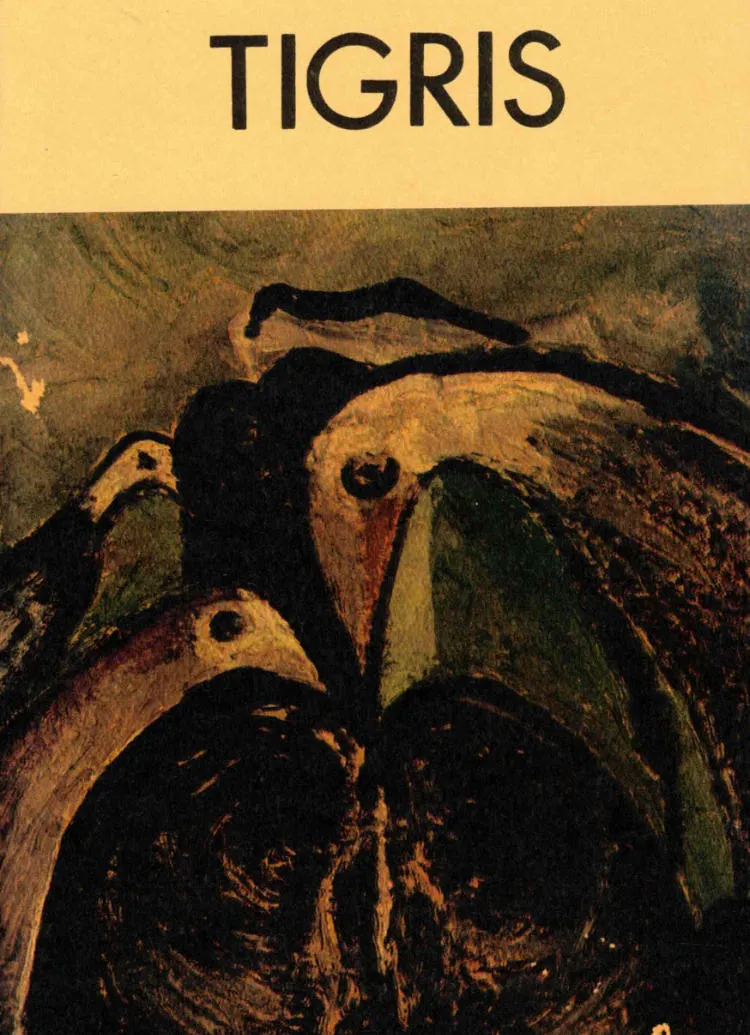
Cover of ESDS Archives 3 : Pascal Doury - carnet inédit c.97-99

Editions L'Amazone

ESDS Archives 3 : Pascal Doury - carnet inédit c.97-99

Pascal Doury

€15.00

Facsimilé d'un carnet inédit de Pascal Doury réalisé par Jonas Delaborde (Der Vierte Pförtner Verlag) et co-produit par les Editions l'Amazone, réalisé dans le cadre de la publication des Archives Elles Sont de Sortie suite à la parution de Choquer le monde à mort. Elles Sont de sortie. Bruno Richard - Pascal Doury.

Published in 2025 ┊ 32 pages ┊ Language: English

recommendations

Cover of Archive Dora Diamant #07

Editions L'Amazone

Archive Dora Diamant #07

Dora Diamant

LGBTQI+ €18.00

A collection of photographs from the archives of the icon of underground and alternative Parisian nights Dora Diamant.

A self-taught photographer, Dora Diamant has left thousands of photos. The Dora Diamant Association, custodian of this archive, and Éditions L'Amazone have joined forces to bring them to life by devoting a series of publications to them. Each volume of the Dora Diamant Archive was created by a different person and is the result of a subjective selection and arrangement specific to its author.

Figurehead of the Parisian underground and queer nights, photographer, DJ, multimedia and polymorphic artist, Dora Diamant was the daughter of Pascal Doury.

Selected by Yamil Farah and Mélanie Matranga.

Cover of Choquer le monde à mort – Elles sont de sortie – Pascal Doury – Bruno Richard

Editions L'Amazone

Choquer le monde à mort – Elles sont de sortie – Pascal Doury – Bruno Richard

Bruno Richard, Pascal Doury and 1 more

"Elles sont de sortie" is the title of a periodic publication launched in 1977 by Pascal Doury and Bruno Richard. The plural and feminine form of the enigmatic phrase "elles sont de sortie," chosen almost by chance, announces a protean work and often collective experience. From its origins to the most recent iterations, including Doury's more confidential individual trajectory after "Elles sont de sortie," Choquer le Monde à Mort traces five decades of a corpus of nearly three hundred publications. It addresses some of the most emblematic editorial works, as well as others that remain unpublished, alongside ambitious and sometimes scandalous exhibitions, few of which are documented.

This work is the result of several years of research, enriched by numerous firsthand interviews, and unfolds in three parts: a chronology and analysis of a singular and marginal artistic history, works and iconographic documents, and an anthology bibliography. Together, these elements reveal the complexity of an editorial object with porous boundaries, both in its forms and its contents, oscillating between graphzine, artist book, poetry collection, and personal journal. Its ramifications, status, and legacy retrospectively reveal the importance of a discreet yet seminal work.

Thus, "Elles Sont de Sortie" also serves as an opportunity to revisit the paths of two aesthetic and provocative artists, deeply devoted to their art and true free spirits in an art world often too narrow for them. It immerses us in a plethora of works that are intimate and raw, as well as subtle and refined, all in service of a project that, in Doury's words, aims to "shock the world to death."

Edited by Tiphanie Blanc, Jonas Delaborde, Anna Lejemmetel.
Contribution by Anna Lejemmetel.

Cover of Archive Dora Diamant #05

Editions L'Amazone

Archive Dora Diamant #05

Dora Diamant

LGBTQI+ €18.00

A collection of photographs from the archives of the icon of underground and alternative Parisian nights Dora Diamant.

A self-taught photographer, Dora Diamant has left thousands of photos. The Dora Diamant Association, custodian of this archive, and Éditions L'Amazone have joined forces to bring them to life by devoting a series of publications to them. Each volume of the Dora Diamant Archive was created by a different person and is the result of a subjective selection and arrangement specific to its author.

Figurehead of the Parisian underground and queer nights, photographer, DJ, multimedia and polymorphic artist, Dora Diamant was the daughter of Pascal Doury.

Selected by Clara Pacotte and Esmé Planchon.

Cover of David Robilliard Notebooks 1983-1988

Rob Tufnell

David Robilliard Notebooks 1983-1988

David Robilliard

Poetry €32.00

This book follows the first exhibition of Robilliard’s notebooks, ‘Disorganised Writings and Sketches’ with Rob Tufnell in Cologne in April 2019. It was made with support from the Elephant Trust and the book’s designers, A Practice for Everyday Life and with assistance from James Birch, one of David’s gallerists, and Chris Hall, custodian of the estate of Andrew Heard. The book is dedicated to Andrew Heard.

Rob Tufnell presents a new publication of extracts from the notebooks of the poet and artist David Robilliard (b.1952 – d.1988). After his premature death from an AIDS-related illness in 1988, Robilliard left a large number of notebooks in the care of his close friend and fellow artist Andrew Heard. These were obsessively filled with drafts of poems, diary entries, addresses and telephone numbers, blunt observations, quiet reflections, short stories, ideas for paintings, portraits and crude drawings. Robilliard’s superficially simple, pithy prose and verse is riddled with the dichotomies of an era that was both exuberant and miserable. His notebooks reveal his creative process, his interests, ideas, ambitions and then his illness but always embody his often repeated belief that ‘Life’s not good it’s excellent.’ 

Many of the books contain the inscription: ‘If found please return to 12 Fournier Street, London E1. Thank you’ – the home and studio of his patrons, Gilbert & George. In their lament ‘Our David’ (1990) they describe their protégé as: 

“...the sweetest, kindest, most infuriating, artistic, foul-mouthed, witty, sexy, charming, handsome, thoughtful, unhappy, loving and friendly person we ever met... Starting with pockets filled with disorganised writings and sketches, he went on to produce highly original poetry, drawings and paintings.”

The publication exists in two editions: yellow and pink.

Cover of Retour

Doubleyoutee Publishing

Retour

Tato Greve

Poetry €14.00

Retour is a book featuring a collection of drawings made on train journeys between Belgium and the Netherlands. It combines hand-written typography and train interiors, subtly highlighting cultural differences forming the countries’ border. 

Cover of distinguish the limit from the edge

Book Works

distinguish the limit from the edge

Theresa Hak Kyung Cha, Jimmy Robert

distinguish the limit from the edge is an intergenerational dialogue between Theresa Hak Kyung Cha and Jimmy Robert. Their connection emerges through the intersection of text and image between selected work from Cha’s oeuvre and Robert’s practice that share the formal strategies of the fold.

Robert’s work utilizes paper as a sculptural material, and his hand sometimes appears to shape the page. For Cha, the fold is present in her compositions enmeshing language through strategies of visual poetry, as in L’Image Concrete feuille L’Objet Abstrait (1976),  and Untitled (après tu parti) (1976) which are both previously unpublished. The possibility of overlaying one’s work with the other, emphasised by the book’s spiral-bound double spine, and reverse fold-outs, forges an intimacy, a shared sensibility, and an encounter with the corporeal. In conversation with editor Jacob Korczynski, Robert refers to Fred Moten’s In The Break, stating, ‘Suddenly time falters. Words don’t go there. And if words don’t go there, then what does?’ 

distinguish the limit from the edge is commissioned by Book Works, edited by Jacob Korczynski and designed by Wolfe Hall. The book is published in association with Participant Inc. with the support of the Ministry of Culture, Sports and Tourism and Korea Arts Management Services, after the exhibition:

flipping through pages keeping a record of time: Theresa Hak Kyung Cha & Jimmy Robert curated by Jacob Korczynski at Participant Inc., 6 September – 3 November, 2024, supported by a Fall 2020 Curatorial Research Fellowship from The Andy Warhol Foundation for the Visual Arts.

Cover of My Mother My Home

Archive Books

My Mother My Home

Chipo Chipaziwa

Performance €18.00

Who claims abstraction? What are the limits of abstraction? Are statelessness, dislocation and feelings of (un) belonging embodiments of an abstracted self that is in itself a work in progress? How could performance art—an artistic practice that places significant importance on presence and legibility of form—transgress into the realm of the abstract and the illegible in an effort to protect the artist’s likeness while shedding light on what it means to be in their body in relation to this world?

Chipo Chipaziwa’s My Mother My Home establishes itself as a query on the aspects of belonging and the artist’s own personhood that acts as the foundation of her practice. The question of where one’s personhood begins and ends within an artwork has appeared to be ever prevalent within the realm of visual art and is more relevant within the canon of performance art.

Writers: Chipo Chipaziwa, Denise Ferreira da Silva, Olumoroti George

Contributing artists: Margaret Joba-Woodruff, Sophia Lapres, and David Ezra Wang
Edited by Katrina Geotjen

Cover of Deer Book/Libro Venado

Radius Books

Deer Book/Libro Venado

Cecilia Vicuña

Inspired initially by Jerome Rothenberg’s translation Flower World Variations, which Cecilia Vicuña first encountered in 1985, Deer Book brings together nearly forty years of the artist’s poetry, “poethical” translations, and drawings related to cosmologies and mythologies surrounding the deer, and sacrificial dance in cultures around the world.

Woven like one of her quipu installations, Vicuña’s texts—which include original compositions in Spanish as well as English translations by Daniel Borzutzky—become meditations on translation, not just of the sacred nature of this animal but on how our understandings of ceremony and ritual are transformed, by this ongoing process. Taken as inspiration rather than conundrum, the impossibility of translation opens up poetic possibilities for Vicuña as she continues her lifelong exploration into the nature of communication across eras and distant lands, languages and shared symbols within Indigenous spiritualities.