Books
Books
French editions

SABR N°00 - It’s 6:18 in the morning, I got woken up by the Adhan a few minutes ago.
« [...] Mon moi superstitieux, ou mon moi spirituel, a pensé que je devais l’avoir entendu pour une raison. C’est peut-être pour ça qu’on a pas droit à l’appel à la prière en Occident, les sorcières astro “open chackra” girlies pourraient aussi le prendre comme un signe [...] »
La collection est inaugurée par Nesrine Salem, curatrice et éditrice de SABR/Collection, dans un numéro pilote.
À travers sa polyglossie, l’autrice célèbre la pluralité de son identité et conduit ses recherches autour des traumatismes intergénérationnels, du tokenisme et des pratiques de deuil.
SABR/Collection est une série de publications qui rassemble des œuvres littéraires de format court et de genres variés. Dirigée par Nesrine Salem, la collection souhaite mettre en avant les macro-réalités des auteur·ices choisi·es pour rendre visible le caractère intersectionnel des luttes.

Lassie, Des amis pour la vie
Ce que je vois, c’est comment un animal se détermine à créer une relation avec un garçon malheureux.
Fiction vu en boucle gamine, que je superposais à ma chienne, une colley comme Lassie.
Suivi par Émilie Ferrat.

Velvetyne Saved My Life, Libre Fonts for Everyone Since 2011
Sandra Chamaret, Velvetyne and 1 more
Since 2011, the Velvetyne collective has been dedicated to creating and distributing typefaces under open-source licenses. Its members advocate and promote an uninhibited typographic practice, guided by political principles and aesthetic risk-taking.
This monograph celebrates a generous collective creation—pioneering and recognized on the international scene—that continually questions and reinvents itself. Velvetyne Saved My Life reveals the distinctive workings of this unconventional structure within the contemporary type foundry landscape, its commitment to free-culture and open-source principles, its singular editorial policy, and its pedagogical practice.
The book is structured around a polyphonic interview conducted by Sandra Chamaret with the members of the collective, a series of in-depth articles on emblematic typefaces from the foundry, as well as an exhaustive catalogue of the more than 70 fonts published by nearly as many international authors.
Halfway between text and type specimen, this book is both a story to read and a manifesto to see.

Les Diaboliques Parlures
Les Diaboliques Parlures rassemble trois textes qui nous font découvrir une voix contemporaine majeure de la poésie et du théâtre queer. Ces œuvres, à la croisée du poétique, du politique et de l’intime, explorent le désir, la vulnérabilité, la marginalité et l’identité masculine et queer.
L’Ardeur déploie une langue brûlante pour interroger le désir, la passion et la communauté des outsiders, transformant l’ardeur en force vitale et émancipatrice.
One Night at the Golden Bar offre une écriture intimiste où le romantisme kitsch devient vecteur de poésie et de réflexion sur la vulnérabilité, l’amour et la monstruosité de l’humain.
Analphabet, quant à lui, questionne le langage, l’expression et les limites de la communication, confrontant le lecteur à la puissance de la langue et à sa capacité à révéler l’identité.

Hosted by Red Dust
Partie sur les sites de la dernière briqueterie artisanale de Riemst et de la recyclerie de briques d'Alexander van Mosselaer, Juliet Mérie en ramène un récit poétique qui explore notre rapport à la matière vivante et questonne le cours de la vie.
Loin d'être un documentaire, ses photographies créent un rapport ambigu entre la perception des espaces visités et l'allégorie qui s'installe. La possière se soulève pour dévoiler les lieux de vie et de mort des briques qui dessinent le paysage belge.

Goblinhood - en mode gobelin !
Enfin la traduction en français du best-seller de Jen Calleja, qui sera présente pour une lecture croisée. Repassez vos capes et astiquez vos chaînettes.
La figure du gobelin est espiègle, marginale, répugnante et fascinante et le mode gobelin peut être envisagé comme un mode de vie à part entière.
Jen Calleja, depuis son obsession pour les objets verts et les marionettes, ses souvenirs familiaux, son rapport au corps et au dégoût de soi, au chagrin, au sexe et au deuil, propose avec malice une pensée hybride entre essai, auto-fiction, poésie et théorie de la gobelinité.
En chacunx de nous, suggère-t-elle, sommeille un gobelin qu’il est temps de libérer.

Vrai travail
Le Collectif Occasionnel a organisé en Suisse deux expositions qui présentaient les oeuvres de personnes à la fois artistes et travailleureuses du sexe. Cet ouvrage prolonge leur travail en proposant des textes et des entretiens avec des Tds ou des alliéxes. Permettant l’auto-représentation des personnes interrogées, les entretiens mettent en lumière la pluralité des pratique du travail du sexe, mais aussi l’importance de construire des solidarités travailleuses, des outils pour défaire les stigmates et des perspectives de luttes intersectionnelles.

Affiliation
Mira Mattar, Judith Abensour and 1 more
Affiliation, de Mira Mattar, autrice londonienne issue de la diaspora palestinienne, explore des thèmes tels que le genre, la famille, la religion, la guerre, l’écologie, le colonialisme et l’amour, en lien avec des lieux comme la Jordanie, le Liban, la Palestine et le Royaume-Uni. Interrogeant nos affiliations personnelles et collectives, et la manière dont les systèmes de pouvoir influencent nos désirs et nos identités, le livre s’ouvre sur quatre Lettres d’Amman qui propulsent le texte poétique dans le mouvement du monde et attestent de la dynamique de l’exil palestinien, où l’éclatement, l’effacement et l’appropriation se mêlent avec les effets contemporains de la mondialisation.
La deuxième partie du livre, intitulée Affiliation (pour mon père) est un long poème rétrospectif qui court sur une trentaine de pages. L’écriture à la première personne de Mira Mattar met en tension des contextes politiques, domestiques, intimes, économiques où se déploient des affiliations coloniales, capitalistes, patriarcales, nationalistes. Elle en restitue les violents processus internes, passant du refus de se soumettre à l’impossible échappée. Dans Affiliation, on fait l’expérience d’être en dehors: en dehors de son corps, en dehors d’un pays, en dehors d’une pièce. Il n’y a aucune position stable, et le sujet se construit dans un éclatement constant. Peu de livres articulent aussi finement expérimentation formelle et nécessité de l’expression verbale. Affiliation est un flux de langage dont on peut sentir l’urgence à chaque vers.

Crue
L’Île-de-France a été engloutie. Submergée par de l’eau liquide. C’est à peu près tout ce que l’on sait. Crue est un long poème construit sur un rythme ternaire, une suite de tercets libres entrecoupés de symboles typographiques étranges dont la signification exacte semble avoir été perdue dans l’inondation. Il y a dans le va-et-vient soutenu du texte comme dans celui de la mer, ses gestes répétés, toujours successifs, quelque chose de l’automation ; l’acceptation sans révolte d’une nouvelle nature sous-marine hybride, plus uniquement humaine, à la langue noyée, gorgée de néologismes, méthodique, néanmoins sentimentale. Car ici la cruauté sinistre de la nature fait écho aux émotions du narrateur. Le paysage-état d’âme est désolé, apocalyptique mais comme résigné, nu. Crue sonde les abysses de la civilisation et des comportements humains. Peut-être un des textes les plus personnels de Théo Robine-Langlois.
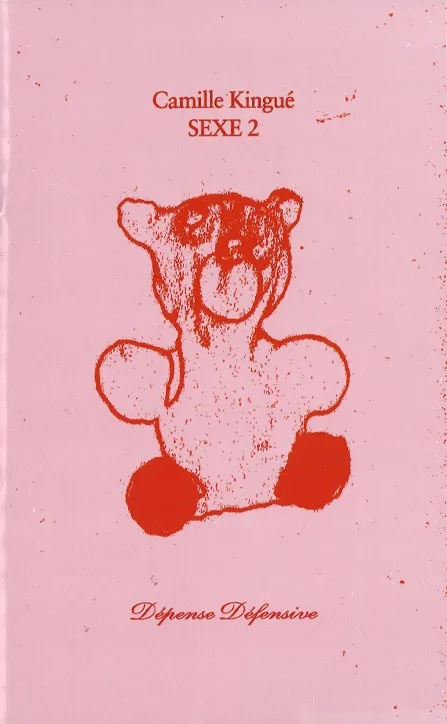
Sexe 2
Confession sur le désir (l’action et l’objet du), les liens de mutualité et de résistance, Sexe 2 alterne prose et versification en 27 fragments numérotés à l’adresse plus ou moins dure, plus ou moins sincère, plus ou moins formulée car plus ou moins éloignée du Toi et du Je. Camille Kingué s’attache à révéler, à voir quelque chose à travers son image réelle et virtuelle, agrandie et rétrécie, droite et renversée, déployant une recherche des principes de l’amour (l’amour comme amour, pourquoi est ce qu’il y a de l’amour) où la métaphysique et la compréhension de soi – donc de l’autre – n’ont jamais été aussi sexy.
Claire Star Finch, dans la magnifique préface qu’iel signe au début de l’ouvrage, écrit : « Après avoir lu tous les livres de Kingué, je ne sais pas si je crois en “l’amour”, que ce soit en tant que substantif absolu ou en tant que proto-résidu de tout ce que “le sexe” peut signifier. Mais je crois définitivement qu’il faut l’écrire. » Définitivement.

The Brotherhood
Carolina Bianchi, Thomas Resendes
The Brotherhood fait suite à La Mariée et Bonne nuit Cendrillon qui avait provoqué une onde de choc lors de sa première à Avignon où Carolina Bianchi amenait des réflexions sur la performance et la théâtralité, sur un lit d'histoires de viols brutaux et de meurtres de femmes.
Dans ce deuxième chapitre de la Trilogie des chiennes, Carolina Bianchi se penche sur la complexité de certains « pactes de masculinité », notamment sur les origines de la fraternité entre les hommes, mettant en lumière les codes mutuels violents qui contribuent à normaliser et perpétuer le viol et la violence sexuelle à travers leur lexique. Carolina Bianchi utilise les principes du théâtre pour articuler des voies possibles à cette discussion, créant des liens forts entre la représentation et le traumatisme réel, les structures de pouvoir dans l'art et la poésie radicale, les origines de la misogynie et une sexualité en crise. La structure de cette réflexion se révèle être un piège, affaiblissant l'auteurité de Bianchi et la transformant en un personnage qui subit les conséquences d'avoir scruté cette « fraternité » de si près.
Texte portugais (Brésil) traduit par Thomas Resendes.
-
The Brotherhood follows La Mariée and Bonne nuit Cendrillon, which caused a shockwave when it premiered in Avignon, where Carolina Bianchi explored reflections on performance and theatricality against a backdrop of stories of brutal rapes and murders of women.
In this second chapter of the Trilogie des chiennes, Carolina Bianchi examines the complexity of certain “pacts of masculinity,” particularly the origins of male brotherhood, highlighting the violent codes of conduct that contribute to normalizing and perpetuating rape and sexual violence through their lexicon. Carolina Bianchi uses the principles of theater to articulate possible avenues for this discussion, creating strong links between representation and real trauma, power structures in art and radical poetry, the origins of misogyny, and a sexuality in crisis. The structure of this reflection turns out to be a trap, undermining Bianchi’s authority and transforming her into a character who suffers the consequences of having scrutinized this “brotherhood” so closely.
Translated by Thomas Resendes.

Le Sacrifice comme acte poétique
Angélica Liddell, Christilla Vasserot
Mise en scène, écriture – pièces de théâtre, poésie, récits, journaux – et présence sur scène : tout est lié chez Angélica Liddell. L’art et la vie, la fiction et la biographie, la création poétique et la réflexion théorique entretiennent les uns avec les autres des liens évidents et complexes. Ce volume inclut une série de textes qui, depuis une perspective théorique, éclairent en partie la pratique théâtrale de leur auteur, contribuant à la construction d’une poétique toujours inachevée, basée sur une expérience vitale.
Dans cet essai recueillant douze conférences et entretiens, Angélica Liddell évoque la création artistique ainsi que son processus dramaturgique très organique et très violent car « la violence poétique est nécessaire pour combattre la violence réelle ».
-
Direction, writing—plays, poetry, stories, journals—and stage presence: everything is interconnected in Angélica Liddell’s work. Art and life, fiction and biography, poetic creation and theoretical reflection maintain obvious yet complex connections with one another. This volume includes a series of texts that, from a theoretical perspective, shed light on the author’s theatrical practice, contributing to the construction of an ever-unfinished poetics rooted in lived experience.
In this essay, which brings together twelve lectures and interviews, Angélica Liddell discusses artistic creation as well as her highly organic and violent dramaturgical process, for “poetic violence is necessary to combat real violence.”

Comme des œufs, comme des pierres
Dans l’imaginaire collectif, l’œuf évoque la fragilité et la promesse de vie, tandis que la pierre renvoie à la permanence et à la disparition. Cette édition tente de déplacer cette opposition à travers une forme fragmentaire. Il rassemble des notes écrites au fil du temps. Sa production suit cette logique : imprimé en offset, le projet prend en compte les formats de papier afin d’en optimiser l’usage. Les chutes sont utilisées dans un cahier complémentaire, rassemblant textes et images laissés en marge. La reliure, cousue à la main au fil de coton, reste simple et légère. L’objet se conçoit comme quelque chose à manipuler et découvrir, entre publication et transmission plus intime.
« J’ai donc cherché une forme simple, en évitant tout formalisme superflu. Le projet repose sur une question : est-il nécessaire de produire ce type d’objet, et pourquoi ? »
In the collective imagination, the egg suggests fragility and the promise of life, while stone evokes permanence and disappearance. This edition seeks to move beyond this opposition through a fragmentary form. It gathers notes written over time. Its production follows the same logic: printed in offset, the project takes paper formats into account in order to optimize their use. Offcuts are used in a supplementary section, gathering texts and images left aside. The binding is hand-sewn with cotton thread, remaining simple and lightweight. The object is conceived as something to handle and discover, between publication and a more intimate form of transmission.
“So I sought a simple form, avoiding unnecessary formalism. The project rests on a question: is it necessary to produce this type of object, and why?”

touxs mes queers sont des poéte·sses
Car archiver nos écrits et nos paroles n'a jamais été aussi important, car il faut rendre compte de nos existences, de ce moment, pour nous et pour les futurs queers en recherche de repères oui, nous avons écrit, donc oui vous pourrez écrire aussi ! oui, nous avons existé, donc oui, vous existerez aussi ! car oui, nous sommes toustes poéte·sses ! car nos vies sont des poèmes et être queer est de la poésie car touxs mes queers sont des poéte·sses!
Because preserving our writings and our words has never been more important, because we must bear witness to our lives, to this moment, for ourselves and for future queers in search of guidance yes, we have written, so yes, you can write too! yes, we have existed, so yes, you will exist too! because yes, we are all poets! because our lives are poems and being queer is poetry because all my queers are poets!

Mouvement #128
How the right wing is ruining culture, part II; in Sicily, humanitarian flotillas bound for Gaza are on the US Army's radar; Alice Diop and the Black Venus; Iraqi singer Sajda Obeid unites the country; theater according to Sylvain Creuzevault; the British left reveals fascism...
Founded in 1995, Mouvement is a French “indisciplinary cultural magazine”, published quaterly.

Mouvement #129
The new “left-wing Catholics”; education under Trump and the American brain drain; theater, porn, and bullfighting with Lorraine de Sagazan; an X-ray journey with the nuclear nomads; soccer, Gen Z, and algorithmic governance in Morocco; Pedro Rhino, cinema at the end of the neocolonial mirage...
Founded in 1995, Mouvement is a French “indisciplinary cultural magazine”, published quaterly.

Éclairages : 12 entretiens et analyses sur les violences d’État
Filippo Ortona, Francesco Sebregondi
Depuis 2020, l’ONG d’investigation Index mène des contre-enquêtes sur les violences policières en France. De la mort d’Adama Traoré à celle de Nahel Merzouk, ses rapports ont pour objectof d’établir les faits dans des affaires où le déni est la norme.
Ce livre rassemble des entretiens et analyses publiés par Index entre 2024 et 2025, pour exposer l’arrière-plan des affaires qu’elle documente. En donnant la parole à des sociologues, juristes, chercheur·euses, journalistes et militant·es, l’ensemble explore différentes fomes de violences institutionnelles, les logiques discriminatoires qui les traversent, ainsi que les espaces où elles s’intensifient : des quartiers populaires aux outre-mer ou encore aux zones de frontières de territoire.
Éclairages se veut une ressource pour comprendre les conditions s’exercice des violences d’État aujourd’hui.
Contributions de Nour Abuzaid (Forensic Architecture), Matteo Bonaglia, Magda Boutros & Aline Daillère, Rémi Garayol, Thomas Chambon (Utopia 56), Groupe Retrace, Gwenola Ricordeau, Mathieu Rigouste, Sebastian Roché.

Friends and Family
This first monograph includes all of Van der Stokker's murals and most of her drawings.
In an interview in this collection of Van der Stokker's wall paintings and drawings, John Waters says, 'Millions of teenage girls have drawings that are good, but no one ever tells them that they are'. Van der Stokker celebrates teenage girlishness, and has since 1983 found both immense support and immense rejection within the art world community. Includes interviews with Van der Stokker and a complete presentation of her works in situ, printed on full-page spreads on quality mat paper.
Dutch-born van der Stokker (1954, Hertogenbosch), active artist-gallery owner on the East Side of New York in the 80's, now lives between Amsterdam and New York. She developed pictorial murals with happy candy-coated slogans that incited acid sarcasm from her contemporaries.
Texts by Anne Pontégnie, Éric Troncy, John Waters/Charles Esche, Mirjam Westen, Amy Kellner.

Insula
Insula est un roman d’anticipation aussi intime que spéculatif qui mêle autofiction, confession intime, esthétique queer, jeu vidéo, et une formidable vision apocalyptique du monde contemporain. Insula (île, en latin), c’est d’abord le nom d’un jeu clandestin de réalité augmentée d’un nouveau genre : il suffit d’ingérer une pilule stupéfiante et illégale pour accéder à la simulation. Théo, le narrateur, en apprend l’existence lors d’une fête de cruising queer, au sommet d’un immeuble désaffecté du centre de Londres, dans une atmosphère d’apocalypse. Un garçon s’effondre à ses pieds quelques minutes après avoir consommé la substance, et pleure des larmes de sperme. Mais Théo doit tout interrompre pour se rendre au chevet de son père mourant, dans un hôpital parisien. C’est le moment de la dernière nuit, du dernier souffle et des derniers aveux. Le mot insula revient, cette fois dans la bouche des médecins, pour désigner une partie flottante du cerveau ravagée par la maladie, comme une île qu’on a dans la tête. Alors que les médias annoncent la disparition de plusieurs personnes qui auraient pris une pilule d’insula, l’étau se resserre sur Théo qui se résout à son tour à prendre un cachet prohibé avec l’intuition que les avatars ne sont que des fantômes, et qu’il pourra ainsi retrouver son père dans l’autre monde.
Ce roman aux accents dantesques (vision d’un enfer digital qui n’est que le double du monde réel), entre vertige technologique et exploration du désir, est marqué par la pensée critique du réel et la pop culture (Final Fantasy, Kanye West). Il ouvre un univers parallèle pour raconter l’histoire d’une traversée intime, convoquer des époques, des territoires et des identités multiples, dans une seule et même histoire qui navigue entre témoignage et fantasme. Dystopie, histoire d’amour et de fantômes, enquête et cauchemar, Insula est un portail entre plusieurs dimensions, le vrai et le faux, le réel et le digital, la vie et la mort.

Peau d’Ana
Ana Jotta, Alice Dusapin and 2 more
A long conversation about the work and life of Portuguese artist Ana Jotta, accompanied by 60 previously unpublished photographs of her homes (in Brazil, Morocco, and Zanzibar) and her years in theater in the late 1970s.
“Peau d’Ana” is a conversation with the Portuguese artist Ana Jotta (1946), conducted in January 2024 by Alice Dusapin, Martin Laborde, and Baptiste Pinteaux in the Lisbon apartment that Ana has occupied for over forty years. Through the history of both this unique place and the various other homes in which she has lived — Tangier, Madeira, Brazil, and the Portuguese countryside — Ana Jotta mischievously and playfully invites us to revisit fragments of her life. She discusses her childhood, her work as an actress and set designer, her first exhibitions in the mid-1980s, and her life in the studio. She talks about the importance of pleasure and frustration, her love of painting and literature, and the role of the irrational in her work. She shares her dislike of families, her friendships with artists and other animals, and the detours necessary for finding, and preserving, the energy essential for work… and for sleep. She disarms with the precision of her words, which describe a solitary, demanding, and profoundly vivid existence where mediocrity has no place. The interview, published in French and English, is accompanied by some sixty previously unpublished photographs and documents.

Robida 11 - on orchards
The eleventh issue of Robida magazine, is collection of essays, photographic explorations, visual narratives, art projects, and poetic texts all centered on the orchard as landscape and fruit trees as powerful metaphors and living archives of stories and memories.
Robida is a situated, multilingual cultural magazine published by Robida collective. Each issue explores a topic connected and generated by Topolò/Topolove, the village on the border between Italy and Slovenia where the collective is based.
The chosen topic is thrown into the world and interpreted by people who have never been to Topolò. What people send back after the open call is not only a contribution to the exploration of a defined theme but also a new interpretational tool to explore the collective’s relation to Topolò.
CONTRIBUTORS
Alessandra Saviotti, Alja Piry, Aljaž Škrlep, Alessandra Faccini, Anastasia Kolas, Andrea Martinelli, Andreina Trusgnach, Angelica Calabrese, antonisotzu, Antônio Frederico Lasalvia, Cassidy McLeod McKenna, Companion–Platform, Danijel Losic, Derek Scott Russell, Dora Ciccone, Eda Aslan, Elena Braida, Elena Rucli, Emmy Elvira Wassén, ERBA, Francesca Farris, Francesca Battaglia, Francesca Lucchitta, Giovanni Aloi, Giulia Bertuletti, Gregor Božič, Greta Biondi, ife collective, Jana Kiesser, Jannete Mark, jean ni, Jennifer Shin, Jessica Hollis, Jip van Steenis, Julina Vanille Bezold, Kristína Mičová, Lalie Thébault Maviel, Laura Savina, Lina v. Jaruntowski, Lindsay Buchman, Luca Vettori, Luca Battista, Ludovica Battista, Luigi Coppola, Luisa Gastaldo, Maria Elena Vecchio, Marta Pagliuca Pelacani, Martina Havlová, Martina Motta, Mia Frances LaRocca, Michael Marder, Nataša Kramberger, Ola Korbańska, Paolo Bosca, Rachele Daminelli, Rosie Ellison-Balaam, Sasha Arutyunova, Serena Abbondanza, Silvia Mascheroni, Stephanie Rebonati-Cannizzo, Teresa Carretta, Terry Cueball, Vesna Liponik, Victoria King, Vida Rucli, Vittoria Rubini
Languages: English (mainly), Italian, Slovene, French, German + local, minoritarian lan(d)guages and dialects from the regions of Benečija, Valchiavenna, Abruzzi, Bari, su Logudoru, Corsica, Gorenjska, Cetuna and the White Carpatians region.

YouYou Group – A li'nuage
Handmade artist's book combining drawings, photographs, and archival materials. This publication reflects on the YouYou Group's ten-year journey and its evolving relationship with space. It marks a transitional moment from the group's long-term engagement with public space toward a growing understanding of spatiality and collective presence.
YouYou Group is a Belgian choir that specializes in what is known in Arabic as zaghareed. This trilling cry is used by women at weddings and festive occasions, but also at funerals. Youyou is the French name for zaghareed. Depending on the regional origin, it is also called kululu, tsahalulim, or irrintzi. It is a long, shrill tone that is modulated (by the throat, glottis, or rapid tongue movements) and can be heard from far away. Brussels artist Myriam Van Imschoot was one of the founders of this singing group.

Publiek Park
Jef Declercq, Anna Laganovska and 2 more
The third Publiek Park publication – Walking Guide – combines essays, archival fragments, and artistic voices to trace both the exhibition route at Plantentuin Meise and the historical path that led from the creation of the Jardin Botanique in the heart of Brussels to its relocation outside the city. Following the logic of a quilt, layering different perspectives, textures, and timelines, the book connects artistic narratives with history and reflections on urban gardens, public space, and botanical imaginaries. Just like the exhibition, the publication offers not merely a portrait of a place, but a reflection on the multiplicity that defines it.
Alongside documentation of the exhibition and contributions from the participating artists, this year’s Walking Guide features writings by Nikolaos Akritidis, Denis Diagre-Vanderpelen, Koen Es, Lana Jones, François Makanga, Noam Youngrak Son, and Jean Watt. The two parks are portrayed in photographs by Michiel de Cleene, with book design by Victor Verhelst and Corbin Mahieu bringing all of these elements together.
This publication is made with the generous support of Plantentuin Meise and all partners.

les petites histoires
Sam Buouffandeau, S. M. Drogo and 2 more
les petites histoires sont quatre courtes fictions contemporaines. Entre le lonely langoureux New York des années deux mille, le pont poétique et capricieux de Louis 2 de Bavière, l'histoire vraie de Sandy Stone dans les seventies et la satire cinglante et drôle d'une galerie d'art, ces livres sont de brefs univers vivants et curieux.
En 2025, quatre petites histoires sont racontées par quatre auteurices dans quatre livres : L'effondrement du pont de Sam Bouffandeau ; The Gallery de S. M. Drogo ; Exit de Juli Le Nahelec; «Que faire de Sandy Stone?» de Mia Trabalon.
L'édition des petites histoires a été imaginée par Élise Comte, Chloé Delchini, Perrine Estienne, Gabriel René Franjou, Justine Gensse, Bastien Hauser, et Cyprien Muth. Ce collectif d'éditeurices est né à Bruxelles, où les petites histoires ont été imprimées, chez Graphius.
La maquette, réalisée par Chloé Delchini, à été composée avec Otto, une typographie dessinée par Sam de Groot et Laura Opsomer Mironov, chez Dinamo Typefaces.