Zines
Zines

The Rush
THE RUSH is an anthology of heady, imminent, erotic queer writing by 24 poets from across the English-speaking literary landscape.
Contributions by Briana Armson, Janette Ayachi, Blush Bullseye, Ash Burnel, Troy Cabida, Eden Chicken, James Daniello Jr, Zack Darsee, Meredith MacLeod Davidson, India Glover, Parel Joy, Conor Kirwan, T.S. Leonard, C.H. Lieberman, Ian Macartney, Sean Patrick Mulroy, Tom Nutting, Stuart Rawlinson, Patrick Paridee Samuel, L Scully, KD Sims, Thomas Stewart, Mark Ward and Luke Worthy.
"Rebellion and bucking, rapture and glee, an unhinged paradise, disembodied or entirely embodied to the core and vein to the tune of a hyena laugh with the swishswishswishes of a suicidal cock. This inner thigh roller coaster knows nothing about embarrassment, only ectoplasmic pearls, the flocksqueeze, and the rush of milked venom pouring out in language."
—Erin Honeycutt, author of Dear Enheduanna and co-editor of Woman

mnemotope 009
Various
this issue of mnemotope feels especially charged; charged with politics as well as humour, absurdity, gentleness and a vice-grip on the present moment. getting to share in the vitality and emotion and outrage and stillness and hilarity and chaos within these words reminds us that there are other people living different lives who feel as intensely as we do, and we’re not going mad - or at least, not going mad alone.

A Common Language is One of Holes
Art is charged with what cannot but hide and yet wants to be known! Like the city, it is defined by a feature that is shared but invisible.

A4 review N°5
Amandine André, Gary Farrelly and 2 more
Founded in 2023, A4 is a poetry review which showcases and explores contemporary writings practices. Run by Littérature Supersport collective, the object is seen as the extension of their events. The review takes the form of 4 postcards which, when placed side-by-side, form an A4-sheet. A light (even precarious) format for literature that slips into the back pocket of pants and hangs on fridge doors. Each issue features unpublished texts by 4 authors.
This issue presents texts by : Amandine André, Gary Farrelly, Fanny Garin, Michael Strunge.

Oracular Opuscules
THE HOLE. AN INSURRECTIONARY POETICS by Katharina Ludwig was recently published by MA BIBLIOTHÈQUE. In parallel/in interruption with this book are three opuscules—The Oracle of Lips, The Oracle of Tongue, and The Oracle of Teeth.
“At the limits of language, a hole opens and voices meet, channelled from the abyss through temporalities and histories. Jacques Lacan analyses the wounded text; Hélène Cixous whispers to anarchist poet Katerina Gogou; theorist Carla Lonzi, artist Chiara Fumai, and her army of women dissidents invade the symbolic realm of father, state, law, and religion. A canon of disorderly voices from philosophy, psychoanalysis, poetry, and fictional characters converse, connected by the appearance of K. The Hole is an epistolary work written in multiple forms, approaching the unsayable in a jouissant textual body, considering broken narratives and minor literatures through an investigation of (textual) holes, wounds (trauma), and the mouth (voice/language). Poetry operates as strategy of resistance and revolt, against systemic power structures and against closure. Wounds must stay open to speak.”
3x zines, Varying sizes, Hand sewn

Proverbs of a She-Dandy
These proverbs were originally published in 2018 in Vancouver by the Morris and Helen Belkin Art Gallery. With permission from the author the text has been styled into a bootleg and risoprinted in medium blue ink.
“Menopause, Gardanne said in 1821, is the loss of the signs of female reproductive ability. ‘Huge dangers’, he warned, ‘precede, accompany, follow the cessation of this function’. The illustration on the cover of his book shows a broken ceramic pitcher. Gardanne was at the forefront of what now would be called the ‘medicalisation of menopause’, which is to say, its treatment as an ailment, both physical and psychosomatic, of the female body.”
Proverbs of a She-Dandy elaborates on a persistent theme in feminist art and literature over many past decades: a skeptical yet desirous exploration of the flâneur as a figure of agency for women. Robertson finds in Charles Baudelaire’s dandy a tangible presence for old women in public spaces.

Give Piss A Chance
A collection of notes, pictures, social media posts, about the legendary “Piss Goblin” who is / was (?) active in the Berghain bathrooms. This edition – handmade by Cutt Press – beautifully + playfully embodies its subject, as orange plasticky sheets are interspersed in between the text pages, and marble paper half-covers shimmer, in an evocation of golden torrents . . .
Give Piss a Chance. A Williing Suspension of Consequences was first published in the context of the For Real exhibition at DAADGalerie, Berlin, in 2025.

Body Work For The Hybrid Body Of An Institution
‘Bodywork for the hybrid body of an institution’ traces the visible and invisible dynamics within self-organized spaces. This publication is not guided by instructions, but offers glimpses into shimmering moments of dissent, togetherness and re-doing the anatomy of institution by including its entangled ecologies. It is an invitation into the visceral sensation of bodywork through the very act of reading.

The Adventures of Leucippe and Clitoris
Various
Leucippe and Clitoris is based on one of the first romantic novels written in 192 AD by Achilleas Tattius. A very Katsarida Press retelling of an ancient story.
This is the second WOMANWOOD Kindling, a reprint of the original zine first published in Athens
WOMANWOOD Kindling is devoted to full-length chapbooks/zines published in between releases of WOMANWOOD, the smut gazette.
Riso-printed in an edition of 60, bound by blue linen thread with embellishments from the riso scrap pile.

How To Do Things With Groups
STARTING POINT: ALL GROUPS HAVE AN UNCONSCIOUS
This project developed from a shared experience: groups we believe should exist and succeed, from mutual aid collectives to communist cadres, struggle with difficult and often unexamined inter-psychic group dynamics. We take it as a starting point that groups, by their very nature, elicit and enact painful and confusing states, like over-dependence on a leader or fear of contamination. We believe that these dynamics play out beneath the surface and alongside whatever the group is trying to do together. In other words, any group, like any individual, has an unconscious.
OUR BIG QUESTION: WHAT DOES THIS MEAN FOR GROUPS DOING POLITICAL WORK?
Groups break down for all kinds of reasons; political organizing is often brutal, exhausting, disappointing work. Feelings of heartbreak and betrayal, resentment and shame, are common. These can be painful, difficult aspects of group life to discuss. They are also often dismissed as ancillary to the real work of political struggle, especially in times of unabating crisis, genocide, and war.
Although interpersonal drama can be taken up in excess–and distract from our work–group dynamics are not mere distraction, and our hesitations about discussing them do not make them disappear. Ironically, in fact, when groups treat relational dynamics as merely superficial or deleterious, they often wind up mired in confusion about what any given internal conflict is “really” about. Often the confusion is posed as not being able to discern what is interpersonal strife and what is political disagreement—an aggravating situation that, we’ve observed, comes up constantly in groups’ narration of their own breakdown. There are no easy formulas for working through these dimensions of group life, but we believe that being undisciplined about them makes it harder for groups to work together productively—or, for that matter, to separate “well.” This pamphlet offers concepts and questions that you can bring to your own group to perform a group inquiry, to think about what might be happening below the surface.
Groups Group is a collective of clinicians, organizers, writers, artists, and scholars interested in group dynamics in the everyday life of all forms of left social movements. We also do internal process work, popular education, and consult with groups.

Blank Stare
Blank Stare is the first publication in the CommonWealth series, published by Chillzone.
Compiled of graffiti written in the streets of Iran, combining the urgency of emotional expression amidst the political suffocation of people during the 2026 government-imposed internet blackout.
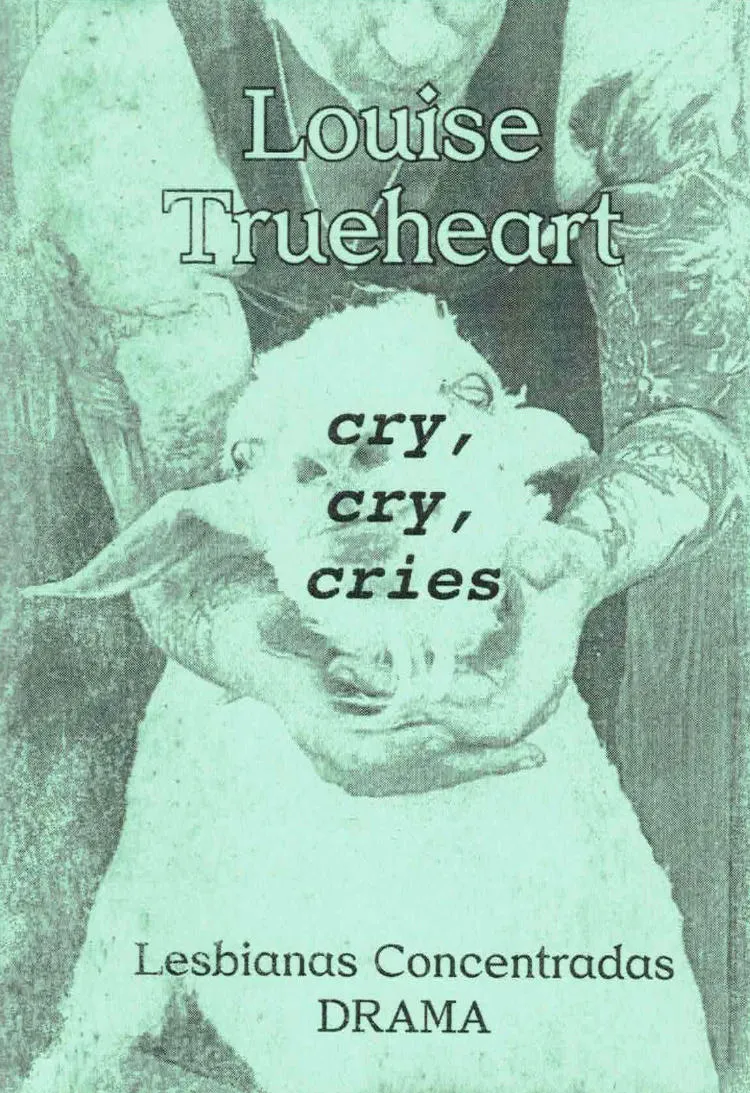
Cry, cry cries
The text is a chapter of a work in progress novel called Lamb. It weaves together the idea of sacrifice in the Bible and pop culture through ‘the liquid gist of sincerity itself’: crying.
Is the third publication of the series " Lesbianas Concentradas DRAMA".

CROSSLWORD #2
Various
Lesbica Enigmistica is a queer-centered crossword by TOMBOYS DON'T CRY built by the queer community, for the queer community.
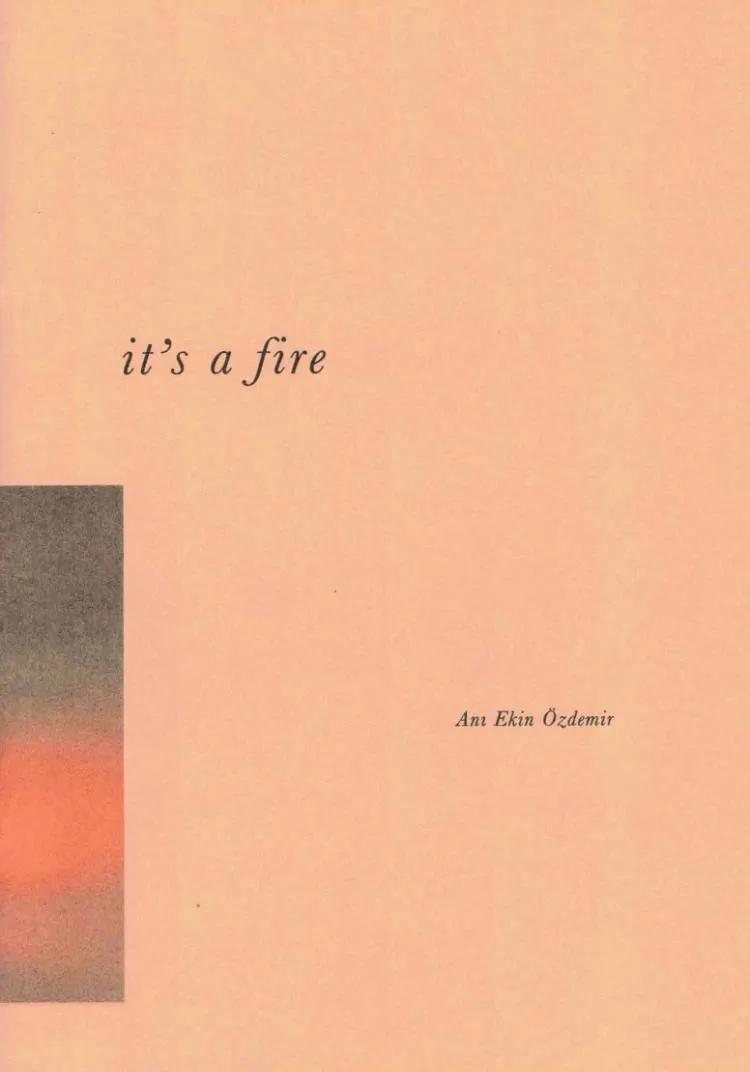
It's a Fire
It's a Fire is a collection of poems that weaves together dreamt and experienced situations, written in movement, with the intensity of senses, weather conditions, and the impossibility of fulfilment and ownership—which also makes it a reflection on desire as a force that disorganizes capitalist productivity, disciplined subjectivity, and neoliberal self-improvement. Along the way, it burns, contaminates, multiplies, and keeps on desiring.

Manifest ( ) gathered angry woman loving
Chiara Di Luca, Emma Burel and 2 more
Words gathered from The Carrier Bag Theory of Fiction (Ursula K. Le Guin, 1986), Natural Enemies of Books (MMS, 2020), Non credere di avere dei diritti (Libreria delle donne di Milano, 1987), Dada Cannibalistic Manifesto (Francis Picabia, 1920) and WITCH (Rebecca Tamás, 2019). A first version of this poem/pamphlet was made in the context of See What I Mean, a workshop by Phil Baber at Antwerp’s Royal Academy of Fine Arts, october 2024.

Campism Divides Struggles: How Iranians and Palestinians Forced into Opposition
Various
In this interview, Palestine solidarity activists form the Chinese diaspora speak with Iranian activists in exile about the uprising that took place in Iran in January 2026, comparing notes about resistance to various forms of authoritarianism.

From Palestine to "Xinjiang": Forced Labour and Capitalist rule
Various
For a long time, Israel and the West, led by Europe and the United States, have used hasbara and neoliberal discourses to hide their colonial plunder of Palestine, while today China and Russia are also whitewashing their own imperialist practices by aligning themselves with authoritarin government and projecting an image of leading resistence to western hegemony.
This publication analyzes the structural similarities and differences between forced labor and capital exploitation of Palestinians and Uyghurs from left-wing perspective. The author hopes to dispel the myth of campism and call for inter-racial/-ethnic/-national proletarian solidarity against oppression of colonization, capital and totalitarianism.

Testimony From A West Bank Village: ‘Illegal Life’ Under Occupation
Various
Resistance dispatch 002
In 2024, the documentary No Other Land, co-produced by Palestinian and Jewish activists from Masafer Yatta drew internattional attention at film festivals, bringing the long-standing occupation, demolitions, and violence in the region into broader public view.
The starting point of this publication emerged from an impromptu decision to draw a family tree covering roughly five hundred villagers of Umm al-Kheir. The author follows two threads simultaneously: one traces verifiable institutional and geographic transformations, tracking how a community is systematically rendered illegal through planning regimes and court rulings; the other comes from lived encounters, oral testimony, and the moments when people entrusted me with their names, their kinship ties, and their past.

A Letter from a Tehran Prison
This story was written by a Chinese activist/writer about her arrest and detention during the waves of resistance in China in late 2022. To evade censorship, she disguised it as a translation—told through the voice of an Iranian Kurdish woman amid the “Woman, Life, Freedom” uprising happening at the same time.
After fleeing China, the author reclaimed the story through footnotes—uncovering hidden meanings and restoring its Chinese context. What first read as an Iranian story became, on re-reading, a coded Chinese narrative. Iran stood as both real and metaphorical—a displaced symbol, through which the interconnected struggles in different movements echoed.
The two waves of reading, months apart, became part of the story’s form. This “non-nonfiction” reveals a paradox: in China, truth must appear as fiction or elsewhere to be told—making the fiction more real than reality itself.
Two years later, the piece was translated “back” into Persian by an Iranian Kurdish activist. And now, it arrives here, in this zine of tripped, layered languages.
Author: Wu Qin
English Translation: Aaris WOO and Yixi
Farsi Translation: Somayeh Rostampour
Visual & Layout: Maoyi, If A, Hu Jiamin
Interior illustrations: Hu Jiamin
Published by Tofu Stand (Tofulogy 002)

Revolutionary Tofu
Revolutionary Tofu. Transnational Flows in the Making of Chinese Anarchism, through the clue of soy, attempts to resurface the historical threads of Chinese anarchy in the early 20th century and the transnational flow in the making of it, weaves between France and China, from Manchukuo to São Paulo. Revolutionaries from different regions encountered one another in various historical moments, quietly opening up an alternative path that history might have taken.
The story was first published in 44 Monthly (September 2022) in China , revised, translated and printed in Berlin in 2024.
Written by Wu Qin
Designed by IfA
Published by Tofu Stand (Tofulogy 001)

Terra Nova
Esther De Soomer, Rudolph Glitz
Terra Nova combines fragments from a novel in the making by Esther De Soomer, in which she explores the parallels between the loss of language and forest dieback, between climate grief and linguistic mourning. Reflecting on her own relationship with language and multilingualism, she traces the feelings of grief that accompany the loss of German, one of her mother tongues. Drawing on existing narratives — such as fairy tales and family stories — she examines the critical state of the disappearing Hambacher Wald in Western Germany and presents language as a means to name and hold on to things.

SABR N°04 - Half a life
“Perhaps much of what we once believed was never truth but a gentle and necessary illusion.It was something we chose quietly and almost unconsciously so we could continue without falling apart.”
Bayan Abu Nahla is a visual artist born in 2001 in Gaza, Palestine. Her artistic practice functions as a visual diary, documenting and reflecting rapidly evolving events, both before and after the genocide. Through her work, she explores realities and daily living conditions often unknown to those who have not lived in Gaza.
SABR/Collection is a series of publications that bring together short literary works in a variety of genres. Curated by Nesrine Salem, SABR/Collection wishes to highlight the macro-realities of the authors chosen, to make visible the intersectional nature of struggles.

SABR N°03 - Perles à compter
« Quelques perles coulent entre ses doigts. Les récits de Larem se délient du temps que l’on connaît. Elle raconte, superpose, recule et avance, jouissant des temps qu’elle invoque. »
Emma Berger-Pierre est artiste plasticienne et chercheuse. Dans son travail, elle reprend les objets de ses grands-parents pour tirer des récits familiaux de l’immigration algérienne, les enjeux liés aux guerres coloniales et aux banlieues françaises, plus particulièrement Mantes-la-Jolie. Liée à la silenciation de ces histoires et des violences, elle tisse les liens intimes et systémiques de continuation des stratégies et ambiance de guerre, et des résistances, qui se perpétuent dans les quartiers populaires et dans la sphère familiale.
SABR/Collection est une série de publications qui rassemble des œuvres littéraires de format court et de genres variés. Dirigée par Nesrine Salem, la collection souhaite mettre en avant les macro-réalités des auteur·ices choisi·es pour rendre visible le caractère intersectionnel des luttes.

SABR N°02 - Un scorpion dans l’épicerie
« Jusqu’à ce soir-là, je ne me doute pas qu’il y a des scorpions en France. Dans mon esprit, tous les scorpions vivent en Algérie. Je ne sais pas exactement ce qu’est l’Algérie, je n’y suis jamais allée, mais je sais, grâce à ma mère, que je suis scorpion “du deuxième décan”. »
Lydia Amarouche est directrice éditoriale, autrice et curatrice. Son travail puise dans l'exploration de documents d'archives, une matière première qui lui permet en particulier d’aborder la question du passé et du présent colonial. En 2020, elle fonde Shed publishing, une maison d'édition indépendante publiant des essais de critique sociale et politique ainsi que de la littérature jeunesse.
SABR/Collection est une série de publications qui rassemble des œuvres littéraires de format court et de genres variés. Dirigée par Nesrine Salem, la collection souhaite mettre en avant les macro-réalités des auteur·ices choisi·es pour rendre visible le caractère intersectionnel des luttes.