Artists' Books
Artists' Books

Sonnet(s)
A lost gem of permutational conceptualism from a key figure in artist's book culture, available again
Known internationally as one of Mexico's most important conceptual artists, Ulises Carrión (1941-89) played a decisive role in defining and conceptualizing the genre of the artists' book through his manifesto, The New Art of Making Books (1975), which he wrote soon after the 1972 publication of SONNET(S) and his move from Mexico City to Amsterdam, where he opened the legendary bookshop gallery, Other Books and So, the first space dedicated exclusively to artists' publications and an important precursor to such artists' book hubs as Printed Matter.
One of Carrión's earliest bookworks, SONNET(S) represents a landmark shift in the artist's output from poetry to artists' books. Here, Carrión takes a single poem by Dante Gabriel Rossetti through 50 typographic and procedural permutations. This republication is supplemented by new essays on Carrión's bookworks by contemporary artists, writers, and scholars from Mexico, Europe and the US.
Published March 2021

Index of Operational and Code Names
Le titre du livre « Index of operational and code names » reprend l'intitulé d'un document trouvé sur Internet constitué d'une liste de 437 mots anglais classés par ordre alphabétique et accompagnés de brèves indications concernant les opérations militaires pour lesquelles ces mots ont servi de noms de code.
Ce document a inspiré à Diane Guyot la série « Index War » réalisée selon un protocole simple consistant à produire un dessin pour chaque mot de la liste.
Composé de 86 dessins issus de cette série, certains reproduits pour le support du livre, d'autres présentés au sein d'un cahier photographique tels qu'ils sont aujourd'hui accrochés dans les intérieurs de leurs propriétaires, et d'une partie textuelle placée en fin de volume qui restitue l'intégralité du document source, le livre, comme le suggère la mention volume 1 qui accompagne son titre, ne marque pas le point d'achèvement de l'œuvre mais témoigne au contraire d'un processus en cours.
L'articulation des composantes de l'œuvre dans l'espace du livre en constitue en mème temps une nouvelle version, à la fois spécifique et autonome. L'activation du dispositif codex/index invite le lecteur à une méditation sur la notion de code, où s'entrecroisent sémiotique de l'image, technique de propagande et technologie de l'information.

For Chris Mann (Open Space Magazine #22)
Dorota Czerner, Elaine Radoff Barkin
Special issue of this US magazine dedicated in its entirety to the late Australian artist/compositional linguist/raconteur Chris Mann, who died in 2018. The magazine contains tributes from Mann associates and admirers, including Warren Burt, Amanda Stewart, Pi-0, Ronald Robboy, Linda Kouvaras, Alvin Lucier, Ruark Lewis, Annea Lockwood, as well as Mann’s own writing and an interview with him by Philip Blackburn.
88 pages bound in soft-cover glossy colour cover by Brigid Burke.

DRINK DEEPLY AND DREAM
Drink Deeply and Dream by Elspeth Walker is an ethereal, offbeat short story about wannabe vampires with a Marxist bent and their search for salvation from capitalism via eternal bloodlust.
Paperback, Staple Bound and Offset Printed

Schismatics
Schismatics consists of 10 short stories, in a fictitious way dealing with forgotten historical personas. Among them, artist Goda Palekaitė includes Mary Anning –– an amateur discoverer of dinosaurs, Emanuel Swedenborg –– a mystic who empirically explored the architecture of heaven, and Essad Bey –– a Jewish-Muslim writer and orientalist. Here their lives are revived and balance between the lines of history and story.
The book fuses elements of fiction, academic writing, and artistic research, and intertwines with rumors, forgeries, and inventions. Previously, its characters and narratives have already appeared in Palekaitė’s performances and installations, which are presented in the middle of this bilingual edition. In the introductory essay, Valerio Del Baglivo analyses the author’s exploration of facts and fiction, the mechanisms of knowledge production, and the trans-chronological perception of time. At the end of the book, Monika Lipšic ‘Riddle’ reflects on a ‘schismatic poetics’.
Goda Palekaitė is a contemporary artist and researcher whose work combines visual, literary, performative, and anthropological practices. Exploring the politics of historical narratives, the agency of dreams and collective imagination, and social conditions of creativity, her work evolves around long-term projects that manifest as performances, scenographies, installations, and texts. Her performances, solo and group shows are being presented internationally. In 2019 Goda Palekaitė received The Golden Stage Cross and the Young Artist’s Prize for her artistic contributions across disciplines.
Published September 2020

Homophone Dictionary
Homophone Dictionary was originally a file that is compiled by the now 96-year-old former schoolteacher Susan Nixon. She has build up many collections throughout her life, almost all of them exist out of objects, except one: after her retirement she compiled a word document that by now exist out of almost 1000 homophones; two, or more words that you pronounce similar but have a different meaning, often the spelling is also different.
The document is structured as a dictionary and the homophones are illustrated with examples that are based on autobiographical information. The structure of Homophone Dictionary also refers to speech therapy exercises and concrete poetry.
“As a student nurse learning medical terminology, I became fascinated with understanding the roots of words. When I had a young family, words were a principal source of entertainment: it was not unusual for one of the children to slip from their chair at the dinner table and fetch a dictionary in order to settle a dispute or satisfy someone’s curiosity. Then I became a teacher and brought this love of words into the classroom. My habit of word collecting became the children’s habit – my pupils became ‘word-lovers’ and ‘list-makers.’
I casually collected homophones for years. When introducing homophones into the classroom, the kids found definitions dull; the typical reaction was, ‘Yes, but give me a sentence using the word!’ and this idea emerged: a book of sentences demonstrating the meanings of homophone pairs or sets.”
Offset print
20,4 × 12,4 cm
edition of 500

Beauty Kit
BEAUTY KIT – AN ECO-EROGENOUS ART PROJECT by Isabel Burr Raty with contributions by Kristin Rogghe, Elke Van Campenhout, Gosie Vervloessem, Pablo Diartinez and Tim Vets, is an experimental catalog summarizing Isabel Burr Raty’s research on conceptualizing and manufacturing eco-erogenous para-pharmaceutical products. It tells the story of the BKFF, a mobile farm where she and other females harvest their orgasmic juices to produce beauty bio-products, used for treatments in the BK Spa, critically discussed in the BK Focus Group and moving forward into becoming a village, where every-body harvests each other. The catalog comes with contributing text, “Harvesting bodies – The Farm as Paradox” by Elle/Elke Van Campenhout, and other reflections on the project.
Isabel Burr Raty is a Belgian-Chilean artist, filmmaker, and Media Art History teacher in ERG (École de Recherche Graphique), living between Brussels and Amsterdam. She is currently developing her second feature film, about the colonial impact on Easter Island, and creating live art and new media installations that queer production understandings, such as the Beauty Kit Project. Her works have been shown internationally.

O Fortuna
In 2015, Jacob finds himself wandering the streets, swamps and cemeteries of New Orleans. Through his search for a man named Ignatius, 'O Fortuna' tells the story of his attempt to make a film. We discover the city’s unique atmosphere and meet a bizarre cast of characters who assist Jacob with his uncertain attempts at shooting scenes of DAT LIKWID LAND.

Ferrara Deux (Faits Divers)
faits divers are the various reports in a news bulletin, miscellaneous human interest stories, theorised by Roland Barthes as ‘total’ and ‘immanent’ information.
ferrara deux (faits divers) scrolls around the discovered corpse of a talented street musician named Landau, mangled and sealed into vacuum bags in the walk-in of a modern Italian-American restaurant. Street performance is content for an attention economy, playing on authenticities and profiting from recognition.
In this debut novel, artist Ivan Cheng reconfigures recent performance texts into an approximation of a murder mystery.

Oslo National Academy of the Arts
Segunda Vez: How Masotta Was Repeated
Publication documenting the research made by Dora García for a video project on Oscar Masotta, pioneer of Lacanian psychoanalysis in Latin America and influential art critic.
It features a selection of Masotta's writings as well as contextual essays on his work.Segunda Vez is an art research project centered on the figure of Oscar Masotta (Buenos Aires, 1930, Barcelona, 1979), an author of groundbreaking texts about the Happening, art, and dematerialization, a pioneer of Lacanian psychoanalysis in the Spanish-speaking world, and a happenista. The project has yielded a full-length and four medium-length films by Dora García, two Cahiers documenting the research, and this book. Segunda Vez: How Masotta Was Repeated offers a selection of Masotta's writings, including his early study of Argentinean author Roberto Arlt, as well as texts that contextualize Masotta's thought and broaden the reach of his reflections on the intersections between performance and psychoanalysis, art and politics.
Edited by Emiliano Battista.
Texts by Dora García, Oscar Masotta, Roberto Bolaño, Jorge Jinkis, Inés Katzenstein, Ana Longoni, Emiliano Battista, Aaron Schuster, Julio Cortázar.
English edition
13,5 x 21 cm (hardcover)
320 pages (color & b/w ill.)

Forms Of Life Of Forms
FORMS OF LIFE OF FORMS brings artistic research into form – not merely as an aesthetic question but as a social and political one. Indeed, there are no politics without form! With Forms of Life, Rob Ritzen curated several “Moments” that assembled works, collective readings, and other references into a single installation. This publication reshuffles documentation of these “Moments” as a visual reflection of the trajectory of this research.
Rob Ritzen works as a curator with a background in philosophy. His curatorial practice is focusing on self-organized and cooperative formats. Consciously positioned at the margins of established institutions and outside of market-oriented spaces, his practice is placed in close association with communities of cultural practitioners. His initiatives are attempts to reconfigure the politics of making art and alternative forms of production and presentation.

A Long List Of Safe Words – (A.L.L.O.S.W)
A compilation of texts, poems and stories whose title is borrowed from the safe words used in BDSM practices.
Published on the occasion of the exhibition “Puberté 2”, Ravisius Textor, Nevers, from October 5 to November 16, 2019. Kevin Desbouis is a French artist and author.

Moi
The straplines of a number of advertisements drawn from magazines of the 1950s are turned into drawings, as though a particularly vain and narcissistic woman speaks (as of course she does), She is ‘en pleine forme’ of her beauty. (2016).

Aftershow
A monograph / artists' book that engages with the recent film installations of Pauline Boudry / Renate Lorenz. Installation shots, research material, scripts, and film stills give an insight into the artists' investigation of performance in film and their dense net of references to experimental film, the history of photography, sound, and underground (drag) performances.
The book's title alludes to an interest in opaque events that are belated, left backstage or off-screen. A number of (fictitious) letters to friends and collaborators such as Sharon Hayes, Yvonne Rainer, Ginger Brooks-Takahashi, and Jack Smith place the work of Boudry & Lorenz in a context of debates around temporalities, activism, the archival, decolonizing practices, and queer histories. Published following the exhibition “Patriarchal Poetry” at the Badischer Kunstverein, September 27– November 24, 2013.

I Want
I Want reviews the eponymous duo's double-projection film installation examining issues of gender, sexuality and performativity—and inspired by the words of punk poetess Kathy Acker and convicted whistle-blower Chelsea Manning. This publication documents the major film installation I Want (2015) by collaborative artists Pauline Boudry and Renate Lorenz, which was presented at their 2015 solo exhibitions at Kunsthalle Zürich and Nottingham Contemporary.
The double-projection film installation is based on a script that borrows texts from American punk-poet Kathy Acker (1947-1997), as well as chats and materials by convicted whistle-blower Chelsea Manning that speak of her reasons for revealing nearly one million secret military and diplomatic documents through WikiLeaks, at the same time exposing her transgender identity to her superiors.
Through poetic gestures of appropriation and recombination, Boudry and Lorenz examine issues around gender, sexuality, the performance of identity, and the nature of collaboration. Alongside generous color documentation, written contributions by Gregg Bordowitz, Laura Guy, Dean Spade, and Craig Willse unpack and reflect upon both the historical context and contemporary significance of this multivalent work.

F.R. David - what I mean is—
F.R.DAVID is a typographical journal, dealing with the organisation of reading and writing in contemporary art practises. “what I mean is—” the 16th issue, edited by Will Holder.

F.R. David - Flurry
F.R.DAVID is a typographical journal, dealing with the organisation of reading and writing in contemporary art practises. “Flurry” is the 15th issue (a best-of, of sorts) edited by Will Holder. “I realized very slowly over a period of time that the activity of framing a performance and the intentions that accumulate around that activity produce a certain anxious kind of mode, and I became bothered by the flurry of activity and how it tends to mask so many things.”

F.R. David - Inverted Commas
F.R.DAVID is a typographical journal, edited by Will Holder, dealing with the organisation of reading and writing in contemporary art practises. This 13th issue of F.R.DAVID is edited with Riet Wijnen, and has its origins in her Registry of Pseudonyms, an online database which accounts for who is who and why who is who. ‘Inverted Commas’ follows ‘pseudonym’ through names, naming, bodies, brains, self, author, other, reader, labour.

F.R. David - Spin Cycle
F.R.DAVID is a typographical journal, dealing with the organisation of reading and writing in contemporary art practises.
This issue, "Spin Cycle", is concerned with captioning, commentary and description. Edited with Mike Sperlinger.

F.R. David - With Love
F.R.DAVID is a typographical journal, dealing with the organisation of reading and writing in contemporary art practises.
“With Love,” takes correspondence and calligraphy—or letter-writing—as model for information theory, and adaptive, cybernetic relations.

NIGHTNIGHT
In collaboration with Laurent Poleo-Garnier, NIGHTNIGHT is an archive of images and texts from different sources addressing the theme of the night. Over the book as a party that degenerates with fatigue, alcohol and other stimulants, images and layout deteriorate, the subjects get tired, the vision is cloudy...
Time has fallen asleep in the afternoon sunshine
Mon Songe
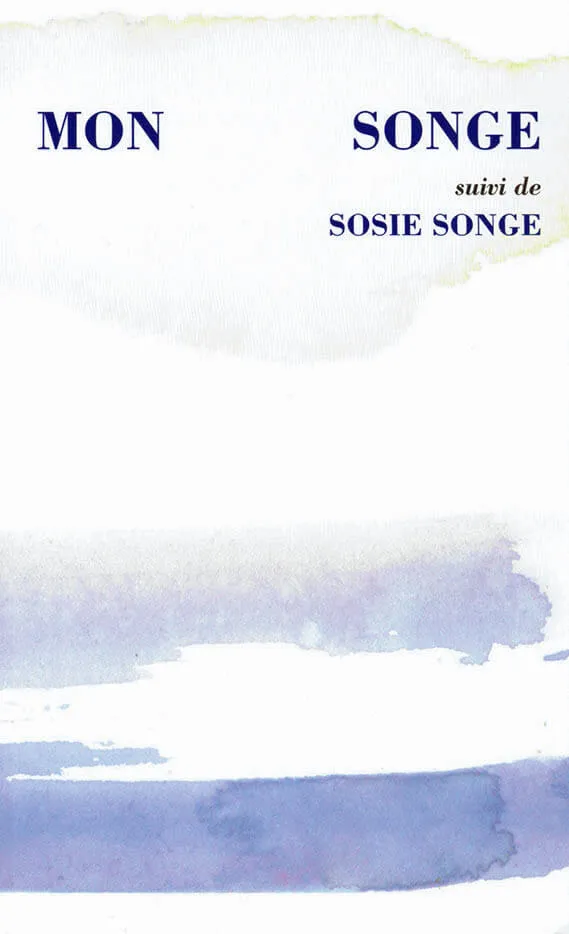
For the project Time has fallen asleep in the afternoon sunshine a group of people/ performers memorize a book of their choice. Together they form a library collection consisting of living books. After years of learning by heart and reciting for readers, some of the books have now been written down from memory to create new editions, versions resulting from this process. This book is one of those books, chosen by one person, learned by heart and recited many times, and now written down again from memory. This edition is not a re-edition of the original text. It is a re-writing of the text after the process of reading, memorizing and reciting, with all the alterations that might have occured in the course of this process.
These are the tools of the present
Mai Abu ElDahab, November Paynter and 1 more
This publication comprises a series of interviews with contemporary artists, musicians, and writers who are in dialogue with Beirut and Cairo. While not purporting to be an overview of the art scenes in these cities, this book begins to draw a picture of how artists think about what it means to be active in the contexts of these cities. It offers insight into the circumstances that structured these artists’ stories, and the often accidental influences that have shaped how their practices have developed.