rile*books

Search books

Search books by title, author, publisher, keywords...

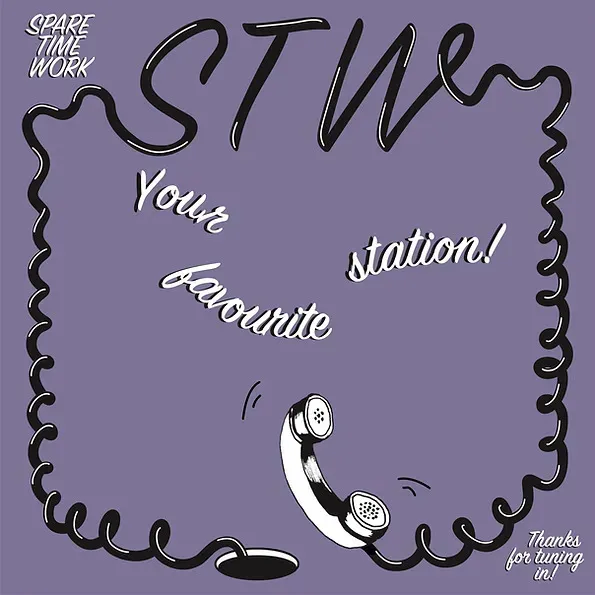
Cover of STW, your favourite station!

het balanseer

STW, your favourite station!

buren

€25.00

STW, your favourite station! functioneert als een radioprogramma. Een boek dat lyrisch proza uitzendt van We make stuff up for a living (een CV medley) tot COMPUTER_SONG, een ceremoniële quiz met Adult Hood & Young als protagonisten, een grillige anekdote van iemand die zich ergert aan een Call Service, en meer! Thanks for tuning in!

Published in 2026 ┊ 48 pages ┊ Language: English

recommendations

Cover of Bewogen selfies

het balanseer

Bewogen selfies

Obe Alkema

Poetry €24.50

In Bewogen selfies onderzoekt Obe Alkema de verhouding tussen landschap en herinnering. Wat treft hij aan bij terugkeer naar belangrijke plaatsen uit zijn geheugen? Wat herinnert hij zich niet, maar Google wel? Is er een gedenkschrift te puren uit zijn metadata?

Memoires, rechtstreeks verteld en met omwegen, uit eerste hand en van horen zeggen. Archieven en herinneringen eisen spreektijd, houden het niet meer droog of worden tot spreken gebracht. Wat hebben ze eigenlijk te melden? Ze lopen helemaal leeg, net als Alkema zelf. Een leven zoals zovele, poedelnaakt en geretoucheerd, vol zin en onzin.

Cover of Nasleep

het balanseer

Nasleep

Çağlar Köseoğlu

Poetry €19.00

Nasleep neemt de protesten rondom het Gezi Park in 2013 als vertrekpunt en verkent gaandeweg wat er is overgebleven van dit historische moment waarin een andere wereld voor het grijpen leek. Het zijn gedichten die laveren tussen ritmische, conceptuele en kritische noise enerzijds en postrevolutionaire affecten anderzijds, tussen politise­ring enerzijds en onmacht en radeloosheid anderzijds.

Cover of EN

het balanseer

EN

Guy Rombouts

Poetry €25.00

In het begin van de jaren 1970, hield Guy Rombouts een notaboekje bij waarin hij alle woorden, bijvoeglijk naamwoorden en werkwoorden bijhield die hij tegenkwam tijdens het lezen en die met elkaar verbonden waren door het voegwoord ‘en‘.

Ongeveer 50 jaar later en met de hulp van de grafische vormgever Jeroen Wille, is de transcriptie van zijn aantekeningen gepubliceerd als een boek dat gelezen kan worden in twee richtingen (en als enige boek coronaproof met twee tegelijkertijd).

Het boek bevat 2158 verzen met in totaal 4316 EN-combinaties.

De kortste verzen met evenveel letters:

A EN Z

4 EN 6

De langste verzen met evenveel letters:

ONUITSPREKELIJKHEDEN EN IMPONDERABILIA

ONEVENWICHTIGHEID EN ZELFOVERSCHATTING

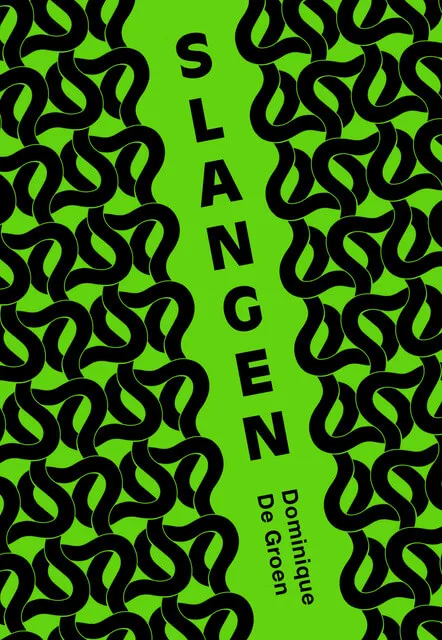
Cover of Slangen

het balanseer

Slangen

Dominique De Groen

Poetry €19.50

Slangen krioelen in de sarcofaag van het heden, in de krochten van de popcultuur, in de mummie van de natuur, in wondes en rot vlees, in artificiële woestijnen en op geoliede dad bods. Ze wentelen zich rond beursgrafieken, raken verstrengeld met wurgende algoritmes, orkestreren een trage ondergrondse revolutie. Een meisje snijdt zich aan een nepdiamanten piramide en werpt haar slangenvel van zich af.

Dominique De Groen is schrijver en beeldend kunstenaar. Ze publiceerde de dichtbundels Shop Girl (2017), Sticky Drama (2019) en offerlam (2020). Ze werd genomineerd voor de Poëziedebuutprijs Aan Zee 2018, de Herman de Coninckprijs 2020 en de Fintroliteratuurprijs 2021 en won de Frans Vogel Poëzieprijs 2019 en de Fintropublieksprijs 2021.

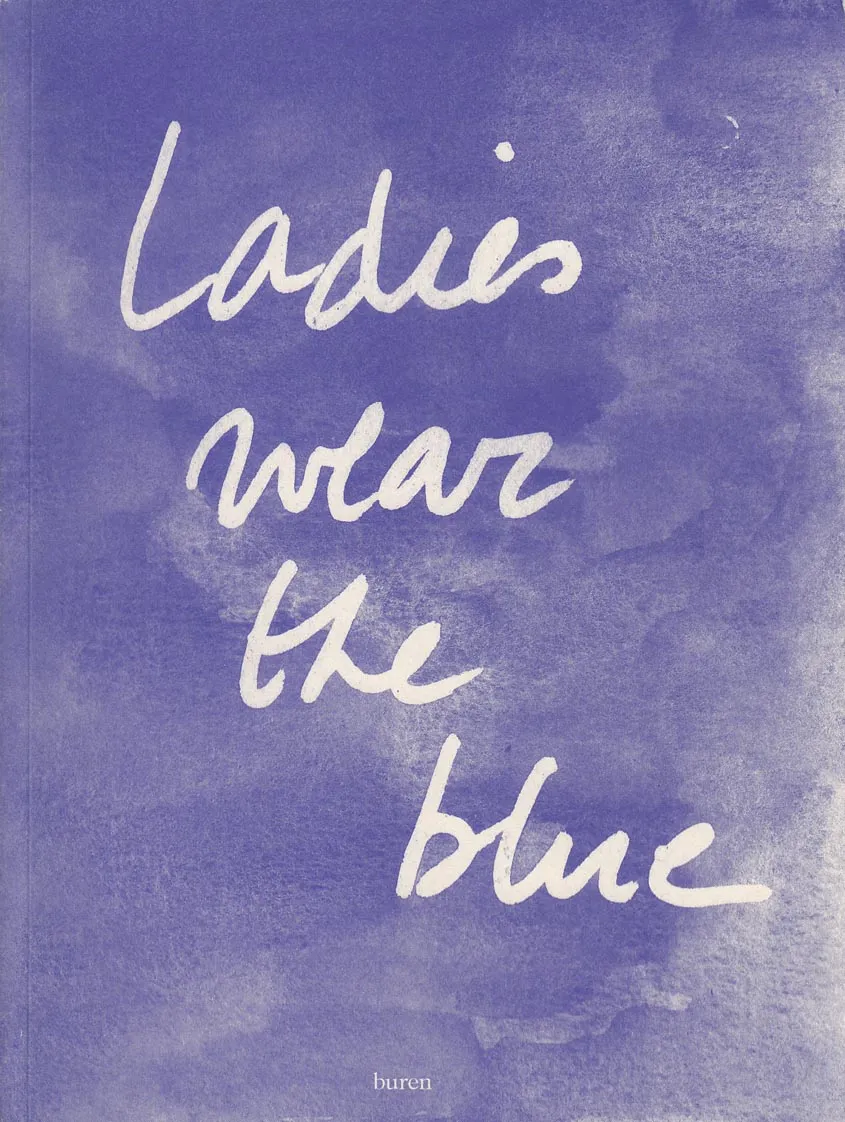
Cover of Ladies Wear the Blue

Self-Published

Ladies Wear the Blue

buren

Ladies wear the blue is a collection of watercolour drawings by the hand of Melissa Mabesoone and Oshin Albrecht. The blue watercolours portray women from different moments in time. The adjacent texts describe these women's existence, roles, desires or ideosyncrasies deriving from the 'blue' in their lives. From the first female police officers and Alices all around, to Courtney Love's blue baby dolls and the girl with the blue tattoo Olive Oatman, this publication is an ode to women venturing into the world, and a way to continue telling their herstories.

Cover of Essays

Essay Press

Essays

Dorothea Lasky

Essays €18.00

Poetry as both a form and genre has many possibilities to exist within; however, poetry too often is burdened by the imperative to have an argument and a set of imagery and meanings that are preconceived and placed within the poem. In this way, poetry gets conflated with writing a thesis or project, and the poet simply the presenter of perfectly argued language. When poets attempt to bridge the gap between genres and write within the contemporary essay form, they are tasked to construct perfect arguments there as well and avoid the associative and aesthetic logic that makes poems important. The term essay itself was coined by Michel de Montaigne in the 1500s — it comes from the French word essai, which means to test or experiment with what one knows as a learning tool, and is in partial opposition to the terms we use to discuss the essay now

ESSAYS calls on thinkers and writers to move beyond this linear thinking into the realm of what an essay by someone like Montaigne might do. His essays do as they say they will—they test out ideas, they are unafraid to get messy in their execution, they are brave enough to go forward into the uncharted waters. In them, it’s completely beside the point to get back to where they started, let alone where they’d say they would go. They are simply beside the point. It’s true.

ESSAYS, edited by Dorothea Lasky, is a book of essays on the essay, which enact and query these directives. The volume collects essays by poets Ariel Goldberg, Ken Chen, Wayne Koestenbaum, Tracie Morris, Anaïs Duplan, Raquel Salas Rivera, Brandon Shimoda, Cecilia Vicuña, Fred Moten, and Mónica de la Torre.

Cover of T (poem)

Materials

T (poem)

Laurel Uziell

Poetry €13.00

T is a long poem in multiple parts and its author's second book. “The two genders are YES and NO, so you stutter or else shut up forever”. 

From the Afterword: "Between 2017-2018 I was involved in a trial with a group of TERFs after a scuffle emerged during a counter protest against a ‘debate’ about sex-based rights in light of proposed reforms to the Gender Recognition Act which would have made trans people’s lives marginally easier. Luckily I wasn’t actually in the dock, but I appeared to give evidence, and for everyone involved it was a humiliating ordeal as we were doxxed, harrassed online and in real life, while the relentless media campaign which ensued took a toll on the entire trans community. The caricaturesque reduction of a complex interrelation of political positions, epistemologies, traumas and personal grievances into two ‘sides’ ultimately worked to further the persecution of trans people, but nevertheless highlighted a social logic on whose terms the so called debate was forced to appear: sex was pitted against gender (or more revealingly ‘gender identity’), objective biology against subjective ‘self-identification’, nature against culture, or perhaps, first nature against second nature."

What does a poet say (what does anyone say), when placed on the stand, how answer the binary logics forced like a cage in the legally-grounded violence which splittingly interrogates solidarity, the splitting invocation of law? In answer, T spreads across the page as if desperately finding a form for speech acts forced into a garrotted tick-box, a witness stand, video evidence, Nature’s originary disguise as history or vice versa, wrapped inside ‘common sense’ as a pronominal shroud, in the policing of body, speech, and every fungible fibre of being. The author writes: “I want the whole text to be a kind of horrific inorganic body with awkward parts, both to replay at the level of form some of the critiques of organicist thinking with reference to nature that the poem tries to articulate, and also, more glibly, to be somewhat like a trans body, awkwardly fitting together with some parts undercutting others”. An extended enquiry into Materialism and its material (fleshed) stakes, driven through the heart and to the heart of things, T sees lyric poem shudder to line-broken essay to fragment of play to citational drop; in tight compression sprawling, a poem whose argument is necessary and necessarily incomplete, poetry can do thinking, this thinking we do outside and within it, sprung trap, open and closing door. 

Cover of Barking Up the Wrong Tree

How To Become

Barking Up the Wrong Tree

Sophie T. Lvoff

LGBTQI+ €6.00

How To Become est une maison d'édition autogérée basée à Paris. Nous publions les textes d'auteuces engagés dans des pratiques féministes et peu diffusés par le réseau des grandes maisons d'édition françaises.

Créée en 2016, elle est composée d'artistes et écrivaires en majorité gouines, HTB publie de la litterature expérimentale née d'influences post-post- sapphiques ainsi qu'un choix de tradu d'auteuices non traduites en langue française. HTB s'articule autour d'ateliers d'écriture: How to Become a Lesbian, et d'une revue annuelle publiant les choses issues de l'atelier.