rile*books

Search books

Search books by title, author, publisher, keywords...

Cover of EN

het balanseer

EN

Guy Rombouts

€25.00

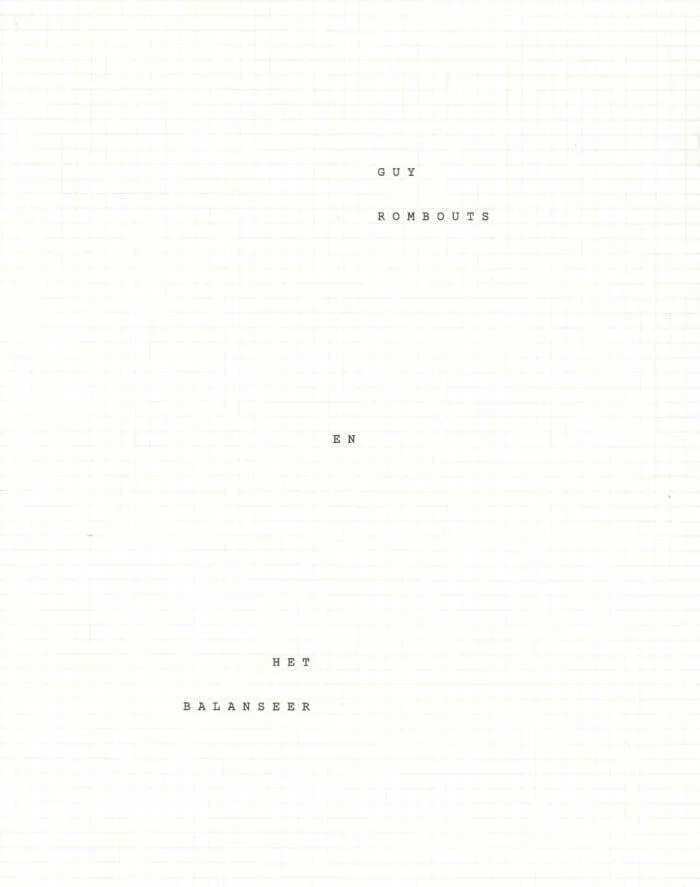
In het begin van de jaren 1970, hield Guy Rombouts een notaboekje bij waarin hij alle woorden, bijvoeglijk naamwoorden en werkwoorden bijhield die hij tegenkwam tijdens het lezen en die met elkaar verbonden waren door het voegwoord ‘en‘.

Ongeveer 50 jaar later en met de hulp van de grafische vormgever Jeroen Wille, is de transcriptie van zijn aantekeningen gepubliceerd als een boek dat gelezen kan worden in twee richtingen (en als enige boek coronaproof met twee tegelijkertijd).

Het boek bevat 2158 verzen met in totaal 4316 EN-combinaties.

De kortste verzen met evenveel letters:

A EN Z

4 EN 6

De langste verzen met evenveel letters:

ONUITSPREKELIJKHEDEN EN IMPONDERABILIA

ONEVENWICHTIGHEID EN ZELFOVERSCHATTING
Published in 2012 ┊ 176 pages ┊ Language: Dutch

recommendations

Cover of Nasleep

het balanseer

Nasleep

Çağlar Köseoğlu

Poetry €19.00

Nasleep neemt de protesten rondom het Gezi Park in 2013 als vertrekpunt en verkent gaandeweg wat er is overgebleven van dit historische moment waarin een andere wereld voor het grijpen leek. Het zijn gedichten die laveren tussen ritmische, conceptuele en kritische noise enerzijds en postrevolutionaire affecten anderzijds, tussen politise­ring enerzijds en onmacht en radeloosheid anderzijds.

Cover of Bewogen selfies

het balanseer

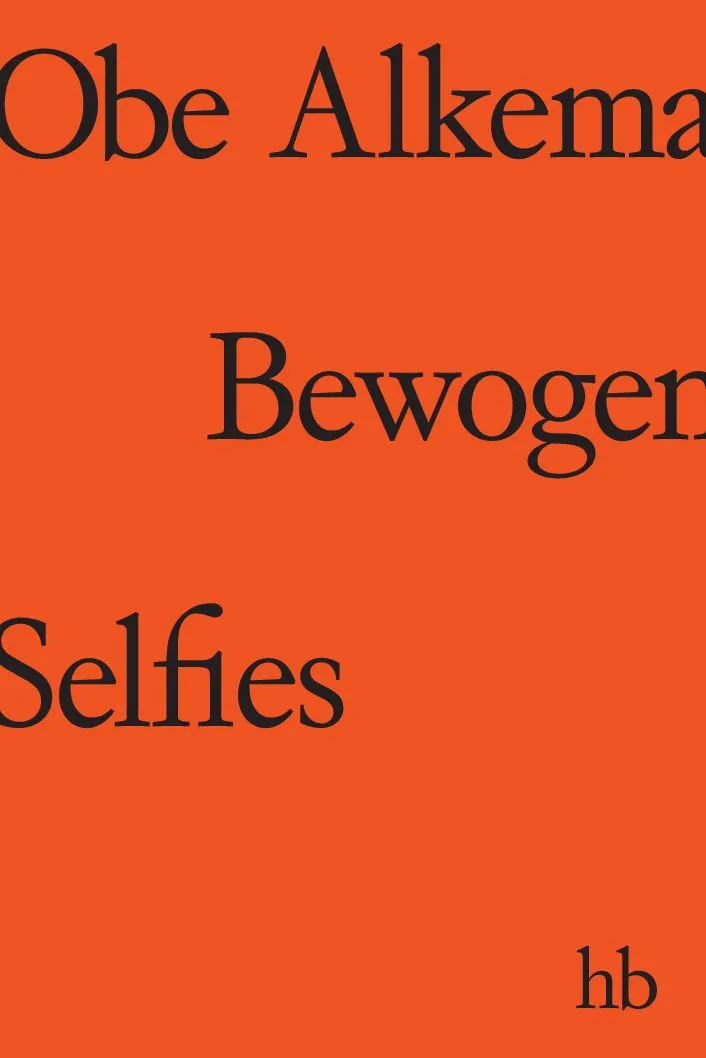
Bewogen selfies

Obe Alkema

Poetry €24.50

In Bewogen selfies onderzoekt Obe Alkema de verhouding tussen landschap en herinnering. Wat treft hij aan bij terugkeer naar belangrijke plaatsen uit zijn geheugen? Wat herinnert hij zich niet, maar Google wel? Is er een gedenkschrift te puren uit zijn metadata?

Memoires, rechtstreeks verteld en met omwegen, uit eerste hand en van horen zeggen. Archieven en herinneringen eisen spreektijd, houden het niet meer droog of worden tot spreken gebracht. Wat hebben ze eigenlijk te melden? Ze lopen helemaal leeg, net als Alkema zelf. Een leven zoals zovele, poedelnaakt en geretoucheerd, vol zin en onzin.

Cover of Slow Mania

Futurepoem

Slow Mania

Nazareth Hassan

Poetry €22.00

Nazareth Hassan’s devastatingly brilliant Slow mania is a powerful document of senses and sense-making where estrangement and ugliness meets longing and beauty. The artist begins with a photographic sequence: two white-blue sky panels; a shattered glass storefront window; a street gutter clutching leaves, smashed straw sleeves and plastic lids; then snow holding a disassembled red stained chest of drawers. These are the writer’s plinths where form as waste is configured: “smoggy breath thru burnt-edged holes tracking acid mucous inside your home.” Slow mania provokes through enumerative structures, for instance, “screening bodies” who keep a sex club’s gates open only to some: “…197 mmm maybe lemme think / 151 yes / 162 yes / 197 ok yes, but keep your shirt on.” The poet deftly folds human intimacy into interspecies metaphor: “The rat torso twitches in agreement. Across / the street, the flies continue to starve,” where “…you’re lost in your own hole: what did you find?” Hassan attends to this painful search, bearing witness to the disturbingly exultant, offering a radical state of being, in and out of which the stunning and timely Slow mania lives and thrives. — Ronaldo V. Wilson

Slow mania is resistance to resolution, it’s pointillistic magic, it’s Seurat in Bed-Stuy: the tighter you zoom, the more undifferentiated beauty you encounter. It’s kinky (the kinked-up curls of somebody’s greased-up chops). It’s tender (bruised and brown, like the overripe fruit that haunts your summer kitchen waiting to be crumbled into a crumble). The colors are blurry, the edges are soft, the stakes are high, and everything—everything!—shimmers in the space between life and afterlife. Hassan’s gaze is a hot summer steam that sneaks into the skinniest, stinkiest crevices; the grimiest seams, the most miraculous cracks. Breathe into the abyss, that’s the invitation. Take it in, let it in. Be a wit(h)ness to every single being. — Steffani Jemison

This amazing book reads like a synesthetic performance, the only thing missing is the smell of sweat, of streets, of loss. A book of choreographed pages, scores, movements, image blur, hand-scribbles. The bleak, unsparing texts hidden among the materials turn out to be the record of sudden eruptions, violent street scenes, pick-up scenes, unclear dialogues, insults, self-debasing verbal injuries on repeat. The performers are racialized, sexualized, anonymized “persons,” “meats,” numbers, lovers, passers-by, all caught up in these dangerous yet desperately emotional and triggering dances at the limit. It will leave you raw, spaced-out, both roused and alarmed as though coming out of an intoxicating show, and wanting more. — Caroline Bergvall

Cover of OEI #86/87 Publishing Practices, Publishing Poetics

OEI editör

OEI #86/87 Publishing Practices, Publishing Poetics

Tobi Maier, Cecilia Grönberg and 1 more

Periodicals €40.00

Once more, an astonishing issue of OEI – a thrilling, compelling, stimulating feast of ideas regarding publishing and the book: the perfect big companion to read and hug in bed while the virus spreads outside.

Bringing together contributions from circa 130 publishing structures, publishing communities, magazines, small press endeavors, artists, poets, writers, editors, theoreticians, curators, scholars, and art bookstores, OEI # 86–87 reflects upon the challenges, pressures and possibilities of publishing and creating publics in different contexts and places in a time of far-reaching – economical, medial, political, social, technological – transformations.

The potential and the versatility of publishing open it to a diversity of practices and approaches in the arts, but as an eminently social form of art, a collective or micro-collective work with shared responsibilities, it is also a never-ending process of “crafting a variegated approach to how you create, publish, distribute, and build a social ecosystem around your efforts”, of trying to “build up and strengthen the community around these printed forms” (Temporary Services).

It is the conviction of OEI #86–87 that print has the power to play an important part in the construction of social spaces, of a social world. As Benjamin Thorel puts it in one of the essays in the issue, “conceiving of the dynamics of publishing as making publics as well as making things public is not a pun – insofar as the artists/publishers encompass, beyond the book itself, its possible ‘lives’, imagining the different spaces, and the different people, amongst whom a publication will circulate.” This is what Michael Warner has called “a public [as] poetic worldmaking”, implying “that all discourse or performance addressed to a public must characterize the world in which it attempts to circulate, projecting for that world a concrete and livable shape, and attempting to realize that world through address.”

This is also, as stressed by Annette Gilbert and others, what can make publishing such an active force, a force co-constituting texts and publications and publics. Indeed, with Michalis Pichler, it is tempting to say that in publishing as practice – perhaps more than in any other art field – “artists have been able to assert the aesthetic value of their own socio-politically informed concerns and to engage, often under precarious conditions, in cultural activities fully aligned with their political values.”

OEI #86–87 also includes sections on and with contemporary poetry from Canada; Fluxus publishing; Krister Brandt/Astrid Gogglesworth; Kalas på BORD (Öyvind Fahlström); Lars Fredrikson; Claude Royet-Journoud’s poetry magazines; Carl Einstein; Gail Scott; Ållebergshändelser; OEI #79: edit/publish/distribute!; “det offentligas försvinnande” and many many other things. [publisher’s note]

Design by Konst & Teknik

Cover of The Flesh

Tabloid Publications

The Flesh

Yves B. Golden

Poetry €18.00

The Flesh is a collection of Yves B. Golden's poems, lyric essays and social criticism – and often these generic distinctions become blurred. Published by Ediciones La Escocesa (Barcelona, ES), TABLOID facilitated this book's production as editors and book designers. A selection of Golden's texts are also translated by Leto Ybarra, rendering the author's work into Spanish for the first time.

“Respectfully! The Flesh feels like a conjuring and a force of nature—unyieldingly raw, full of delectable sensitivity that shapes a world Yves B. Golden deliveries with formidable honesty—where her word is the journey, the body and the bond. Yves writes: ‘not one bird is declined entry into heaven’. The Flesh is succulent in the mouth of the mother— Yves is a steward of time machines, celestial bliss and untethered healing. The Flesh unties the tongue, waters the mouth and the garden. Within Yves’ 5th book she offers us a timeline in recognizing that all birds and angels alike can touch the sky. We are always, already, held and drenched in glory and deserving of love and safety. The Flesh is Black like obsidian. May our love bloom like the flesh in every lifetime.”
- keioui keijaun thomas

“Yves B Golden has given us a protection spell against tyranny; a Blue Guide for the conscious and the daydream; raw free jazz that knows the standards as well. Golden’s linguistically liberated fantasies can transmute into a body of politically imperturbable ethoses in the same sentence. This book offers information for an evolutionary sensitivity, for the next level of sense-making and particularity of the human being. Though the poet urges us to de-realize the flesh, to split our own heads open, we must also accommodate the flesh’s intangibles that interlock, conjoin, negate, and negotiate: such ‘outward and inward facing conundrums’ go on and on. Welcome this ‘bearer of turbulent news.’”
- Losarc Raal

Cover of ONE THOUSAND GHOSTS IN THIS FEAST

Wendy's Subway

ONE THOUSAND GHOSTS IN THIS FEAST

Sahar Khraibani

Poetry €14.00

Sahar Khraibani’s ONE THOUSAND GHOSTS IN THIS FEAST contends with desire, grief, and language as sites of injury and release. Written over a period of three days—amid ongoing genocide, land seizure, and displacement—the long poem counters logics of possession with those of relation. Khraibani’s all-caps, first-person address impels the poem forward, centering intertextuality as a force through which spectral presences shine.

Sahar Khraibani is a writer and artist whose work has been presented with Montez Press, The Brooklyn Rail, Magnum Foundation, the Poetry Foundation, the Poetry Project, and Hyperallergic among others. Sahar is a recipient of the Creative Capital / Arts Writers Grant, a fellowship at The Poetry Project, a MacDowell Fellowship, a 2024 residency at Mass MoCA, and is an alumni of the Whitney Independent Study Program. Sahar teaches at Pratt Institute and is the author of Anatomy of A Refusal (1080PRESS, 2025). 

ONE THOUSAND GHOSTS IN THIS FEAST lays bare the “SENSELESS DECAY” potentiated by empire’s relentless categorization, containment, and calculated death delivery. Khraibani’s debut chapbook collapses the imposed and perceived distance written by borders, disrupts anticipated colonial language logics, and bursts “INTO THE MADNESS OF THE ORGY” with queer interference reverberating in all directions. From the soil, from the graveyard, from the dancefloor, from their favorite spot on the eroding waterfront, Sahar broadcasts, IN ALL CAPS, “THE UNNAMEABLE TRUTH.”
Andrea Abi-Karam

Cover of Slangen

het balanseer

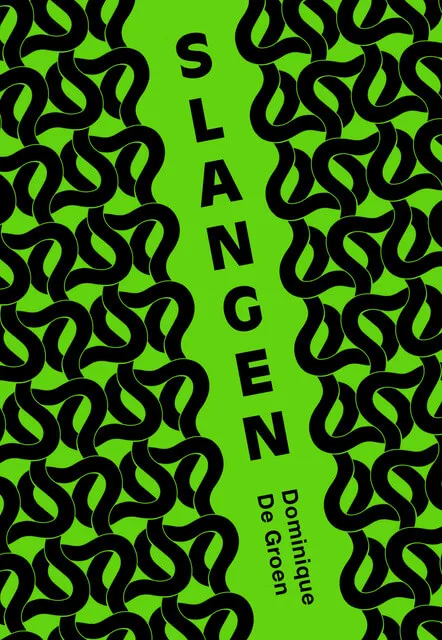
Slangen

Dominique De Groen

Poetry €19.50

Slangen krioelen in de sarcofaag van het heden, in de krochten van de popcultuur, in de mummie van de natuur, in wondes en rot vlees, in artificiële woestijnen en op geoliede dad bods. Ze wentelen zich rond beursgrafieken, raken verstrengeld met wurgende algoritmes, orkestreren een trage ondergrondse revolutie. Een meisje snijdt zich aan een nepdiamanten piramide en werpt haar slangenvel van zich af.

Dominique De Groen is schrijver en beeldend kunstenaar. Ze publiceerde de dichtbundels Shop Girl (2017), Sticky Drama (2019) en offerlam (2020). Ze werd genomineerd voor de Poëziedebuutprijs Aan Zee 2018, de Herman de Coninckprijs 2020 en de Fintroliteratuurprijs 2021 en won de Frans Vogel Poëzieprijs 2019 en de Fintropublieksprijs 2021.