rile*books

Search books

Search books by title, author, publisher, keywords...

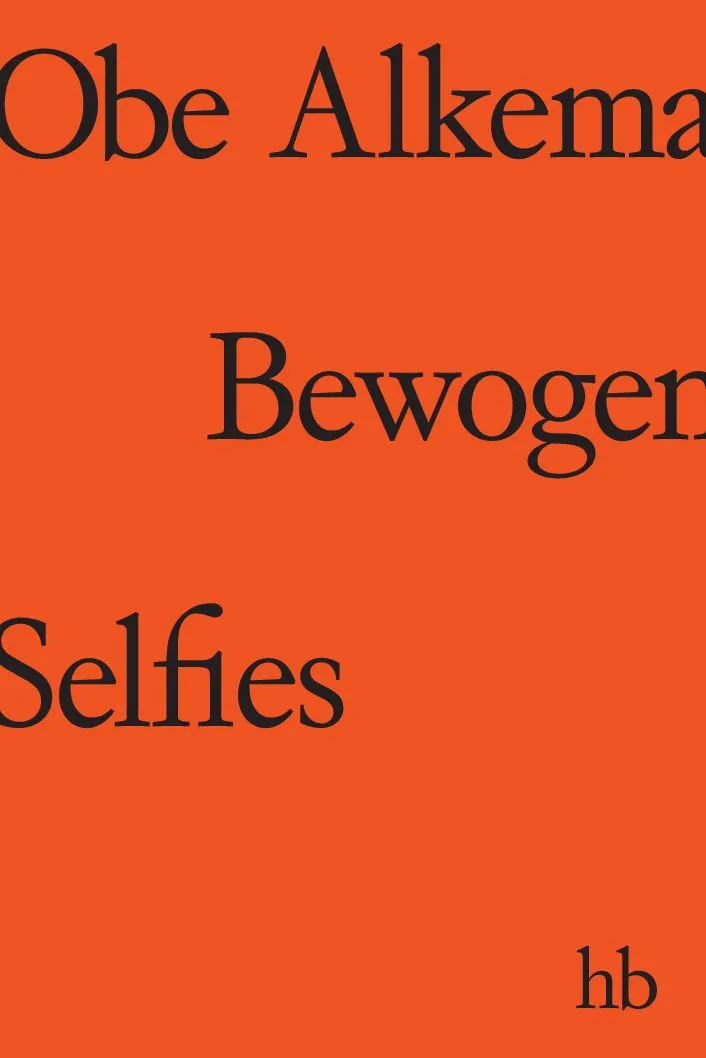
Cover of Bewogen selfies

het balanseer

Bewogen selfies

Obe Alkema

€24.50

In Bewogen selfies onderzoekt Obe Alkema de verhouding tussen landschap en herinnering. Wat treft hij aan bij terugkeer naar belangrijke plaatsen uit zijn geheugen? Wat herinnert hij zich niet, maar Google wel? Is er een gedenkschrift te puren uit zijn metadata?

Memoires, rechtstreeks verteld en met omwegen, uit eerste hand en van horen zeggen. Archieven en herinneringen eisen spreektijd, houden het niet meer droog of worden tot spreken gebracht. Wat hebben ze eigenlijk te melden? Ze lopen helemaal leeg, net als Alkema zelf. Een leven zoals zovele, poedelnaakt en geretoucheerd, vol zin en onzin.

Language: Dutch

recommendations

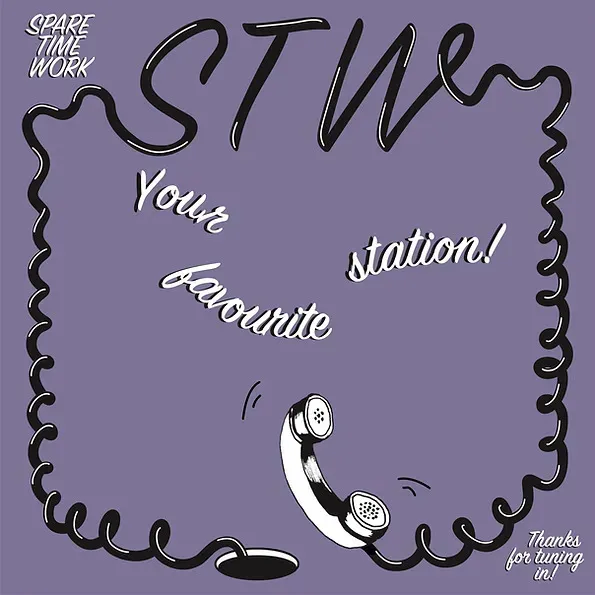
Cover of STW, your favourite station!

het balanseer

STW, your favourite station!

buren

Poetry €25.00

STW, your favourite station! functioneert als een radioprogramma. Een boek dat lyrisch proza uitzendt van We make stuff up for a living (een CV medley) tot COMPUTER_SONG, een ceremoniële quiz met Adult Hood & Young als protagonisten, een grillige anekdote van iemand die zich ergert aan een Call Service, en meer! Thanks for tuning in!

Cover of EN

het balanseer

EN

Guy Rombouts

Poetry €25.00

In het begin van de jaren 1970, hield Guy Rombouts een notaboekje bij waarin hij alle woorden, bijvoeglijk naamwoorden en werkwoorden bijhield die hij tegenkwam tijdens het lezen en die met elkaar verbonden waren door het voegwoord ‘en‘.

Ongeveer 50 jaar later en met de hulp van de grafische vormgever Jeroen Wille, is de transcriptie van zijn aantekeningen gepubliceerd als een boek dat gelezen kan worden in twee richtingen (en als enige boek coronaproof met twee tegelijkertijd).

Het boek bevat 2158 verzen met in totaal 4316 EN-combinaties.

De kortste verzen met evenveel letters:

A EN Z

4 EN 6

De langste verzen met evenveel letters:

ONUITSPREKELIJKHEDEN EN IMPONDERABILIA

ONEVENWICHTIGHEID EN ZELFOVERSCHATTING

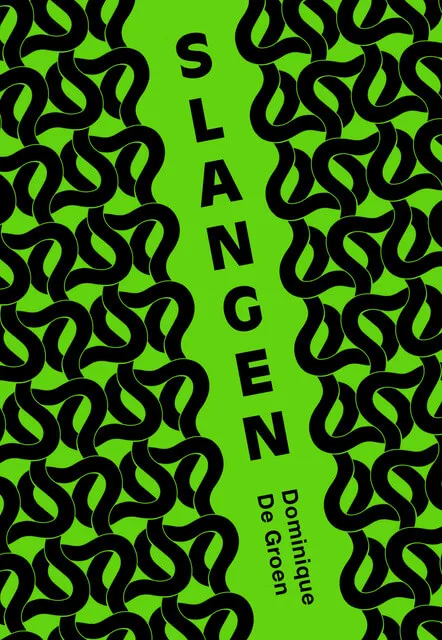
Cover of Slangen

het balanseer

Slangen

Dominique De Groen

Poetry €19.50

Slangen krioelen in de sarcofaag van het heden, in de krochten van de popcultuur, in de mummie van de natuur, in wondes en rot vlees, in artificiële woestijnen en op geoliede dad bods. Ze wentelen zich rond beursgrafieken, raken verstrengeld met wurgende algoritmes, orkestreren een trage ondergrondse revolutie. Een meisje snijdt zich aan een nepdiamanten piramide en werpt haar slangenvel van zich af.

Dominique De Groen is schrijver en beeldend kunstenaar. Ze publiceerde de dichtbundels Shop Girl (2017), Sticky Drama (2019) en offerlam (2020). Ze werd genomineerd voor de Poëziedebuutprijs Aan Zee 2018, de Herman de Coninckprijs 2020 en de Fintroliteratuurprijs 2021 en won de Frans Vogel Poëzieprijs 2019 en de Fintropublieksprijs 2021.

Cover of Nasleep

het balanseer

Nasleep

Çağlar Köseoğlu

Poetry €19.00

Nasleep neemt de protesten rondom het Gezi Park in 2013 als vertrekpunt en verkent gaandeweg wat er is overgebleven van dit historische moment waarin een andere wereld voor het grijpen leek. Het zijn gedichten die laveren tussen ritmische, conceptuele en kritische noise enerzijds en postrevolutionaire affecten anderzijds, tussen politise­ring enerzijds en onmacht en radeloosheid anderzijds.

Cover of My Kevin, My Paris

Self-Published

My Kevin, My Paris

Obe Alkema

In the fall of 2017, Obe Alkema got acquainted with the American poet Kevin Killian, first at the New Narrative conference at UC Berkeley, then at the Poets & Critics Symposium in Paris that was all about his poetry. A year and a half later, Alkema traveled back to Paris, this time as a participant of a writing residency. He was there to research the landscape of memory, but more than he expected and initially realized, Kevin’s death the previous month (June 2019) affected his return. Besides inevitable, mourning and remembering became obsessions for Alkema, as he shows in ‘My Kevin, Our Paris’, a memoir about Kevin Killian (1952–2019), but especially about his Kevin and their Paris.

Cover of The Saddest Thing Is That I Have Had to Use Words: A Madeline Gins Reader

Siglio Press

The Saddest Thing Is That I Have Had to Use Words: A Madeline Gins Reader

Madeline Gins

Poetry €28.00

Poet, philosopher, speculative architect and transdisciplinary artist, Madeline Gins is well known for her collaborations with her husband, the artist Arakawa, on the experimental architectural project Reversible Destiny, in which they sought to arrest mortality by transforming the built environment. Yet, her own writings — in the form of poetry, essays, experimental prose and philosophical inquiries — represent her most visionary and transformative work. Like Gertrude Stein before her, Gins transfigures grammar and liberates words. Like her contemporaries in conceptual art, her writing is attuned to the energized, collaborative space between reader and page.

The Saddest Thing Is That I Have Had to Use Words: A Madeline Gins Reader is a revelatory anthology, edited and with an introduction by the writer and critic Lucy Ives. It brings never-before-published poems and essays together with a complete facsimile reproduction of Gins' 1969 masterpiece, WORD RAIN (or A Discursive Introduction to the Intimate Philosophical Investigations of G, R, E, T, A, G, A, R, B, O, It Says), along with substantial excerpts from her two later books What the President Will Say and Do!! (1984) and Helen Keller or Arakawa (1994). Long out of print or unpublished, Gins' poems and prose form a powerful corpus of experimental literature, one which is sure to upend existing narratives of American poetics at the close of the 20th century.

Edited by Lucy Ives. 

Cover of Grammar of the Cage

Les Figues Press

Grammar of the Cage

Pam Ore

Poetry €20.00

What words made this world of captivity and extinction? If written language is a biological adaptation, how can a text reshape the environment? These are the questions at the heart of Grammar of the Cage, a startling first collection of poetry by Pam Ore. The Compulsive Reader calls Ore "a poet of great promise," and poet Eloise Klein Healy says she has found Ore's book "haunting but necessary...a stunning debut collection."

Grammar of the Cage is clean and heartbreaking as a bone, and yet, as poet Ingrid Wendt writes in her Introduction, "[like] Emily Dickinson, Ore's 'business' is 'to sing.' And sing she does."

Cover of She Will Last as Long as Stones

Wendy's Subway

She Will Last as Long as Stones

kathy wu

Ecology €18.00

Weaving together the matter of geology, migration, and computation, kathy wu’s debut book She Will Last as Long as Stones mines data from the United States Geological Survey, pairing it with (mis)translations of conversations with the author’s mother, narratives of racialized and gendered labor, and elegies on end-of-life care. Through text, photo-collage, and diagrammatic circuitry, wu mobilizes language toward the edges of things, where glitch and failure meet grief, outpour.

kathy wu's She Will Last as Long as Stones is the 2024 Open Reading Period Book Prize winner, and was selected by guest judge Bhanu Kapil

kathy wu is a Chinese–American artist, poet, and designer living in Providence, Rhode Island, on Narragansett land. She works across digital media, fiber, book arts, and language to pull at histories of science and technology. Her work has appeared via The New School, Dialogist, Rain Taxi, NatBrut, and Tilted House, and has been anthologized by Fonograf Editions and Nightboat Books. She has been awarded fine arts residencies at Blue Mountain Center, Black Mountain College Museum, and Pao Arts Center. She currently teaches full-time at Rhode Island School of Design (RISD), and holds an MFA from Brown University’s Literary Arts program.

She Will Last as Long as Stones has the inter-genre brilliance of asking where materials originate, and following that question until writing becomes a kind of listening with stone, with metal, for magnetic reverberations, for the thinking at the back of the cave.
— Bhanu Kapil

There just might be currents coursing through landscape, language, software, and labor—presences that escape extraction and will not be denied. She Will Last as Long as Stones looks into the multiple temporalities and operations of many things: material place, mining, social and scientific documentation, computation, migrant women's work, and mother-daughter relations, constellating them into a poetics of wondrous design and resonant beauty. 
— Kimberly Alidio

She Will Last as Long as Stones is a subtle circuit that conducts a charge but (paradoxically) remains open. wu's intricate parataxis offers readers fertile resistance, while simultaneously leading us to grounded revelations about the intertwined materialities of technology, language, and memory.
Allison Parrish