rile*books

Search books

Search books by title, author, publisher, keywords...

Explore

Categories
Visit
Collections
Publishers
Back in stock
Any books
Cover of Strangers in Light Coats

Seagull Books

Strangers in Light Coats

Ghassan Zaqtan, Robin Moger trans.

€21.00

Strangers in Light Coats is the third collection of Zaqtan's poetry to appear in English. It brings together poems written between 2014 and 2020 drawn from six volumes of poetry. Catching and holding the smallest particles of observation and experience in their gravity, the poems sprout and grow as though compelled, a trance of process in which fable, myth, and elegy take form only to fall apart and reconfigure, each line picked apart by the next and brought into the new body. 

Ghassan Zaqtan is not only one of the most significant Palestinian poets at work today, but one of the most important poets writing in Arabic. Since the publication of his first collection in 1980, Zaqtan's presence as a poet has evolved with the same branching and cumulative complexity as his poems—an invisible system of roots insistently pushing through the impacted soil of political and national narratives. 

Published in 2023 ┊ 92 pages ┊ Language: English

recommendations

Cover of  The Book of Sleep

Seagull Books

The Book of Sleep

Haytham El-Wardany, Robin Moger

Philosophy €17.00

What is sleep? How can this most unproductive of human states—metaphorically called death's shadow or considered the very pinnacle of indolence—be envisioned as action and agency? And what do we become in sleep? What happens to the waking selves we understand ourselves to be?

Written in the spring of 2013, as the Egyptian government of President Mohammed Morsi was unraveling in the face of widespread protests, The Book of Sleep is a landmark in contemporary Arabic literature. Drawing on the devices and forms of poetry, philosophical reflection, political analysis, and storytelling, this genre-defying work presents us with an assemblage of fragments that combine and recombine, circling around their central theme but refusing to fall into its gravity.  

"My concern was not to create a literary product in the conventional sense, but to try and use literature as a methodology for thinking," El Wardany explains. In this volume, sleep shapes sentences and distorts conventions. Its protean instability throws out memoir and memory, dreams and hallucinatory reverie, Sufi fables and capitalist parables, in the quest to shape a question. The Book of Sleep is a generous and generative attempt to reimagine possibility and hope in a world of stifling dualities and constrictions.

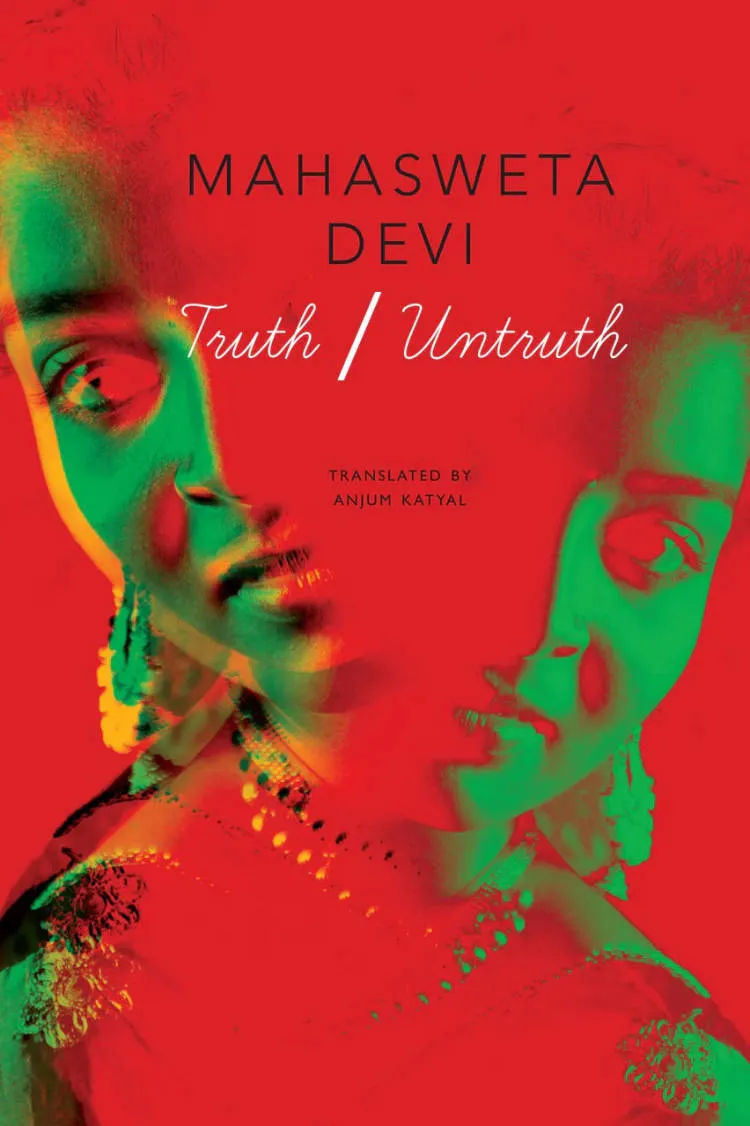
Cover of Truth / Untruth

Seagull Books

Truth / Untruth

mahasweta devi, Anjum Katyal

Fiction €22.00

A trenchant, darkly humorous, and unsentimental look at Calcutta society. 

Set in Calcutta in the mid-1980s, Truth/Untruth is a fast-paced thriller built around the death of the pregnant Jamuna—a maid in a newly affluent residential apartment complex—and Arjun, the upwardly mobile businessman who seduced her. Packed with a cast of colourful characters, this novel is a trenchant, darkly humorous, and unsentimental look at the different segments of Calcutta society: from the middle-class culture vultures to the unscrupulous ‘promoter’ class and the domestic helpers and slum goons who form an intrinsic part of the city’s life. All are implicated in a complex web of guilt and bizarre twists and turns. Sex, lies, death—the great modernist themes—run like a thread through this book, exposing societal greed, lust, corruption, and moral hypocrisy with a sardonic tone that spares none. An unusual novel by an author who is otherwise known for her hard-hitting activist-feminist stories, Truth/Untruth underlines the exploitative vicious cycle that defines urban relations between the haves and have-nots.

‘Although not of the margins herself, Devi was accomplished in writing from the margins [ . . . ] However, it is indeed worth it if you are looking for an exhilarating social commentary and biting satire that remains relevant today. Devi also reflects the jargon and dialects of the lower classes as deftly as the peculiarities of upper-class speech patterns. A feat of this work is Katyal’s ability to mediate these multiple registers, rewarding the reader with sharp writing that is at once funny, sardonic, and darkly pleasurable to read.‘—Jack Greenbert, Cha: An Asian Literary Journal.

Cover of Living Translation

Seagull Books

Living Translation

Gayatri Chakravorty Spivak

Living Translation offers a powerful perspective on the work of distinguished thinker and writer Gayatri Chakravorty Spivak, revealing how, throughout her long career, she has made translation a central concern of the comparative humanities.

Starting with her landmark "Translator's Preface" to Jacques Derrida's Of Grammatology in 1976, and continuing with her foreword to Mahasweta Devi's Draupadi and afterword to Devi's Chotti Munda and His Arrow, Spivak has tackled questions of translatability. She has been interested in interrogating the act of translation from the ground up and at the political limit. She sees at play at border checkpoints, at sites of colonial pedagogy, in acts of resistance to monolingual regimes of national language, at the borders of minor literature and schizo-analysis, in the deficits of cultural debt and linguistic expropriation, and, more generally, at theory's edge, which is to say, where practical criticism yields to theorizing in untranslatables.

This volume also addresses how Spivak's institution-building as director of comparative literature at the University of Iowa—and in her subsequent places of employment—began at the same time. From this perspective, Spivak takes her place within a distinguished line-up of translator-theorists who have been particularly attuned to the processes of cognizing in languages, all of them alive to the coproductivity of thinking, translating, writing.

Cover of Passage to the Plaza

Seagull Books

Passage to the Plaza

Sahar Khalifeh

Fiction €24.50

In Bab Al-Saha, a quarter of Nablus, Palestine, sits a house of ill repute. In it lives Nuzha, a young woman ostracized from and shamed by her community. When the Intifada breaks out, Nuzha’s abode unexpectedly becomes a sanctuary for those in the quarter: Hussam, an injured resistance fighter; Samar, a university researcher exploring the impact of the Intifada on women’s lives; and Sitt Zakia, the pious midwife.

In the furnace of conflict at the heart of the 1987 Intifada, notions of freedom, love, respectability, nationhood, the rights of women, and Palestinian identity—both among the reluctant residents of the house and the inhabitants of the quarter at large—will be melted and re-forged. Vividly recounted through the eyes of its female protagonists, Passage to the Plaza is a groundbreaking story that shatters the myth of a uniform gendered experience of conflict.

Cover of How to Mend: Motherhood and Its Ghosts

Kayfa ta

How to Mend: Motherhood and Its Ghosts

Iman Mersal

Mothering €10.00

In How to Mend: On Motherhood and its Ghosts, Kayfa ta’s 4th monograph, Iman Mersal navigates a long and winding road, from the only surviving picture of the author has with her mother, to a deep search through what memory, photography, dreams and writing, a search of what is lost between the mainstream and more personal representations of motherhood and its struggles. How to mend the gap between the representation and the real, the photograph and its subject, the self and the other, the mother and her child. 

Iman Mersal is an Egyptian poet and associate professor of Arabic Literature and Middle Eastern Studies in the University of Alberta, Canada.

Text: Iman Mersal
Editors: Maha Maamoun and Ala Younis
Translated from Arabic by Robin Moger
Co-publishers: Kayfa ta and Sternberg Press
Design: Julie Peeters
Size: 9.6 x 14.8 cm
Pages: 168 pages, Soft cover

Cover of How to disappear

Kayfa ta

How to disappear

Haytham El-Wardany

Essays €10.00

This publication proposes a set of aural exercises that show readers how to disappear, reappear, join a group, or leave a group. Its annex is a lexicon of some of the sounds that dwell in or are banished from the middle-class household. 

Text: Haytham El-Wardany
Editors: Maha Maamoun and Ala Younis
Translated from Arabic by Jennifer Peterson (Preliminary Exercises) and Robin Moger (Sounds of the Middle Classes)

Cover of Agitated Air: Poems After Ibn Arabi

Tenement Press

Agitated Air: Poems After Ibn Arabi

Robin Moger, Yasmine Seale

Poetry €24.00

Born in Murcia in 1165, Ibn Arabi was a prolific Muslim philosopher and poet. He travelled extensively before settling in Damascus, where he died in 1240. Tarjuman al-Ashwaq, or The Interpreter of Desires, is a cycle of sixty-one Arabic poems. They speak of loss and bewilderment, a spiritual and sensual yearning for the divine, and a hunger for communion in which near and far collapse.

Agitated Air is a correspondence in poems between Istanbul and Cape Town, following the wake of The Interpreter of Desires. Collaborating at a distance, Yasmine Seale and Robin Moger work in close counterpoint, making separate translations of each poem, exchanging them, then writing new poems in response to what they receive. The process continues until they are exhausted, and then a new chain begins.

Translated and re-translated, these poems fray and eddy and, their themes of intimacy across distance made various, sing back and forth, circling and never landing. Absence and approach, knowing and unknowing, failure and repetition: Ibn Arabi’s cycle of ecstatic love shimmers with turbulence. Seale and Moger move into and against these contending drifts, finding in the play of dissatisfaction and endurance a prompt for new poetry. 

Cover of Traces of Enayat

And Other Stories

Traces of Enayat

Iman Mersal, Robin Moger

Non-fiction €17.00

Cairo, 1963: Enayat al-Zayyat’s suicide becomes a byword for talent tragically cut down, even as Love and Silence, her only novel, languishes unpublished. Four years after al-Zayyat’s death, the novel will be brought out, adapted for film and radio, praised, and then, cursorily, forgotten. For the next three decades it’s as if al-Zayyat never existed.

Yet when poet Iman Mersal stumbles across Love and Silence in the nineties, she is immediately hooked. Who was Enayat? Did the thought of her novel’s rejection really lead to her suicide? Where did this startling voice come from? And why did Love and Silence disappear from literary history? To answer these questions, Mersal traces Enayat’s life, interviews family members and friends, reconstructs the afterlife of Enayat in the media, and tracks down the flats, schools, archaeological institutes, and sanatoriums among which Enayat divided her days. Touching on everything from dubious antidepressants to domestic abuse and divorce law, from rubbish-strewn squats in the City of the Dead to the glamour of golden-age Egyptian cinema, this wide-ranging, unclassifiable masterpiece gives us a remarkable portrait of a woman artist striving to live on her own terms.

Winner of the 2024 James Tait Black Prize – Biography 

Longlisted for the 2024 Jan Michalski Prize 

Cover of A Catalogue of Risk

Wendy's Subway

A Catalogue of Risk

Alisha Mascarenhas

Poetry €18.00

Alisha Mascarenhas’s A Catalogue of Risk is a volte-face of the neoliberal market economy’s construction of isolated, individual safety. In her debut book of poems, Mascarenhas lingers in the question of risk as it arises in daily life and intimacy. Through a close study and partial translation of philosopher-psychoanalyst Anne Dufourmantelle’s Éloge du risque (2011), her poems posit risk as a fissure, through which we might imagine yet-unknown futures.

Alisha Mascarenhas’s A Catalogue of Risk is the recipient of the 2022 Carolyn Bush Award.

Alisha Mascarenhas (b. 1989) is a poet and translator and the author, most recently, of the chaplet Contagion Fields (Belladonna* 2021). She has contributed writing to Pamenar Press, The Poetry Project Newsletter, The Recluse, Peripheral Review, and The Felt, among others. Alisha was a 2023 resident at La Baldi Artist’s Residency in Montegiovi, Italy. She holds an MFA in Writing from Pratt Institute in Brooklyn, where she now lives.

There is a body lying across Alisha Mascarenhas’s A Catalogue of Risk. Here is a book of generosity and perdition, that could not anticipate the death of its author, the one these works are addressed to, written for, dreamt by, in a stream of proximities. A strange dismantling of time occurs as a result of quiet reversals in which light is diffracted across belated syntaxes, reaching past life to the living. Though A Catalogue of Risk is “running past the flowers,” it is a slow text that grieves the day’s illuminations. It is a lesson in transmission in which we, readers, are the apprentices of grace, at the edge also of drowning. Here is a book that has been “hungering to be emptied.” So, too, is it a book of promise.
Nathanaël

A Catalogue of Risk is a book of luminous attention. Alisha Mascarenhas gives us the language of a mind tracking both internal and external weathers, tuning and returning herself to beauty, fear, grief and desire. Attending a cascade of emotions, the poet dwells in questions, knowing that to keep open to difficult questions is to keep open to desire. That she risks such openness, thinking always with others, through pain and love, is an astonishment. 
— Madhu Kaza

A Catalogue of Risk poses an evocative challenge, one of prismatic nuance: to pursue multiple angles of intimacy along the life-death continuum of how risk holds, unfolds, and makes one whole. “The definition” of what risk is “is shaded in questions” and runs a gamut of desires and sensations at once libidinal and cerebral. Alisha Mascarenhas risks risk itself with this generous offering of exquisite phenomenology and experiential trace in the form of a full-saturation poetics glowing in amplitude and intensity.
— Brenda Iijima

Cover of Positions of the Sun

Belladonna* Collaborative

Positions of the Sun

Lyn Hejinian

Poetry €18.00

The second work in Belladonna* Collaborative’s Germinal Texts series, Lyn Hejinian’s Positions of the Sun is a book of twenty-six interlocking “essays with characters” that explores the mid-2000s financial “crisis” through the movements and daily lives of a wide-ranging cast of characters located in the Bay Area.

In Positions, Hejinian plays the bricoleur, bringing together whatever’s needed in her to approach to the subject—whether the paratactic tactics of poetry, scholarship’s critical patchwork, or dramatis personae set in time that evokes but frustrates narrative.

Earlier iterations of essays 4, 14, and 17 appeared in Belladonna*’s Elders Series #5, edited by Jennifer Scappettone with work by Etel Adnan, Lyn Hejinian, and Jennifer Scappettone.

Cover of Help

Tenement Press

Help

Steven Zultanski

Poetry €25.00

Death-obsessed, disengaged and overinvested—the four long poems assembled in Steven Zultanski’s Help theatricalise morbid fascinations, self-protective impulses, and unfocused desire. Help is, at its core, a set of conversations; the result of games played between friends that were then transcribed, edited, and embellished. Participants were asked to talk about loss, the death of acquaintances, secret hiding places, mislaid time, and unmet demands. The resulting poems read like meandering scripts for unrealised plays; incidental excavations of persona and place.

Somewhat reminiscent of Linda Rosenkrantz’s Talk (1968) or Alice Notley’s transcription poems of the 1970s, in Help the poet pretends to be a recording device, and the poem an act of remembering. Zultanski’s writing is at once skeletal and overstuffed, dryly unsentimental and yet dripping with melodrama. Help foregrounds its own contradictions in a collection that is at once both extremely personal and distinctly artificial.

Help brilliantly extends Steven Zultanski’s current phase of writing—looser, more documentary, more situational. In setting up explicit objects of inquiry and conversation—love, death, childhood—the book shows that to know these things is to also know our friends and ourselves. Sustained by an orchestration of relation and memory (and thus reality), affect here is modular, the product of what happens when we transform things by talking about them. A careful and astute experiment in writing and living.
 — Jennifer Soong

Cover of Men in Aïda

Uitgeverij

Men in Aïda

David Melnick

Poetry €24.00

David J. Melnick published the first book of Men in Aida, a homophonic, but also homoeroticized translation of Homer's epic Iliad, in December 1983 in an edition of 450 at Tuumba Press. After appearing in many guises and fragments, Book Two was published online in 2002 as part of the Eclipse Archive. Book Three appears for the first time in the present publication, which brings together all three books of one of the most important American avant-garde poems. 

According to Sean Gurd, who wrote the introduction to this unified edition: "The labor of more than 20 years, Men in Aïda filters the sound of Homer's Iliad through the words and phraseology of English. Far more than an exercise in homophonic translation, David J. Melnick's epoch-marking poem packs thousands of years of linguistic history into three riotous books."