Poetry
Poetry

Issue № 6 - Winter–Spring 2026 / SENSING BODIES
Coming back to the body is rarely tranquil. Often it is turbulent, interrupting dominant narratives and entrenched meanings. It is the upset of being alive, and awake to it.
The fourteen texts in this new issue do not shy away from that turbulence. There is joy and there is pleasure, there is shame, pain, and liberation... Each text addresses this dense experience from a singular perspective, yet together they explore what emerges and becomes possible when sense-making and making sense(s) are re-anchored in the sensing practices of the body.
With texts by Valérie Hug, Marco Antonini, cassiane c. pfund, Elodie Olson-Coons, Ines Marita Schärer, Bernadette Kolonko, Jo Bahdo, Lotta Beckers, Melanie Jame Wolf, Samuel Brzeski, Madeleine Kaye, Nora Longatti, Rosanna Puyol Boralevi, Larissa Clement-Belhacel
editorial team: Delphine Chapuis Schmitz, Nicole Bachmann, Robert Steinberger, and Shelby Lee Stuart as invited editor

Glove Money
A hymn to perversity, a lyric pledge to desire and risk, Glove Money pages through the canon to “seed its sugar in your dreams.”
In this joyful and irreverent exploration of the role of poet-as lover, Sophia Dahlin plays Sappho, O’Hara, romantics and troubadours, assembling a self seaworthy of romance. With humor and a light touch, Glove Money dismisses bioessentialist gatekeeping and expands the lesbian imaginary.

Cunt Norton
In CUNT NORTON, the sequel to her unforgettable CUNT UPS, Dodie Bellamy "cunts" The Norton Anthology of Poetry (1975 edition), setting her text-ravenous cut-ups loose to devour the canonical voices of English literature. The texts that emerge from this sexual-linguistic encounter are monstrous, beautiful, unashamed: 33 erotic love poems ("the greatest fuck poem in the English language," according to Ariana Reines) that lust after the very aesthetic they resist. "These patriarchal voices that threatened to erase me—of course I love them as well," Bellamy writes. Even as CUNT NORTON dismembers the history of English poetry, "cunting" Chaucer and Shakespeare, Emerson and Lowell, it simultaneously allows new sexual members to arise and fill in the gaps, transforming the secret into the explicit, the classically beautiful into the wonderfully grotesque. Bellamy's cunted texts breathe life into literary "masters" with joy, honesty, hilarity, and insatiable passion.
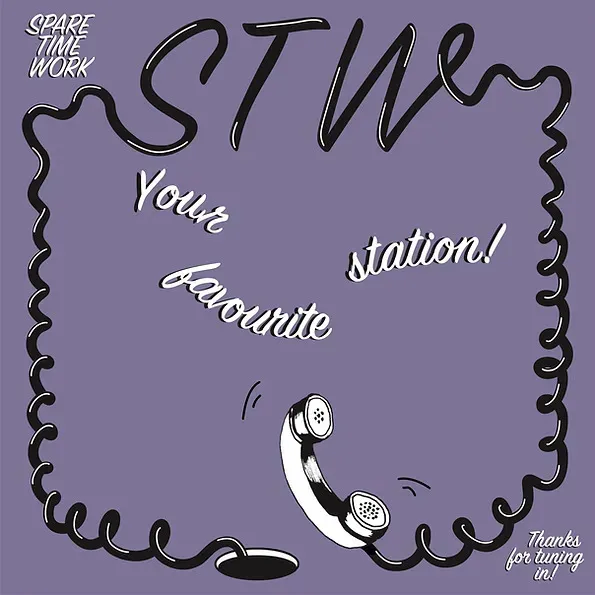
STW, your favourite station!
STW, your favourite station! functioneert als een radioprogramma. Een boek dat lyrisch proza uitzendt van We make stuff up for a living (een CV medley) tot COMPUTER_SONG, een ceremoniële quiz met Adult Hood & Young als protagonisten, een grillige anekdote van iemand die zich ergert aan een Call Service, en meer! Thanks for tuning in!

Subduing Demons in America: Selected Poems 1962-2007
Associated with key 1960s avant garde figures such as Ginsberg, Burroughs, Rauschenberg, and Johns, John Giorno was an early pioneer of multimedia poetry through Giorno Poetry Systems, which also distributed a who’s who of the American underground from Patti Smith to Sonic Youth. Giorno’s use of transgressive material and in-your-face, amplified delivery was also a key influence on punk/new wave pioneers such as Suicide, Throbbing Gristle, and Black Flag. Not just a poet but a sexual, spiritual, and political radical, Giorno helped pioneer the open celebration of queer sexuality in poetry in the 1960s.
Subduing Demons in America offers the best of Giorno’s revolutionary poetry, from his striking Pop Art–influenced poems of the 1960s to the psychedelic, echo-laden, multitracked cut-ups of the 1970s with their explosive configurations of queer sex, spiritual practice, and the bohemian Good Life. Also here are the pared-down punk/hip-hop performance poems that Giorno performed in the 1980s.

Plastic: A Poem
Set during a single twelve-hour night shift in an injection molding factory, plastic is a book-length poem exploring the life of the industrial worker turned poet.
Bringing together memoir, ekphrasis, and satire, plastic is based on Matthew Rice’s experience working in a plastic molding factory for ten years. Illustrating alienated twenty-first-century Irish labor in poetic form, plastic engages with the inflictions and implications of a “post-industrial,” “post-Troubles” society, all while weaving in depictions of factory work from literature, film, and the visual arts.
Time-stamped to highlight the claustrophobia of the worker’s experience, Rice meditates on masculinity, sectarianism, and intergenerational trauma. But at its core is a poem about feeling a calling while being submerged in the world of menial labor—making plastic airplane parts by night, making poetry by day.
Invoking the brevity of Seamus Heaney, plastic is an expansive and imaginative poem that offers the working class a grace, dignity, and truth not often found in contemporary literature.
MATTHEW RICE was born in Belfast. He holds an MA in poetry from Queen’s University Belfast and is currently undertaking a PhD at the Seamus Heaney Centre at Queen’s. His debut collection, The Last Weather Observer, was published in 2021 to critical acclaim, highly commended for the Forward Prize for Best First Collection, and included in the Arts Council of Northern Ireland’s top ten books of the year.

Vestiges_07: Catachresis
To wilt tears for an infatuation who has no name of their own. To weep rain like a sentence that passes through the unrequited glimpse. Language is the instrument of our shivers; literature the wink that slips into a wince.
Out of profane necessity we dress the missing words for each circumstance in ecstatic deprivation. Anticipation and alienation. Shock and sorrow. Craving and cruelty. Elation and tension. Emotion is the borrowed absence of transferred meaning: the sensuous "legs" of a table and the sunrise that falls-in-shadow upon the "foot" of a bed. Quintilian's "thirsty" crops that have neither tongue nor throat. Barthes' compassed "wings" of a house. Augustine's "piscina" in which no fish are to be found (and only humans drown). With delirium we endure, and delight in, the abuse of our sensibilities by the sadistic literalization of metaphor.
Featuring Will Alexander, Kimberly Alidio, César Dávila Andrade, Martine Bellen, Stanislav Belsky, Anselm Berrigan, David Buuck, Garrett Caples, Sam Cha, Logan Fry, Lawrence Giffin, Tilghman Alexander Goldsborough, E. Tracy Grinnell, Karen Holman, Elise Houcek, Andrew Joron, Inna Krasnoper, Carlos Lara, Jonathan Larson, Sueyeun Juliette Lee, Michael Leong, Douglas A. Martin, olga mikolaivna, Sheila E. Murphy, Ann Pedone, Sal Randolph, Martha Ronk, Jonathan Simkins, Christophe Tarkos, Edwin Torres, Christina Vega-Westhoff, Wendy Xu & John Yau

CUNY Center for the Humanities
Algeria: Capital Algiers
Algeria, Capital: Algiers by Anna Gréki is co-published by Pinsapo Press and CUNY Lost & Found, translated by Marine Cornuet, and introduced by Ammiel Alcalay.
Anna Gréki (1931-1966) was an Algerian poet of French descent. A member of the Algerian Communist Party, she was arrested and imprisoned for her participation in the Algerian liberation struggle in Algiers, in 1957. Algérie, capitale Alger, a collection of poems written during Gréki's imprisonment, was published in 1963 in a French and Arabic bilingual edition. Algeria, Capital: Algiers makes this work available to English readers for the first time.
"Anna Gréki was a particularly inconvenient pied noir—not loyal enough for the French colonists and too compromised for the Algerian nationalists—and so she was shunted to the margins of Algerian literary history. Nevertheless, it’s time she takes her place at the center of that narrative, and these accomplished translations constitute a necessary English-language introduction to this secret garden of Maghrebi poetry. Gréki’s poetry is electrified by the heady heights of the war of liberation, but arguably it finds its truest expression in her paeans to the wild hills and impregnable peaks of the Aurès mountains, where she was born and where she found a sense of peace which otherwise eluded her in her brief life." —André Naffis-Sahely
“Nothing happens here but everything burns.” From the prison where she was tortured by French authorities in 1950s Algeria, Anna Greki stays in touch, feverishly, with “this world of vulnerable flesh.” Addressed to her friends and comrades in struggle, to the land and the leaves and the birds, these poems defy “the war, this male ax,” invoking the future with “a trust so total / I can almost touch it.” Marine Cornuet’s translation deftly conveys Greki’s intimate language of the senses, to “transcribe with words what is done without them.” —Omar Berrada
"How fitting that a bilingual edition of Anna Gréki’s poems should be published now: a French poet born in Algeria, anti-colonialist (imprisoned for that) as Algeria battled for independence, writing in French, like Kateb Yacine, to show her freedom from French hegemony, but also her freedom as a woman writer to forge a transcendent and engaged poetics." —Marilyn Hacker

Girl With a Bullet
Ukrainian poet Anna Malihon’s English-language debut gathers daring, resilient, open-eyed poems written before and after Russia’s full-scale invasion. The difficult fates voiced by the protagonists of Malihon’s poems intertwine with her own experience, weaving an alarming but beautiful world where the young grow old and love is met with war. This world, at first shocking, holds the reader in suspension, compelling a desire to rethink and reread. With deft allegory and startling metaphor, Malihon crafts a poetry that seeks to influence the course of events, to reroute history.

Elegies of the Earth
Ahmad Shamlou, Niloufar Talebi
A sweeping centennial edition of Iran’s iconic twentieth-century poet of liberty, whose work shaped modern Persian poetry. Known for his political engagement and deep humanism, and his pivotal role in Persian poetry’s modernist turn toward free verse, Ahmad Shamlou (1925–2000) crafted poems that carried both lyrical intimacy and cultural force. A central, defiant voice in Iran’s modern literary history, Shamlou championed the power of poetry as an instrument of liberation. His work, long suppressed in his homeland, remains urgent for readers everywhere confronting censorship, exile, and erasure. This bilingual edition honors Shamlou’s centennial with the most expansive selection of his poetry to date in English, encompassing his wide thematic range: from fierce protest to intimate love, mythic storytelling to existential reflection. Niloufar Talebi’s vibrant translations and deeply researched commentary shine new light on Shamlou’s legacy and his relevance today.

Theory of the Voice and Dream
Liliana Ponce , Michael Martin Shea
Obsessing on the relationship between creation and absence, Argentine poet Liliana Ponce presents an unsettling meditation on body, language, and self. For the first time in English, this edition brings together Ponce’s serial poems from the closing years of the twentieth century, the widely anthologized Theory of the Voice and Dream and Fudekara, a shorter sequence written in response to a Japanese calligraphy course. In these major works, Ponce questions the nature of writing itself, of how to write when to write today is an emptiness, or when mouth and voice cannot find each other. Breaking with Argentine poetic conventions, Ponce charts a new model for poesis—oneiric, embodied, and urgent. As she says, I write so I don’t have to speak, so I don’t have to watch.

Smoke Drifts
Nadia Anjuman, Diana Arterian and 1 more
Afghan poet Nadia Anjuman (1980-2005) drew on the lineage of Persian and Sufi writing and her life under Taliban rule, attending to love, oppression, myth, and devotion through lyrics that both embrace and resist tradition. Anjuman grew up in the Herat, Afghanistan, a city known for centuries for its poetry. While the Taliban was in power, Anjuman met with other women in what appeared to be a needlepoint school, one of the few sanctioned pastimes for women, to secretly discuss literature and poetry. After the fall of the Taliban, Anjuman was finally able to attend university. She wrote and published a celebrated volume of poetry and was set to publish another before her early death due to domestic violence. Selections from both of Anjuman’s collections are presented here for the first time in English.

The Chroma Series
The Chroma Series lists elements of reality and systematically changes their color to evoke monochrome universes. The resulting poems may be conceived as mental films where quick-change art coexists with nonsense and politics.

Ruins and Other Poems
Samer Abu Hawwash, Huda J. Fakhreddine
In these poems, Samer Abu Hawwash stands upon ancient and modern ruins, engaging with the archetypal Arabic qasida and its echoes in the present, set against a backdrop of exile, displacement, and genocide. The site of the ruin, the journey, and the return home are the three movements of the archetypal Arabic form with which Samer contends in his book-length poem.
Writing in and from the moment of crisis, the poet keeps returning to ruins, forfeiting the journey and the hope of return and resolution, rearranging the elements of poetry in the Arabic tradition in search of closure or consolation—in a gesture, a shadow, a memory, an object. The five poems that follow “Ruins” in this book root themselves in monumental loss. When “it no longer matters if anyone loves us” and “we will lose this war,” nothing remains but the poem, the witness, the signpost in the wasteland of history.

The Complete C Comics
In the mid-1960s, legendary artist and writer Joe Brainard (I Remember) teamed with poets such as John Ashbery, Frank O’Hara, Barbara Guest, Ron Padgett, Kenneth Koch, Ted Berrigan, and many more for these pioneering collaborative comic strips—unavailable for decades and collected here for the first time.
“PEOPLE OF THE WORLD… RELAX!”
In the creative hotbed of 1960s New York, Joe Brainard was a whirlwind. He was a maker of paintings, assemblages, collages, book covers, poetry-reading flyers, and more. But some of his most exciting work was done with his friends. In 1964, the twenty-two-year-old Brainard turned his talents to rewiring the lowly comic book form into something new and surprising. He invited his friends Frank O’Hara, Ted Berrigan, John Ashbery, Kenneth Koch, Peter Schjeldahl, Barbara Guest, Ron Padgett, and others—all of them New York School poets—to collaborate with him on comics that they would write and he would draw.
The results were unlike any comics seen before. Previously available only on the rare-book market (at very high prices) but available here under one cover for the first time, the two issues of C Comics still feel as fresh as when the first page rolled off the mimeograph machine more than sixty years ago. Brainard’s energetic line and joyful humor charge across every page, illustrating O’Hara’s recasting of a cowboy as a mash-note-writing lover, Padgett’s experiments with traditional cartoon sound effects (ROAR! GRRR! SKREE!), cameos by Ernie Bushmiller’s Nancy, and heaps of Dadaesque delights.
This edition includes a foreword from Padgett and an essay by comics historian Bill Kartalopolous, who details the creation (and creators) of C Comics. A masterpiece of collaboration and spontaneity, C Comics is a testament to the vastness of Brainard’s creativity and his ability to push any artistic form in a new and powerful direction.
Foreword by Ron Padgett
Contributions by Bill Kartalopoulos

Unbidden Tongues #9: Potty Mouth
Unbidden Tongues #9: Potty Mouth is a collection of what could be described as concrete poetry, written over the past two years by our niece Violet Bartley, now aged five. Typed at a computer and sent exclusively via e-mail, the poems stand as clear evidence of a person in the beginnings of grasping (at) language. Throughout, characters are repeated uninterrupted until margins break them, keys pushed down by a finger not yet strong enough to lift itself up.
Over the years, as her written vocabulary grew and these attempts at communication slowly stacked up into the collection printed here, Violet delivered poem after poem within which different mutations of the word ‘poo’ were uttered in type: poo, poobum, bum poo, ipoo, poop. While simple, often illegible and definitely isolated utterances (she never replies when you send a poem back in turn), they are decipherable examples of someone learning defiance through language.

Suede Mantis / Soft Rage
Swaying between command and curiosity, acquiescence and destruction, distance and proximity, Jennifer Soong’s Suede Mantis / Soft Rage proffers tenderness that teeters on the precipice of loss. Premised on this peril is not a paralyzing grief but a generative poiesis of “cruel desperation,” in which poetry pronounces itself in contrasts and conditionals, had beens and renunciations. Like a tongue that tans flesh, like passion that’s made pliable by the pulsing and glistening of language, Suede Mantis / Soft Rage is the negotiated labor of a process rather than a product, raising interior operations to the surface while presenting an antithesis to mimetic construction. Neo-romantic and post-pastoral, the poems in Soong’s second collection reinvigorate lyric possibility.

Slow Mania
Nazareth Hassan’s devastatingly brilliant Slow mania is a powerful document of senses and sense-making where estrangement and ugliness meets longing and beauty. The artist begins with a photographic sequence: two white-blue sky panels; a shattered glass storefront window; a street gutter clutching leaves, smashed straw sleeves and plastic lids; then snow holding a disassembled red stained chest of drawers. These are the writer’s plinths where form as waste is configured: “smoggy breath thru burnt-edged holes tracking acid mucous inside your home.” Slow mania provokes through enumerative structures, for instance, “screening bodies” who keep a sex club’s gates open only to some: “…197 mmm maybe lemme think / 151 yes / 162 yes / 197 ok yes, but keep your shirt on.” The poet deftly folds human intimacy into interspecies metaphor: “The rat torso twitches in agreement. Across / the street, the flies continue to starve,” where “…you’re lost in your own hole: what did you find?” Hassan attends to this painful search, bearing witness to the disturbingly exultant, offering a radical state of being, in and out of which the stunning and timely Slow mania lives and thrives. — Ronaldo V. Wilson
Slow mania is resistance to resolution, it’s pointillistic magic, it’s Seurat in Bed-Stuy: the tighter you zoom, the more undifferentiated beauty you encounter. It’s kinky (the kinked-up curls of somebody’s greased-up chops). It’s tender (bruised and brown, like the overripe fruit that haunts your summer kitchen waiting to be crumbled into a crumble). The colors are blurry, the edges are soft, the stakes are high, and everything—everything!—shimmers in the space between life and afterlife. Hassan’s gaze is a hot summer steam that sneaks into the skinniest, stinkiest crevices; the grimiest seams, the most miraculous cracks. Breathe into the abyss, that’s the invitation. Take it in, let it in. Be a wit(h)ness to every single being. — Steffani Jemison
This amazing book reads like a synesthetic performance, the only thing missing is the smell of sweat, of streets, of loss. A book of choreographed pages, scores, movements, image blur, hand-scribbles. The bleak, unsparing texts hidden among the materials turn out to be the record of sudden eruptions, violent street scenes, pick-up scenes, unclear dialogues, insults, self-debasing verbal injuries on repeat. The performers are racialized, sexualized, anonymized “persons,” “meats,” numbers, lovers, passers-by, all caught up in these dangerous yet desperately emotional and triggering dances at the limit. It will leave you raw, spaced-out, both roused and alarmed as though coming out of an intoxicating show, and wanting more. — Caroline Bergvall

A Map of Absence: An Anthology of Palestinian Writing on the Nakba
A Map of Absence presents the finest poetry and prose by Palestinian writers over the last seventy years. Featuring writers in the diaspora and those living under occupation, these striking entries pay testament to one of the most pivotal events in modern history – the 1948 Nakba.
This unique, landmark anthology includes translated excerpts of works by major authors such as Mahmoud Darwish, Ghassan Kanafani and Fadwa Tuqan alongside those of emerging writers, published here in English for the first time. Depicting the varied aspects of Palestinian life both before and after 1948, their writings highlight the ongoing resonances of the Nakba.
An intimate companion for all lovers of world literature, A Map of Absence reveals the depth and breadth of Palestinian writing.

A book with a hole in it
Kamelya Omayma Youssef’s A book with a hole in it uses the poetry of the fragment and the language of everyday survival to gesture towards the fallibility of language at the juncture of the multiple, intersecting wars on women, on "terror," on the non-White body, and on people and language in diaspora. Drawn from a set of journals written over a four-month period, A book with a hole in it throws the formal, official work of poetry into relief, asking what knowledge exists beyond knowledge, which silences are too deep to be surfaced on the page, and how to pierce through trauma and violence to approach a politics of redemption.

You Who Suffer, Because You Love, Love Still More
In You Who Suffer, Because You Love, Love Still More, Serubiri Moses offers an intimate and personal study of the lives and loves of pop star Freddy Mercury, combining a detailed epigraphy on the duplicitous nature of Mercury's origins, sexuality, and artistic talent with his own delicate memoir as a poet. Through this series of interlocked poems, yet again Moses lures us into an atmosphere both sensual and scholarly that echoes well past its last verse.
With ardor and grace, Serubiri Moses traverses a catalogue of pop music, visual art, and cultural history to bring his readers to a state of openness — to love, to art, and the freewill of ecstatic experience. Moses’s writing forefronts pleasure as a gateway for deeper critical inquiry, braiding personal memory and epigraphic excursions into sex, stardom, and poetry, reminding us in this journey that "pleasure almost happens without us knowing."
— Tausif Noor
Serubiri Moses, Ugandan curator and author, lives in New York City. He serves as a part-time faculty member at Hunter CUNY, and visiting faculty at the Center for Curatorial Studies, Bard College. He previously held faculty positions at New York University, and the New Centre for Research and Practice, and delivered lectures at Chazen Museum of Art, Art Institute of Chicago, Williams College, Yale University, University of Pittsburgh, The New School, Zeitz Museum of Contemporary Art Africa, and basis voor aktuelle kunst (NL), and University of the Arts Helsinki (FL). As a curator, he has organized exhibitions at museums including MoMA PS1, Long Island City; Kunst-Werke Institute for Contemporary Art, Berlin; the Hessel Museum, Bard College, NY; and the Smithsonian National Museum of African Art. He has curated solo presentations of Carl E. Hazlewood, Reza Aramesh, and is working on a retrospective of Taryn Simon. He previously held a research fellowship at the University of Bayreuth, and received his MA in Curatorial Studies at Bard College, and is an alumni of the Àsìkò International Art Programme. He serves on the editorial team of e-flux journal and his short stories have appeared in print in Ursula, and online in Lolwe. He has published poetry in the online journals Jalada and Badilisha Poetry Exchange, as well as in print journals Kwani? 7, Kwani? 8, and READ: A Journal of Inter-Translation (2022). He is the author of the poetry collection THE MOON IS READING US A BOOK (2023; Pântano Books).

New Ancient Words
New Ancient Words is the first translation of Ellen Lima Wassu's poetry into English. A trilingual edition between her native Tupi indigenous language of the land of Pindorama, now Brazil, Portuguese, and English, this collection offers a wider readership her resistant yet intimate poetry, which flows seamlessly between her relational woes, a decolonial voice, and an animated playfulness with words and imagery. In her poems, history is an unstable landscape, where the personal, the mythical, and the natural are ever entwined and ever shifting in meaning.
Ellen Lima Wassu is a multiartist, freshwater fish, perplexed human, apartment gardener, and more beast than person. Born in Rio de Janeiro, she is Indigenous to the Wassu Cocal people (Alagoas, Brazil) and currently lives in Portugal, where she is pursuing a PhD, developing artistic practices, teaching courses, giving lectures, and working as an activist. In addition to contributing to literary magazines and anthologies, she has published ybykûatiara um livro de terra (Urutau, 2023) and ixé ygara voltando pra ’y’kûá (Urutau, 2021). Her practice weaves together art, poetry, performance, activism, critique, counter-colonial studies, essayistic writing, good encounters, river baths, listening sessions, and conversations with flowers.
Translation by Isadora Neves Marques and Alice dos Reis, revised by Marta Espiridião

Moon Mirrored Indivisible
Multilayered lyric poems that resist systems of power and foster intimacy.
An inheritor of lineages marked by colonial and gendered violence, Farid Matuk approaches the musical capacities of verse not as mere excitation or decoration, but as forms that reclaim pleasure and presence. Entering the sonic constellations of Moon Mirrored Indivisible, the reader finds relief from nesting layers of containment that systems of power impose on our bodies and imaginations. In this hall of historical mirrors, fictions of identity are refracted, reflected, and multiplied into a vast field of possibilities. Matuk’s meditations on place and power offer experiments in self-understanding, moving through expansive conversations between a lyric “I” and others, including poets, the speaker’s partner, ancestors, and the reader, and creating spaces for strange intimacy. Each of the book’s four sections of poems builds on the other to ask how we might form a collective—a people—not founded in orthodoxies of originality but in the mutual work of mirroring one another.

Memory
A spiritual homage to Bernadette Mayer's monumental artwork of the same title, Dorothea Lasky's Memory is a cycle of "poet's essays" stirred by two profound questions. What constitutes personhood and consciousness? What memories get lost, and why?
Expansive in her quest for answers, Lasky launches an inspired investigation of the forces that form our lives and deepest senses of ourselves. She identifies three dimensions of memory—ancestral, personal, and poetic—and in her singularly clear voice, undertakes to enter into their mysteries. From those recesses, she returns with a wide-ranging collection of essays that like lyric poems find the universal inside the particular. Memory reflects on the banal; private emotions and historical trauma; dear departed poets (Diane di Prima, Lucie Brock-Broido); her father's battle with Alzheimer's; and cultural events that have become charged sites of collective reminiscence (the moon landing, the music of Neutral Milk Hotel). Other pieces face the flip side of memory, asking what's left where memory is absent, and what's "real" beyond the horizon of death. The book closes with "Time, the Rose, and the Moon," an ars poetica published here in English for the first time, which offers the ancient symbol of the Ouroboros as a figure for the nonlinear processes of time, memory, and art.
Like Mayer before her, Lasky reveals memory to be huge and haunting, as she accumulates impressions that challenge the very possibility of fixed meaning. "Every rose has the scent of death," she writes. "And poetry is a perfume. That will stay on your body forever.... Whatever happens this time around, remember that."
Dorothea Lasky is the author of six full-length collections of poetry, including, most recently, The Shining (2023). She is also the author of the prose book Animal (2019) and a forthcoming book about Sappho, as well as the editor of Essays (2023) and a coeditor of Open the Door: How to Excite Young People About Poetry (2013). Her writing has appeared in POETRY, The New Yorker, The Paris Review, The Atlantic, and Boston Review, among other places.