Essays
Essays

Proverbs of a She-Dandy
These proverbs were originally published in 2018 in Vancouver by the Morris and Helen Belkin Art Gallery. With permission from the author the text has been styled into a bootleg and risoprinted in medium blue ink.
“Menopause, Gardanne said in 1821, is the loss of the signs of female reproductive ability. ‘Huge dangers’, he warned, ‘precede, accompany, follow the cessation of this function’. The illustration on the cover of his book shows a broken ceramic pitcher. Gardanne was at the forefront of what now would be called the ‘medicalisation of menopause’, which is to say, its treatment as an ailment, both physical and psychosomatic, of the female body.”
Proverbs of a She-Dandy elaborates on a persistent theme in feminist art and literature over many past decades: a skeptical yet desirous exploration of the flâneur as a figure of agency for women. Robertson finds in Charles Baudelaire’s dandy a tangible presence for old women in public spaces.

The Forgetting of Dreams Selected Oneiric Residues
We process our lives through riddles, mysteries, ciphers, and enigmas - but we hesitate to share these with friends and family. In times gone by, as for Freud, dreams were considered a key to cosmic secrets. Today, in all sorts of ways – both subtle and not – we are discouraged from sharing the content of our dreams, unless we happen to be indulging in that most anachronistic ritual: lying prostrate on the psychoanalyst’s couch. Anywhere else, an anecdote that begins, “Last night I dreamed . . .” is usually met with a sigh and a defensive glazing of the eyes. In our over-burdened world, any sharing of dreams is always already perceived as over-sharing. Contrary to this, Pettman argues - the more we share tales of our isolated nocturnal journeys, the better chance we have to understand the topography of our collective conundrum.

Shakespeare and Ethics
Shakespeare’s plays are full of philosophical ideas, but they are rarely examined systematically. In this pamphlet philosopher Colin McGinn analyzes the plays to distill Shakespeare’s ideas about ethics. McGinn concludes that the “plays are about good and evil,” and that Shakespeare is “a great moral psychologist,” who expertly stages how his characters are defined by their moral qualities (their naturalistic virtues and vices).

Aesthetical Relations
Aesthetical Relations is a constellation of essays on art, fashion, cancer, comedy, Los Angeles, and your mom. Martinez whips elements of fiction and stand up material into bits and pieces addressing such concerns as: how many times you may kiss an art-world acquaintance, the theoretical stakes of sexting, and why German performance art is like French clowning. Aesthetical Relations is titled after Martinez’s ongoing conceptual comedy talk show of the same name. This new revised and expanded third edition includes new essays written from 2020-2025.
Christina Catherine Martinez (Mexican American, b. Bellflower, CA) lives and works between Los Angeles, Mexico City, and New England. She was named both a Comedian You Should Know by Vulture and a Comic to Watch by TimeOutLA, and is a recipient of an Andy Warhol Foundation Arts Writers Grant for her varied approaches to art criticism, published in platforms such as The Los Angeles Times, Aperture, Frieze, Artforum, Bookforum, e-flux criticism, DOCUMENT Journal, Dirt.fyi and Texte Zur Kunst.

That Figures. Selected Writings
Gathering 13 amazing essays by artist and writer Dena Yago, co-founder of K-HOLE, That Figures retraces more than a decade of reflections on the creative industry—digging into topics such as Sporespace, Billie Eilish, LARPing, corporate cafeterias, ketamine, precarity, poetry, and the internet’s lures and failures. Yago exposes the contradictions of living amidst the sugarcoated deals of the attention economy, and further proposes a new lexicon to address the numbing and disorienting effects of late stage capitalism. Absorbing but refusing to metabolize the language of commercial culture, she opens a space where critical thinking can still happen.
That Figures also features a selection of artworks by Yago, in which the combination of conceptual legacies with pop cultural elements creates new poetical arrangements.

Comment réparer : La maternité et ses fantômes
Iman Mersal, Richard Jacquemond
Publié en 2018 par Kayfa-ta (Égypte), Comment réparer : la maternité et ses fantômes propose une réflexion sur la maternité et ses représentations. Plusieurs fois réimprimé, ce livre jouit d’une très grande réputation dans le monde arabophone, notamment auprès des jeunes générations.Mobilisant différentes formes d’écriture (essai, récit, poème, journal) et des images photographiques tirées de sources diverses (archives personnelles, presse, portraits vernaculaires, etc.), la trame du livre s’articule autour des relations de l’autrice avec sa mère, sa grand-mère et ses deux fils. Déjouant les clichés et les formes narratives établies, Iman Mersal décèle les complexes réseaux symboliques dans lesquels s’inscrivent la filiation et la maternité, depuis la grossesse jusqu’à l’éducation des enfants, et ce de génération en génération.À l’écoute des silences de la mémoire, explorant ses labyrinthes, le livre porte un regard critique sur la violence et le sentiment de culpabilité qui traversent le corps maternel, notamment dans ses rapports au langage, au travail ou aux institutions. Iman Mersal élabore ainsi une sorte d’art poétique : la réparation dont parle le titre passe par l’écriture, elle est donc d’ordre créatif ; mais l’écriture s’insère dans un quotidien qui lui fait obstacle, qui met au défi la possibilité même d’écrire dès qu’on devient mère. Comment réparer : la maternité et ses fantômes est en ce sens un formidable texte de résistance, un geste d’émancipation.
Née en 1966 en Égypte, Iman Mersal est poète et professeur associé de littérature arabe à l’université d’Alberta, au Canada. Ses récents livres sont des écrits très originaux qui mêlent recherche académique et réflexions intimes sur une grande variété de sujets, dont la plupart ont trait à son identité de femme et d’artiste. Une anthologie de ses poèmes – Des choses m’ont échappé (2018) – et un récit – Sur les traces d’Enayat Zayyat (2021) – ont été traduits en français par Richard Jacquemond pour les éditions Actes Sud

On Breathing
A beautiful, expansive essay about care, dependence, and what it means to breathe in an age of environmental catastrophe.
A few moments after birth we begin to use our lungs for the first time. From then on, we must continue breathing for as long as we are alive. And although this mostly happens unconsciously, in a society plagued by anxiety, climate change, environmental racism, and illness, there are more and more instances that ‘teach us about the privilege that is breathing.’
Why do we so easily forget the air that we breathe in common? What does it mean to breathe when the environment that sustains life now threatens it? And how can life continue to flourish under conditions that are increasingly toxic?
To approach these questions, Jamieson Webster draws on psychoanalytic theory and reflects on her own experiences as an asthmatic teenager, a deep-sea diver, a palliative psychologist during covid, a psychoanalyst attentive to the somatic, and a new mother. The result is a compassionate and timely exploration of air and breathing as a way to undo the pervasive myth of the individual by considering our dependence on invisible systems, on one another, and the way we have violently neglected this important aspect of life.

La locataire
The Tenant is a monographic critical essay by Marie Canet. It is the first text to directly address the connections between McKenzie’s work, pornography, and special effects. The title refers to the way the artist moves through different periods and aesthetic spaces, appropriating their codes in order to construct new visual fictions. The book is infused with post-#MeToo feminist thinking, alternative uses of biography, reflections on the art world, and contemporary debates surrounding appropriation, embodiment, and the status of the artwork.
McKenzie and Canet worked with each other for over eight years, on projects like Atelier E.B: Passer-by catalogue, published on the occasion of the Fondation Galeries Lafayette exhibition, or the book Pervert or Detective, a conversation between Lucy McKenzie and artist Reba Maybury. This collaboration now culminated in an exhibition and a book: Plastic Newspaper (presented at CRAC Sète in March 2026) and Lucy McKenzie, The Tenant.
Texts by Marie Canet and Lucy McKenzie
Translations: Catherine Petit & Paul Buck (Marie Canet), Juliette Desorgues (Lucy McKenzie)
Published in connection with the exhibition Lucy McKenzie, Plastic Newspaper, at Crac Occitanie, Centre régional d‘art contemporain Occitanie/Pyrénées-Méditerranée à Sète, 21.03.-06.09.26

The Tenant
The Tenant is a monographic critical essay by Marie Canet. It is the first text to directly address the connections between McKenzie’s work, pornography, and special effects. The title refers to the way the artist moves through different periods and aesthetic spaces, appropriating their codes in order to construct new visual fictions. The book is infused with post-#MeToo feminist thinking, alternative uses of biography, reflections on the art world, and contemporary debates surrounding appropriation, embodiment, and the status of the artwork.
McKenzie and Canet worked with each other for over eight years, on projects like Atelier E.B: Passer-by catalogue, published on the occasion of the Fondation Galeries Lafayette exhibition, or the book Pervert or Detective, a conversation between Lucy McKenzie and artist Reba Maybury. This collaboration now culminated in an exhibition and a book: Plastic Newspaper (presented at CRAC Sète in March 2026) and Lucy McKenzie, The Tenant.
Texts by Marie Canet and Lucy McKenzie
Translations: Catherine Petit & Paul Buck (Marie Canet), Juliette Desorgues (Lucy McKenzie)
Published in connection with the exhibition Lucy McKenzie, Plastic Newspaper, at Crac Occitanie, Centre régional d‘art contemporain Occitanie/Pyrénées-Méditerranée à Sète, 21.03.-06.09.26
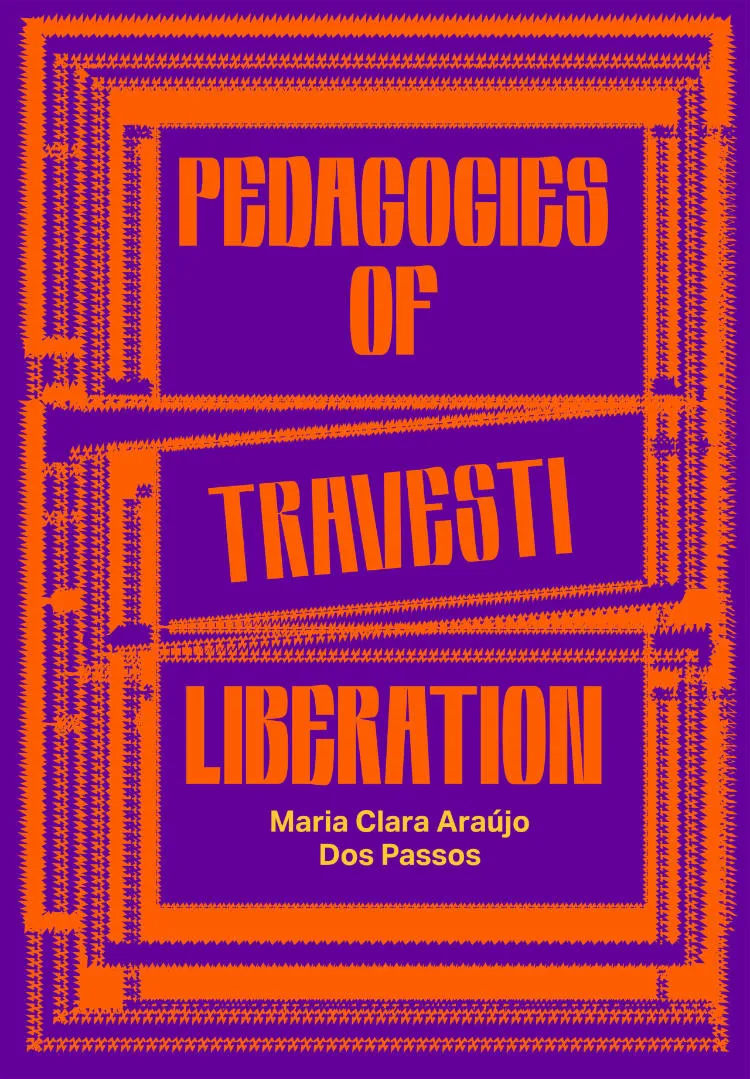
Pedagogies of Travesti Liberation
Maria Clara Araújo dos Passos, Natália Affonso
Maria Clara Araújo dos Passos examines the interplay of education, identity, and liberation in Brazil's travesti community.
In Pedagogies of Travesti Liberation, Maria Clara Araújo dos Passos critiques traditional pedagogical frameworks that marginalize gender nonconforming narratives and highlights the effects of systemic discrimination on travestis' psychosocial well-being. The book advocates for inclusive educational practices and emphasizes the need for affirmative curricula.
Newly translated from Portuguese, this work contributes towards connecting political struggles globally and navigating the complexities of translation—particularly of the term "travesti"—across various geographical and political contexts, featuring a conversation between Araújo dos Passos and translator Natália Affonso.
Maria Clara Araújo dos Passos (born 1996 in Recife) is a Brazilian Afro-transfeminist educator and sociologist, and an activist for LGBT rights.
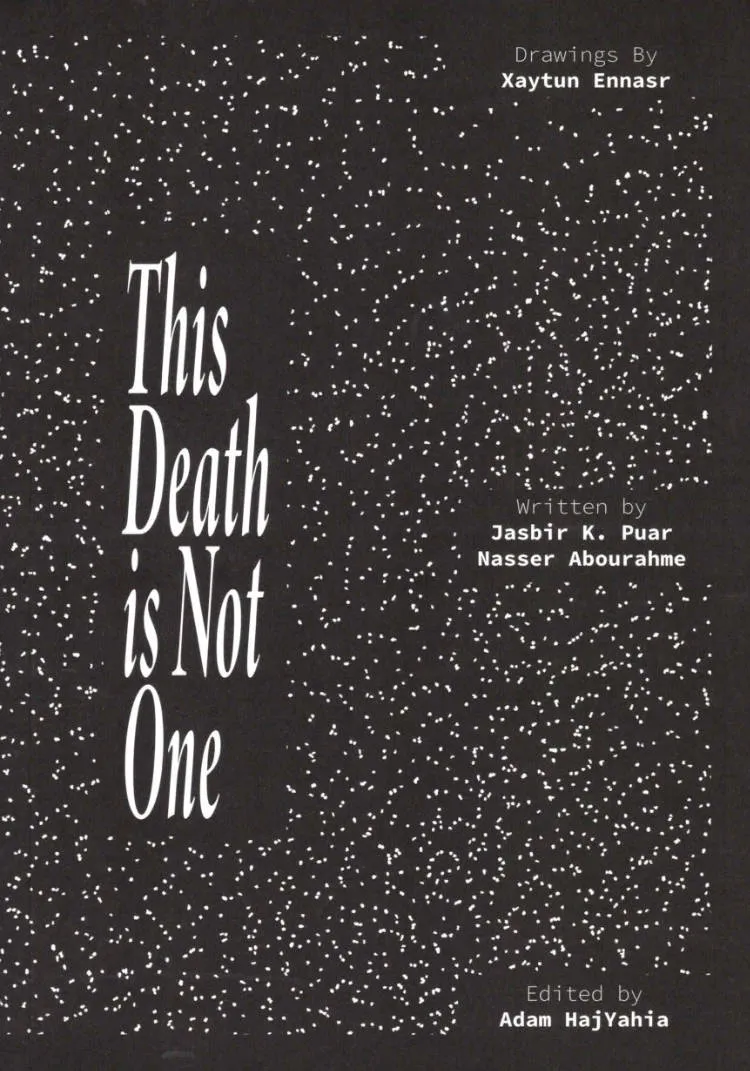
This Death is Not One
Jasbir K. Puar, Nasser Abourahme and 1 more
The publication of The Right to Maim by Jasbir K. Puar in 2017 was critical to advancing studies on disability and to further articulating how the body figures in the nexus of capacity and debility across racializing and extractive neoliberal lines. It offered a complex and rigorous anti-capitalist account of disability that is useful to both scholarly work and political and social organizing. However, despite its paramount contribution to scholarship on Palestine, delivered by its scathing analysis of the Israeli biopolitical policy—its right to maim—in how the injured Palestinian body is produced and reproduced, its reception was difficult, and hard to stomach. It cohered a political logic in writing before it was visibly evident on the ground. In the moment and aftermath of the Great March of Return (2018-19), Puar’s offerings became much harder to ignore, as the event crystallized a mass maiming campaign of Palestinian protesters inside the edges of the militarized borders of Gaza.
The occasion of this publication by Bilna’es marks the first translation into Arabic of the chapter “Will Not Let Die”: Debilitation and Inhuman Biopolitics in Palestine, alongside the postscript of The Right to Maim. Not simply a reissue of previously published work or a translation, This Death is Not One includes a new preface from Jasbir K. Puar revisiting the right to maim from within this moment of genocide in Gaza that interrogates the new vectors of living and dying under settler-colonialism, and how maiming, in fact, speaks of extermination; an introduction by Nasser Abourahme reflecting on the book’s stakes in the present and its reception in the past, alongside searing analysis of genocide in excess of the law, and what this reveals and forecloses in how we understand the juridical body and militancy in the wake of Zionism; and original drawings by Xaytun Ennasr that inscribe a relation between land and body mapped through cosmological patterns tracing the relation between martyrs, who are referred to as moons, and the moon, a symbol for martyrdom in Palestine.
Jasbir K. Puar is Distinguished Faculty of Arts Professor in the Social Justice Institute at the University of British Columbia, Extraordinary Professor in the Women’s and Gender Studies Department at the University of the Western Cape in Cape Town, South Africa, and Professor Emerita at Rutgers University where she was faculty in the Women’s, Gender, and Sexuality Studies Department for 23 years. Puar is the author of the award-winning books: The Right to Maim: Debility, Capacity, Disability (2017), and Terrorist Assemblages: Homonationalism in Queer Times (2007).
Nasser Abourahme is a writer and teacher, and is currently assistant professor at Bowdoin College. He’s the author of The Time beneath the Concrete: Palestine between Camp and Colony (Duke University Press, 2025), which was awarded the 2025 Palestine Book Award.
Xaytun Ennasr is an artist and designer. She works across experimental video games, paintings, prints, ceramics, installations, and text. She often uses science fiction, folklore, and radical softness as affective tools for revolutionary cultural production, specifically Palestinian liberation and sovereignty. Her work often deals with questions of land, cartography, transness, gender, and the living environment.
Drawings by Xaytun Ennasr
Translation to Arabic:
“Living in Genocide” by Jasbir K. Puar, translated by The Archilogue
“Our names, our remains” by Nasser Abourahme, translated by The Archilogue
The Right to Maim, Chapter 4: “Will not let die: Debilitation and Inhuman Biopolitics in Palestine ” and the The Right to Maim Postscript by Jasbir K. Puar, translated by Bekriah Mawasi
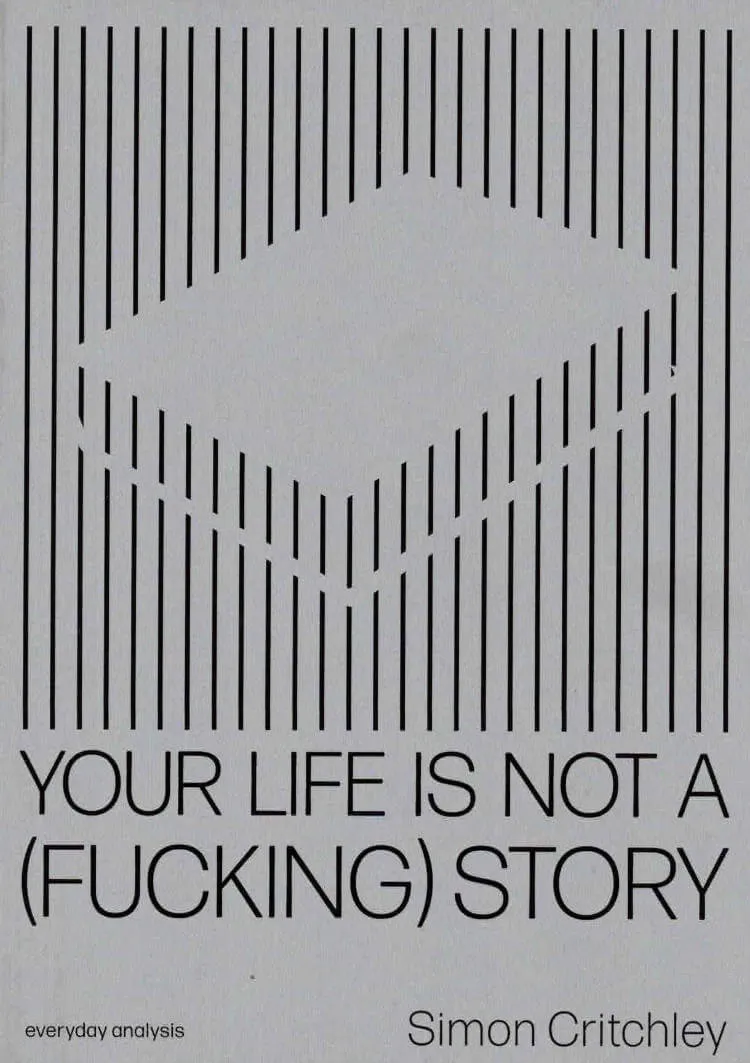
Your Life Is Not A (Fucking) Story
In this new collected edition of his recent articles, Simon Critchley - one of the most important living philosophers - takes us through his reflections on death, questions of doubt and reason, the legacy of David Bowie, the nature of fear and empathy in a broken society and a critique of narrative identity - among other things. YOUR LIFE IS NOT A STORY explores the contemporary world and its psychological impact on us, offering us a way to see our situation different and resist its tricks and contrivances.
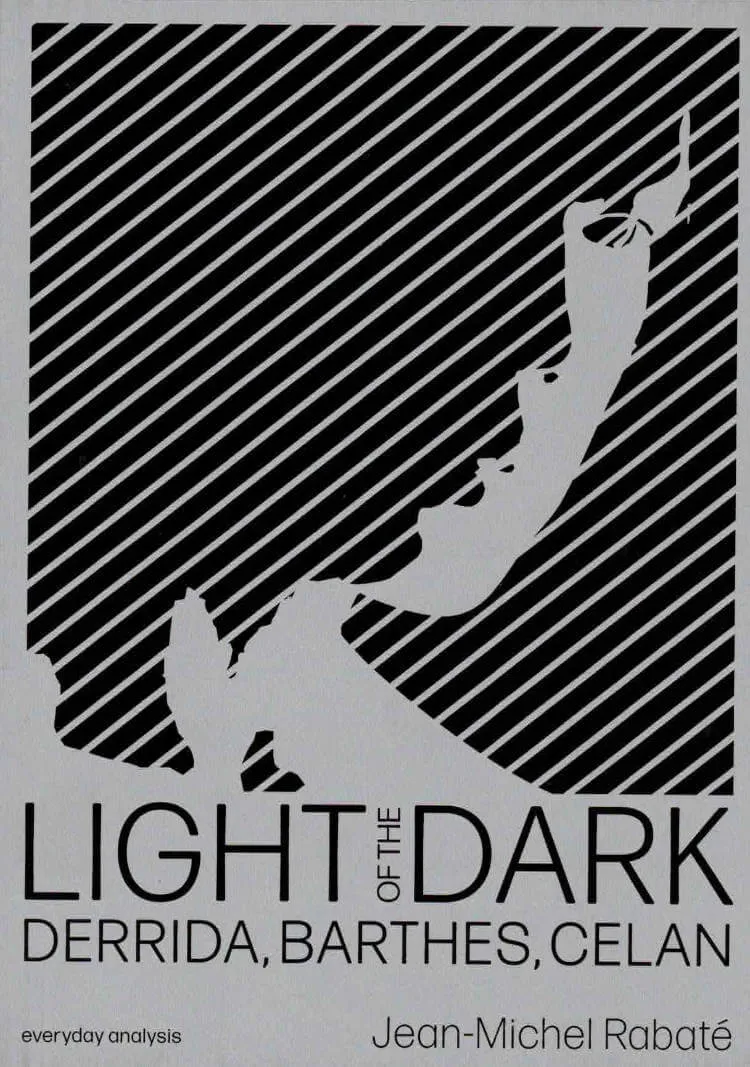
Light Of The Dark: Derrida, Barthes, Celan
Derrida’s essay “Aletheia” discusses the work of Japanese photographer Kishin Shinoyama. Reading Derrida, Rabaté investigates how, behind the classical concept of truth as a beautiful naked woman, Derrida argues that any photographic image tells the Truth, but a truth obscured as it comes to light: “nothing is more black than the visibility of light.” Staging a critical conversation with Roland Barthes’s theses in Camera Lucida and Paul Celan’s poems from Breathturn to Lightduress, Rabaté argues for a theoretical approach to truth that counters the prevailing truth-discourses of today.
Confessions Of A Class Reductionist
In these essays, Ben Burgis criticizes fashionable radical-liberal identity politics and makes the case for universalism about rights and an unabashedly “class-first” approach to socialist political strategy. This may sound to some ears like a call for abandoning marginalized people. On the contrary, he argues, focusing on economic inequality empowers the victims of bigotry and retrograde social practices the resources and material security to stand up for themselves far more effectively than any diversity trainer or “anti-racism” consultant could represent their interests. As we face a rising tide of reactionary authoritarianism, it’s more important than ever to ditch the identitarian pieties of the recent past and think hard about how the Left can actually win.

The Completion
In The Completion, legendary philosopher Franco 'Bifo' Berardi offers his analysis of cognitive automation and artificial intelligence. Of the possible worlds imagined in Silicon Valley and in the media discourse around tech boosterism, none will likely materialise. Instead, the unpredictable will intervene in the future of predictive technology.
In this new edition, in a new venture for Everyday Analysis, Berardi's essay is accompanied by an introduction by Alfie Bown and a series of artworks and illustrations, new and historic- from Borges's labyrinths to the I-ching - offering a reading experience in the spirit of Berardi's work.
Saving Genitality: Toward A Freudian Virtue Ethics
Western societies have dismantled many of the prohibitions that ringfenced errant sexual drives in Freud’s time. The psychoanalytic project describes people caught between two fundamental and contradictory principles: One a relentless sexual drive, the libido; the other our species’ collective need for social order and harmony. Part of this harmony, for true Freudians, is embedded in the binary mutuality of men’s and women’s bodies, which remains indispensable for society to reproduce itself, even in our sexually liberated age. In this essay, Ahmari revisits the idea of ‘genitality’ arguing that perhaps the "heteronormative" orthodox Freudians were right about some things after all.
![Cover of أحمد [Ahmed] – Writing](https://rile.space/storage/4500/conversions/01KTRKW207R5ABRVS27RYCB9M1-webp.webp)
أحمد [Ahmed] – Writing
[Ahmed] is the quartet of Pat Thomas (piano), Joel Grip (double bass), Antonin Gerbal (drums) and Seymour Wright (alto saxophone). Since 2014, أحمد [Ahmed] have excavated and re-imagined the music of Ahmed Abdul-Malik, in an ever ongoing search for future music.
[Ahmed] – Writing (EXV01) gathers together the [Ahmed] ‘paper’ texts from the last decade: liner-notes; covers of the releases; and writing by the band members – Antonin and Joel have written two fresh ones for this book, Seymour’s have appeared alongside the records, and some of Pat’s come from a time (long) before [Ahmed]. “Together, the ideas-energy in these things gives a sense of what we have done, do, think together (and apart) in living music, how our different ways come together, and how, together, we learn through be-doing [Ahmed]… These texts are woven together (the etymology of text is from weave) through (and into) a rich fabric of enquiry. A collaborative weaving together of difference(s) to make a whole (thing).” (Seymour Wright)
Contributions by Pat Thomas, Seymour Wright, Antonin Gerbal, Joel Grip, Robert Levin, James G. Spady, John Chantler, Edward George, Fred Moten
Edited by [Ahmed]
Series Editors: Stoffel Debuysere, Jef Lambrechts, Will Holder
Initiated by Stoffel Debuysere
Produced and designed by Will Holder [lps’ original design: Maja Larsson]

knot body
Bringing together poetry, essay, and letters to “lovers, friends and in-betweens,” Eli Tareq El Bechelany-Lynch confronts the ways capitalism, fatphobia, ableism, transness, and racializations affect people with chronic pain, illness, and disability. knot body explores what it means to discover the limits of your body, and contends with what those limitations bring up in the world we live in.
knot body was shortlisted for the QWF First Book Prize. Their second collection of poetry, The Good Arabs (Metonymy Press), won the 2022 Grand Prix du Livre de Montréal.
“For me, the power of knot body stems from its courage and unique voice in writing the ache, the ache of chronic pain, the ache of faulty diagnoses and bodily misreadings, and, equally, the ache for honest answers on how to love each other in all our dignity. Eli Tareq El Bechelany-Lynch is an artist and philosopher of talent, generosity, and heart.” – David Chariandy, author of Brother (Penguin Random House)
“In this moment, when trans, racialized and disabled bodies are met with violent and polarizing commentary within the public sphere, Eli Tareq El Bechelany-Lynch offers us the uninterrupted intimacy of knot body. As self-communional as Kiese Laymon’s Heavy and Terese Marie Mailhot’s Heart Berries, they amplify and queer the epistolary memoir genre. Each letter is emotionally and thematically complete and, too, each letter decidedly speaks to the next. Readers may ruminate on the sharp and sensual inquiry offered by each individual letter, or read cover-to-cover and be present to the gorgeously-engaged, call-and-response quality of knot body as a whole.” – Amber Dawn, author of My Art is Killing Me (Arsenal Pulp Press)
“knot body is such a generous tapestry of tenderness—a collection that brilliantly utilizes the direct address in a way that is not universal, but still beautifully communal. I reached the end of this collection and breathed in a newer, better world.” – Hanif Abdurraqib, author of A Fortune for Your Disaster (Tin House)
Eli Tareq El Bechelany-Lynch is a queer Arab poet living in Tio’tia:ke, unceded Kanien’kehá:ka territory (Montreal). Their work has appeared in The Best Canadian Poetry 2018 anthology, GUTS, carte blanche, the Shade Journal, The New Quarterly, Arc Poetry Magazine, Room Magazine, and elsewhere. They participated in the Banff Centre’s ‘Centering Ourselves’ BIPOC residency, and they were longlisted for the CBC Poetry Prize in 2019. Their second collection of poetry, The Good Arabs, was published by Metonymy Press in 2021.

Afterimage No. 11, Sighting Snow
The independent British film journal Afterimage published thirteen issues between 1970 and 1987. International in scope, it surveyed the many forms of radical cinema during an extraordinary period of film history. Having emerged in the wake of post-1968 cultural and political change, Afterimage charted contemporary developments with special issues on themes such as the avant-garde, Latin American cinema and visionary animation, and also looked back at early film pioneers. It published many of the leading critics of the period and vitally provided a forum for filmmakers’ writings and manifestos.

I presumed possession, my language, my loss
In I presumed possession, my language, my loss, I begin in third person to write about what it means to lose a mother tongue, and about how that loss is never natural but engineered: by state assessments, border conditions, and a free market of articulation. I write about language as transaction—what you gain in the language of power at the cost of becoming inarticulate in the language of origin. I write about the monolingual paradigm as a political demand rather than a natural inheritance, about standardization as a form of border-drawing, and about the grief of hearing the people you love measured as insufficient. The text moves between the personal and the structural, between a grandmother forgetting and a language policy forbidding. It is about what we lose, and about what we have learned to accept as acceptable to lose.
Cecilie Fang is an anti-disciplinary artist and writer from China and Denmark, based in Amsterdam. Generated through writing, her process-oriented work unfolds across performance, publication, material micro-performativity, and installation.

The Minor Gesture
In this wide-ranging and probing book Erin Manning extends her previous inquiries into the politics of movement to the concept of the minor gesture. The minor gesture, although it may pass almost unperceived, transforms the field of relations. More than a chance variation, less than a volition, it requires rethinking common assumptions about human agency and political action. To embrace the minor gesture's power to fashion relations, its capacity to open new modes of experience and manners of expression, is to challenge the ways in which the neurotypical image of the human devalues alternative ways of being moved by and moving through the world—in particular what Manning terms "autistic perception." Drawing on Deleuze and Guattari's schizoanalysis and Whitehead's speculative pragmatism, Manning's far-reaching analyses range from fashion to depression to the writings of autistics, in each case affirming the neurodiversity of the minor and the alternative politics it gestures toward.
I have been enthralled and held by this book! Erin Manning has given us a new theory of bearing, as well as a new elaboration of gesture, going beyond Balzac’s theory and Agamben’s interpretation of it. She doesn’t lament the loss of gesture but celebrates gesture's minoritization.
- Fred Moten

Sick issue 7
Writing on navigating the workplace as an ambulatory wheelchair user, how sex work can be a means of survival, re-imagining 'Christina's World', the boundaries of our bodies, an interview with Caren Beilin, poetry, artwork, book recommendations, and much more.
Essays, features, poetry, art, interviews & more from Laura Baliman, Caren Beilin, Amy Berkowitz, Leah M. Bowie, Kaitlin D'Avella, Lindsy Davis, Katherine DeCoste, Yining Fang, Emily Freeman, Maria Gray, Bec Mackenzie, Ariana Martinez, Chloe McGreal, Ryann McKinney, Iyla Owens, Emily Pinkerton, Marin Scarlett, Maya-Gawonii Shabazz-Saleh, Anna Stiles, Maeve Sweeney, & J Min Wang.
SICK is an independent, thoughtful magazine exploring illness and disability, founded & edited by Olivia Spring and designed by Kaiya Waerea. Founded in Norwich, UK in 2019, we are currently based in Maine, USA and London, UK. We typically publish one issue per year.

Telling is Listening: Selected Essays 1973-2014
Ursula K. Le Guin, Conner Bouchard-Roberts
An essential collection of essays on language, the imagination, and the art of words by one of the great literary masters of the last century.
This book traces a long sweep (1973-2014) through Ursula K. Le Guin's career; offering both a portrait of the author as a philosopher and a reference text for new generations of wordworkers and bookmakers.

Theory for Moving Houses
You are asking me where I live and it’s making me think all these things about space, where I start and end in space and where space starts and ends in me and when, in space, I am a body and when I’m a book, in space.
So begins Renee Gladman's Theory for Moving Houses, and with these lines we are invited into a liminal space of imagination and investigation, as Gladman guides us through the architectures of her poetics. Foundational here is a sense of fluidity, a slippage of time, a devotion to “non-linear and hyper gestural movement,” a communal spirit. Gladman’s inquiry into her intersecting practices of writing and drawing reveals a deep commitment to uncertainty and “fictional knowing.” Yet again, Gladman upends traditional expectations of prose, as she leads us through landscape of her Ravicka series novels, ultimately surprising us with a novel within nonfiction. The latest volume in Wave’s Bagley Wright Lecture Series, Theory for Moving Houses is not only visionary in its contemplations but also is a virtuosic example of the ways in which language can shape utopian sites of possibility.