Choreography
Choreography

Movement Research Performance Journal
Issue #62 - We Exist in the Ambivalence of Those Motherfuckers
Anh Vo, maura nguyen-donohue and 1 more
What began as a project responding to the fiftieth anniversary of the ‘end’ of the Vietnam War became a project of inhabiting the Movement Research Performance Journal (MRPJ) from within the landscape of contemporary Vietnamese performance art. The result, Issue #62, is a window onto a community of insiders who reflect a set of concerns, questions, historical trajectories, and aesthetic legacies that differ from what has more often been foregrounded in our U.S./New York City-centric publication. Like other documents of this kind, which endeavor to portray a performance scene that will be foreign to many readers, the texts from this group of intergenerational, contemporary artists demonstrate a careful navigation of the dialectics of inside and outside, self and other, performer and audience, seeing and being seen, that informs every exchange across cultural difference.
The texts are also not monolithic, suggesting a range of relations to the Vietnam of the past and present, from within Vietnam’s national borders and among the diaspora. Especially for contributors living and working in Vietnam, writing has also been a practice of choreographing words within a political landscape where to speak publicly, in itself, is a performance of negotiated risk. Embracing the complexities of these differing positions has been the focus of our editorial process—one that has asked the editorial team to embrace the limits of our own knowledge, to recognize we will not be able to recognize all valences others may discover in these texts, and not to edit these layers out of the works that follows.
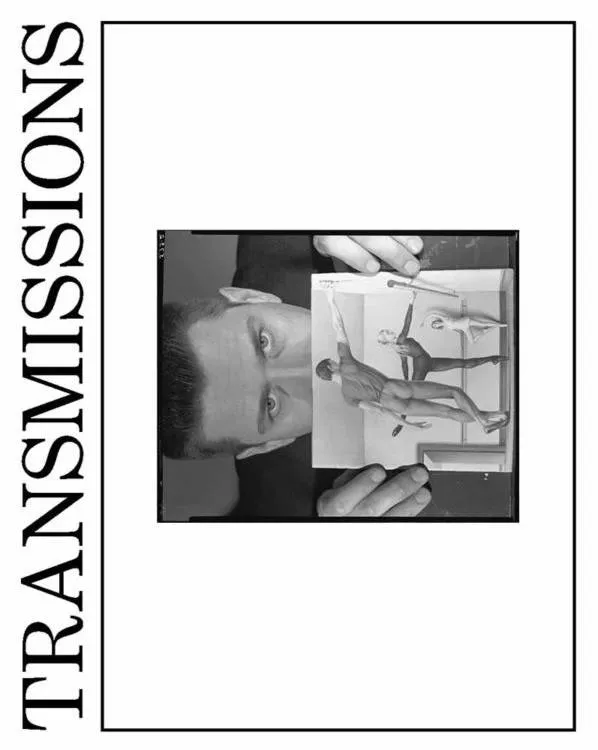
Transmissions
An aesthetic and social history of art and dance in mid-20th-century New York interpreted by contemporary artist Nick Mauss.
Over the past decade, Nick Mauss (b. 1980) has pursued a hybrid mode of working that melds the roles of curator, artist, and scholar. This catalogue leans heavily into the scholarship side of his practice, building on his 2018 Whitney Museum exhibition with a closer look at the relationship between modernist ballet and the New York avant-garde. In the 1930s through 1950s, ballet was introduced to a popular audience in New York and was simultaneously influenced by developments in Europe in painting, photography, fashion, music, and poetry. Mauss reflects on this period of rich cross-media production and synergy, ultimately arguing for the inseparability of dance and art history.

Whitney Museum of American Art
Edges of Ailey
Alvin Ailey is one of the most celebrated choreographers of the twentieth century. The creator of iconic works such as Blues Suite, Revelations, and Cry, he is widely recognized for the dance company he founded in 1958 when he was just twenty-seven years old. Ailey imagined and cultivated a platform for modern dance through his innovative repertoire, interdisciplinary sensibility, and support of dancers and choreographers. This expansive volume situates Ailey within a broader social, creative, and cultural context, looking at the artists who influenced and collaborated with him, the spaces and scenes he frequented, the dynamic themes within his dances, and how his vision and work changed contemporary dance.
Essays by artists, scholars, and critics cover topics ranging from the Black church, the South, and the Great Migration to nightclubs, musical influences, and queerness. With more than four hundred images including photographs of works Ailey choreographed, archival materials such as notebooks, sketches, letters, and never-before-published behind-the-scenes photos, and conversations about the legacy of the company with Sylvia Waters, Judith Jamison, and Masazumi Chaya as well as several contemporary dancers and scholars, this study offers an unprecedented full picture of one of the twentieth century’s leading artists and the way his work continues to inspire today’s generation of dancers.
Contributions by Horace D. Ballard, Harmony Bench, Kate Elswit, Aimee Meredith Cox, Thomas F. DeFrantz, Malik Gaines, Jasmine Johnson, Joshua Lubin-Levy, Uri McMillan, Ariel Osterweis, J Wortham, CJ Salapare, Kyle Abraham, Claire Bishop, Masazumi Chaya, Brenda Dixon-Gottschild, Jennifer Homans, Judith Jamison, Sylvia Waters, Jamila Wignot and Jawole Willa Jo Zollar

Dance History(s): Imagination as a Form of Study
Annie-B Parson, Thomas F. DeFrantz
Authored by twelve diverse American dance artists in the form of twelve small booklets, Dance History(s): Imagination as a Form of Studyapproaches and celebrates dance history as a subjective, artistic inquiry. It reimagines and radicalizes our understanding of dance throughout human history through the voices of working choreographers. Simultaneously, the project is dedicated to the power of an artist-centric view of history itself, thus placing the dance history back into the body, where it began. Here, history occurs in vertical layers of time and space and moves into the street, the football field, the yard, the screen, the memory, the womb, the sky, and the future.
Text by mayfield brooks, thomas f. defrantz, maura nguyễn donohue, Keith Hennessy, Bebe Miller, Okwui Okpokwasili, Eiko Otake, Annie-B Parson, Javier Stell-Frésquez, Ogemdi Ude, Mariana Valencia, and Andros Zins-Browne

Studies on Squats
Studies on Squats is an evocative exploration of embodied resistance and political movement that uses the multifaceted posture of the “Asian Squat” as a lens through which broader concepts of migration, illness, and resilience are examined. In Studies on Squats, the body—in its most vulnerable and potent states—becomes a speculative site for reclaiming agency by crafting new forms of protest that draw from ancestral strength, humor and eroticism. This posture, rich with cultural resonance, offers as an entry point to imagine ways in which the body can engage in acts of defiance against systems of oppression. Studies on Squats invites the audience to consider how dance and choreographic thinking can serve as tools for envisioning alternative futures, where artistry empowers those enduring systemic social injustices to transform their realities.

Jennifer Lacey & Nadia Lauro – Dispositifs chorégraphiques
Un essai consacré au travail de la chorégraphe et danseuse Jennifer Lacey et de la plasticienne et scénographe Nadia Lauro, qui rend compte de l'univers visuel des deux artistes au travers de nombreuses illustrations.
Dans cet essai, Alexandra Baudelot s'attache à saisir l'ensemble des œuvres co-écrites par la chorégraphe Jennifer Lacey et la plasticienne et scénographe Nadia Lauro, en observant de quelle manière elles s'architecturent les unes aux autres pour constituer des extensions inédites d'une forme artistique vers une autre.
Elle les observe à la manière de parcours envisagés comme des supports d'expériences cherchant à déborder constamment ses propres cadres de représentation. Ceci afin de saisir les politiques mises en jeu pour penser le corps, sa place dans un environnement fictif ou quotidien, son impact dans les enjeux chorégraphiques contemporains et ses liens avec notre époque.
L'espace de cet essai se prête également à l'univers visuel des deux artistes qui se livrent ici à un jeu de construction entre l'exploration d'images d'archive, de déclinaisons de projets inédits et périphériques aux pièces publiques, d'illustrations, et d'exposition d'un portfolio de dessins.
Originaire de New York, la chorégraphe et danseuse Jennifer Lacey est établie à Paris. Depuis 1991, elle a développé son propre travail chorégraphique qui a été présenté aux États-Unis (P.S. 122, The Kitchen) et en Europe (Klapstuk Festival, Vienna Festival, Danças na Cidade, Biennale d'art contemporain de Lyon, Big Torino). Depuis qu'elle réside en France, elle a créé et présenté plusieurs œuvres : $Shot (Lacey / Lauro / Parkins / Cornell), Châteaux of France no. 2 et no. 3, un projet conçu en collaboration avec Nadia Lauro, et Prodwhee!, une série de courts modules. En 2002, elle a été accueillie en résidence aux Laboratoires d'Aubervilliers. Jennifer Lacey a collaboré à différents projets avec de nombreux artistes : Loïc Touzé, Boris Charmatz, Emmanuelle Huynh, Benoît Lachambre, Catherine Contour et Latifa Laâbissi. Elle développe actuellement ses créations au sein de l'association Megagloss.
Nadia Lauro est artiste visuelle et scénographe basée à Paris. Elle développe son travail dans divers contextes et conçoit des environnements, des installations visuelles et des costumes pour différents projets chorégraphiques. Outre Jennifer Lacey, elle collabore notamment avec les chorégraphes Ami Garmon, Vera Montero, Benoît Lachambre, Frans Poelstra, Barbara Kraus, figures de la danse contemporaine en Europe. En 1998, elle fonde avec l'architecte paysagiste Laurence Crémel l'association Squash Cake Bureau – scénographie et paysage au sein de laquelle elle conçoit des installations paysagères et du mobilier urbain. Elle a également créé la scénographie de plusieurs défilés de mode.

Lives Shaping Works Making Life
Xavier Le Roy, Giulia Casartelli and 2 more
24 transcribed public conversations led by Xavier Le Roy with artists and cultural workers, creating a space where Le Roy's work meets the experiences of his guests.
Lives Shaping Works Making Life is a collection of 24 transcribed public conversations titled Practices: Strategies and Tactics, led by Xavier Le Roy and hosted by the Institute for Applied Theater Studies in Giessen between November 2022 and November 2024. These dialogues bring together artists and cultural workers creating a space where Xavier Le Roy's work engages in conversation with the experiences of each guest. Each encounter follows the same set of 14 questions—printed on the book's cover—which serve as a flexible framework guiding the conversations. Through the careful editing of Giulia Casartelli, Daniel Cordova, and Livia Andrea Piazza, these conversations have been transformed into vivid, polyphonic texts that invite further reflection and offer a point of departure for expanding the dialogue beyond the original live encounters.
Conversations with Antonia Baehr, Matthias Mohr, João Fiadeiro, Herbordt / Mohren, Carolina Mendonça, Rolf Michenfelder, Ana Vujanović, Bojana Cvejić, Joana Tischkau, Giulia Casartelli, Susanne Zaun & Judith Altmeyer, Florence Lam, Olivia Hyunsin Kim, Jorge Alencar & Neto Machado, Rabih Mroué, Ruth Geiersberger, Swoosh Lieu, Arkadi Zaides, Valeria Graziano, Mette Edvardsen, Mala Kline, Sarah Parolin, Andros Zins-Browne, Rose Beermann.

Movement Research Performance Journal
Issue #60 - Gender Disarray
Kay Gabriel, Amalle Dublon and 2 more
Under the direction of four contributing editors—Amalle Dublon, Kay Gabriel, Keioui Keijaun Thomas, and Anh Vo— we’ve assembled a new body of work by mostly trans and queer artists reflecting on the keyword “gender” and its relation to contemporary performance. Their work moves across multiple genres of writing, from analytic essays to poetry to performance scripts.
“Read My Lips” is a phrase that will be familiar to longtime readers of the Movement Research Performance Journal—so familiar that the mere reference will bring to mind an image posted by the artist collective GANG, an image that lies at the heart of one of the journal’s most spectacular moments. Issue #3, with its focus “Gender Performance,” was published in 1991 amid that era’s Culture Wars, receiving almost immediately negative reception from government officials (the NEA threatened to withdraw funding from Movement Research) and many members of the dance community (who considered Issue #3 to be deliberately provoking the so-called “war,” intentionally taking a political position that some worried might comprise future funding of the field). In the thirty-three years since its publication, Issue #3 has developed a patina familiar to many artist-activist histories that are looked upon with romance and nostalgia, often by those for whom that history is only a fantasy (rather than a lived experience).

As If They Had A Spirit: the practice of Pontus Pettersson
As If They Had A Spirit is the first comprehensive monograph of artist Pontus Pettersson. Using drawing and narration, the book expands on Pettersson’s sculptural, poetic and choreographic practice through the accounts and fabulations of long term collaborators. As If They Had A Spirit centers the acts of re-membering, re-telling and re-tracing as situated methods for documenting and studying the protracted and evolving nature of process-based artistic practices.
Recounted and drawn by Linnea Hansander, Robert, Malmborg, Diana Orving, Karina Sarkissova, Sandra Lolax, Stina Nyberg, Anna Koch, Peter Mills, Anna Efraimsson and Galerie (Simon Asencio & Adriano Wilfert Jensen)
Edited and redrawn by Galerie (Simon Asencio & Adriano Wilfert Jensen)
Editing assistance Izabella Borzecka
Published by Galerie, Int
Co-publisher & Distibribution: PAM, Stockholm
As If They Had A Spirit was made possible with generous support by the Swedish Arts Council, Weld, MDT and PAM

Dance First Think Later
An encounter between dance and visual arts.
Dance First Think Later - The Thinking Body between Dance and Visual Arts follows on from the exhibition-festival Dance First Think Later - An Encounter between Dance and Visual Arts, presented in Geneva in summer 2020, documenting it with a wealth of iconography and enriching it with a critical, theoretical and historical perspective on the works and the project. Commissioned texts are devoted to the 22 artists, written by authors active in museums, festivals, art schools, independent critics and artists.
The biennial event Dance First Think Later explores the converging fields between dance, performance, visual arts and moving images. Arta Sperto, which is organising and producing the exhibition-festival and publishing the book, is developing a cross-disciplinary approach that combines the operating mechanisms of the visual and performing arts, and the respective characteristics of museums/art centres and theatres/festivals. This approach is motivated by the need to support artists whose cross-disciplinary practices come up against the way in which culture is still largely organised by field, whether in terms of cultural policies, institutions, funding or the media. Starting with the works themselves, the book offers food for thought on cross-disciplinary approaches to the contemporary arts.
With / around Halil Altindere, Alexandra Bachzetsis & Julia Born, Pauline Boudry & Renate Lorenz, Alex Cecchetti, Clément Cogitore, Dara Friedman, Gerard & Kelly, Marie-Caroline Hominal, Lenio Kaklea, La Ribot, Pierre Leguillon, Xavier Le Roy, Klara Lidén, Melanie Manchot, Olivier Mosset & Jacob Kassay, Samuel Pajand, Christodoulos Panayiotou, Alexandra Pirici, Julien Prévieux, Marinella Senatore, Gregory Stauffer, Barbara Wagner & Benjamin de Burca.
sex and place vol 2
Adriano Wilfert Jensen, Andrea Zavala Folache
sex and place is a series of workshops and publications exploring score-based and semi-anonymous writing as a tool for articulating shared concerns.
Vol 2 ‘discores’ is written by Kexin Hao, Luca Soudant, HaYoung, Andrea Zavala Folache & Adriano Wilfert Jensen. Five strangers are stuck in changing boots next to each other and decide to embark on an intimate conversation starting from the question: “What is troubling your sexuality at the moment?”.
The ‘sex and place’ series is part Domestic Anarchism, a project devoted to coalition-building beyond biological, chosen, or national conceptions of family. Dance serves as a set of tools and knowledge that can be applied beyond “the spectacle” to collectively study, write, and move.
Andrea Zavala Folache and Adriano Wilfert Jensen are choreographers and they co-parent three-year-old Penélope Cleo. Andrea and Adriano use dance and choreography to think about the distribution of care and solidarity beyond ‘the family’, and in turn consider how such a distribution could inform their dance practice. Inevitably themes like sex, economy, gender, and class get activated. But also notions such as prefiguration, anarchism, clitoridian* thinking, zones of non-domination and coalition building. They see dance as a knowledge that can be applied to different practices. Some of these include: co-habitations, score based writing and dancing, self-organised study groups and publications, workshops and dance performances.
sex and place vol 1
Adriano Wilfert Jensen, Andrea Zavala Folache
sex and place is a series of workshops and publications exploring score-based and semi-anonymous writing as a tool for articulating shared concerns.
Vol. 1 ‘preliminiaries’ is written by Andrea Zavala Folache and Adriano Wilfert Jensen. In the midst of (learning) child care, (unlearning) performance and (experimenting with) sex, the publication interweaves three registers of writing as analogies and interruptions of each other.
The ‘sex and place’ series is part Domestic Anarchism, a project devoted to coalition-building beyond biological, chosen, or national conceptions of family. Dance serves as a set of tools and knowledge that can be applied beyond “the spectacle” to collectively study, write, and move.
Andrea Zavala Folache and Adriano Wilfert Jensen are choreographers and they co-parent three-year-old Penélope Cleo. Andrea and Adriano use dance and choreography to think about the distribution of care and solidarity beyond ‘the family’, and in turn consider how such a distribution could inform their dance practice. Inevitably themes like sex, economy, gender, and class get activated. But also notions such as prefiguration, anarchism, clitoridian* thinking, zones of non-domination and coalition building. They see dance as a knowledge that can be applied to different practices. Some of these include: co-habitations, score based writing and dancing, self-organised study groups and publications, workshops and dance performances.

Time has fallen asleep in the afternoon sunshine
Appendix #3: Orality
Victoria Pérez Royo, Léa Poiré and 1 more
Time has fallen asleep in the afternoon sunshine Appendix #3 Orality includes contributions by Simon Asencio, Bruno De Wachter, Peter Szendy, Clara Amaral, Itziar Okariz, Jude Joseph, Léa Poiré and Mette Edvardsen.
Time has The Appendixes #1–4 is an editorial series by Mette Edvardsen, Léa Poiré and Victoria Pérez Royo that developed out of the project Time has fallen asleep in the afternoon sunshine. For a two-year residency at Les Laboratoires d’Aubervilliers* (2022–23), they came together as a small work group, shaping the work process, hosting presentation formats and making this publication series on paper as four cahiers.
The cahiers comprise a collection of commissioned texts and contributions created for this context, selected documents and traces from work sessions and encounters organized during their residency, texts read together and republished for this occasion, a collection of references, notes in progress, unfinished thoughts and loose fragments – on paper, between pages.
The Appendixes are organized around four themes: (1) The gesture of writing, (2) How to organize a library, (3) Orality and (4) Translation. In addition to being published on paper, the editorial series also consisted of other formats of presentations, exchanges and meetings organized as workshops, fieldwork, performances, conferences, collective readings and oral publications, taking place during their residency at Les Laboratoires d’Aubervilliers and in the vicinity.
The Appendixes is the work that continues, material that adds on, some of it perhaps too long or too detailed, unfit or unfinished. The four themes that their research is formulated around originate in specific experiences and questions from the practices of Time has fallen asleep in the afternoon sunshine (2010 – ongoing), and also the large publication on the project ‘A book on reading, writing, memory and forgetting in a library of living books’ (2019). The research was both a means of exploring these themes in greater depth and also of bringing them into contact with other artists and researchers working on similar or related subjects. The Appendixes offered them both the contexts and the pretexts for things to happen (in time, in space, on paper).
The Appendixes #1–4, published in these cahiers, do not present an overview or a summary of all of the activities and presentations that took place during the two years at Les Laboratoires d’Aubervilliers. What these cahiers offer is a space in which to hold some thoughts together and to share them in this form. It is one more step along the way, extending the research and work already begun and that will now continue.

Allow me to dream a body with you
Writing from the body, from nervous impulses, sensations and gestures, but also from our being carried by matter, language and history, Sabina Holzer explores how writing may become ‘a way of singing and slip over into liminal, latent meanings and potentials.’ How to stay close to the body of the word? To perceive some of the multiplicity of our reality and ways of being, she incorporates somatic practices, ecology and new materialism, fables and science fiction in her writing. Allow me to dream a body with you gathers poetic essays and stories that delve into the fine grain of our corporeal entanglements and embeddedness. ‘Would an encounter between you and me be possible without all this?’
Sabina Holzer works in the field of expanded choreography. Her performances, interventions and texts explore the ecologies of human and more-than-human bodies with particular attention to movement and matter. She engages in practices of collaboration, philosophy, ecology, science fiction and poetry.
Graphic design: Michaël Bussaer

Traces of Dance
Traces of Dance brings together scores, drawings, sketches, notes, graphics and paintings, which contributes to define a textuality of movement between writing and image.
The drawings and notations of choreographers rarely come before the public eye; and yet they are far more than simple memory aids. Several types of speech and writing have been called upon to lead the viewer's perception through the traces that the dancing body lays down. While these texts are not all concerned with the specific practices of dance, they all deal with the most profound contribution that a knowledge of the moving body brings to our culture, to our lives.
With Georges Appaix, Dominique Bagouet, Trisha Brown, Lucinda Childs, Régine Chopinot, Merce Cunningham, Philippe Decouflé, Raoul-Auger Feuillet, Roxane Huilmand, Isaac, Anne Teresa De Keersmaeker, Rudolf Laban, Daniel Larrieu, Jean-Marc Matos, Dana Reitz, Hervé Robbe, Kellon Tomlinson, Mary Wigman, André Lorin, Vaslav Nijinski, Louis-Guillaume Pécour, Pierre Rameau, Bob Wilson.
Texts by Daniel Dobbels, Jean-Noel Laurenti, Laurence Louppe, Valérie Preston-Dunlop, René Thom, Paul Virilio.

Planning prévisionnel Printemps
This publication presents research conducted by visual artist and choreographer Clarissa Bauman over two years, in the frame of the exerce MA in choreography and performance (National Choreographic Center of Montpellier / Occitanie). Here, writing becomes movement, a weaving of words, gestures, images, and drawings that rub against each other in a dialogue articulated from page to page.
"The choreography of small, overlooked gestures from moments of boredom, letting loose, detours. The finger sliding along the table, the arm coinciding with the back of this wooden chair. The coincidence of a gesture with an image, and the instantaneous disparition of this image in the body, as it transforms into the sketch of another movement. Contours, strokes, perspective lines, everything sinuous, asking at what moment does the image appear, emerge, and then become undone? The impossibility, within the body, of an image being fixed, still, one. (…) At this point in the writing, I perceive text less as a desire to organise, sediment, or give form to something, whatever it might be, but rather as a desire to find the outlines of connections between materials left hanging in the room I share with them, the tight space around the table, the images pinned to the walls in front of and behind me, the markings layered, scratched, or sketched in notebooks, the pages from books insistently revisited these last months, the memories that wane, escape, or insinuate themselves between these spaces. Developing a strategy for distracted observation."
Contributions by Anne Kerzerho, Christian Rizzo, Rostan Chentouf, Alix de Morant, Laurent Pichaud, Myrto Katsiki, Jocelyn Cottencin.

Hardscapes / Here
Hardscapes / Here documents and brings together two exhibition projects by artists Nina Canell and Maria Hassabi. Produced on the occasion of the exhibitions of the same name curated by Samuele Piazza at the OGR Torino, the publication consists of two graphically specular books that merge into a single volume. Essays, unpublished materials and a rich set of photographic materials form the driving force behind two visual narratives that offer new keys to understanding the research of the two artists.
Hassabi's live installation Here calls on visitors to share space and spend time with six performers portrayed in a decelerated rhythmic choreography within a sculptural environment. In constant motion, the dancers contribute to a situation of shifting presence, demonstrating the contestable nature of the "here and now." Immobility and slowing down are thus used both as techniques and as subjects of representation: the performing bodies oscillate between dance and sculpture, subject and object, living body and static image.
Canell's Hardscapes combines two works that focus on the concepts of circulation and transformation as well as on unexpected forms of coexistence. Energy Budget (2017–18), a video that alternates between two subjects: a basement in which a leopard snail crawls over an electrical panel, and the gradual shifting of the frame away from "dragon gates"—portal-like openings in huge buildings on the Hong Kong waterfront. Muscle Memory (16 Tonnes) (2020–21) is a floor sculpture, decomposed and transformed by the density of moving bodies, which literally crumbles under the soles of passing visitors.
In addition to texts by the curator, the publication includes essays by Felicia Leu and Laura Preston, along with a conversation by Maria Hassabi and Nina Canell with Lorenzo Giusti.
Published on the occasion of the epoymous exhibitions at OGR Torino in 2022.
Edited by Samuele Piazza.
Texts by Lorenzo Giusti, Felicia F. Leu, Samuele Piazza, Laura Preston.

Remembering a Dance – Part of Some Sextets 1965/2019
A re-examination of Yvonne Rainer's Parts of Some Sextets, a radical performance and pivotal piece in the American choreographer's career, which led her to theorize her conception of dance in the 1960s, before being revived in 2019.
Parts of Some Sextets, Yvonne Rainer's 1965 performance for ten people and twelve mattresses, represents a turning point in the American choreographer's oeuvre. "My mattress monster," as Rainer calls it, was built in her formative years with the experimental downtown New York group Judson Dance Theater. In this work, she asserted her exploration of "ordinary" actions as well as her disregard for narrative constructions to create an intricate choreography that unfolded with a new scene every thirty seconds.
More than half a century after its premiere, Rainer, in collaboration with choreographer and dancer Emily Coates, directed the 2019 revival of the piece for the Performa 19 Biennial in New York, grappling with the changing contexts of a new presentation of her radical performance. Remembering a Dance: Parts of Some Sextets, 1965/2019 delves into every aspect of this dance, from its original manifestation to its reconstitution.
This book, designed by visual artist Nick Mauss, includes previously unpublished archival images and documents from the 1965 stagings at the Judson Memorial Church in New York and the Wadsworth Atheneum in Hartford, Connecticut. Texts by Emily Coates, RoseLee Goldberg, Jill Johnston, Kathy Noble, Yvonne Rainer, David Thomson, Lynne Tillman, and Soyoung Yoon, as well as a new interview with Rainer, pose questions about the trajectories of artworks, performers, and audiences, all while tracing the life—and afterlife—of a dance.
Edited by Emily Coates.
Texts and contributions by Emily Coates, RoseLee Goldberg, Jill Johnston, Kathy Noble, Yvonne Rainer, David Thomson, Lynne Tillman and Soyoung Yoon; conversation between Yvonne Rainer, Emily Coates and Nick Mauss.

Being a Chair. Essays on Choreographic Poetry
Imagine words approaching a dance eyes closed or sleepwalking, words adrift beyond what can be envisioned beforehand, prompting writer and reader alike into a zone where time multiplies, where bodies grow footnotes and paper skin, savour the taste of language, attune their ears to the wavelength of blue. In a string of brief essays on her practice of writing choreographic poetry and scores, Janne-Camilla Lyster offers reflections on time, memory and the senses, on translation, punctuation and rhythm, on mistakes and crevasses, on the impossible and yet other things. What does it take to enter another form of existence, say, a chair?
Janne-Camilla Lyster is a writer, dancer and choreographer. She has published poetry, novels, essays and plays.

How to Die – Inopiné
A transdisciplinary investigation and a choreographic performance, between Umeå and Oslo, about ecological grief, cultural panic, and a feeling of collapse.
How to Die – Inopiné is a performance and a practice. It thinks through, in an embodied manner, the prevailing contemporary moods of ecological grief, cultural panic, and collapse. As a performance in a theater or outdoors, an audience encounters five dancers who are constantly building, unbuilding, and rebuilding. Afterwards, stories are told around a bonfire. As a practice in the studio, school, or street, a group of dancers, artists, writers, and architects meet for a year of residencies between Oslo and Umeå. They host a working process and encounter external informants. The goal is to displace oneself into the unexpected. This publication, two years in the making, engages with the challenges of translating a choreographic process into the space of a book. It both documents the project's development as well as offering the reader-doer different modes of thinking-doing, from somatic practices to proposals for a curriculum. Experiments in writing, mapping, and moving are played with, all engaging with the question, "what is the future of displaced thinking?"
Published following the series of eponymous events held in Umeå, Oslo, Bergen, Trondheim and Reykjavik in 2019-2020.
Contributions by Harald Becharie, Mia Habib, Jassem Hindi, Asher Lev, Marie Kraft Selze, Namik Mačkić, Ingeborg Olerud, Anna Pehrsson, Ashkan Sepahvand, Nina Wollny.

Afternoon Editions N°4: Certain Things
A day can be a composition not unlike an essay. Full of possibilities, full of limitations, bound by universal structures and marked by idiosyncratic desires. You go on walks. You read. You do your chores. All the while memory and other forms of imagination keep time with you. Books are strange companions; writing is a lonely thing rich with consolations.
Certain Things is a text by Claudia La Rocco, created with and through ideas such as these.
Published September 2022.

Skies
Skies is a practice that emerged when Edurne Rubio and María Jerez found themselves working in isolation during the creation process of their performance A Nublo in 2020. A dialogue in pictures capturing the skies above Madrid, Brussels and many other places, it is now a book and document of a particular time that invites others to reminisce as they read the clouds and ponder invisible worlds that haunt the aether. It comes with an essay by Augusto Corrieri on theatre and cosmos.
Edurne Rubio is a visual artist. Her work leans towards the documentary and starts out from orality and storytelling.
María Jerez creates work at the intersection of choreo graphy, film and visual art. With her work, she wants to open up spaces of possibility through the encounter with what is foreign to us.
www.edurnerubio.org
www.mariajerez.com
Published by Varamo Press in the essay series Gestures
First edition October 2022
200 pages, 11 x 16.5 cm, sewn perfect binding
ISBN: 978-82-691492-6-5
Graphic design by Michaël Bussaer

Noa & Snow – Poem #9
This book/catalogue is published on the occasion of the final event of Noa & Snow, a gentle experiment between the everyday and the event, at the Volkskundemuseum, Vienna.
Publication Concept Alix Eynaudi, Goda Budvytytė
Design Goda Budvytytė
Printing Robstolk, Amsterdam
Edition 600 copies
Proofreading Bella Marrin
ENVELOPE Pattern design based on the Lila Dress and its signature cording by An Breugelmans
LE VESTIAIRE
Costumes & objects An Breugelmans Tapestries & trompe-l’oeil Cécile Tonizzo Weaves Lydia McGlinchey Photos taken inside of Jason Dodge’ show Cut a Door in the Wolf at Macro Museum by Carlotta Pierleoni Photos in Vienna Samuel Feldhandler
THEM, PROTEXTIONS
Han-Gyeol Lie, Mette Edvartsen, Lydia McGlinchey, Clara Amaral, Ujjwal Kanishka Utkarsh, Jennifer Lacey, Cécile Tonizzo, Sabina Holzer, Alice Chauchat, Jason Dodge, Joachim Hamou, Quim Pujol, Litó Walkey, Serena Lee, Mihret Kebede
PUBLIC MEDITATIONS
Anne Faucheret, Elizabeth Ward, Kirsty Bell, Tony Just, Sabina Holzer, Samuel Feldhandler, Frida Robles
TEXTURAGES Paula Caspão VIGNETTES Alix Eynaudi
Poster picture of Claire Lefèvre’s Grimoire/Giant Notebook/Bison Book Rasa Juškevičiūtė
INSTITUTE OF REST(S)
Alix Eynaudi, Paula Caspão, Quim Pujol
Back side A thread for Alix Eynaudi, woven as a table placement by Genė Janušauskaitė in 1936, out of the flax she had sawn and harvested herself. Photographed by Kristien Daem in 2022, after Aldona Malašauskienė revealed the placement to her son Raimundas.

Weaknesses
Afternoon Editions no. 2: text and drawings by Chrysa Parkinson titled Weaknesses. Between January and March 2019 Time has fallen asleep in the afternoon sunshine was presented as a solo-exhibition at Index Foundation in Stockholm. During this period Chrysa Parkinson was invited as a guest writer for Afternoon Editions. Weaknesses is a leap in memory.