Books
Books
in random order

Godlike
New York poet Paul Vaughn has a trick for enjoying poetry readings: He simply imagines the reader died a long time ago. Paul is twenty-seven, married, and an admired poet himself. R. T. Wode’s mission is to give offense. He’s also a poet, freshly landed in the city, and, at age sixteen, unknown.
Paul worships T. They embark on a tempestuous affair, dropping acid and crashing parties and perambulating the grit and grime of New York City circa 1972. Paul is in love with T., but T. is in love with experience. Their relationship disintegrates.
A novel of compelling originality and transcendent beauty by legendary musician and poet Richard Hell, Godlike transposes the notorious romance of Paul Verlaine and Arthur Rimbaud to the East Village in its squalid, glorious ’70s heyday. The book comprises a version of Paul’s 1997 hospital notebooks: diaries amidst poems and essays, along with, most pertinently, the poet’s third-person memoir-novelette of his youthful time with the now-famous T. Godlike is infused as well with evocations—and sometimes actual poems—of many New York poets of the era, from Ted Berrigan and Ron Padgett to Edwin Denby and James Schuyler. It achieves a lyricism both profane and profound as it conjures the frenetic vitality as well as the existential malaise of an era. It’s a searching meditation on art, life, love, and the impossibility of everything.

Sonic Meditations
Pauline Oliveros (1932-2016) Pauline Oliveros' life as a composer, performer and humanitarian was about opening her own and others' sensibilities to the universe and facets of sounds. Her career spanned fifty years of boundary dissolving music making. In the '50s she was part of a circle of iconoclastic composers, artists, poets gathered together in San Francisco. In the 1960's she influenced American music profoundly through her inclusive work with improvisation, meditation, electronic music, myth and ritual.
She founded 'Deep Listening(R), ' which came from her childhood fascination with sounds and from her works in concert music with composition, improvisation and electro-acoustics. She described Deep Listening as a way of listening in every possible way to everything possible to hear no matter what you are doing. Such intense listening includes the sounds of daily life, of nature, of one's own thoughts as well as musical sounds. 'Deep Listening is my life practice, ' Oliveros explained, simply. Oliveros founded Deep Listening Institute, formerly Pauline Oliveros Foundation, now the Center For Deep Listening at Rensselaer, NY. Her creative work is currently disseminated through Pauline Oliveros Publications and the Ministry of Maåt, Inc

Unfinished Histories – Radical Rediscoveries: Performance Texts from the Women’s Theatre Movement 1969-1987
Jane Arden, Winsome Pinnock and 1 more
Radical Rediscoveries: Performance Texts from the Women’s Theatre Movement 1969–1987 is the first of three volumes by Unfinished Histories as part of Montez Press imprint Scores, in collaboration with the Associate Artists programme at London Performance Studios. This collection brings together six seminal works of British alternative feminist and women’s theatre from the archive, with a contextual introductory text by Dr. Susan Croft, co-founder of Unfinished Histories.
The play texts included are: Vagina Rex and the Gas Oven by Jane Arden (1969), Go West Young Woman by Pam Gems (1974), Ophelia by Melissa Murray (1979), Minutes by Hesitate & Demonstrate (1979), Room by Natasha Morgan (1981) and The Wind of Change by Winsome Pinnock (1987).

the boy, the bucket and the persistent tide
the netherlands has been the home of irishman charlie jermyn for the last 5 years; it’s a nation that has been dredged up from the water and which attempts, to this day, to hold back the persistent tide. in this brilliant and very-hard-to-describe debut novel, jermyn brings the common and absurd to crisp, shimmering life through his essays and short non-fiction pieces, reminding us to take note of the mad and brilliant world around us before the tide comes in again.
illustrated by samuel van heijningen

Festival
The festival is a space of communion and celebration, a romanticized collision of bodies, music and magic. The revolution will look like a festival, we’ve been told by philosophers, writers, artists, and marketers. But the festival is also, of course, the space of formalizing ideology, ritualizing the consumption and violence that propels existing structures of power.
This poetry collection views the migrant, female body as both the glorified and martyred totem of the festival-of-all-festivals we call globalization. Drawing from sources such as Sigmund Freud, James George Frazer, H.D., the Situationist International, seventeenth century narratives of Dutch sailors shipwrecked on the Korean peninsula, the rise of K-pop and the “Korean Wave,” and a zoo-breaking gorilla named Bokito, Festival features kaleidoscopic poetic sequences aiming to show that if anything universal is to be found in lyric poetry’s “I,” it is the result of centuries-long entanglements and contaminations, and of the bodies made to bear these exchanges, to give birth to this century’s globalized subject.
“FESTIVAL is an ode to both beauty and misery. Mia You’s ingenious poetry will have you laughing through your tears. Do NOT miss out!”
— Yael van der Wouden
"She reanimates the form-of-life which is a poem with a feminist skepticism, without foreclosing her robustly idealist commitment to poetry’s continuance"
— Lisa Robertson


Three moments of a script that never was written but might have happened
This publication departs from three video works by the artist Hu Wei, exploring the possibilities of devising new scripts within the manifold connections between materials for creative works, images, and texts.
The first part of the publication transcribes and recompiles the narrations in his videos into three sets of juxtaposed scripts. Each of these textual fragments showcases an “anatomical section of an era” from disparate geopolitical contexts: a family letter from Sabah, a set of Rashomonian testimony, and an anecdote about the anonymous.
The second part is a notebook-like atlas that unfolds following the clues of three keywords: “Fabrication,” “Anonymity,” and “Boundary.” Within this section, different types of images and texts, including factual materials, embodied research and survey records, as well as fabricated documents, interlace with each other. They serve as an interrogation, extension, reconstruction, and reassemblage of three muted histories or events.


Els Dietvorst E.D. (2010–2014)
This publication presents a survey of the work of Els Dietvorst from 2010 to 2014. This is also the period in which she left Brussels to live in a village on the south-east coast of Ireland, where she focused on projects such as The Black Lamb. The audio piece One was killed for beauty, another one was shot, the two others died naturally is included on an audio CD.
Els Dietvorst E.D. (2010–2014), Rolf Quaghebeur, Eva Wittocx, Katleen Weyts, Els Dietvorst, Brussels, 2014.

Local Ecology – Moulin des Ribes
A contemplative photographic series by Jochen Lempert, created during a residency at the Moulin des Ribes in Grasse, a former mill nestled in the Provençal landscape.
Known for his background in biology and his distinctive analogue black-and-white photography, Lempert brings a scientific sensitivity and poetic restraint to his exploration of the site's immediate environment.
Shot entirely on location, the images focus on subtle interactions between natural forms and their surroundings. Rather than constructing grand ecological narratives, Lempert observes everyday life in and around the mill, drawing attention to the interdependencies and ephemeral presences that define a place.
With the intimacy of field notes and the tactility of silver gelatin prints, Local Ecology. Moulin des Ribes is both a document and a meditation. It reveals the overlooked ecologies that persist on the periphery of human attention, transforming the act of looking into a form of ecological engagement. In the silence of these photographs, Lempert proposes a different kind of knowledge—rooted in slowness, attunement, and care.
The photographs included in this publication were taken in the summer of 2021 during a residency at La Società delle Api, Moulin des Ribes, Grasse, based on an idea by Cristiano Raimondi.
Jochen Lempert (born 1958 in Moers) is a German photographer. Trained as a biologist specializing in dragonflies, he began his career as a photographer in 1989, at the age of 31, developing an artistic practice based on this scientific heritage, marked by images of nature where the animal and vegetal go hand in hand.

Metropolitan Voids Agency
Margherita Moscardini, Zasha Colah and 1 more
Metropolitan Voids Agency is the first monographic publication dedicated to the collected works of artist Margherita Moscardini. The book recounts the work carried out by Moscardini spanning seventeen years, between 2008 and 2024, inviting a reading of her practice in its entirety as an investigation into ‘urban voids’: those which Moscardini has recognized and designated as voids, or those she has herself invented in the urban fabric.

Parapraxis 07: Romance
It is a particularly unlovely time to be thinking about romance. The heart can be fickle, indulgent, its matters distracting, impractical. But in the heavy boots of our undesirable present, seized by colliding catastrophes, we ask: how do we get out of here? Can the simple math of desire plus futurity break us free? Or is this just a barely veiled expression of our longing for avoidance? When we declare that love is the answer, we often forget the ambivalence of which psychoanalysis warns: love emerges in tandem with hate. It is neither the antidote to aggression nor the basis of a coherent social order.
As a narrative structure, romance insists on the future. Whether it's with a new lover hoping to break the repetition of bad patterns, in emotional growth born of the analytic couple, or inside the tremulous energy of an insurgent crowd that makes yesterday seem historically distinct from tomorrow, romance threads time with the texture of meaning. Perhaps delusional, perhaps heroic in this audacious promise, romance must also always be a fantasy, an imagined structure that has not yet met its match in the present. While this fantasy is vital to our attachment to the world and each other, it can also provide the fuel for self-serving denial and disavowal. When we say that the youth are not fucking and that they don’t care about politics, these separate charges obscure the nature of their common cause. As the world attempts to disavow the death of the earth and the removal of its peoples, our sense of continuity flees; the receding horizon is not an open road, but a vanishing point. Whither romance?
Dependent. Detached. Trauma Bonded. The Incest Lobby. Revolution Against Romance. Reading for Love and Labor. Surrealist Bedfellows. Mad Love. Essays by Nadia Bou Ali, hannah baer, Moon Charania, Davey Davis, Kaleem Hawa, Anna Kornbluh, Thomas Ogden, and more.

Palestine is everywhere
‘Palestine is everywhere because it names a political subject of radical universal emancipation,’ writes teacher and writer Nasser Abourahme. In Palestine is everywhere, writers, thinkers, poets and artists map the Palestinian struggle for freedom and its global resonances.
Vital dispatches from Gaza, essays, poems, protest chronicles, images and letters from prison reflect upon resistance, solidarity and the right to self-determination. Amid a world-historical moment marked by unknowability and loss, this collection offers essential reading for those interested in Palestinian liberation.
This collection is edited by Skye Arundhati Thomas, with contributions from Alaa Abd El-Fattah, Nasser Abourahme, Amal Al-Nakhala, Muhammad Al-Zaqzouq, Maisara Baroud, Ahmed Bassiouny, Houria Bouteldja, Anees Ghanima, Sahar Khalifeh, Laleh Khalili, Lujayn, Mira Mattar, Lina Meruane, Mohammed Mhawish, Nahil Mohana, Rahul Rao, Nasser Rabah, Adam Rouhana, Ahmad Zaghmouri.
Co-published by TBA21.
All royalties from this project will be donated to Medical Aid for Palestinians (MAP) and The Arab Group for the Protection of Nature (APN).
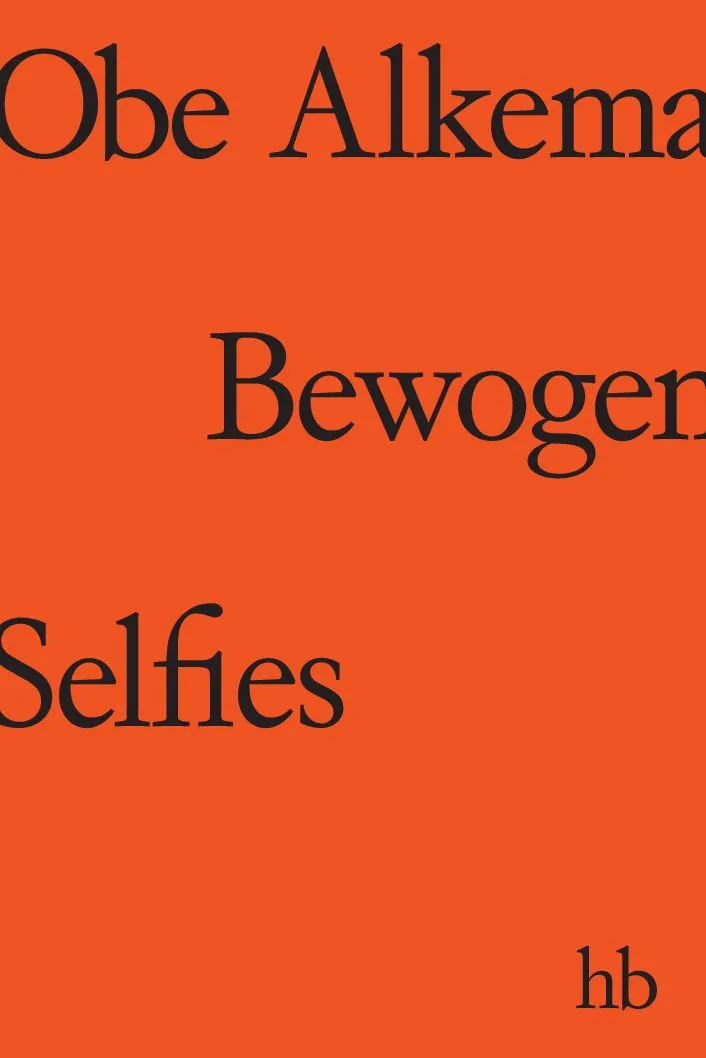
Bewogen selfies
In Bewogen selfies onderzoekt Obe Alkema de verhouding tussen landschap en herinnering. Wat treft hij aan bij terugkeer naar belangrijke plaatsen uit zijn geheugen? Wat herinnert hij zich niet, maar Google wel? Is er een gedenkschrift te puren uit zijn metadata?
Memoires, rechtstreeks verteld en met omwegen, uit eerste hand en van horen zeggen. Archieven en herinneringen eisen spreektijd, houden het niet meer droog of worden tot spreken gebracht. Wat hebben ze eigenlijk te melden? Ze lopen helemaal leeg, net als Alkema zelf. Een leven zoals zovele, poedelnaakt en geretoucheerd, vol zin en onzin.

Gravity And Grace
Simone Weil, the French philosopher, political activist, and religious mystic, was little known when she died young in 1943. Four years later the philosopher-farmer Gustave Thibon compiled La pesanteur et la grbce from the notebooks she left in his keeping.
In 1952 this English translation accelerated the fame and influence of Simone Weil. The striking aphorisms in Gravity and Grace reflect the religious philosophy of Weil's last years. Written at the onset of World War II, when her health was deteriorating and her left-wing social activism was giving way to spiritual introspection, this masterwork makes clear why critics have called Simone Weil "a great soul who might have become a saint" and "the Outsider as saint, in an age of alienation." Introducer Thomas R. Nevin is a professor of classical studies at John Carroll University and the author of Simone Weil: Portrait of a Self-Exiled Jew.

Entropia Vol. 1 & 2
Entropia (vol. I & II) – written by William Kherbek and edited in collaboration with Jack Clarke – is a publication which seeks to recount and re-examine a decade of artistic curation, production, and critique between London, Berlin, and other urban art centres from 2010 to 2020.
Comprised of two volumes, this publication contains a compendium of over one hundred reviews and interviews with luminaries of contemporary art (Vol I), as well as a speculative attempt to create a newly generated algorithmic art(ificial) critic (Vol II). Together they serve to document, excoriate, and theorise an art world which is simultaneously hegemonic and precarious, complicit and constructive, driven by values, yet fed by extraction, all filtered through Kherbek’s precise, aphoristic, acerbic, lens.
The publications include contextual contributions from both Josie Thaddeus-Johns, writer for the New York Times, The Financial Times, Frieze; and Rozsa Farkas, director of London-based gallery Arcadia Missa.

Glaring
Glaring: a sustained look of anger, an obvious fact, a situation of such brightness and intensity that vision is obscured. In his debut book of poems, Benjamin Krusling is concerned with reading domination and violence and entering their psychotic motion, the better to do otherwise. Through the thicket of anti-blackness, militarism, surveillance, impoverishment, and interpersonal abuse and violence, Glaring investigates the things that haunt daily life and make love difficult, possible, necessary.
Benjamin Krusling's Glaring is the winner of our 2019 Open Reading Period, and was selected by guest judge Lucy Ives.

Issue № 6 - Winter–Spring 2026 / SENSING BODIES
Coming back to the body is rarely tranquil. Often it is turbulent, interrupting dominant narratives and entrenched meanings. It is the upset of being alive, and awake to it.
The fourteen texts in this new issue do not shy away from that turbulence. There is joy and there is pleasure, there is shame, pain, and liberation... Each text addresses this dense experience from a singular perspective, yet together they explore what emerges and becomes possible when sense-making and making sense(s) are re-anchored in the sensing practices of the body.
With texts by Valérie Hug, Marco Antonini, cassiane c. pfund, Elodie Olson-Coons, Ines Marita Schärer, Bernadette Kolonko, Jo Bahdo, Lotta Beckers, Melanie Jame Wolf, Samuel Brzeski, Madeleine Kaye, Nora Longatti, Rosanna Puyol Boralevi, Larissa Clement-Belhacel
editorial team: Delphine Chapuis Schmitz, Nicole Bachmann, Robert Steinberger, and Shelby Lee Stuart as invited editor

Love Belongs to Those Who Do the Feeling: New & Selected Poems (1966-2006)
An exciting collection of new and selected poetry by Judy Grahn. The book contains selections from Judy's entire body of poetic work from The Work of a Common Woman, The Queen of Wands and The Queen of Swords, to new poems written between 1997 and 2008.
Judy's poetry is rangy and provocative. It has been written at the heart of so many of the important social movements of the last forty years that the proper word is foundational.

Viscose 01: Style
The very first issue of Viscose tackles the expansive notion of “style”. Both a noun and a verb, style can be understood as the most basic unit or currency of fashion. Style names the very movement of aesthetics in society, and thus holds an important place in the critique of art and visual culture more broadly.
As a verb, it connotes a tactic: a dynamic tool for persuasion and communication through the bricolage of signifiers. It also relates directly to the contemporary profession of “styling”; a practice native to the fashion industry, but increasingly prevalent across the arts, media, consumerism, and politics. Thiss issue of Viscose sets out to critically gesture to all of these connotations and their potential intermingling through concrete case studies and cross disciplinary philosophical speculation.
with contributions by:
Shanzhai Lyric, David Lieske, Bakri Bakhit, Dena Yago, Matthew Linde, Burke Battelle & Ada O’Higgins, Davide Stucchi, Taylore Scarabelli, Mahoro Seward, Jordan Richman, Giorgi Gago Gagoshidze, Hito Steyerl, & Milos Trakilović, Laura Gardner, Avena Gallagher, Alex Esculapio, Elise by Olsen and Jeppe Ugelvig

48Kg.
Cristina Viti, Batool Abu Akleen and 4 more
One of the most viscerally affecting collections of poems I have ever read. Devastatingly precise and unforgettable images emerge from every line. The Arabic and the English sit side by side on the pages of this book but the effect is deeper than language, it meets the reader in the heart. I wept reading this brilliant, natural, gifted young poet and wished her subject was something other than this atrocity visited upon her and her people.
What is happening in Gaza is a genocide not a war, but not since Akhmatova have I read poetry that so potently reckons with the relationship between war and the body. They create a new category of literary grace out of the cataclysm. These are poems of fire and agony, bombing and starvation, but they are also poems of grace, cleverness, tenderness and yearning. A great international poet arrives with this collection, but it is also a landmark work of resistance. No human should have to write their poetry from inside death's dominion, but Batool Abu Akleen has done it and the result is truly astonishing.
— Max Porter
A debut collection from the Palestinian poet—Modern Poetry in Translation’s ‘Poet in Residence,’ 2024—a bilingual assembly of forty-eight poems in which each work accounts for a single kilogram; a body’s mass; a testament to a sieged city; a vivid and visceral voicing of the personal and the public in the midsts of unspeakable violence.
Translated from the Arabic by the poet with Graham Liddell, Wiam El-Tamami, Cristina Viti & Yasmin Zaher

Skies
Skies is a practice that emerged when Edurne Rubio and María Jerez found themselves working in isolation during the creation process of their performance A Nublo in 2020. A dialogue in pictures capturing the skies above Madrid, Brussels and many other places, it is now a book and document of a particular time that invites others to reminisce as they read the clouds and ponder invisible worlds that haunt the aether. It comes with an essay by Augusto Corrieri on theatre and cosmos.
Edurne Rubio is a visual artist. Her work leans towards the documentary and starts out from orality and storytelling.
María Jerez creates work at the intersection of choreo graphy, film and visual art. With her work, she wants to open up spaces of possibility through the encounter with what is foreign to us.
www.edurnerubio.org
www.mariajerez.com
Published by Varamo Press in the essay series Gestures
First edition October 2022
200 pages, 11 x 16.5 cm, sewn perfect binding
ISBN: 978-82-691492-6-5
Graphic design by Michaël Bussaer

Notes on Conceptualisms
Vanessa Place, Robert Fitterman
What is conceptual writing, how does it differ from Conceptual Art, what are some of the dominant forms of conceptualism,where does an impure or hybrid conceptualism fit in, what about the baroque, what about the prosody of procedure, what are the links between appropriation and conceptual writing, how does conceptual writing rely on a new way of reading, a “thinkership” that can shift the focus away from the text and onto the concept, what is the relationship between conceptual writing and technology or information culture, and why has this tendency taken hold in the poetry community now? What follows, then, is a collection of notes, aphorisms, quotes and inquiries on conceptual writing. We have co-authored this text through correspondence, shared reading interests, and similar explorations. Notes on Conceptualisms is far from a definitive text, and much closer to a primer, a purposefully incomplete starting place, where readers, hopefully, can enter so as to participate.

In Pursuit of Revolutionary Love: Precarity, Power, Communities
Violence is arrayed against us because we’re Black, or female, or queer, or undocumented. There is no rescue team coming for us. With that knowledge, we need a different operational base to recreate the world. It is not going to be a celebrity savior. Never was, never will be. If you’re in a religious tradition that is millennia-old, consider how the last savior went out. It was always going to be bloody. It was always going to be traumatic. But there’s a beauty to facing the reality of our lives. Not our lives as they’re broken apart, written about, and then sold back to us in academic or celebrity discourse. But our lives as we understand them. The most important thing is showing up. Showing up and learning how to live by and with others, learning how to reinvent ourselves in this increasing wasteland. That’s the good life.
Foreword by Da’Shaun L. Harrison.
Afterword by Mumia Abu-Jamal.
"Joy James’s Revolutionary Love is umph-degree love; or love beyond measure. It is anything love. It is love without reckoning. It is love that dares all things, beyond which others may find the spirit-force to survive; to live to fight another day. Such love is also fighting itself, for the sake of ensuring that others may live." — Mumia Abu-Jamal