rile*books

Search books

Search books by title, author, publisher, keywords...

Cover of Post-Comics. Beyond Comics,Illustration and the Graphic Novel

het balanseer

Post-Comics. Beyond Comics,Illustration and the Graphic Novel

Sébastien Conard ed.

€22.00

‘Post-comics are much more than just another way of making or telling comics. What post-comics are doing is transferring the art of comics to different fields, different contexts, if not different artistic, cultural, technological and industrial worlds. These new environments may challenge post- comics the same way they themselves have challenged their initial comics setting.’ Jan Baetens 

Language: English

recommendations

Cover of EN

het balanseer

EN

Guy Rombouts

Poetry €25.00

In het begin van de jaren 1970, hield Guy Rombouts een notaboekje bij waarin hij alle woorden, bijvoeglijk naamwoorden en werkwoorden bijhield die hij tegenkwam tijdens het lezen en die met elkaar verbonden waren door het voegwoord ‘en‘.

Ongeveer 50 jaar later en met de hulp van de grafische vormgever Jeroen Wille, is de transcriptie van zijn aantekeningen gepubliceerd als een boek dat gelezen kan worden in twee richtingen (en als enige boek coronaproof met twee tegelijkertijd).

Het boek bevat 2158 verzen met in totaal 4316 EN-combinaties.

De kortste verzen met evenveel letters:

A EN Z

4 EN 6

De langste verzen met evenveel letters:

ONUITSPREKELIJKHEDEN EN IMPONDERABILIA

ONEVENWICHTIGHEID EN ZELFOVERSCHATTING

Cover of Nasleep

het balanseer

Nasleep

Çağlar Köseoğlu

Poetry €19.00

Nasleep neemt de protesten rondom het Gezi Park in 2013 als vertrekpunt en verkent gaandeweg wat er is overgebleven van dit historische moment waarin een andere wereld voor het grijpen leek. Het zijn gedichten die laveren tussen ritmische, conceptuele en kritische noise enerzijds en postrevolutionaire affecten anderzijds, tussen politise­ring enerzijds en onmacht en radeloosheid anderzijds.

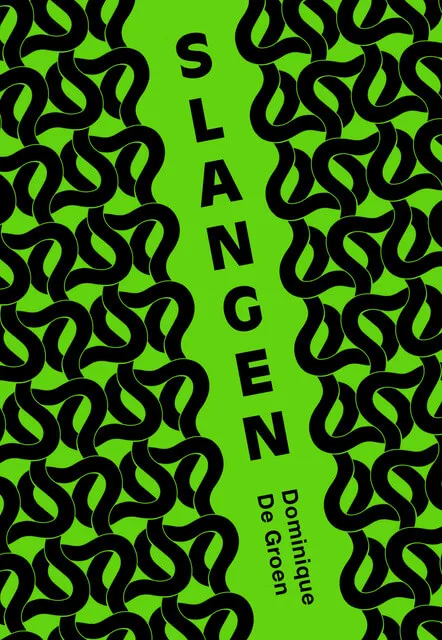
Cover of Slangen

het balanseer

Slangen

Dominique De Groen

Poetry €19.50

Slangen krioelen in de sarcofaag van het heden, in de krochten van de popcultuur, in de mummie van de natuur, in wondes en rot vlees, in artificiële woestijnen en op geoliede dad bods. Ze wentelen zich rond beursgrafieken, raken verstrengeld met wurgende algoritmes, orkestreren een trage ondergrondse revolutie. Een meisje snijdt zich aan een nepdiamanten piramide en werpt haar slangenvel van zich af.

Dominique De Groen is schrijver en beeldend kunstenaar. Ze publiceerde de dichtbundels Shop Girl (2017), Sticky Drama (2019) en offerlam (2020). Ze werd genomineerd voor de Poëziedebuutprijs Aan Zee 2018, de Herman de Coninckprijs 2020 en de Fintroliteratuurprijs 2021 en won de Frans Vogel Poëzieprijs 2019 en de Fintropublieksprijs 2021.

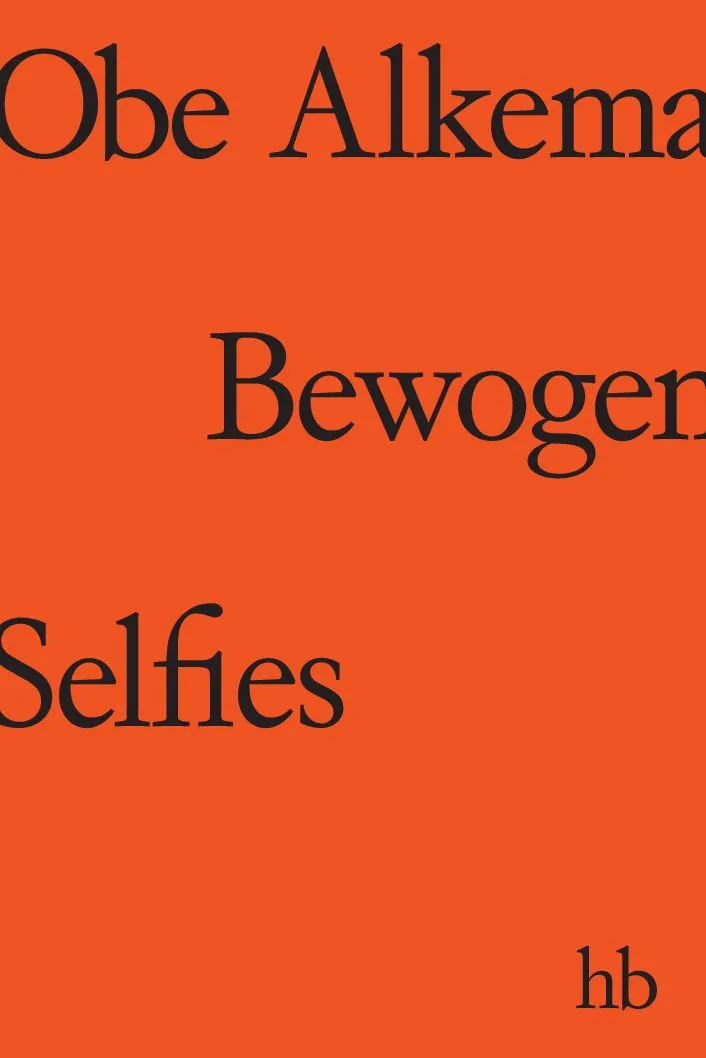
Cover of Bewogen selfies

het balanseer

Bewogen selfies

Obe Alkema

Poetry €24.50

In Bewogen selfies onderzoekt Obe Alkema de verhouding tussen landschap en herinnering. Wat treft hij aan bij terugkeer naar belangrijke plaatsen uit zijn geheugen? Wat herinnert hij zich niet, maar Google wel? Is er een gedenkschrift te puren uit zijn metadata?

Memoires, rechtstreeks verteld en met omwegen, uit eerste hand en van horen zeggen. Archieven en herinneringen eisen spreektijd, houden het niet meer droog of worden tot spreken gebracht. Wat hebben ze eigenlijk te melden? Ze lopen helemaal leeg, net als Alkema zelf. Een leven zoals zovele, poedelnaakt en geretoucheerd, vol zin en onzin.

Cover of How to Tell When We Will Die: On Pain, Disability, and Doom

Hillman Grad Books

How to Tell When We Will Die: On Pain, Disability, and Doom

Johanna Hedva

Non-fiction €18.00

The long-awaited essay collection from one of the most influential voices in disability activism that detonates a bomb in our collective understanding of care and illness, showing us that sickness is a fact of life.

In the wake of the 2014 Ferguson riots, and sick with a chronic condition that rendered them housebound, Johanna Hedva turned to the page to How do you throw a brick through the window of a bank if you can’t get out of bed? It was not long before this essay, “Sick Woman Theory”, became a seminal work on disability, because in reframing illness as not just a biological experience but a social one, Hedva argues that under capitalism—a system that limits our worth to the productivity of our bodies—we must reach for the revolutionary act of caring for ourselves and others.

How to Tell When We Will Die expands upon Hedva’s paradigm-shifting perspective in a series of slyly subversive and razor-sharp essays that range from the theoretical to the personal—from Deborah Levy and Susan Sontag to wrestling, kink, mysticism, death, and the color yellow. Drawing from their experiences with America’s byzantine healthcare system, and considering archetypes they call The Psychotic Woman, The Freak, and The Hag in Charge, Hedva offers a bracing indictment of the politics that exploit sickness—relying on and fueling ableism—to the detriment of us all.

With the insight of Anne Boyer’s The Undying and Leslie Jamison’s The Empathy Exams, and the wit of Samantha Irby, Hedva’s debut collection upends our collective understanding of disability. In their radical reimagining of a world where care and pain are symbiotic, and our bodies are allowed to live free and well, Hedva implores us to remember that illness is neither an inconvenience or inevitability, but an enlivening and elemental part of being alive.

Cover of A take away cup and a cloud

Self-Published

A take away cup and a cloud

Oda Brekke

Essays €10.00

A take away cup and a cloud is an essay written alongside the dance performance Seems to be by Denise Lim and Stina Ehn. It plays with a variety of containers–the list form being one. By mixing a personal with a historical gaze it traces the trajectory of mundane commodities and  the replacement of material with imaterial objects brought about to the everyday by technical progress. 

Cover of An Anarchist Playbook. Radical Translation Workshop

Tenement Press

An Anarchist Playbook. Radical Translation Workshop

Cristina Viti, Jacob McGuinn and 2 more

Essays €25.00

The Conspiracy of Equals (1796) is often hailed as the first revolution against a revolutionary state. Even if the conspirators were soon found out and put on trial, their ideas of radical equality and liberty shaped future generations of revolutionaries worldwide. An Anarchist Playbook—the first publication in Tenement’s new imprint, No University Press—gathers together many of the key documents from their trial across a myriad forms, with a number of these texts appearing herein in their first English-language translation.

Assembled in the Playbook are the last words of Gracchus Babeuf, the leader of the conspiracy and a radical proponent of the abolition of private property, and of his fellow conspirator Augustin Darthé, as they faced the guillotine. We’ve a letter, written in the popular idiom of the sans-culottes, that urges the common soldier to rebel; the score and lyrics of a street song that names the new class enemy: the wealthy bourgeoisie who have profited from the revolution; a first-time English translation of ‘The Last Judgement of All Kings’—an extraordinary one-act play by Sylvain Maréchal, the unofficial poet of the Conspiracy, that was performed to considerable acclaim in Year II of the Revolution (and that the Workshop is in the process of adapting for contemporary audiences). 

Many of these texts were never published in their own time, and form a part of the testament left behind by Philippe Buonarroti, a leading conspirator who inspired new generations of revolutionaries across Europe over the course of the nineteenth and early twentieth centuries. Among the best known works included is the Manifesto of Equals, long considered a founding text of social, communist and anarchist revolutions. The Playbook presents a translation of the Manifesto alongside other key texts by the conspirators, reconstructing the richness and variety of revolutionary communication that informs the editorship, shape, and scope of this volume.

Cover of Designing History - Documents and the Design Imperative to Immutability

Set Margins'

Designing History - Documents and the Design Imperative to Immutability

Chris Lee

Essays €23.00

Moving beyond the usual genres of form in graphic design’s canonical history, ‘Designing History’ proposes a model centred on bureaucratic instruments of identity, ownership, value, and permission: money, passports, certificates, property deeds, etc. It considers the implications of a design history of the document, where the designer shifts from being a practitioner of conventional design histories to become subject and agency of bureaucratic authority. The book is a revised edition of ‘Immutable: Designing History’ (2022) and includes an extended essay that contextualizes the project as a remapping of graphic design’s historical, pedagogical, and practical assumptions.