Books
Books
published in 2009

F.R. David - Iditorial
“The bizarre order in which the seven days of the week appear in the current issue of F.R.DAVID is modelled after the sequence of KarlHeinz Stockhausen’s opera cycle 'Licht', starting with “Donnerstag am Licht” (work on which began in 1977) and ending with “Sonntag am Licht”, the part with which the composer finally concluded the series in 2003. In Stockhausen’s cycle, the subject matter of each opera mirrors (however opaquely at times) the traditional mythological attributes ascribed to the various days of the week—not a concern that exerted any influence on F.R.DAVID’s appropriation of this structure, which is no more than a homage in passing. Each editorial was conceived and written, however, within the space of a day, with various elements recurring, echo-like, throughout the week that was. So far, 'Licht' has never been staged in its entirety, and it is not known whether Stockhausen ever meant it to be.”

The Winter Sun
Fanny Howe's richly contemplative The Winter Sun is a collection of essays on childhood, language, and meaning by one of America's most original contemporary poets.
Through a collage of reflections on people, places, and times that have been part of her life, Howe shows the origins and requirements of "a vocation that has no name." She finds proof of this in the lives of others—Jacques Lusseyran, who, though blind, wrote about his inner vision, surviving inside a concentration camp during World War II; the Scottish nun Sara Grant and Abbé Dubois, both of whom lived extensively in India where their vocation led them; the English novelists Antonia White and Emily Brontë; and the fifth-century philosopher and poet Bharthari. With interludes referring to her own place and situation, Howe makes this book into a Progress rather than a memoir.
The Winter Sun displays the same power as found in her highly praised collection of essays, The Wedding Dress, a book described by James Carroll as an "unflinching but exhilarating look at real religion, the American desolation, a woman's life, and, always, the redemption of literature."
Fanny Howe is the author of more than twenty books of poetry and prose. She has won a fellowship from the Guggenheim Foundation and an award from the Academy of Arts and Letters.

Impossible Princess
Impossible Princess is the third collection of gay short fiction by PEN Award–winning San Francisco–based author Kevin Killian. A member of the “new narrative” circle including Dennis Cooper and Kathy Acker, Killian is a master short story writer, crafting campy and edgy tales that explore the humor and darkness of desire. A former director of Small Press Traffic and a co-editor of Mirage/Periodical, Killian co-wrote Jack Spicer’s biography, Poet Be Like God, and co-edited three Spicer books, including My Vocabulary Did This To Me: Collected Poems. His latest book, Action Kylie, is a collection of poems devoted to Kylie Minogue.

Notes on Conceptualisms
Vanessa Place, Robert Fitterman
What is conceptual writing, how does it differ from Conceptual Art, what are some of the dominant forms of conceptualism,where does an impure or hybrid conceptualism fit in, what about the baroque, what about the prosody of procedure, what are the links between appropriation and conceptual writing, how does conceptual writing rely on a new way of reading, a “thinkership” that can shift the focus away from the text and onto the concept, what is the relationship between conceptual writing and technology or information culture, and why has this tendency taken hold in the poetry community now? What follows, then, is a collection of notes, aphorisms, quotes and inquiries on conceptual writing. We have co-authored this text through correspondence, shared reading interests, and similar explorations. Notes on Conceptualisms is far from a definitive text, and much closer to a primer, a purposefully incomplete starting place, where readers, hopefully, can enter so as to participate.

REWIND PLAY: An Anthology of Early British Video Art
REWIND PLAY presents a selection of key works from the first decade of artist's video practice in the UK. From early conceptual experiments exploring the parameters of the medium to works dealing with media culture and television this collection explores the range and diversity of the first years of video as new media.
This three DVD box set including 24 videos by: John Adams, Peter Anderson, Kevin Atherton, Ian Bourn, Ian Breakwell, David Critchley, Peter Donebauer, Catherine Elwes, Judith Goddard, David Hall, Mick Hartney, Brian Hoey/Wendy Brown, Madelon Hooykaas/ Elsa Stansfield, Tina Keane, Tamara Krikorian, Mike Leggett, Stephen Littman, Stuart Marshall, Chris Meigh-Andrews/ Gabrielle Bown, Marcelline Mori, Stephen Partridge, Clive Richardson and Tony Sinden. Plus a new essay by Sean Cubitt, Professor of Media and Communications, University of Melbourne.
Total running time: 336 minutes. 3 x DVD 9, PAL, Region 0
Published in collaboration with REWIND| Artists' Video in the 70s and 80s.
Disc 1:
Stories, John Adams (1982, 13 min) Eyebath Peter Anderson (1977, 8 min) In Two Minds (2 screen version) Kevin Atherton (1978, 25 min) Lenny's Documentary Ian Bourn (1978, 45 min) In the Home Ian Breakwell (1980, 10 min)
Disc 2:
Pieces I Never Did (3 screen version), David Critchley (1979, 31 min) Circling, Peter Donebauer (1975, 12 min) Kensington Gore, Catherine Elwes (1981, 15 min) Time Spent, Judith Goddard (1981, 12 min) TV Interruptions (7 TV Pieces), David Hall (1971, 23 min) State of Division, Mick Hartney (1978, 5 min) The Extent of Three Bells, Steve Hawley (1981, 5 min) Flow, Brian Hoey/Wendy Brown (1977, 17 min)
Disc 3:
Split Seconds, Madelon Hooykaas/ Elsa Stansfield (1979, 11 min) Clapping Songs, Tina Keane (1979, 6 min) Vanitas, Tamara Krikorian (1977, 8 min) The Heart Cycle, Mike Leggett (1973, 9 min) Mirror, Stephen Littman (1979, 5 min) Go thru the Motions, Stuart Marshall (1975, 8 min) Continuum, Chris Meigh Andrews/Gabrielle Bown (1977 5 min) 2nd and 3rd Identity, Marcelline Mori (1978, 10 min) Monitor, Stephen Partridge (1975, 6 min) Video Sketches, Clive Richardson (1972, 22 min) Drift Guitars, Tony Sinden (1975 21 min)

What Did I Do Wrong?
Episodic and picaresque, Fanny Howe's novella What Did I Do Wrong? tells the story of a revolutionary mutt's journey through the kennels, parks, and suburban waste spaces around Boston in search of true freedom. This dog offers a firsthand account of the cruelty meted out to both animals and forgotten members of human society. Like The Golden Ass, What Did I Do Wrong? takes on moral and spiritual questions without abandoning earthly appetites. In a twist on the fabulous tradition established by Apuleius, we are urged not to maintain our humanity but rather to look for the dog within.
Illustrated by Colleen McCallion.

Century of Clouds
This edition restores to print a central text of the New Narrative movement, founded in San Francisco by Boone and Robert Gluck in response to the stagnation of contemporary experimental poetry of the late 1970s. Wishing to bring the vigor and energy of the gay rights and feminist movements, Bruce Boone’s writing of the late 1970s is as fresh, funny, witty, and self-reflexive as it was thirty years ago. First published in 1980, Century of Clouds, based on Boone’s experiences at the summer meeting of Marxism and Theory Group in St. Cloud, Minnesota, takes up issues of sexuality, political and theoretical identity, religion, and friendship in the characteristically rich and varied writing of the New Narrative movement.

Steal This Book
Eleven performance-based projects by Dora García, documented through letters, emails and other elements from the artist's private correspondence with various interpreters of performances, whether they were direct collaborators of simple spectators.
Edited and prefaced by François Piron, Steal This Book, a tribute to Abbie Hoffmann's pamphlet of the same name, is not a definitive attempt at rendering the pieces on which it is based; it calls for a free, active and contradictory reception, that of an open archive. Part epistolary novel, part rough screenplay and part user's manual, Steal This Book proposes a body of discussions, questions without answers and endless ramblings, in place of the critique's or the artist's voice.
The book has also been presented in exhibitions as a Dora García sculpture meant to be stolen, but it can also be purchased in selected bookstores worldwide.
Contrary to the idea that would have art addressing the greatest possible number of people, Dora García (born in 1965 in Valladolid, lives and works in Barcelona), best known for her performance devices, is interested in what is enacted at the individual scale: in a radically conceptual form, at once accessible and elegant, she elects to transmit oddly coded messages, their ask being to bestir a specific relation with each and every visitor. Dora García is interested in everything that intervenes in the communication between an artist and his/her public: art no longer represents the world, but itself becomes a producer of realities often on the borderline of fiction and make-believe. It urges us to undergo experiences other than ordinary situations, at once simple and hard to grasp.
Dora García has had solo exhibitions at the MACBA in Barcelona, the Reina Sofia in Madrid and the SMAK in Gent. She represented Spain at the Venice Biennale in 2011, and was a part of the Skulptur Projekte Münster 07, the Sydney Biennial in 2009, the Biennale de Lyon in 2009 and Documenta 13 in 2012.

The Third Body
In The Third Body, the poet, novelist, feminist critic, and theorist Hélène Cixous interweaves a loose narrative line with anecdotes, autobiography, lyricism, myth, dream, fantasy, philosophical insights, and intertextual citations of and conversations with other authors and thinkers. Cixous evokes the relationship of the female narrator and her lover, a relationship of alternating presences and absences, separations and rejoinings. This relationship assumes protean forms within a complex web of writing, creating a third body out of the entwined bodies of the narrator and her lover.
Hélène Cixous is a professor emerita of literature and founder of the Centre d'études feminines, Paris VIII. Her numerous books include Stigmata, Three Steps on the Ladder of Writing, The Newly Born Woman, The Laugh of the Medusa, and Manhattan: Letters from Prehistory. In 2000, a collection in Cixous' name was created at the Bibliothèque nationale de France.

Grey Gardens
One of the strangest and subtlest films ever made, the Maysles Brothers' 1975 documentary Grey Gardens today boasts as devoted a following as Harold and Maude. Shot at Grey Gardens, the dilapidated East Hamptons mansion of Big Edie and Little Edie Beale, aunt and cousin to Jackie Onassis, this classic of cinema vérité tracks the Beales' eccentric and sequestered lives, which consist mostly of doing nothing, but with a mesmerizing zest and volubility.
This volume offers a myriad of illustrations, photographs, film stills, production notes and other archival materials alongside transcripts of the Beales' own stories and conversations edited from unreleased Grey Gardens sound recordings. Structured to mirror the Maysles' approach to the world of the Beales, it resembles the enchanting clutter of the mansion, a self-contained world littered with mementos and ephemera. It also reproduces unpublished photographs by both Albert and David Maysles. With an introduction by Albert Maysles, drawings and illustrations by Albert's daughter, Rebekah Maysles and an appendix with the full transcript of Grey Gardens, as well as an audio CD of sound recordings capturing the Beales at their best, this book is the essential companion to the film and a beautiful testimony to its legacy.
The 60-minute CD that comes with the book contains conversations with the Beales and their friends, songs and poetry recited by the two Edies and audio of the Beales during and after watching the film for the first time.

Absence Where As: Claude Cahun and the Unopened Book
This book, from inter-genre, bilingual writer Nathanaël, investigates the relationship between image and language through a philosophical and poetic meditation on a self-portrait by Surrealist photographer and writer Claude Cahun.
"In Absence Where As, Nathanael reads the unread book, ‘the book that comes’ to us nevertheless, that haunts and hovers unopened and dreamt, proceeding from the Ecrits of the visionary and revolutionary artist-activist Claude Cahun, to life’s library. Through this constellatory essay in the faults of thought, in reading’s flaw, Nathanael comes to know and know how, creating new epistemological and aesthetic territory in the radiant continuum between lyric and narrative, the text and the dream of text, which is literature itself." - John Keene

oh, tongue
The notebook of American dancer and choreographer Simone Forti, in which she shares her poetry as well as her thoughts on dance, the body, writing, the state of the world… The publication includes an interview with Forti by Annie Suquet, and an afterword by poet and Fluxus artist Jakson Mac Low.
American dancer and choreographer Simone Forti (born 1935 in Florence, Italy) has been a leading figure in the development of contemporary performance over more than fifty years. Artist, choreographer, dancer, writer, Forti has dedicated herself to the research of a kinesthetic awareness, always engaging with experimentation and improvisation. Investigating the relationship between object and body, through animal studies, news animations and land portraits, she reconfigured the concept of performance and dance.

The Gloria Anzaldúa Reader
Gloria Anzaldua, AnaLouise Keating
A collection of published and unpublished writings of the groundbreaking Chicana writer and self-described "chicana dyke-feminist, tejana patlache poet, writer and cultural theorist" Gloria Anzaldua.
Gloria Anzaldúa (1942-2004) was a visionary writer whose work was recognized with many honors, including the Before Columbus Foundation American Book Award, a Lambda literary award, the National Endowment for the Arts Fiction Award, and the Bode-Pearson Prize for Outstanding Contributions to American Studies. Her book Borderlands/La frontera was selected as one of the 100 Best Books of the Century by Hungry Mind Review and the Utne Reader. AnaLouise Keating, Professor of Women's Studies at Texas Woman's University, is the author of Women Reading, Women Writing: Self-Invention in Paula Gunn Allen, Gloria Anzaldúa, and Audre Lorde; editor of Anzaldúa's Interviews/Entrevistas and EntreMundos/AmongWorlds: New Perspectives on Gloria Anzaldúa; and co-editor, with Anzaldúa, of this bridge we call home: radical visions for transformation.
AnaLouise Keating, Professor of Women's Studies at Texas Woman's University, is the author of Women Reading, Women Writing: Self-Invention in Paula Gunn Allen, Gloria Anzaldúa, and Audre Lorde; editor of Anzaldúa's Interviews/Entrevistas and EntreMundos/AmongWorlds: New Perspectives on Gloria Anzaldúa; and co-editor, with Anzaldúa, of this bridge we call home: radical visions for transformation.

Humanimal: A Project For Future Children
In this prose document, Bhanu Kapil follows a film crew to the Bengal jungle to re-encounter the true account of two girls found living with wolves in 1921. Taking as its source text the diary of the missionary who strove to rehabilitate these orphans, through language instruction and forcible correction of supinated limbs, Humanimal functions as a healing mutation for three bodies and a companion poiesis for future physiologies.
Through wolfgirls Kamala and Amala, there is a grafting: what scars down into the feral opens out also into the fierce, into a remembrance of Kapil's father. The humanimal text becomes one in which personal and postcolonial histories cross a wilderness to form supported metabiology.
"Lucidly, holographically, your heart pulsed in the air next to your body; then my eyes clicked the photo into place. Future child, in the time you lived in, your arms always itched and flaked. To write this, the memoir of your body, I slip my arms into the sleeves of your shirt. I slip my arms into yours, to become four-limbed."

The Little Black Book of Grisélidis Réal: Days and Nights of an Anarchist Whore
Ariana Reines, Jean-Luc Hennig
The Little Black Book of Grisélidis Réal is the portrait of a true humanist who made a career out of compassion. Hailed as a virtuoso writer and a "revolutionary whore," Grisélidis Réal (1929-2005) chanced into prostitution at thirty-one after an upper-class upbringing in Switzerland. Serving clients from all walks of life, Réal applied the anarcho-Marxist dictum "from each according to his abilities, to each according to his needs" to her profession, charging sliding-scale fees determined by her client's incomes and complexity of their sexual tastes.
Réal went on to become a militant champion of sexual freedom and prostitutes' rights. She has described prostitution as "an art, and a humanist science," noting that "the only authentic prostitution is that mastered by great technical artists...who practice this form of native craft with intelligence, respect, imagination, heart..."
This volume includes lengthy dialogues from 1979-1981 with Réal conducted by journalist and author Jean-Luc Henning, in which she eloquently discusses the theoretical implications of sex-positive whoring and relates her experiences both inside and outside the profession: from her lengthy love affair with the "Berber" to such "psychological" and "special" clients as the "moldy rhinoceros."
The "Little Black Book" that rounds out this book is drawn from the logs in which Réal kept track of her many clients, from "Pedro, hilarious fat Spaniard, devoted, simple, honest, fat peasant face, 70F" to "Pierre 8 (from Basel), blue eyes, fifties, slightly balding, cultivated, sweet-violent...licks my finger after I remove it from his anus...100-400F." It is a journal that not only chronicles Réal's working life, but offers a clinically direct, investigative sociological analysis of the sexual subcultures of her time.
Translated by Ariana Reines.

A (Trenchart)
How do you trace death? What do you make of the useless objects left behind? Conjuring Cage, Stein, and Francesca Woodman, British poet Sophie Robinson documents the detritus of sudden loss. Layering word and image, object and subject, the said with the unsayable, A is as Caroline Bergvall writes, "[a] work of mourning. Angry, torn, hardly daring to remember", a textual performance of "love that dares to speak as queer."
A is published as part of the TrenchArt: Tracer Series, with a foreword by Caroline Bergvall, an afterword by Diane Ward, and collaborative visual art by Ken Erhlich and Susan Simpson.

Actors and Extras
Thomas Trummer, Paul Willemsen
The publication Actors & Extras appears following the exhibition of the same name at Argos. Five authors highlight the theme of characterisation from various angles. Georges Didi-Huberman’s contribution People exposed, People as Extras explores how cinema represents the masses. Sven Lütticken highlights the performance tradition in the visual arts in relation to the producing of subjectivity. On the basis of the classic cinema, in Figures of the Extra, Paul Willemsen composes a typology of the extra and subsequently gives attention to the aberrant status of the extra in modern cinema and contemporary art.
Thomas Trummer’s Volonté Générale. Extras in Film and Democracy questions the responsibility of the anonymous individual. With The Passing Actor: Sketch of a Renaissance Jean-Louis Comolli analyses how the concept of acting in a documentary has a different interpretation than in a fiction film. The last part of the publication describes the selected works in the exhibition.
Texts by: Clemens von Wedemeyer, João Onofre, Mark Lewis, Mike Figgis, Jeremy Deller, Irina Botea, Christian Jankowski, Aernout Mik, Krassimir Terziev, Julika Rudelius
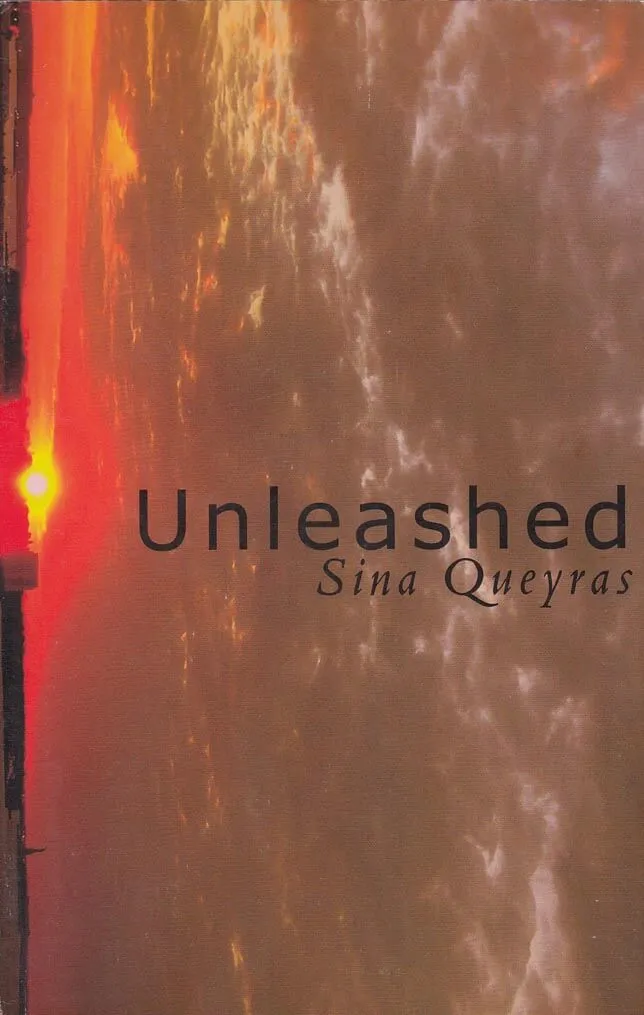
Unleashed
05/09/04 Now she is blogging. Now she is sitting on the black couch listening to the sirens wail and the rain fall. Now she is thinking of oysters. Now she is wondering why this is worth sharing. Now she is thinking, how decipher what is worth reading? Who is to say? Sifters. She thinks we have become a nation of sifters. So began a three-year experiment in blogging. An experiment begun for many reasons—a way for an expat to keep in touch with fellow Canadian writers and artists, a way to come to terms with the increasing relevance of the internet in literary lives, and a way to figure out why, after decades of gains, women writers are still grossly underrepresented in critical dialogues.
With an afterword by Vanessa Place.

Woman, Native, Other
Woman, Native, Other is located at the juncture of a number of different fields and disciplines, and it genuinely succeeds in pushing the boundaries of these disciplines further. It is one of the very few theoretical attempts to grapple with the writings of women of color. - Chandra Talpade Mohanty

Magenta Soul Whip
Lisa Robertson writes poems that mine the past, its ideas, its personages, its syntax, to construct a lexicon of the future. Her poems both court and cuckold subjectivity by unmasking its fundament of sex and hesitancy, the coil of doubt in its certitude. Reading her laments and utopias, we realize that language, whiplike, casts ahead of itself a fortuitous form. The form brims here pleasurably with dogs, movie stars, broths, painting's detritus, Latin and pillage.
Erudite and startling, the poems in Lisa Robertson's Magenta Soul Whip, occasional works written over the past fifteen years, turn vestige into architecture, chagrin into resplendence. In them, we recognize our grand, saddened century.