rile*books

Search books

Search books by title, author, publisher, keywords...

Cover of Ticking Stripe

Blank Forms

Ticking Stripe

Spencer Gerhardt

€22.00

A new collection of writings by the composer and mathematician Spencer Gerhardt, considering among other topics the rich points of contact between minimalist musical aesthetics and intuitionistic mathematics.

Noted composer and mathematician Spencer Gerhardt presents Ticking Stripe, a groundbreaking collection of essays linking notions of continuity and construction across the boundaries of math, art, music and philosophy. Gerhardt offers new, and deeply informed interpretations of the 1960s New York avant-garde, viewed through the lens of trailblazing artists such as La Monte Young, Marian Zazeela, Catherine Christer Hennix, Henry Flynt and Tony Conrad.

Ticking Stripe pairs the spirit of L. E. J. Brouwer—a mathematician who brilliantly, and controversially, sought to reconstruct the continuum in his own philosophical terms called intuitionism—with the ambitions of pioneering minimalists who combined continued constructions, idealized processes of introspection, and conceptual world-building with a host of philosophical, scientific, and spiritual concerns. Informed by his own work as a professional mathematician and composer, Gerhardt explores the depths of these disparate traditions, finding unlikely areas of commonality. Spanning over two decades, these essays feature rich historical explorations of minimalist music, writing on contemporary art, and work in logic and algebraic groups, all approached with rare clarity and technical aplomb.

Spencer Gerhardt is a composer and mathematician. His music engages constructive, introspective and romantic traditions. Gerhardt has written solo piano music, piano based songs, and works of minimalism. He studied raga with La Monte Young and Marian Zazeela, piano performance with Sung-Hwa Park, and has collaborated with artists such as Thomas Ankersmit and Charles Curtis.

Language: English

recommendations

Cover of Blank Forms #07 – The Cowboy's Dreams of Home

Blank Forms

Blank Forms #07 – The Cowboy's Dreams of Home

Joe Bucciero, Lawrence Kumpf

The seventh entry in an ongoing series of anthologies, this book features rare poems alongside new essays and interviews that engage the artists and themes explored elsewhere in Blank Forms' public programming.

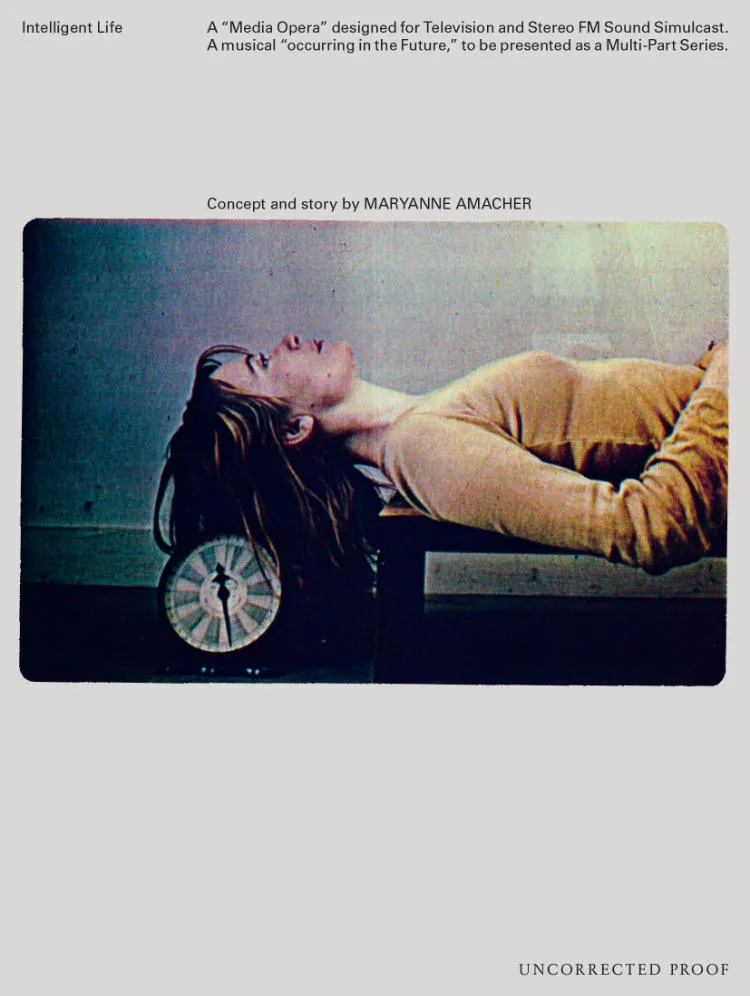
Where most of prior entries, including Aspirations of Madness (2020), Intelligent Life (2019), and Music From The World Tomorrow (2018), have foregrounded little-seen or newly translated archival materials, this iteration privileges new texts produced specifically for the publication. These include an in-depth retrospective interview with the idiosyncratic Texan singer-songwriter and visual artist Terry Allen conducted by ICA Philadelphia chief curator Anthony Elms; a conversation between multidisciplinary writers—and longtime friends—Thulani Davis and Jessica Hagedorn on the occasion of Davis's latest poetry collection, Nothing but the Music, recently published by Blank Forms Editions; a recent discussion between composer Sarah Hennies and cellist Judith Hamann about their recent collaboration, which is included on Hamann's Music for Cello and Humming; and a conversation with composer-performers Tashi Wada and Charles Curtis, on the heels of a recent compilation of Curtis's work, Performances & Recordings 1998– 2018, produced by Wada. Each of these interviews shed light on the particularities of the artists' careers and methods in terms both formal and casual, practical and theoretical. 

In addition to these dialogues, this book features new critical reflections on three artists whose work Blank Forms has presented: the legendary jazz percussionist and healer Milford Graves, by Ciarán Finlayson; English multimedia artist Graham Lambkin and his beguiling 2011 album Amateur Doubles, by Alan Licht; and the UK-based experimental music trio Still House Plants, by Joe Bucciero. These articles mine historical, social, and theoretical contexts, filling gaps in the existing literature on the given artist-subjects. New and archival poems and writing about poetry complement these interviews and essays, including rare texts by Davis, Hagedorn, and René Daumal—the latter translated by Louise Landes Levi—and a suite of Auto-Mythological writings commissioned from Chicago-based composer and musician Angel Bat Dawid.

Cover of Black Case Volume I and II – Return From Exile

Blank Forms

Black Case Volume I and II – Return From Exile

Joseph Jarman

Poetry €20.00

The republication in print form of the poems of Art Ensemble of Chicago's founding member breathes new life into a forgotten document of the Black Arts Movement.

In 1977, Art Ensemble of Chicago Publishing Co. published Jarman's Black Case Volume I and II: Return From Exile, a collection of writing conceived across America and Europe between 1960 and 1975. Comprised largely of Jarman's flowing, fiery free verse—influenced by Amus Mor, Henry Dumas, Thulani Davis, and Amiri Baraka—the book also features a manifesto for “GREAT BLACK MUSIC,” notated songs, concert program notes, Jarman's photos, and impressions of a play by Muhal Richard Abrams, the founder of the Association for the Advancement of Creative Musicians of which Jarman was also an original member.

Jarman writes poetry of personal revolutionary intent, aimed at routing his audience's consciousness towards growth and communication. He speaks with compassionate urgency of the struggles of growing up on Chicago's South Side, of racist police brutality and profound urban alienation, and of the responsibility he feels as a creative artist to nurture beauty and community through the heliocentric music that he considers the healing force of the universe. A practicing Buddhist and proponent of Aikido since a 1958 awakening saved him from the traumatic mental isolation of his time dropped by the US army into southeast Asia, Jarman sings praise for the self-awareness realization possible through the martial arts.

With cosmic breath as its leitmotif, his poetry both encourages and embodies a complete relinquishing of ego. While some of the poems contained within Black Case have already been immortalized via performances on classic records by Jarman and Art Ensemble of Chicago, its republication in print form breathes new life into a forgotten document of the Black Arts Movement.

Cover of Better Do It Now before You Die Later: Sonny Simmons with Marc Chaloin

Blank Forms

Better Do It Now before You Die Later: Sonny Simmons with Marc Chaloin

Sonny Simmons, Marc Chaloin

Though his years in the New York free-jazz scene of the sixties cemented his reputation as "one of the most forceful and convincing composers and soloists in his field," saxophonist Sonny Simmons (1933–2021) was nearly forgotten by the '80s, which found him broke, heavily dependent on drugs and alcohol, and separated from his wife and kids. "I played on the streets from 1980 to 1994, 365 days a year," Simmons tells jazz historian and biographer Marc Chaloin. "I would go to North Beach, and I'd sleep in the park. The word got around town that Sonny is a junkie, really strung out."

The resurrection of Simmons' career―upon the release of his critically acclaimed Ancient Ritual (Qwest Records) in 1994―has become a modern legend of the genre. In the last two decades of his musical career, Simmons broke through to a new echelon of recognition, joining the pantheon of great innovators and masters of the music. But to this day he remains an undersung figure. Here, in the first ever book dedicated to his life, Simmons recounts his childhood in the backwoods of Louisiana, his adolescence in the burgeoning Bay Area jazz scene and his star-studded life in New York playing alongside the greats.

Cover of After Institutions

Floating Opera Press

After Institutions

Karen Archey

Essays €17.00

The current crisis of museums and the future of Institutional Critique.

Faced with waning state support, declining revenue, and forced entrepreneurialism, museums have become a threatened public space. Simultaneously, they have assumed the role of institutional arbiter in issues of social justice and accountability. The canon of Institutional Critique has responded to the social embeddedness of art institutions by looking at the inner workings of such organizations. In After Institutions, Karen Archey expands the definition of Institutional Critique to develop a broader understanding of contemporary art's sociopolitical entanglements, looking beyond what cultural institutions were to what they are and what they might become.

Karen Archey is curator of contemporary art at the Stedelijk Museum Amsterdam. She is a 2015 Creative Capital | Warhol Foundation Arts Writers Grant recipient for short-form writing. Since joining the Stedelijk Museum in April 2017, Archey has organized solo exhibitions by artists Rineke Dijkstra, Stefan Tcherepnin, Catherine Christer Hennix, Steffani Jemison, Metahaven, Jeff Preiss, Charlie Prodger, and Hito Steyerl. She has written numerous catalogue essays and is a contributor to several art publications, including Artforum and Frieze.

Cover of Bodies of Sound: Becoming a Feminist Ear

Silver Press

Bodies of Sound: Becoming a Feminist Ear

Sarah Shin, Irene Revell

Fiction €20.00

‘I am concerned with the power of sound! and what it can do to the body and the mind,’ wrote composer Pauline Oliveros. In the body, histories and politics come together with sound and listening, memory and feeling. Bodies of Sound offers a resonant exploration of feminist sonic cultures and radical listening in over fifty contributions. In this book of echoes, a variety of forms – from essays to text scores to art, fiction and memoir – speak across gender, ways of knowing, witnessing, sounding and voicing, translation, displacement, violence and peace.

With contributions from: 

Sara Ahmed, Ximena Alarcón, Svetlana Alexievich, Ain Bailey & Frances Morgan, Anna Barham, Xenia Benivolski, Leanne Betasamosake Simpson & Kite, Elena Biserna, Karen Barad & Black Quantum Futurism, Anne Bourne, Daniela Cascella, Theresa Hak Kyung Cha, Maria Chávez, Don Mee Choi, Carson Cole Arthur, Petero Kalulé & AM Kanngieser, Lindsay Cooper, Julia Eckhardt, Lucia Farinati & Claudia Firth, Ella Finer, Annie Goh, Louise Gray, Christina Hazboun, Johanna Hedva, Sarah Hennies, Tomoko Hojo, IONE, Lee Ingleton, Hannah Catherine Jones, Christine Sun Kim, Nat Lall, Cathy Lane, Jeanne Lee & Lona Foote, Marysia Lewandowska, Annea Lockwood & Jennifer Lucy Allan, Cannach MacBride, Elaine Mitchener & Hannah Kendall, Alison O'Daniel, Naomi Okabe, Pauline Oliveros, Daphne Oram, Gascia Ouzounian, Holly Pester, Roy Claire Potter, Anna Raimondo, Tara Rodgers, Aura Satz & Barbara London, Shortwave Collective, Sisters of the Order of Celestial Nephology, Sop, Syma Tariq, Marie Thompson, Trinh T. Minh-ha & Stoffel Debuysere, Salomé Voegelin

Cover of Sonic Faction: Audio Essay as Medium and Method

Urbanomic

Sonic Faction: Audio Essay as Medium and Method

Maya B. Kronic, Steve Goodman and 1 more

Essays €20.00

Explorations of the audio essay as medium and method.

With contributors including Justin Barton, Angus Carlyle, Kodwo Eshun, Steve Goodman, Robin Mackay, Paul Nataraj, and Iain Sinclair, Sonic Faction presents extended lines of thought prompted by two Urbanomic events which explored the ways in which sound and voice can produce new sensory terrains and provoke speculative thought.

Three recent pieces provide the catalyst for a discussion of the potential of the "audio essay" as medium and method, a machine for intensifying listening and unsettling the boundaries between existing forms: documentary, music, ambient sound, audiobook, field recording, radio play….

Kode9's Astro-Darien (2022) is a sonic fiction about simulation, presenting an alternative history of the Scottish Space Programme, haunted by the ghosts of the British Empire. Justin Barton and Mark Fisher's On Vanishing Land (2006) is a dreamlike account of a coastal walk that expands into questions of modernity, capitalism, fiction, and the micropolitics of escape. Robin Mackay's By the North Sea (2021) is a meditation on time, disappearance, and loss as heard through the fictions of Lovecraft, Ccru, and the spectre of Dunwich, the city that vanished beneath the waves.

Alongside photographic documentation of the events and edited transcripts of the artists' discussions, Sonic Faction brings together contributors with diverse perspectives to address the question of the audio essay and to imagine its future.

Contributors
Lawrence Abu Hamdan, Lendl Barcelos, Justin Barton, Ben Borthwick, Angus Carlyle, Matt Colquhoun, Jessica Edwards, Kodwo Eshun, Steve Goodman, Ayesha Hameed, Eleni Ikoniadou, Lawrence Lek, Robin Mackay, Paul Nataraj, Emily Pethick, Iain Sinclair, Shelley Trower

Cover of Spectres #02 – Resonances

Shelter Press

Spectres #02 – Resonances

Bartolomé Sanson, François Bonnet

The second issue of Spectres is devoted to the concept of resonances, with contributions by Maryanne Amacher, Chris Corsano, Ellen Fullman, Christina Kubisch, Okkyung Lee, Pali Meursault, Jean-Luc Nancy, David Rosenboom, Tomoko Sauvage, The Caretaker, David Toop, and Christian Zanési.

To resonate: re-sonare. To sound again—with the immediate implication of a doubling. Sound and its double: sent back to us, reflected by surfaces, diffracted by edges and corners. Sound amplified, swathed in an acoustics that transforms it. Sound enhanced by its passing through a certain site, a certain milieu. Sound propagated, reaching out into the distance. But to resonate is also to vibrate with sound, in unison, in synchronous oscillation. To marry with its shape, amplifying a common destiny. To join forces with it. And then again, to resonate is to remember, to evoke the past and to bring it back. Or to plunge into the spectrum of sound, to shape it around a certain frequency, to bring out sonic or electric peaks from the becoming of signals.

Cover of Audible Heat

Tenement Press

Audible Heat

Milo Thesiger-Meacham

A manuscript shortlisted for the inaugural edition of the Prototype Prize, 2024, a eulogy to the sonic influence and cultural inferences of the sound of the cicada. A train of thought on the multiform significations and significance of the cicada’s buzz and hum; a dissection and deconstruction of the insect as emblem; a wild and associative suite of fragments on the evocations of background noise when brought to the fore.

Milo Thesiger Meacham’s Audible Heat is a rich, meditative ecotone of ideas; a nimble and associative work of essayism that aims to map a reticulated cultural biography of the sound of the cicada. Equal parts academic argument, travelogue, and critical collage, this synthesis of ideas pulls upon a wide-ranging bibliography of materials to examine the omnipresent sound of the cicada as ‘audible heat’ throughout human history and culture. Herein, this climatic sound acts as a conduit between ecology, identity and mortality, and the cicada’s sonic inference emerges as a codification of the unknown and unfamiliar—as a spiritual weathervane in desert settings—and as a means of teasing out the sensorial limits of human understanding.

Thesiger-Meacham sits himself in a field of enquiry and in dialogue with voices various, ancient, and modern, such as Douglas Yanega of the University of California, folk musician Matthias Loibner, and Gene Kritsky, developer of Cicada Safari, a public app which tracks the mass emergence of periodical cicadas across North America, in a transversal network of interlinked, informational nodes.

Herein, we’ve the sonic-induced anxieties of 17th, 18th and 19th-century colonists in Northeastern America—notably the largely unknown career of entomologist Margaretta Morris—and the apocalyptic premonitions of the indigenous Wampanoag; Greek tongue twisters; the poetry of Ibn Quzmān and Harry Crosby; African American mathematician Benjamin Banneker’s lost wooden clock; Socrates' fear of dehydration; the geopolitical tensions embedded in Southern Spain as Al-Andalus (سُلَدْنَألا); Plato’s Phaedrus; a history of the hurdy-gurdy; Geronimo’s hatred of telegraphy; contemporary and historical entomologies; the slurred, slow body language of Clint Eastwood; insects on the film sets of Sergio Leone's Spanish Westerns; squinting; tanning; metamorphosis; acts of violence in Once Upon a Time in the West (1968); military reenactments of the Battle of Marathon (490 BCE); the botanist Donald C. Peattie’s existential dread; ancient cooking implements; riverside trees hills, and their symmetric reflections in still water…

All ideas emanating from the acoustical atmospherics inherent to the cicada’s song.