rile*books

Search books

Search books by title, author, publisher, keywords...

Cover of The Ideal Lecture

het balanseer

The Ideal Lecture

Kenneth Goldsmith

€15.00

‘This lecture premiered at The Louvre auditorium as part of FIAC’s public programs in October, 2017. To give it, I loaded the talk into a teleprompter program on my laptop. The linebreaks in the piece are a result of the way the teleprompter program broke them up in order to facilitate the reading of the work. Although I have never written lineated verse, I love the idea that a computer lineated the verse for me. This lecture, then, reads an awful lot like the way I talk, but it is truly nothing like the way I talk.’ KG

Kenneth Goldsmith is the author and editor of over twenty books. In 1996, he founded UbuWeb. He teaches writing at The University of Pennsylvania. In May 2011, he was invited to read at President Obama’s ‘A Celebration of American Poetry’ at The White House, where he also held a poetry workshop with First Lady Michelle Obama. In 2013, he was named as the inaugural Poet Laureate of The Museum of Modern Art in New York. His most recent book is ‘Wasting Time on the Internet’, a meditation on digital culture. 

Language: English

recommendations

Cover of EN

het balanseer

EN

Guy Rombouts

Poetry €25.00

In het begin van de jaren 1970, hield Guy Rombouts een notaboekje bij waarin hij alle woorden, bijvoeglijk naamwoorden en werkwoorden bijhield die hij tegenkwam tijdens het lezen en die met elkaar verbonden waren door het voegwoord ‘en‘.

Ongeveer 50 jaar later en met de hulp van de grafische vormgever Jeroen Wille, is de transcriptie van zijn aantekeningen gepubliceerd als een boek dat gelezen kan worden in twee richtingen (en als enige boek coronaproof met twee tegelijkertijd).

Het boek bevat 2158 verzen met in totaal 4316 EN-combinaties.

De kortste verzen met evenveel letters:

A EN Z

4 EN 6

De langste verzen met evenveel letters:

ONUITSPREKELIJKHEDEN EN IMPONDERABILIA

ONEVENWICHTIGHEID EN ZELFOVERSCHATTING

Cover of Bewogen selfies

het balanseer

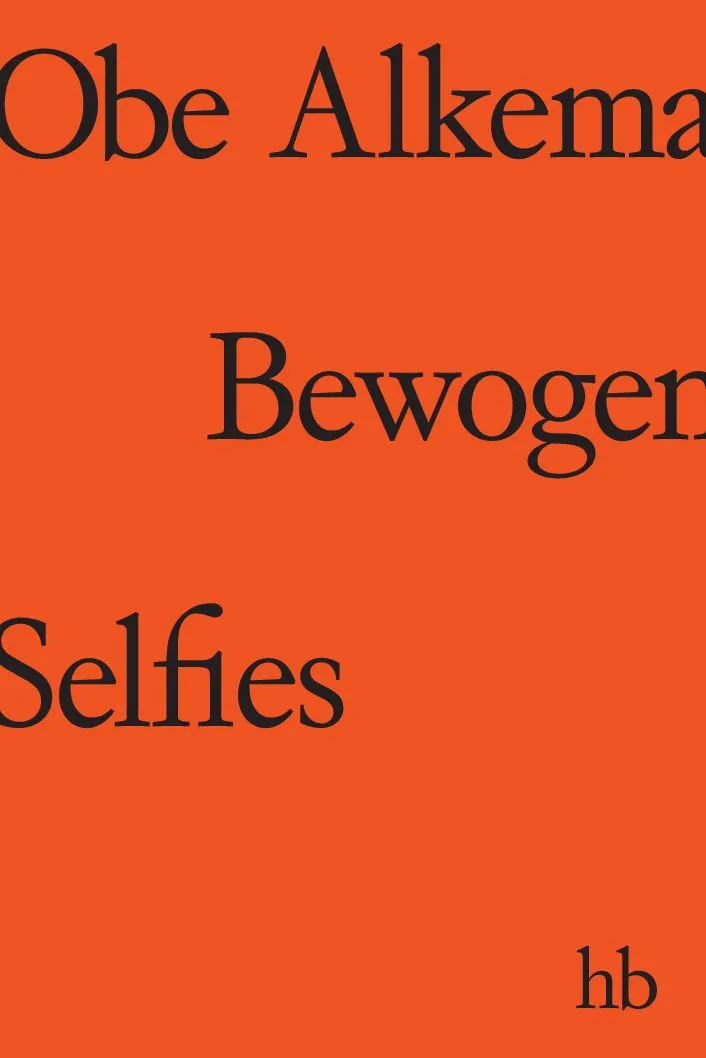
Bewogen selfies

Obe Alkema

Poetry €24.50

In Bewogen selfies onderzoekt Obe Alkema de verhouding tussen landschap en herinnering. Wat treft hij aan bij terugkeer naar belangrijke plaatsen uit zijn geheugen? Wat herinnert hij zich niet, maar Google wel? Is er een gedenkschrift te puren uit zijn metadata?

Memoires, rechtstreeks verteld en met omwegen, uit eerste hand en van horen zeggen. Archieven en herinneringen eisen spreektijd, houden het niet meer droog of worden tot spreken gebracht. Wat hebben ze eigenlijk te melden? Ze lopen helemaal leeg, net als Alkema zelf. Een leven zoals zovele, poedelnaakt en geretoucheerd, vol zin en onzin.

Cover of Nasleep

het balanseer

Nasleep

Çağlar Köseoğlu

Poetry €19.00

Nasleep neemt de protesten rondom het Gezi Park in 2013 als vertrekpunt en verkent gaandeweg wat er is overgebleven van dit historische moment waarin een andere wereld voor het grijpen leek. Het zijn gedichten die laveren tussen ritmische, conceptuele en kritische noise enerzijds en postrevolutionaire affecten anderzijds, tussen politise­ring enerzijds en onmacht en radeloosheid anderzijds.

Cover of Slangen

het balanseer

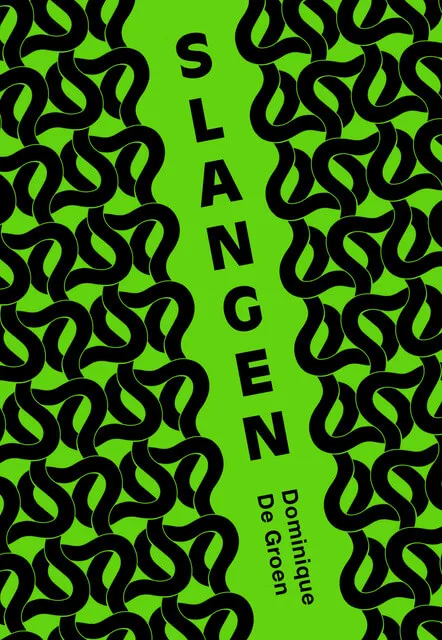
Slangen

Dominique De Groen

Poetry €19.50

Slangen krioelen in de sarcofaag van het heden, in de krochten van de popcultuur, in de mummie van de natuur, in wondes en rot vlees, in artificiële woestijnen en op geoliede dad bods. Ze wentelen zich rond beursgrafieken, raken verstrengeld met wurgende algoritmes, orkestreren een trage ondergrondse revolutie. Een meisje snijdt zich aan een nepdiamanten piramide en werpt haar slangenvel van zich af.

Dominique De Groen is schrijver en beeldend kunstenaar. Ze publiceerde de dichtbundels Shop Girl (2017), Sticky Drama (2019) en offerlam (2020). Ze werd genomineerd voor de Poëziedebuutprijs Aan Zee 2018, de Herman de Coninckprijs 2020 en de Fintroliteratuurprijs 2021 en won de Frans Vogel Poëzieprijs 2019 en de Fintropublieksprijs 2021.

Cover of Writing Dance

Varamo Press

Writing Dance

Jonathan Burrows

‘Human beings embody whatever they meet, and it’s all there when you work whether you want it there or not.’ Practice is like the dust that accumulates, and revisiting fragments of essays and talks on choreography Jonathan Burrows ended up embracing the haphazard and the mess, moments of unfocus and focus, harnessing them in pithy formulations and scores, adding room and punctuation and line breaks in the process so readers can hear the rhythm as he writes his dance on writing dance.

Jonathan Burrows is a choreographer, who has worked for many years in collaboration with the composer Matteo Fargion, with whom he continues to create and perform work. He is the author of A Choreographer’s Handbook (Routledge, 2010) and is currently an Associate Professor at the Centre for Dance Research, Coventry University.

Published by Varamo Press in the essay series Gestures
Graphic design by Michaël Bussaer

Cover of OEI #86/87 Publishing Practices, Publishing Poetics

OEI editör

OEI #86/87 Publishing Practices, Publishing Poetics

Tobi Maier, Cecilia Grönberg and 1 more

Periodicals €40.00

Once more, an astonishing issue of OEI – a thrilling, compelling, stimulating feast of ideas regarding publishing and the book: the perfect big companion to read and hug in bed while the virus spreads outside.

Bringing together contributions from circa 130 publishing structures, publishing communities, magazines, small press endeavors, artists, poets, writers, editors, theoreticians, curators, scholars, and art bookstores, OEI # 86–87 reflects upon the challenges, pressures and possibilities of publishing and creating publics in different contexts and places in a time of far-reaching – economical, medial, political, social, technological – transformations.

The potential and the versatility of publishing open it to a diversity of practices and approaches in the arts, but as an eminently social form of art, a collective or micro-collective work with shared responsibilities, it is also a never-ending process of “crafting a variegated approach to how you create, publish, distribute, and build a social ecosystem around your efforts”, of trying to “build up and strengthen the community around these printed forms” (Temporary Services).

It is the conviction of OEI #86–87 that print has the power to play an important part in the construction of social spaces, of a social world. As Benjamin Thorel puts it in one of the essays in the issue, “conceiving of the dynamics of publishing as making publics as well as making things public is not a pun – insofar as the artists/publishers encompass, beyond the book itself, its possible ‘lives’, imagining the different spaces, and the different people, amongst whom a publication will circulate.” This is what Michael Warner has called “a public [as] poetic worldmaking”, implying “that all discourse or performance addressed to a public must characterize the world in which it attempts to circulate, projecting for that world a concrete and livable shape, and attempting to realize that world through address.”

This is also, as stressed by Annette Gilbert and others, what can make publishing such an active force, a force co-constituting texts and publications and publics. Indeed, with Michalis Pichler, it is tempting to say that in publishing as practice – perhaps more than in any other art field – “artists have been able to assert the aesthetic value of their own socio-politically informed concerns and to engage, often under precarious conditions, in cultural activities fully aligned with their political values.”

OEI #86–87 also includes sections on and with contemporary poetry from Canada; Fluxus publishing; Krister Brandt/Astrid Gogglesworth; Kalas på BORD (Öyvind Fahlström); Lars Fredrikson; Claude Royet-Journoud’s poetry magazines; Carl Einstein; Gail Scott; Ållebergshändelser; OEI #79: edit/publish/distribute!; “det offentligas försvinnande” and many many other things. [publisher’s note]

Design by Konst & Teknik

Cover of My Mother Laughs (UK Edition)

Silver Press

My Mother Laughs (UK Edition)

Chantal Akerman

In 2013, the filmmaker Chantal Akerman's mother was dying. She flew back from New York to Brussels to care for her, and between dressing her, feeding her and putting her to bed, she wrote. She wrote about her childhood, the escape her mother made from Auschwitz but didn't talk about, the difficulty of loving her girlfriend, C., her fear of what she would do when her mother did die. Among these imperfectly perfect fragments of writing about her life, she placed stills from her films. My Mother Laughs is both the distillation of the themes Akerman pursued throughout her creative life, and a version of the simplest and most complicated love story of all: that between a mother and a daughter.

Translated by Daniella Shreir with an introduction by Eileen Myles and afterword by Frances Morgan.

Cover of Great is the Power of the Name

Forlaget Emancipa(t/ss)ionsfrugten

Great is the Power of the Name

Signe Frederiksen, Anne-Mette Schultz

Essays €15.00

Great is the Power of the Name considers the works of authors Elena Ferrante, Pauline Reáge, Karl Ove Knausgård, Colette and artist Lee Lozano

In 2016, when Anne-Mette had invited Signe to take on the role as editor of her text The Institute of Applied Speech, they both began reading Elena Ferrante's The Neapolitan Novels. They were specifically fascinated by the author’s use of pseudonym. Anne-Mette's Institute of Applied Speech was a tale of a fictive place, a pseudo-topos, and Elena Ferrante’s ideas about the pseudonym as a space for the writing itself was useful in thinking about fictive authorship. In a number of written interviews, Elena Ferrante unfolds the feminist perspective of her use of pseudonym. They were attracted by the idea that the author could avoid the biographical question; that she could disappear behind her own writing. 

To them, the artist Lee Lozano is the ghostly presence of hard-core moralist and humorous fuck-off art from another decade. During the course of her life, Lozano continuously reconfigured and gradually dissolved her own name, starting from Leonore Knaster ending up with E. Her work Boycott Women, in which she decides not to have any contact with women, expands the notion of feminist critique. 

Great is the Power of the Name publishes a readership interested in the position of the artist, and how it conditions the way we make art.