rile*books

Search books

Search books by title, author, publisher, keywords...

Cover of The Completion

Everyday Analysis

The Completion

Franco 'Bifo' Berardi

€10.00

In The Completion, legendary philosopher Franco 'Bifo' Berardi offers his analysis of cognitive automation and artificial intelligence. Of the possible worlds imagined in Silicon Valley and in the media discourse around tech boosterism, none will likely materialise. Instead, the unpredictable will intervene in the future of predictive technology. 

In this new edition, in a new venture for Everyday Analysis, Berardi's essay is accompanied by an introduction by Alfie Bown and a series of artworks and illustrations, new and historic- from Borges's labyrinths to the I-ching - offering a reading experience in the spirit of Berardi's work. 

Published in 2025 ┊ 33 pages ┊ Language: English

recommendations

Cover of Saving Genitality: Toward A Freudian Virtue Ethics

Everyday Analysis

Saving Genitality: Toward A Freudian Virtue Ethics

Sohrab Ahmari

Essays €9.00

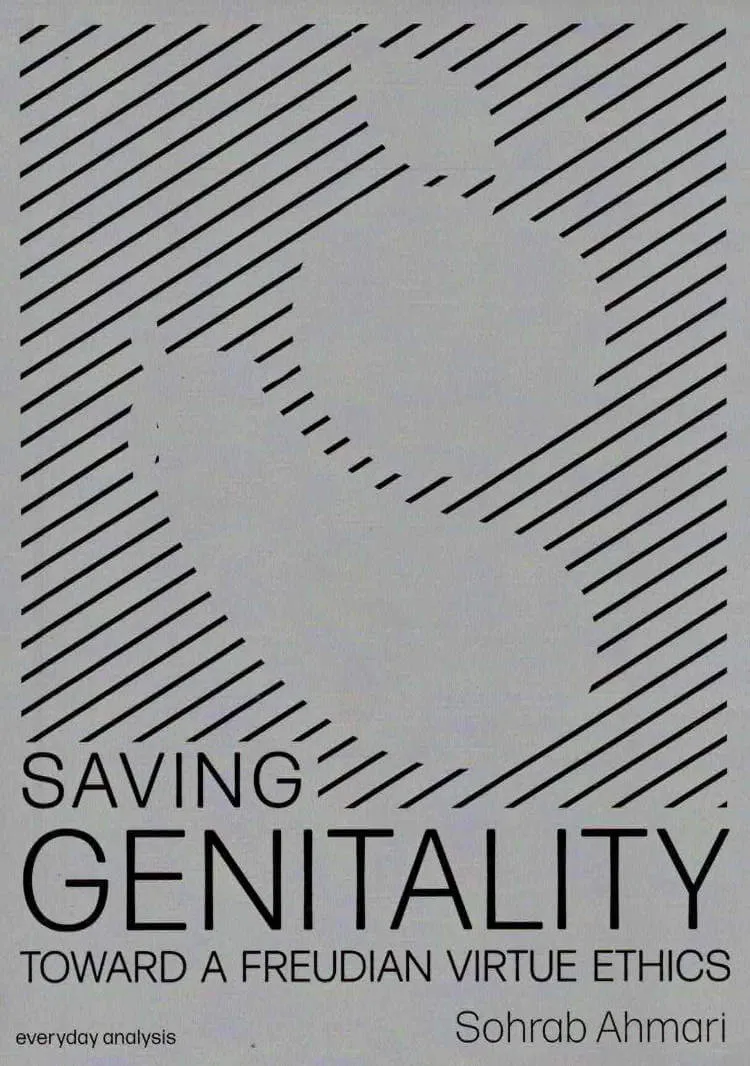
Western societies have dismantled many of the prohibitions that ringfenced errant sexual drives in Freud’s time. The psychoanalytic project describes people caught between two fundamental and contradictory principles: One a relentless sexual drive, the libido; the other our species’ collective need for social order and harmony. Part of this harmony, for true Freudians, is embedded in the binary mutuality of men’s and women’s bodies, which remains indispensable for society to reproduce itself, even in our sexually liberated age. In this essay, Ahmari revisits the idea of ‘genitality’ arguing that perhaps the "heteronormative" orthodox Freudians were right about some things after all.

Cover of Sounds Naughty

Everyday Analysis

Sounds Naughty

Karlo Pavlović

Essays €10.00

In this psychoanalytic pamphlet, Croatian philosopher Karlo Pavlović analyses the perversions of the day. Considering the topic of ASMR, a key example of what he calls the generalised deployment of subtle pornography, of depictions of sexuality "in gloves", he argues that society today should be understood through the blue balls phenomenon. This concept, developed playfully by Pavlović, explains that we are all perverts taking the logic of the drive to its extreme; if the whole point of the drive is not to attain its object, but rather, to circle around it, the perverse subject (as the subject of the present times) has, in fact, no problems with this whatsoever.

Karlo Pavlović is completing his PhD in Philosophy at The University of Ljubljana, supervised by Alenka Zupančič.

Cover of Your Life Is Not A (Fucking) Story

Everyday Analysis

Your Life Is Not A (Fucking) Story

Simon Critchley

Essays €9.00

In this new collected edition of his recent articles, Simon Critchley - one of the most important living philosophers - takes us through his reflections on death, questions of doubt and reason, the legacy of David Bowie, the nature of fear and empathy in a broken society and a critique of narrative identity - among other things. YOUR LIFE IS NOT A STORY explores the contemporary world and its psychological impact on us, offering us a way to see our situation different and resist its tricks and contrivances.

Cover of Confessions Of A Class Reductionist

Everyday Analysis

Confessions Of A Class Reductionist

Ben Burgis

Essays €11.00

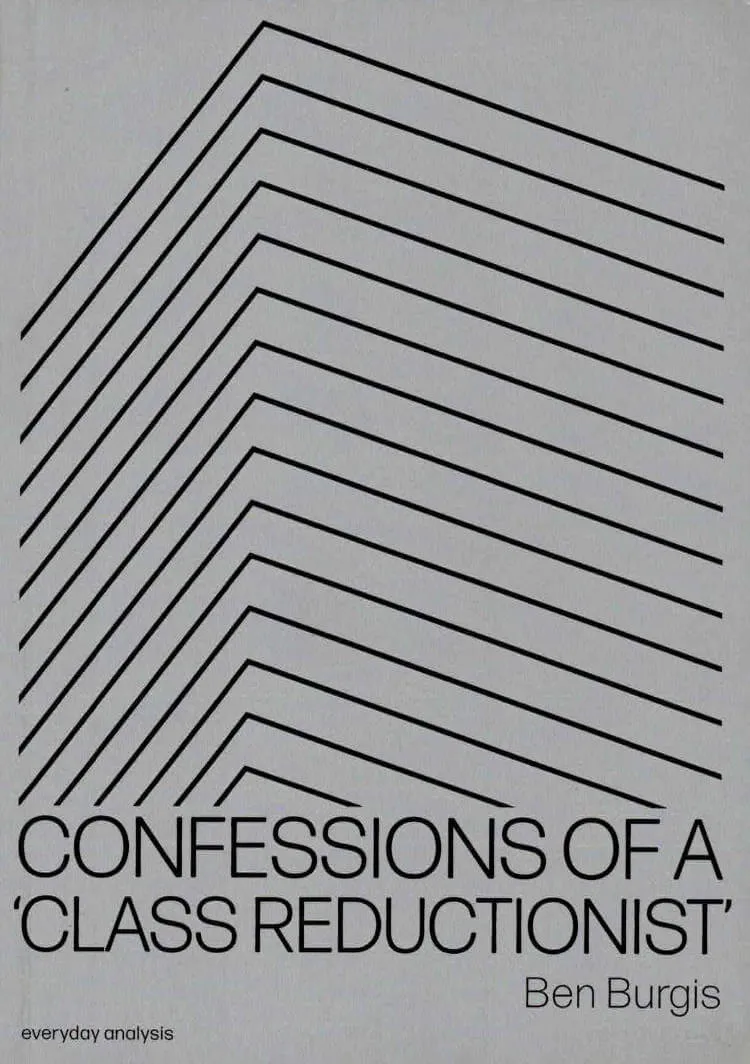
In these essays, Ben Burgis criticizes fashionable radical-liberal identity politics and makes the case for universalism about rights and an unabashedly “class-first” approach to socialist political strategy. This may sound to some ears like a call for abandoning marginalized people. On the contrary, he argues, focusing on economic inequality empowers the victims of bigotry and retrograde social practices the resources and material security to stand up for themselves far more effectively than any diversity trainer or “anti-racism” consultant could represent their interests. As we face a rising tide of reactionary authoritarianism, it’s more important than ever to ditch the identitarian pieties of the recent past and think hard about how the Left can actually win.

Cover of Multiplication of Organs (Manifesto) – Body, Technology, Identity, Desire

becoming press

Multiplication of Organs (Manifesto) – Body, Technology, Identity, Desire

Christian Nirvana Damato

Philosophy €13.00

A queering of psychoanalysis put together by the forerunner of Inactual Magazine. 

Organ Multiplication Manifesto is an essay that delves into the transformations of sociality and sexuality in the context of digital technologies. Using an interdisciplinary approach that blends philosophy, erotic literature, media theory, psychoanalysis, gender studies, and neuroscience, the text explores how devices, platforms, and technologies shape and produce normative systems that influence our perceptions, desires, and relationships with others. By examining the interplay between desire and digital mediation and drawing comparisons with authors such as Deleuze, Ballard, Žižek, Butler, Preciado, Bataille, and others, this book aims to present a new theoretical, critical, and philosophical perspective in the contemporary discourse on the relationship between humans, technology, and society.

This book begins with an analysis of three iconic erotic texts from Masoch, Ballard and Bataille, and uses this analysis as the departure point for its main theoretical work on the four topics listed in the subtitle. The book passes through a lot of interesting phases, including an analysis of Phenomenology and Gucci, class struggle and OnlyFans and much more, until eventually arriving at the actual manifesto for Organ Multiplication and the beautifully named notion of the "Caged Sun". 

Foreword by Vincenzo Estremo.
Afterword by Franco "Bifo" Berardi.

"One may think that the history of the human culture is going to be enormously impoverished by the disappearance of the body, one may think that, on the contrary, human culture has been enriched by the renounce to presence and physical contact. It is not the intention of Damato to save this dilemma, His intention is rather to open a new field of investigation, and possibly to start a reflection on a more advanced dilemma: will the change of perception make possible the emergence of a new ontology, or is the disappearance of the body going to mark the final dissolution of human life itself?" — Franco "Bifo" Berardi

Christian Nirvana Damato is a writer, curator, and independent researcher working in the fields of philosophy, technology, psychoanalysis, and visual culture. He teaches media theory at the IED in Turin and runs various workshops on publishing and writing. He writes for and collaborates with various magazines and publishing houses. He is the founder and editorial director of Inactual. He has also published Medial Disorders. Interpretive and Non-statistical Compendium of Technological Disorders. Vol I, with contributions by Geert Lovink, Alfie Bown, Isabel Millar, Eyal Weizman (Forensic Architecture) et al. (ed. by, Inactual, 2024), Wearable Statistical Desires. Re-programming the performativity of the body through digisexuality (Mimesis 2025; Everyday Analysis, 2025) and Medial Disorders Vol II.

Cover of A Nazi Word for a Nazi Thing

Peninsula Press

A Nazi Word for a Nazi Thing

So Mayer

Essays €12.00

An essay on art, bodies and fascism.

In an era where identity politics is being weaponised against the very people it has sought to make visible, how can we reclaim complexity?

In 1937 the Nazis staged an exhibition of seized modernist artworks. Named Entartete ‘Kunst’ – Degenerate ‘Art’ – it sought to define degeneracy, display it and destroy it.This act of violent appropriation is one episode in a long and ongoing history of the erasure of queer and non-normative cultures.

A Nazi Word for a Nazi Thing works against this erasure; it is a manifesto – a catalogue for an exhibition that could never take place. Drawing on work from dissident sexologist Magnus Hirschfeld to South African artist Zanele Muholi, as well as a century of queer cinema from Sergei Eisenstein to Pedro Almodóvar, So Mayer creates an archive of resistance.

‘This book is a small revolution that becomes a party that you won’t be leaving soon. I believe we’re living in a time of fresh erasures, systemic violences working that global pandemic to take some other bodies out. Looking so freshly at the history of queerness, sexual deviance and the long long coordinated erasures of colonialism, bigotry and transphobia the essential non binary nature of art opens up right here like the wildly singing flower it is and So Mayer’s compelling version makes sense, makes me listen.’
Eileen Myles

‘A Nazi Word for a Nazi Thing is a reflective, creative walk through some of the worst – and best – people of the last hundred years, looking at the power of images and their relationship(s) with text. In a time of rising fascism, So Mayer highlights ways that artists have found strategies of resistance, and offers hope in historical analysis.’
Juliet Jacques

Cover of The Difficulties

Tripwire Journal

The Difficulties

Haytham El-Wardany

Essays €10.00

If there is a centre around which the language of this pamphlet circulates, then it is Palestine. As this centre, Palestine enables a transformative power that persistently and steadfastly turns repression and silencing into solidarity. Essay-fiction, prose poetry, radical philosophy, speculative nonfiction — this uncategorizable collection of texts brings militant inquiry to each utterance, each narrative turn, in acts of transnational and transhistorical becoming.

Cover of Light Of The Dark: Derrida, Barthes, Celan

Everyday Analysis

Light Of The Dark: Derrida, Barthes, Celan

Jean-Michel Rabaté

Essays €10.00

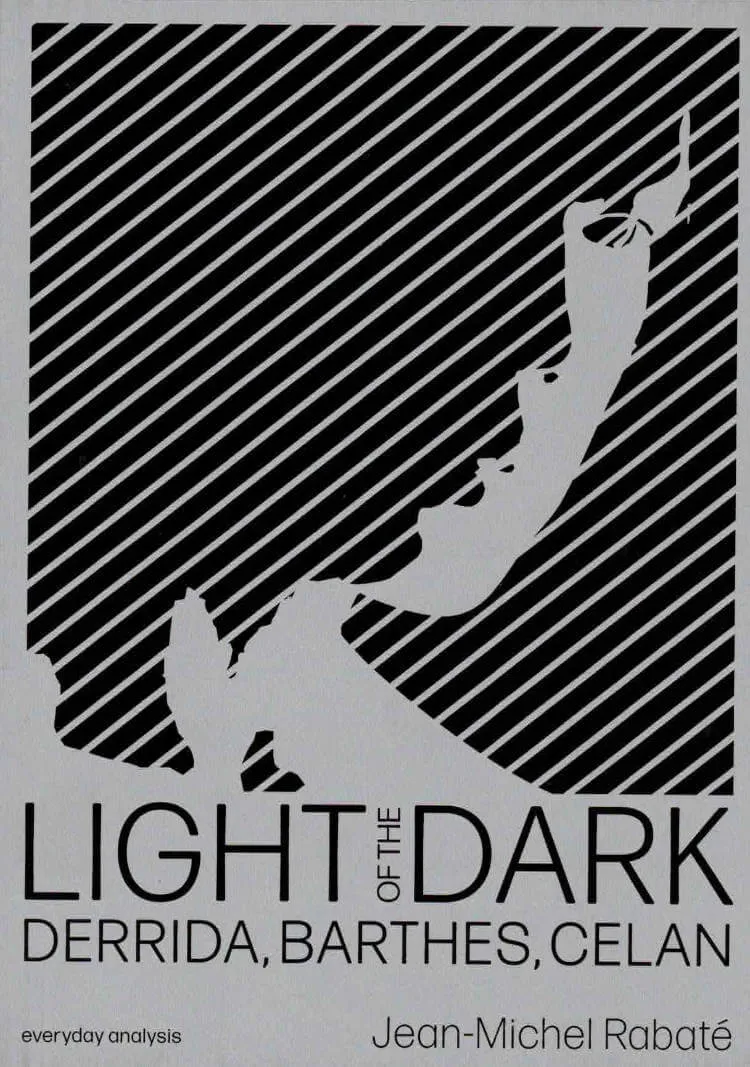
Derrida’s essay “Aletheia” discusses the work of Japanese photographer Kishin Shinoyama. Reading Derrida, Rabaté investigates how, behind the classical concept of truth as a beautiful naked woman, Derrida argues that any photographic image tells the Truth, but a truth obscured as it comes to light: “nothing is more black than the visibility of light.” Staging a critical conversation with Roland Barthes’s theses in Camera Lucida and Paul Celan’s poems from Breathturn to Lightduress, Rabaté argues for a theoretical approach to truth that counters the prevailing truth-discourses of today. 

Cover of Prairie, Dresses, Art, Other

Prototype Publishing

Prairie, Dresses, Art, Other

Danielle Dutton

Fiction €16.00

In Prairie, Dresses, Art, Other Danielle Dutton imagines new models for how literature might work in our fractured times. Dutton’s writing is as protean as it is beguiling, using the different styles and different spaces of experience to create a collage of the depths and strangeness of contemporary life.

This hybrid literary collection covers an inventive selection of subjects in four eponymous sections which contrast and echo one another, challenging our expectations and pushing the limits of the dream-like worlds and moods that language might create.

‘Danielle Dutton is a writer whose work I wait for. When a new book comes, I keep it very close… Her growing body of work is among the most formally inventive (and therefore essential) I can think of, and Prairie, Dresses, Art, Other is a vital, enlivening addition to it.’ – Kate Briggs

Danielle Dutton is the author of the novels Margaret the First and SPRAWL, the prose collection Attempts at a Life, the illustrated nonfiction chapbook A Picture Held Us Captive, and she wrote the text interpolations for Richard Kraft’s Here Comes Kitty: A Comic Opera. Her fiction has appeared in magazines and journals including The New Yorker, The Paris Review, The White Review, Harper’s, BOMB, and NOON. Dutton teaches at Washington University in St. Louis and is cofounder and editor of the award-winning feminist press Dorothy, a publishing project. Born and raised in California, she has lived on the (former) prairie now for roughly twenty years.

Cover of Words are my warders but don’t keep an I on me

Vibrational Semantics

Words are my warders but don’t keep an I on me

Daniela Cascella

Essays €8.00

An experimental essay on voice, narrative, literature and translation. In this text Daniela tunes into the hums of voices heard within books, to the recollected csitation, to singing with stitched lips.