Books
Books
published in 2009

Impossible Princess
Impossible Princess is the third collection of gay short fiction by PEN Award–winning San Francisco–based author Kevin Killian. A member of the “new narrative” circle including Dennis Cooper and Kathy Acker, Killian is a master short story writer, crafting campy and edgy tales that explore the humor and darkness of desire. A former director of Small Press Traffic and a co-editor of Mirage/Periodical, Killian co-wrote Jack Spicer’s biography, Poet Be Like God, and co-edited three Spicer books, including My Vocabulary Did This To Me: Collected Poems. His latest book, Action Kylie, is a collection of poems devoted to Kylie Minogue.

Notes on Conceptualisms
Vanessa Place, Robert Fitterman
What is conceptual writing, how does it differ from Conceptual Art, what are some of the dominant forms of conceptualism,where does an impure or hybrid conceptualism fit in, what about the baroque, what about the prosody of procedure, what are the links between appropriation and conceptual writing, how does conceptual writing rely on a new way of reading, a “thinkership” that can shift the focus away from the text and onto the concept, what is the relationship between conceptual writing and technology or information culture, and why has this tendency taken hold in the poetry community now? What follows, then, is a collection of notes, aphorisms, quotes and inquiries on conceptual writing. We have co-authored this text through correspondence, shared reading interests, and similar explorations. Notes on Conceptualisms is far from a definitive text, and much closer to a primer, a purposefully incomplete starting place, where readers, hopefully, can enter so as to participate.

Steal This Book
Eleven performance-based projects by Dora García, documented through letters, emails and other elements from the artist's private correspondence with various interpreters of performances, whether they were direct collaborators of simple spectators.
Edited and prefaced by François Piron, Steal This Book, a tribute to Abbie Hoffmann's pamphlet of the same name, is not a definitive attempt at rendering the pieces on which it is based; it calls for a free, active and contradictory reception, that of an open archive. Part epistolary novel, part rough screenplay and part user's manual, Steal This Book proposes a body of discussions, questions without answers and endless ramblings, in place of the critique's or the artist's voice.
The book has also been presented in exhibitions as a Dora García sculpture meant to be stolen, but it can also be purchased in selected bookstores worldwide.
Contrary to the idea that would have art addressing the greatest possible number of people, Dora García (born in 1965 in Valladolid, lives and works in Barcelona), best known for her performance devices, is interested in what is enacted at the individual scale: in a radically conceptual form, at once accessible and elegant, she elects to transmit oddly coded messages, their ask being to bestir a specific relation with each and every visitor. Dora García is interested in everything that intervenes in the communication between an artist and his/her public: art no longer represents the world, but itself becomes a producer of realities often on the borderline of fiction and make-believe. It urges us to undergo experiences other than ordinary situations, at once simple and hard to grasp.
Dora García has had solo exhibitions at the MACBA in Barcelona, the Reina Sofia in Madrid and the SMAK in Gent. She represented Spain at the Venice Biennale in 2011, and was a part of the Skulptur Projekte Münster 07, the Sydney Biennial in 2009, the Biennale de Lyon in 2009 and Documenta 13 in 2012.

The Third Body
In The Third Body, the poet, novelist, feminist critic, and theorist Hélène Cixous interweaves a loose narrative line with anecdotes, autobiography, lyricism, myth, dream, fantasy, philosophical insights, and intertextual citations of and conversations with other authors and thinkers. Cixous evokes the relationship of the female narrator and her lover, a relationship of alternating presences and absences, separations and rejoinings. This relationship assumes protean forms within a complex web of writing, creating a third body out of the entwined bodies of the narrator and her lover.
Hélène Cixous is a professor emerita of literature and founder of the Centre d'études feminines, Paris VIII. Her numerous books include Stigmata, Three Steps on the Ladder of Writing, The Newly Born Woman, The Laugh of the Medusa, and Manhattan: Letters from Prehistory. In 2000, a collection in Cixous' name was created at the Bibliothèque nationale de France.

The Gloria Anzaldúa Reader
Gloria Anzaldua, AnaLouise Keating
A collection of published and unpublished writings of the groundbreaking Chicana writer and self-described "chicana dyke-feminist, tejana patlache poet, writer and cultural theorist" Gloria Anzaldua.
Gloria Anzaldúa (1942-2004) was a visionary writer whose work was recognized with many honors, including the Before Columbus Foundation American Book Award, a Lambda literary award, the National Endowment for the Arts Fiction Award, and the Bode-Pearson Prize for Outstanding Contributions to American Studies. Her book Borderlands/La frontera was selected as one of the 100 Best Books of the Century by Hungry Mind Review and the Utne Reader. AnaLouise Keating, Professor of Women's Studies at Texas Woman's University, is the author of Women Reading, Women Writing: Self-Invention in Paula Gunn Allen, Gloria Anzaldúa, and Audre Lorde; editor of Anzaldúa's Interviews/Entrevistas and EntreMundos/AmongWorlds: New Perspectives on Gloria Anzaldúa; and co-editor, with Anzaldúa, of this bridge we call home: radical visions for transformation.
AnaLouise Keating, Professor of Women's Studies at Texas Woman's University, is the author of Women Reading, Women Writing: Self-Invention in Paula Gunn Allen, Gloria Anzaldúa, and Audre Lorde; editor of Anzaldúa's Interviews/Entrevistas and EntreMundos/AmongWorlds: New Perspectives on Gloria Anzaldúa; and co-editor, with Anzaldúa, of this bridge we call home: radical visions for transformation.

Actors and Extras
Thomas Trummer, Paul Willemsen
The publication Actors & Extras appears following the exhibition of the same name at Argos. Five authors highlight the theme of characterisation from various angles. Georges Didi-Huberman’s contribution People exposed, People as Extras explores how cinema represents the masses. Sven Lütticken highlights the performance tradition in the visual arts in relation to the producing of subjectivity. On the basis of the classic cinema, in Figures of the Extra, Paul Willemsen composes a typology of the extra and subsequently gives attention to the aberrant status of the extra in modern cinema and contemporary art.
Thomas Trummer’s Volonté Générale. Extras in Film and Democracy questions the responsibility of the anonymous individual. With The Passing Actor: Sketch of a Renaissance Jean-Louis Comolli analyses how the concept of acting in a documentary has a different interpretation than in a fiction film. The last part of the publication describes the selected works in the exhibition.
Texts by: Clemens von Wedemeyer, João Onofre, Mark Lewis, Mike Figgis, Jeremy Deller, Irina Botea, Christian Jankowski, Aernout Mik, Krassimir Terziev, Julika Rudelius
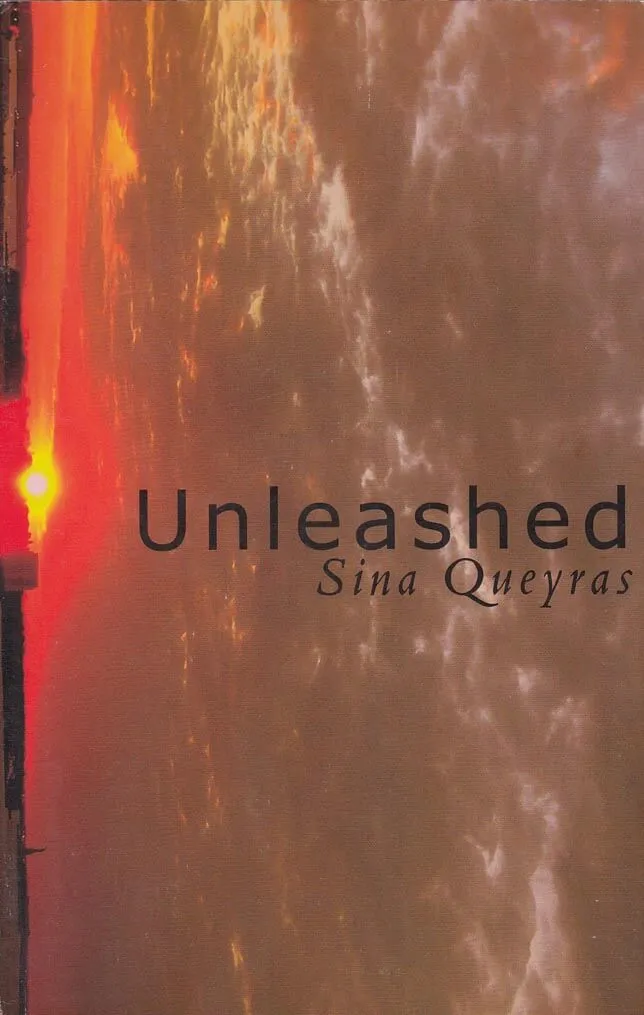
Unleashed
05/09/04 Now she is blogging. Now she is sitting on the black couch listening to the sirens wail and the rain fall. Now she is thinking of oysters. Now she is wondering why this is worth sharing. Now she is thinking, how decipher what is worth reading? Who is to say? Sifters. She thinks we have become a nation of sifters. So began a three-year experiment in blogging. An experiment begun for many reasons—a way for an expat to keep in touch with fellow Canadian writers and artists, a way to come to terms with the increasing relevance of the internet in literary lives, and a way to figure out why, after decades of gains, women writers are still grossly underrepresented in critical dialogues.
With an afterword by Vanessa Place.

Magenta Soul Whip
Lisa Robertson writes poems that mine the past, its ideas, its personages, its syntax, to construct a lexicon of the future. Her poems both court and cuckold subjectivity by unmasking its fundament of sex and hesitancy, the coil of doubt in its certitude. Reading her laments and utopias, we realize that language, whiplike, casts ahead of itself a fortuitous form. The form brims here pleasurably with dogs, movie stars, broths, painting's detritus, Latin and pillage.
Erudite and startling, the poems in Lisa Robertson's Magenta Soul Whip, occasional works written over the past fifteen years, turn vestige into architecture, chagrin into resplendence. In them, we recognize our grand, saddened century.