rile*books

Search books

Search books by title, author, publisher, keywords...

Cover of Girls Like Us #2 — Issue 2

Girls Like Us

Girls Like Us #2 — Issue 2

Marnie Slater ed., Katja Mater ed., Sara Kaaman ed., Jessica Geysel ed.

€8.00

The second issue of the Amsterdam lesbian arts quarterly with newly appointed co-editor Vela Arbutina at the helm.

Features include Vava Dudu and Theo Mercier, Tavi Gevinson and Diane Pernet, Keren Cytter and Dafna Maimon, Lauren Flax and Lauren Dillard, Kaisa Lassinaro, Matthew Lutz-Kinoy, Leilah Weinraub, Benjamin A. Huseby, Eline McGeorge, Janis Pönisch, Anie Stanley, Andrea Ferrer, Devrim Bayar.

Language: English

recommendations

Cover of Girls Like Us #6 - Secrets

Girls Like Us

Girls Like Us #6 - Secrets

Jessica Geysel, Sara Kaaman and 2 more

A secret can be a private space for self-creation – or a shared site of pleasure.

We explore secrets in a plethora of forms and contexts. From layered accounts of mediaeval ecstasy to the unexplored sensory experience of smell. From camouflaged play to queer readings of astrological charts and the hidden history of house music. From a very analog point of view to the outskirts of the internet.

Cover of These are the tools of the present

Mophradat

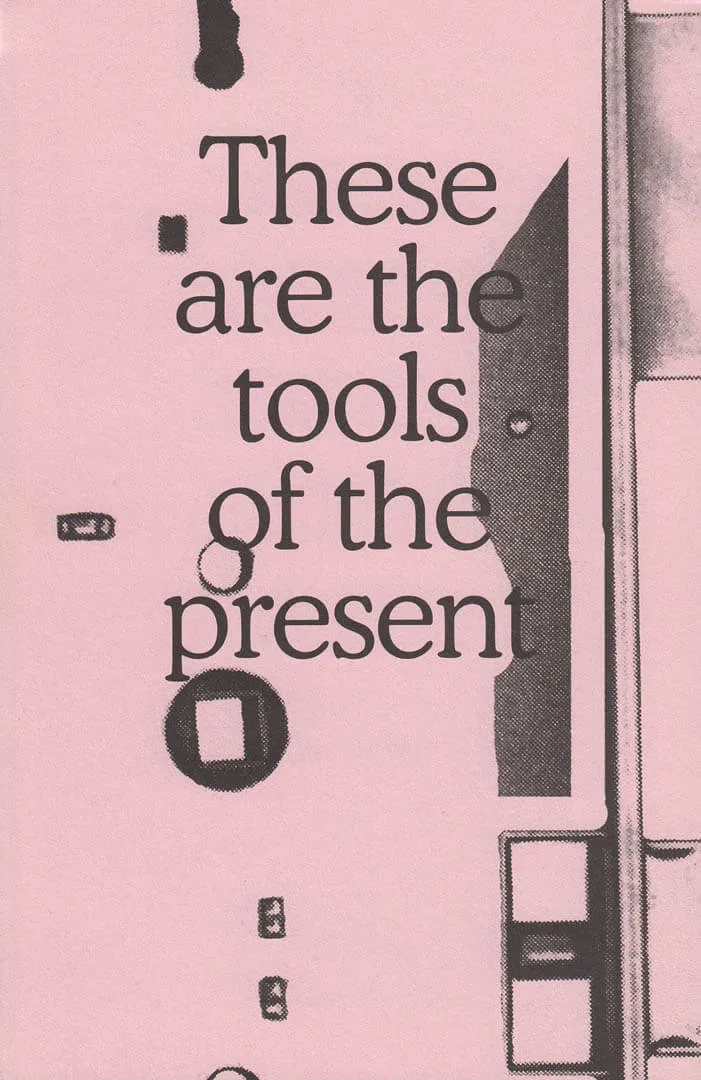
These are the tools of the present

Mai Abu ElDahab, November Paynter and 1 more

This publication comprises a series of interviews with contemporary artists, musicians, and writers who are in dialogue with Beirut and Cairo. While not purporting to be an overview of the art scenes in these cities, this book begins to draw a picture of how artists think about what it means to be active in the contexts of these cities. It offers insight into the circumstances that structured these artists’ stories, and the often accidental influences that have shaped how their practices have developed.

Cover of Fous Moi La Paix

Goswell Road

Fous Moi La Paix

Vava Dudu

Goswell Road presents Fous Moi La Paix a book of drawings by multidisciplinary artist Vava Dudu. Vava made 37 exclusive drawings for the publication, which launched at Paris Ass Book Fair 2024 at Palais de Tokyo. The drawings are offset with her texts, poems and several images of her iconic clothing and accessories.

"The multidisciplinary artist Vava Dudu refuses to follow convention: she draws and writes poetry, makes clothes and accessories, and builds furniture and guitars. She asserts her position as an outsider in contemporary art by stating that she “prefers extremes to the middle ground.” Her work as an independent stylist goes hand in hand with her activity as a singer in La Chatte, an electro-zouk punk new wave band founded in 2013 with Stéphane Argillet and Nicolas Jorio, aka “Nikolu.” Her underground artistic world, which joyously combines text and image, is expressed through various media.

Vava Dudu was born in 1970 in Paris, where she lives and works."

Text from Lafayette Anticipations website

Cover of A Book Knot Book

Body Text

A Book Knot Book

Sara Kaaman

Performance €20.00

A Book Knot Book is a 208 pages long performance, the first from the research and publishing initiative Body Text. In this study of language in action systems of meaning-making crash, sparkle and swoon. In a playful voice over A Book Knot Book self-reflects on the materialities and choreographies of publishing, reading and writing. With guest stars in fragments; Monique Wittig, Yvonne Rainer, Cristina Rivera Garza, Amiri Baraka, Will Rawls, David Abram, Thich Nhat Hanh and more. 

Edited and designed by Sara Kaaman. Published with the support of Stockholm University of the Arts.

Cover of T (poem)

Materials

T (poem)

Laurel Uziell

Poetry €13.00

T is a long poem in multiple parts and its author's second book. “The two genders are YES and NO, so you stutter or else shut up forever”. 

From the Afterword: "Between 2017-2018 I was involved in a trial with a group of TERFs after a scuffle emerged during a counter protest against a ‘debate’ about sex-based rights in light of proposed reforms to the Gender Recognition Act which would have made trans people’s lives marginally easier. Luckily I wasn’t actually in the dock, but I appeared to give evidence, and for everyone involved it was a humiliating ordeal as we were doxxed, harrassed online and in real life, while the relentless media campaign which ensued took a toll on the entire trans community. The caricaturesque reduction of a complex interrelation of political positions, epistemologies, traumas and personal grievances into two ‘sides’ ultimately worked to further the persecution of trans people, but nevertheless highlighted a social logic on whose terms the so called debate was forced to appear: sex was pitted against gender (or more revealingly ‘gender identity’), objective biology against subjective ‘self-identification’, nature against culture, or perhaps, first nature against second nature."

What does a poet say (what does anyone say), when placed on the stand, how answer the binary logics forced like a cage in the legally-grounded violence which splittingly interrogates solidarity, the splitting invocation of law? In answer, T spreads across the page as if desperately finding a form for speech acts forced into a garrotted tick-box, a witness stand, video evidence, Nature’s originary disguise as history or vice versa, wrapped inside ‘common sense’ as a pronominal shroud, in the policing of body, speech, and every fungible fibre of being. The author writes: “I want the whole text to be a kind of horrific inorganic body with awkward parts, both to replay at the level of form some of the critiques of organicist thinking with reference to nature that the poem tries to articulate, and also, more glibly, to be somewhat like a trans body, awkwardly fitting together with some parts undercutting others”. An extended enquiry into Materialism and its material (fleshed) stakes, driven through the heart and to the heart of things, T sees lyric poem shudder to line-broken essay to fragment of play to citational drop; in tight compression sprawling, a poem whose argument is necessary and necessarily incomplete, poetry can do thinking, this thinking we do outside and within it, sprung trap, open and closing door. 

Cover of The Faggots and Their Friends Between Revolutions

Nightboat Books

The Faggots and Their Friends Between Revolutions

Larry Mitchell

Poetry €17.00

The Faggots and Their Friends Between Revolutions is a beloved queer utopian text written by Larry Mitchell with lush illustrations by Ned Asta, published by Calamus Press in 1977. Part-fable, part-manifesto, the book takes place in Ramrod, an empire in decline, and introduces us to the communities of the faggots, the women, the queens, the queer men, and the women who love women who are surviving the ways and world of men.

This new edition will feature essays from performance artist Morgan Bassichis, who adapted the book to music with TM Davy in 2017 for a performance at the New Museum, and activist filmmaker Tourmaline.

Cover of Cold Heaven

O Books

Cold Heaven

Camille Roy

Poetry €14.00

Cold Heaven joins two plays, Sometimes Dead is Better and Bye Bye Brunhilde, with an introduction by the author. Both plays have the dissonant, radical beauty of poetry.

As Roy writes in her Introduction to the book: “Plays are porous, written to be entered… Plays provide a frame for studying collisions… Language can be an (uncontrollable) character, moving in on the others, creating a stir… [I]n a play… the private self disappears. Writing can move out into the dead zone between any two people and test what is there.”

Imagine a Punch and Judy as lesbians whose domestic and sexual squabbles are paraded in the language of brilliant poets; these are Camille Roy's Fear and Technique. A wonderful play.

Cover of HOOT nr. 5 — Grégoire Devidal

GUFO

HOOT nr. 5 — Grégoire Devidal

Rozenn Voyer, Clément Faydit and 1 more

Cet été j’ai rappelé un ami, Grégoire Devidal, pour lui demander de ses nouvelles depuis que nous sommes chacun·e parti·e d’Amsterdam où nous y avons partagé quelques années. Il m’a parlé d’un projet de podcasts avec Agathe Boulanger et Gwendal Raymond.

Ayant partagé des moments de vie, de création, de tension, de doutes et beaucoup de moments de travail, il m’est apparu comme une nécessité de proposer ce nouveau numéro de HOOT à ces trois artistes. La parole et l’écriture sont au centre de leur pratique et de leurs recherches. Je leur ai alors confié mon questionnaire habituel pour m’effacer de la trame de ces conversations et laisser place à une nouvelle forme de dialogue : celui qu'iels se partagent sans que je ne les écoute, sans que je n'intervienne. Iels parlent entre-elleux, se questionnent et se meuvent comme autant d’échos infinis sur des parois fluides. Leurs échanges m’ont évoqué ceux des personnages des Vagues de Virginia Woolf dans la manière dont ils s'interpénètrent, dont l’identité des orateur·rice·s valse et les échanges se relaient plutôt que se répondent.