rile*books

Search books

Search books by title, author, publisher, keywords...

Cover of Why Call it Labor? On Motherhood and Art Work

Mophradat

Why Call it Labor? On Motherhood and Art Work

Mai Abu ElDahab ed.

€10.00

This publication comprises four essays and one conversation with contemporary artists and curators discussing their experience of becoming mothers as professionals in the arts, its reality and effects. While their reflections represent a similar strata of art worker in terms of background, class, and career trajectory, the impact of instruments of patriarchy on rendering maternity invisible that they describe is recognizable and insidious.

Contributions by Mai Abu ElDahab, Basma Alsharif, Lara Khaldi, Mary Jirmanus Saba, and Mirene Arsanios with Nikki Columbus.

Edited by Mai Abu ElDahab
Published by Mophradat and Archive Books
Text design layout by Valerie Arif
Arabic and English

Language: English, Arabic

recommendations

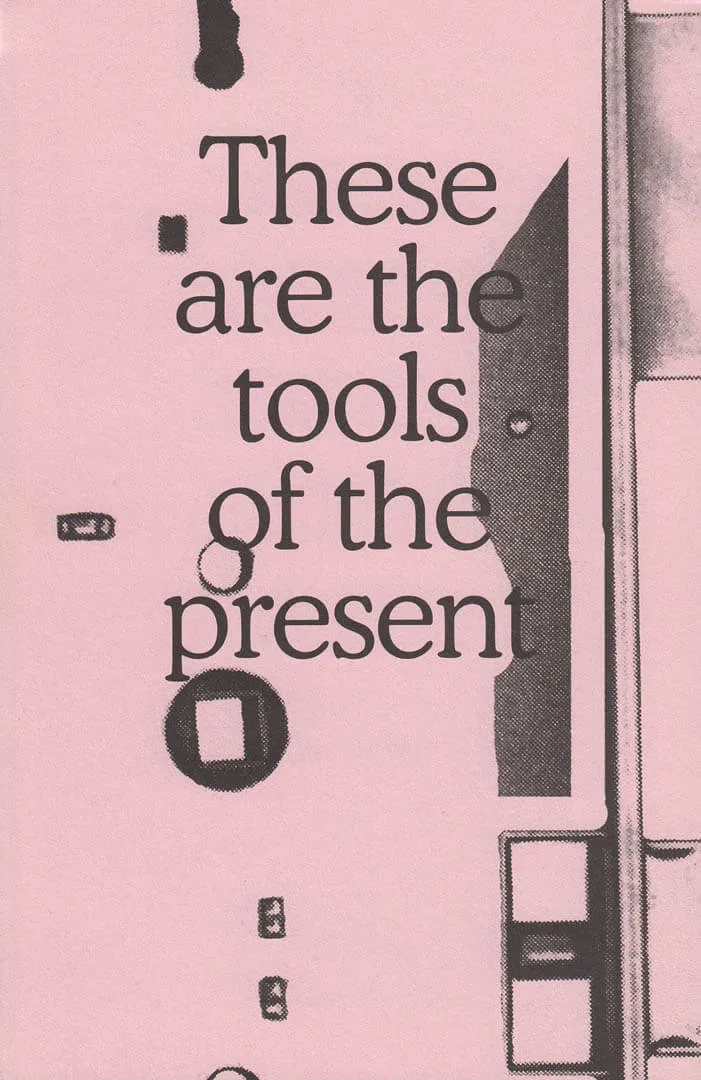
Cover of These are the tools of the present

Mophradat

These are the tools of the present

Mai Abu ElDahab, November Paynter and 1 more

This publication comprises a series of interviews with contemporary artists, musicians, and writers who are in dialogue with Beirut and Cairo. While not purporting to be an overview of the art scenes in these cities, this book begins to draw a picture of how artists think about what it means to be active in the contexts of these cities. It offers insight into the circumstances that structured these artists’ stories, and the often accidental influences that have shaped how their practices have developed.

Cover of The Autobiography of a Language

Futurepoem

The Autobiography of a Language

Mirene Arsanios

Poetry €22.00

Here the mirror image of the almost hallucinatory, heart-rending loss of the familiar is literary defamiliarization. Arsanios both mourns and blasts apart the notion of the mother tongue, reminding us that for each “mother tongue” at least another tongue is silenced. Desire propels her genre-defying writing, which grief notwithstanding still manages to tongue languages, and that is her genius. — Mónica de la Torre

Mirene Arsanios is the author of the short story collection The City Outside the Sentence (Ashkal Alwan). She has contributed essays and short stories to e-flux journal, Vida, The Brooklyn Rail, The Rumpus, and Guernica, among others. Arsanios co-founded the collective 98weeks Research Project in Beirut and is the founding editor of Makhzin, a bilingual English/Arabic magazine for innovative writing. She teaches at Pratt Institute and holds an MFA in Writing from the Milton Avery Graduate School for the Arts at Bard College. Arsanios currently lives in New York where she was a 2016 LMCC Workspace fellow, and an ART OMI resident in fall 2017. With Rachel Valinsky, she coordinated the Friday night reading series at the Poetry Project from 2017–19.

Cover of Wave of Blood

Divided Publishing

Wave of Blood

Ariana Reines

Essays €16.00

Is it the computerization of the planet
Or a loosening of my fidelity to suffering
I don’t understand the intensity
I’ve hidden here but I know I despaired
Of finding a physical place to keep
My tears. Now what. Seas that go turquoise
When you stop looking at them . . .
 
Wrestling with the mind of war, at times shocking in its self-analysis, Wave of Blood is a furious and sincere essay, an eclipse notebook, a family chronicle, all told in the poetry of witness.

Praise for Ariana Reines:

Ariana Reines is a go-for-broke artist who honors her traditions by being like no one else. Some of us have made a fetish of our stupidity, pretending to forget history, and some of us have made a fetish of despair, congratulating ourselves on melancholia, but Ariana is too brilliant and too alive for either of those sad luxuries... I am convinced of the authenticity of the summonses she receives and the summonses she issues and when I read her I am reminded that all of this is a calling before it's an identity or career. Her voice-which is always more than hers alone is a dialectic between the very ancient and the bleeding edge. - Ben Lerner

Reines's books are works of intellectual commitment and structural sophistication; at the same time, they allow the raw stuff of being, in all its messiness, to enter the page. -The White Review

Mind-blowing. - Kim Gordon

Her writing is queer and raunchy, raw and occult, seemingly never pulling away from her deepest vulnerabilities. Yet Reines simultaneously maintains a feeling of epic poetry, of ancient intention. She moves between worlds in search of the divine and the self. - The New York Times

These are the kinds of poems that reorient you in the world, make you understand how little you know, but how much is inside you. - NYLON

Cover of Pasts, Futures, and Aftermaths: Revisiting the Black Dada Reader

DABA

Pasts, Futures, and Aftermaths: Revisiting the Black Dada Reader

Adam Pendleton

Essays €40.00

The sequel to Pendleton's acclaimed Black Dada Reader, compiling an anti-canon of radical experimentation and thought.

In 2011, artist Adam Pendleton (born 1984) assembled Black Dada Reader, a compendium of texts, documents and positions that elucidated a practice and ethos of Black Dada. Resembling a school course reader, the book was a spiral-bound series of photocopies and collages, originally intended only for personal reference, and eventually distributed informally to friends and colleagues. The contents - an unlikely mix of Hugo Ball, W.E.B. Du Bois, Adrian Piper, Gertrude Stein, Sun Ra, Stokely Carmichael, Gilles Deleuze -formed a kind of experimental canon, realized through what Pendleton calls radical juxtaposition. In 2017, Koenig Books published the Reader in a hardcover edition, with newly commissioned essays and additional writings by the artist. A decade later, Pendleton has composed another reader, building upon the constellation of writers, artists, filmmakers, philosophers and critics that emerged in the first volume.

Source texts by Sara Ahmed, Mikhail Bakhtin, Toni Cade Bambara, Amiri Baraka, Augusto de Campos, Hardoldo de Campos, and Décio Pignatari, Angela Davis, Gilles Deleuze, Julius Eastman, Adrienne Edwards, Clarice Lispector, Achille Mbembe, Philippe-Alain Michaud, Charles Mingus, Piet Mondrian, Leslie Scalapino, Leonard Schwartz and Michael Hardt, Juliana Spahr, Cecil Taylor and Malcolm X.

Cover of The Little Database. A Poetics of Media Formats

University of Minnesota Press

The Little Database. A Poetics of Media Formats

Daniel Scott Snelson

Essays €28.00

A poetics for reading the everyday objects that populate a hard drive. 

Bespoke online archives like PennSound and Eclipse host an astounding array of “old media” artifacts, posing a handcrafted counterpoint to the immense databases aggregated by digital titans like Google and Facebook. In The Little Database, Daniel Scott Snelson argues for the significance of these comparatively “small” collections, exploring how digital archives dramatically transform the artifacts they host and how they might help us better understand our own private collections in turn.

Examining curated collections such as Textz, UbuWeb, and the Electronic Poetry Center, Snelson explores media-specific works by poets and artists, including William Carlos Williams, Tracie Morris, bill bissett, Nam June Paik, and Vicki Bennett. He develops creative tools and contingent methods for reading cultural data, whether found on the internet or in our own collections of TXT, JPG, MP3, and MOV artifacts, presenting case studies to show how these objects have come to find revised meaning in their digital contexts. Along the way, experimental poetic interludes give readers practical entry points into the creative practice of producing new meanings in any given little database.

Inventive and interdisciplinary, The Little Database grapples with the digitized afterlives of cultural objects, showing how the past is continually reconfigured to shape the present. It invites readers to find playful and personal means for unpacking their own data collections, in the process discovering idiosyncratic ways to explore and connect with digital archives.

Cover of Planetary Realism – Art Against Apocalypse

Sternberg Press

Planetary Realism – Art Against Apocalypse

Josephine Berry

Ecology €22.00

Traditions of realism are brought together with the decolonial and ecological concept of "planetarity" to understand a new realism in contemporary art.

The devastation left in the wake of modernity and globalization is revealing a fragile and unfamiliar planet, and humanity has awakened to a new real. If the old "realist" tools of objectivism have contributed to capitalist society's divorce from the natural world, how are artists finding new ways to make us really see—and feel—the planet?
Surveying a body of planet-facing art, communal practices, and activism, Josephine Berry investigates art's power to break with capitalist realism and decarbonize the imagination. With chapters on feeling as world-making, the rupture of petroleum landscapes, artists' urban exodus, and migration as survival, Planetary Realism delves deeply into art's necessary reimagining of life on Earth.

"Planetary Realism is a deeply necessary book to add to our toolkit of struggle against a corporate world intent on destroying our planet for nothing but profit. Berry's book is a wake up call to artists and all those whose imaginations have not been destroyed by the consensensual silence surrounding the life or death issue of climate catastrophe. She dismantles the concept of art's autonomy to describe how artists all over the world are becoming artworkers for Planet Earth." — Peter Kennard, London-based artist and activist, and Emeritus Professor of Political Art at the Royal College of Art

"Through this superlative and vigorously argued version of a realism for today—meticulously attuned to planetary predicaments and the art and culture that inhabits them—Berry gives us means to map ways of being more hospitable, disobedient, migratory, alive, in the present." — Matthew Fuller, co-author of Bleak Joys: Aesthetics of Ecology and Impossibility, and Investigative Aesthetics: Conflicts and Commons in the Politics of Truth

Josephine Berry is an art theorist, writer and editor. She supervises thesis only and practice based PhDs in the School of Arts and Humanities, Royal College of Art, London, and teaches in Media Communication and Cultural Studies at Goldsmiths, University of London. She is a member of Mute magazine's editorial collective Mute and is a peer reviewer for the journal Theory, Culture & Society.

Cover of Routes/Worlds

Sternberg Press

Routes/Worlds

Elizabeth A. Povinelli

Elizabeth Povinelli's anthropology of the otherwise locates itself within forms of life that run counter to dominant modes of being under late settler liberalism. In these essays, she considers the emergence of new worlds and the extinguishment of old ones, seeking to develop a social imaginary that can sustain radical potentiality without turning a blind eye to our deep interdependence.