rile*books

Search books

Search books by title, author, publisher, keywords...

Cover of Nous ne nous tairons plus

Archives contestataires

Nous ne nous tairons plus

Archives contestataires ed.

€16.00

La publication de l'inventaire des archives sonores de l'émission Remue-ménage marque la fin d'un long travail de numérisation, description et valorisation des émissions féministes diffusées sur Radio zones. En octobre 2023, nous avions organisé une journée d'étude sur les pratiques féministes de la radio. Devant l'intérêt des contributions proposées durant cette journée, nous avons décidé de les publier en un volume paru début 2025.

Le livre présente différentes expériences de radio-diffusion – d’abord pirates, puis sur les ondes des radios libres qui émergent au début des années 1980 en Europe. Par exemple, la radio Wellenhexen en 1976 à Zurich qui démontre de la vivacité de la scène contre-culturelle féministe et lesbienne. Ou encore les émissions Radio pleine lune et Remue-ménage, étroitement liées au Mouvement de libération des femmes genevois et diffusées pendant 20 ans sur les ondes de la station Radio Zones basée dans l’Ain.

L’ouvrage présente également la trajectoire de Nelly Trummel, fondatrice de l’émission anarcha-féministe Femmes libres sur Radio libertaire, et aborde la présence contrastée des femmes sur la radio de lutte Lorraine cœur d’acier qui émerge dans le cadre des mobilisations des sidérurgistes dans l’est de la France.

Comment la radio s’inscrit-elle dans les différents usages féministes des médias, pour constituer un outil de lutte politique ? La radio permet-elle l’expression et l’émancipation des femmes qui s’en emparent, ou au contraire, reproduit-elle des dominations ? Si ces appropriation féministe de la radio constitue l’exception dans la déferlante des radios libres, que cette exception nous apprend-elle sur la norme de médias dans lesquels les femmes sont dominées ?

Contributeur·ices : Juliette Volcler, Anne-Christine Schindler, Géraldine Beck, Fiona Prieur, Ingrid Hayes, Mathilde Leroy et Marc Colin.

Published in 2025 ┊ 176 pages ┊ Language: French

recommendations

Cover of Blank Forms #07 – The Cowboy's Dreams of Home

Blank Forms

Blank Forms #07 – The Cowboy's Dreams of Home

Joe Bucciero, Lawrence Kumpf

The seventh entry in an ongoing series of anthologies, this book features rare poems alongside new essays and interviews that engage the artists and themes explored elsewhere in Blank Forms' public programming.

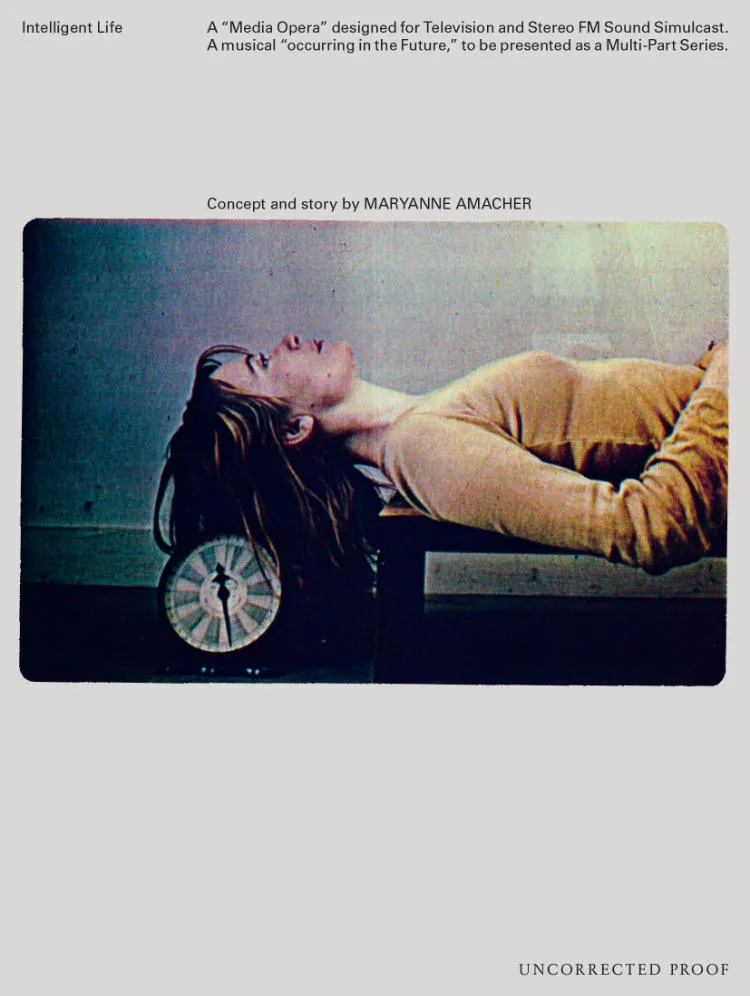
Where most of prior entries, including Aspirations of Madness (2020), Intelligent Life (2019), and Music From The World Tomorrow (2018), have foregrounded little-seen or newly translated archival materials, this iteration privileges new texts produced specifically for the publication. These include an in-depth retrospective interview with the idiosyncratic Texan singer-songwriter and visual artist Terry Allen conducted by ICA Philadelphia chief curator Anthony Elms; a conversation between multidisciplinary writers—and longtime friends—Thulani Davis and Jessica Hagedorn on the occasion of Davis's latest poetry collection, Nothing but the Music, recently published by Blank Forms Editions; a recent discussion between composer Sarah Hennies and cellist Judith Hamann about their recent collaboration, which is included on Hamann's Music for Cello and Humming; and a conversation with composer-performers Tashi Wada and Charles Curtis, on the heels of a recent compilation of Curtis's work, Performances & Recordings 1998– 2018, produced by Wada. Each of these interviews shed light on the particularities of the artists' careers and methods in terms both formal and casual, practical and theoretical. 

In addition to these dialogues, this book features new critical reflections on three artists whose work Blank Forms has presented: the legendary jazz percussionist and healer Milford Graves, by Ciarán Finlayson; English multimedia artist Graham Lambkin and his beguiling 2011 album Amateur Doubles, by Alan Licht; and the UK-based experimental music trio Still House Plants, by Joe Bucciero. These articles mine historical, social, and theoretical contexts, filling gaps in the existing literature on the given artist-subjects. New and archival poems and writing about poetry complement these interviews and essays, including rare texts by Davis, Hagedorn, and René Daumal—the latter translated by Louise Landes Levi—and a suite of Auto-Mythological writings commissioned from Chicago-based composer and musician Angel Bat Dawid.

Cover of Spectres #05 – Diffusion

Shelter Press

Spectres #05 – Diffusion

François J. Bonnet, Bartolomé Sanson

Essays €16.00

The fifth issue of the annual publication dedicated to sound and music experimentation, co-published by Shelter Press and Ina GRM – Groupe de Recherches Musicales, on the theme of diffusion and dissemination.

In a 1955 pamphlet entitled Seven Years of Musique Concrète, Jacques Poullin wrote:
"[...] sound projection in a concert hall is a logical extension of the concerns of the Groupe de Recherches de Musique Concrète and requires its technicians to properly study multiple aspects of the problems of sonorisation that are often neglected and to date have been almost exclusively the preserve of 'public address' technicians".

From the very beginning, fixed media electroacoustic music in its various guises faced a significant challenge: that of how it could be shared with the public. Even before it was distributed in the form of records, musique concrète, having first been transmitted on radio, soon turned to the concert stage. From the time of its birth, a twofold question was posed: What strategy of diffusion could be used for this music which involves no live performers? But also, how could it make use of existing systems of sound amplification without losing its singular nature, making sure to preserve its own particularities? Identified very early on, these questions have lost none of their pertinence some seventy years later.

Under pressure from the cultural industries and faced with a largely commercially-driven standardisation of formats, it is important today to reaffirm both the singular nature of experimental electroacoustic practices, and the possibilities these practices open up beyond standards and rules.

This calls for an exploration of the vast domain of sound creation in which, here and there, ideas, concepts, and sometimes new works appear that fully embrace the question of the deployment of sound, its dissemination and its expansion. An exploration focussed on the listening experience—a fundamentally musical experience—but adopting a critical approach which may sometimes call into question traditional ways of sharing and listening to sound, the status of listener and creator, and which may even challenge the acoustic integrity of venues and the legitimacy of diffusion systems.

Such are the questions to be addressed here. Sketching out the contours of what is quite obviously a huge subject, this volume, drawing upon a wide variety of points of view, experiences, and ideas, hints at an entire critical apparatus that remains to be developed and consolidated, but is crucial given the primordial importance of the theme of dissemination. For dissemination is the transitional stage par excellence, the uncertain stage that sits between creation and reception while at the same time determining both. It is a critical stage, yet one that is often neglected or, as Poullin says, left to a technical intermediary who may impose conditions entirely exogenous to questions of music and listening.

For these reasons, it seems more necessary than ever to return to the experience of sounds, to once again listen attentively to their trajectories, their diffraction in space, their emergence and their disappearance. To get to grips with the mysteries of their deployment so as to reaffirm that this deployment is essential to them.

Edited by François J. Bonnet and Bartolomé Sanson.
Contributions by Marja Ahti, Scott Arford, Nicolas Debade, Michael Gatt, Tim Ingold, Rolf Julius, Jules Négrier, John Richards, Marina Rosenfeld, Hildegard Westerkamp, Randy Yau.

Spectres is an annual publication dedicated to sound and music experimentation, co-published by Shelter Press and Ina GRM – Groupe de Recherches Musicales.

Cover of Rab-Rab, Issue 5

Rab-Rab Press

Rab-Rab, Issue 5

Rab-Rab

The fifth issue of Rab-Rab: Journal of Political and Formal Inquiries in Art includes stories about nation traitors, fierce masses, socialist women struggles, love-forms, psychedelic counter-revolutionaries, workers unions, Brecht fiddlers, jazz surrealism, Soviet trains, and anti-fascism.

Among the contributors to the fifth issue are Anna Thew, Yehuda Safran, Peter Gidal, Cana Bilir-Meier, David Black, Marjo Liukkonen, Alejandro Pedregal, Peter Hallward, Minna Henriksson, and Jyrki Siukonen.

It has also two extensive dossiers. One dedicated to Franklin Rosemont is presented by Joe Feinberg and is introducing some unpublished and difficult to find texts parallel with writings of T-Bone Slim and Joe Hill. The other dossier on Robert Linhart is presented by Tevfik Rada, and it includes a translation of a chapter from Linhart's book on productivism, an article against Western bourgeois dissidents, and an interview with him.

Cover of Switched On – The Dawn of Electronic Sound by Latin American Women

Contingent Sounds

Switched On – The Dawn of Electronic Sound by Latin American Women

Luis Alvarado, Alejandra Cárdenas

The first book dedicated exclusively to the female protagonists of Latin American electronic music.

The book has been edited by independent curator, researcher and label head of Buh Records, Luis Alvarado, and experimental musician, multimedia artist and researcher Alejandra Cárdenas (also known as Ale Hop).

Composers and sound artists featured in this historical account include: Alicia Urreta, Beatriz Ferreyra, Elsa Justel, Eulalia Bernard, Graciela Castillo, Hilda Dianda, Ileana Pérez Velázquez, Irina Escalante Chernova, Iris Sangüesa, Jacqueline Nova, Jocy de Oliveira, Leni Alexander, Margarita Paksa, Marietta Veulens, Mónica O'Reilly Viamontes, Nelly Moretto, Oksana Linde, Patricia Belli, Renée Pietrafesa Bonnet, Rocío Sanz Quirós, Teresa Burga, Vania Dantas Leite, among others.

The official history of 20th-century avant-garde electronic music has been predominantly narrated from the point of view of Anglo-American and Western European experiences and largely remained focused on its male protagonists. To destabilize this history, this editorial project presents a collection of perspectives, essays, interviews, archival photos, and work reviews centered on the early electronic music production by Latin American female creators, who were active from the 1960s to the 1980s. The book also brings us closer to the work of a new generation of researchers who have focused on offering a non-canonical reading of the history of music and technology in Latin America. The publication is the record of a new vision, an account of the condition of being a woman in the field of music technology at a time when this was a predominantly masculine domain. The decision to take electronic technologies for sound creation as the backbone of this history is related to the intention of broadening our focus of interest outside the spectrum of institutional electroacoustic music to include other experimental, interdisciplinary and sonic arts practices involving new technologies, beyond the circuits of academic avant-garde music.

The texts that make up this publication are organized spatially and conceptually, rather than following a chronology. The selection of female composers profiled sheds light on a variety of relevant aspects: key musical contexts, experiments with technologies (such as tape, electronic synthesis, the first commercial synthesizers), diverse formats (i.e., radio art, electroacoustic pieces, installation, multimedia, theater, film, etc.), intertwined with themes, such as migration, memory, identity, collaboration, interdisciplinarity, social engagement, the acceptance of electronic music, etc. Moreover, the framework of this editorial project opened a space for intergenerational dialogue and a meeting of aesthetics, as many of the authors gathered as collaborators are composers and sound artists themselves.

Cover of Livre d'images sans images (LP)

Varamo Press

Livre d'images sans images (LP)

Mette Edvardsen, Iben Edvardsen

Performance €23.00

Livre d’images sans images by Mette Edvardsen & Iben Edvardsen borrows its title from a book by H.C. Andersen, also referred to as The Moon Chronicler. The book follows a conversation between a painter and the Moon, where the Moon describes to the painter what she sees on her journey around the world every evening, telling the painter to paint what she describes. “This conversation, as in the now obsolete meaning of the word (‘a place where one lives or dwells’), was the starting point for our work. Using the weather report as dramaturgy, (‘the moon did not show up every evening, sometimes a cloud came in between’), we have created and collected materials from our conversations in the form of recordings, text, voice, drawings, references, found images, loose connections, inspirations and imaginations, in the order they came to us. They are at the same time sources and traces, material and support for new imaginations or events to come.” The work consists of three different media: vinyl, paper and live performance. 

Mette Edvardsen is a choreographer and performer eager to explore the performing arts as a practice and situation, also in relation to other media such as books and writing. This work is in collaboration with her daughter, Iben Edvardsen.

Published by Xing & Varamo Press
XONG collection – artist records XX10 (2023)
First edition, September 2023
Recorded and edited by Mette Edvardsen & Iben Edvardsen
Format white 12’ vinyl LP in cardboard sleeve
Released in a numbered edition of 300 copies, including collector’s edition of 25 copies, each accompanied by a unique poster hand drawn with black marker by Mette Edvardsen & Iben Edvardsen, 59,4 x 84 cm, folded, signed by the artists