rile*books

Search books

Search books by title, author, publisher, keywords...

Cover of Breast Stories (Revised)

Seagull Books

Breast Stories (Revised)

mahasweta devi

€16.00

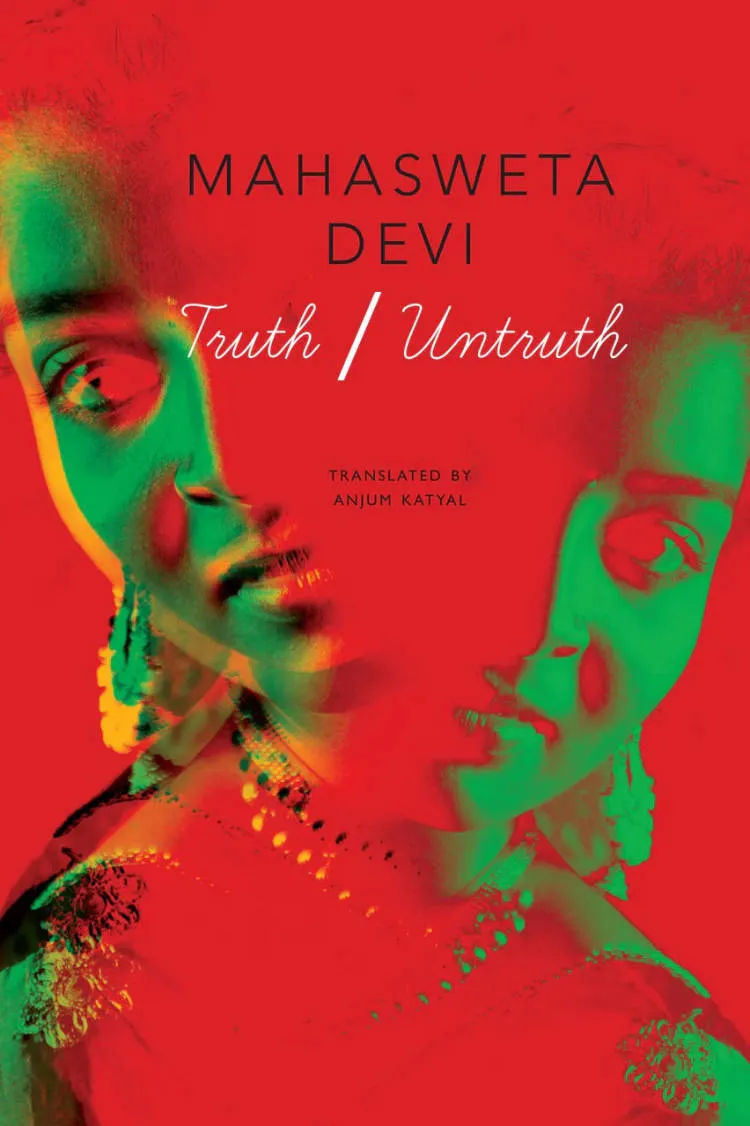
Mahasweta Devi is one of India's foremost literary figures, a prolific and best-selling author in Bengali of short fiction and novels, and a deeply political social activist who has been working in marginalized communities for decades.

Breast Stories is a collection of short fiction that focuses on the breast as more than a symbol of beauty, eroticism, or motherhood. Instead, it is seen as a harsh indictment of an exploitative social system and a weapon of resistance. At a time when violence towards women in India has escalated exponentially, Devi's acerbic writing exposes the inherently vicious systems in Indian society.
Language: English

recommendations

Cover of Passage to the Plaza

Seagull Books

Passage to the Plaza

Sahar Khalifeh

Fiction €24.50

In Bab Al-Saha, a quarter of Nablus, Palestine, sits a house of ill repute. In it lives Nuzha, a young woman ostracized from and shamed by her community. When the Intifada breaks out, Nuzha’s abode unexpectedly becomes a sanctuary for those in the quarter: Hussam, an injured resistance fighter; Samar, a university researcher exploring the impact of the Intifada on women’s lives; and Sitt Zakia, the pious midwife.

In the furnace of conflict at the heart of the 1987 Intifada, notions of freedom, love, respectability, nationhood, the rights of women, and Palestinian identity—both among the reluctant residents of the house and the inhabitants of the quarter at large—will be melted and re-forged. Vividly recounted through the eyes of its female protagonists, Passage to the Plaza is a groundbreaking story that shatters the myth of a uniform gendered experience of conflict.

Cover of les petites histoires

les petites histoires

les petites histoires

Sam Buouffandeau, S. M. Drogo and 2 more

Fiction €15.00

les petites histoires sont quatre courtes fictions contemporaines. Entre le lonely langoureux New York des années deux mille, le pont poétique et capricieux de Louis 2 de Bavière, l'histoire vraie de Sandy Stone dans les seventies et la satire cinglante et drôle d'une galerie d'art, ces livres sont de brefs univers vivants et curieux.

En 2025, quatre petites histoires sont racontées par quatre auteurices dans quatre livres : L'effondrement du pont de Sam Bouffandeau ; The Gallery de S. M. Drogo ; Exit de Juli Le Nahelec; «Que faire de Sandy Stone?» de Mia Trabalon.

L'édition des petites histoires a été imaginée par Élise Comte, Chloé Delchini, Perrine Estienne, Gabriel René Franjou, Justine Gensse, Bastien Hauser, et Cyprien Muth. Ce collectif d'éditeurices est né à Bruxelles, où les petites histoires ont été imprimées, chez Graphius. 
La maquette, réalisée par Chloé Delchini, à été composée avec Otto, une typographie dessinée par Sam de Groot et Laura Opsomer Mironov, chez Dinamo Typefaces.

Cover of L'Empire Noir

Éditions Sans Soleil

L'Empire Noir

George S. Schuyler

Fiction €16.00

Après une campagne militaire fulgurante, l’organisation secrète du redoutable Dr Belsidus a chassé les puissances occupantes du sol africain et s’est rendue maitre de l’ensemble du continent, unifié pour la première fois en un gigantesque empire. L’expansion a démarré et l’édification d’une civilisation d’un genre inédit est en marche. Mais les nations européennes, après s’être fait la guerre, s’apprêtent à revenir. Une course s’engage entre l’Internationale noire et les appétits impérialistes : sabotages, espionnage, guerre technologique ou bactériologique, les héros et héroïnes de L’Internationale noire né reculeront devant rien pour sauvegarder cette indépendance acquise de haute lutte. 

Dans ce second volet du roman-feuilleton qui fit la réputation de G. Schuyler, retrouvez les nouvelles aventures de nos personnages, dorénavant contraints à une lutte géopolitique d’une ampleur inégalée, pour garantir à leur Empire noir un avenir radieux ! 

George Samuel Schuyler, 1895–1977, fut un essayiste, journaliste et romancier de première importance dans le monde culturel africain-américain de l’entre-deux-guerres. Il reste connu pour la férocité de ses critiques. Il est l’auteur d’un seul roman, Black No More, traduit en France en 2016 et d’un essai romancé dénonçant la traite au Liberia, produit de son enquête de terrain dans le pays. Proche des courants socialistes jusqu’à la Seconde Guerre mondiale, il prendra un virage nettement réactionnaire par la suite, tout en demeurant dans les mémoires de toute une génération d’écrivains, tels qu’Ishmael Reed ou Samuel Delany.

Cover of Nymph: A Novel

Verso Books

Nymph: A Novel

Stephanie LaCava

Fiction €20.00

A young woman from a long line of assassins, lives her life with the ardent mission to avoid the trappings of any enduring romantic love, while keeping one on the pursuit of an untimely death for herself. 

Not yet thirty, Bathory, or 'Bat' to those near to her, has assembled a peculiar Model, sex worker, linguist and scholar of Latin. But nothing in her lively job history employs the singular traits she inherited from her strange family, chief among them an uncanny ability to sidestep seemingly certain death(s). An appropriate atavistic instinct, for someone from a long line of assassins and spies. Her clan are assassins of a romantic bent, her parents issuing theories on love galore. However Bat is set on swerving any enduring romantic loves, and she's set on dying young. Now, if she could only avoid that one alluring figure from her father's past.

A thriller, a love story, and a dynamic examination of class, violence and connection. The images we make to share and those we strive to conceal, alienation and salvation, magic and technology, LaCava's bold new novel is propelled by the compelling violence one can seed in contradiction.

Cover of My Lesbian Novel

Dorothy, a publishing project

My Lesbian Novel

Renee Gladman

The latest in writer and visual artist Renee Gladman's ever-expanding body of imaginative investigation is a sui generis novel of queerness and art-making, philosophy and sex. 

The narrator of My Lesbian Novel is Renee Gladman, an artist and writer who has produced the same acclaimed body of experimental art and prose as real-life Renee Gladman, and who is now being interviewed by an unnamed interlocutor about a project in process, a seeming departure from her other works, a lesbian romance. 

Between reflections on art making and on the genre of lesbian romance - "though aspects of the formula drive me crazy... people who write these stories understand how beautiful women are" - a romance novel of her own takes shape on the page, written alongside the interview, which sometimes skips whole years between questions, so that time and aging become part of the process. 

The result is a beautifully orchestrated dialogue between reflection and desire, or clarity and confusion, between the pleasures of form and the pleasures of freedom in the unspooling of sentences over time.

Renee Gladman is a writer and artist preoccupied with crossings, thresholds, and geographies as they play out at the intersections of poetry, prose, drawing, and architecture. She is the author of fourteen published works, including a cycle of novels about the city-state Ravicka and its inhabitants, the Ravickians, all published by Dorothy— Event Factory, The Ravickians, Ana Patova Crosses a Bridge, and Houses of Ravicka. She has been awarded fellowships, artist grants, and residencies from the Radcliffe Institute for Advanced Study at Harvard, Foundation for Contemporary Arts, the Lannan Foundation, and KW Institute for Contemporary Art (Berlin), and was a 2021 Windham-Campbell Prize winner in fiction. She makes her home in New England with poet-ceremonialist Danielle Vogel.

Cover of Six Films

Inpatient Press

Six Films

Marguerite Duras

The English-language debut of a beautiful and beguiling cycle of experimental texts by the legendary Marguerite Duras. 

In the late 1970s, Marguerite Duras embarked on an experimental journey to expand the boundaries of writing and film. For Duras, writing need not be text on a page nor cinema merely images on a screen. Six Films is the result of her efforts to redefine the two arts in order to create a hybrid work. Taking narration, voiceovers, and dialogue from six of her films, Duras re-envisions them as extended prose poems and monologues, tangling with self-identity, personal relationships, colonialism, and expression as the celluoid images recede and the text becomes the film itself. Now available for the first time in English, Six Films is a document of an artist at the apex of her creative prowess.

Translated by Olivia Baes and Emma Ramadan