rile*books

Search books

Search books by title, author, publisher, keywords...

Cover of Lost & Found: The CUNY Poetics Document Initiative, Series IV

CUNY Center for the Humanities

Lost & Found: The CUNY Poetics Document Initiative, Series IV

CUNY ed.

€35.00

From a never before seen manuscript of poems by Harlem Renaissance poet Helene Johnson to a treasure trove of Adrienne Rich's teaching materials from City College, this new series overturns all expectations. We have brought you facsimile reproductions and variorum editions, notes, storyboards, memos, screenplays, letters and of course, poetry from all around America. Building cultural history from the ground up, Series IV provides a completely different vantage point from which to further explore our literary heritage. LOST & FOUND: THE CUNY POETICS DOCUMENT INITIATIVE SERIES IV consists of eight beautifully printed chapbooks (600 pages in all), featuring rare and unpublished texts, including late work by Harlem Renaissance poet Helene Johnson, Adrienne Rich's teaching materials, a newly discovered film script by Edward Dorn, the formative correspondence of Pauline Kael & Robert Duncan, and a facsimile reproduction of Vincent Ferrini's 1946 Tidal Wave: Poems of the Great Strikes.

SERIES IV includes:

Edward Dorn: Abilene! Abilene! (Parts I & II) (ed. Kyle Waugh)

Vincent Ferrini: Before Gloucester (eds. Ammiel Alcalay & Kate Tarlow Morgan)

Helene Johnson: After the Harlem Renaissance (ed. Emily Rosamond Claman)

Pauline Kael & Robert Duncan: Selected Letters 1945-1946 (PARTS I & II) (ed. Bradley Lubin)

Adrienne Rich: Teaching at CUNY, 1968-1974 (Parts I & II) (eds. Iemanjá Brown, Stefania Heim, erica kaufman, Kristin Moriah, Conor Tomás Reed, Talia Shalev & Wendy Tronrud)
Published in 2013 ┊ 600 pages ┊ Language: English

recommendations

Cover of Algeria: Capital Algiers

CUNY Center for the Humanities

Algeria: Capital Algiers

Anna Gréki, Marine Cornuet

Poetry €22.00

Algeria, Capital: Algiers by Anna Gréki is co-published by Pinsapo Press and CUNY Lost & Found, translated by Marine Cornuet, and introduced by Ammiel Alcalay.

Anna Gréki (1931-1966) was an Algerian poet of French descent. A member of the Algerian Communist Party, she was arrested and imprisoned for her participation in the Algerian liberation struggle in Algiers, in 1957. Algérie, capitale Alger, a collection of poems written during Gréki's imprisonment, was published in 1963 in a French and Arabic bilingual edition. Algeria, Capital: Algiers makes this work available to English readers for the first time.

"Anna Gréki was a particularly inconvenient pied noir—not loyal enough for the French colonists and too compromised for the Algerian nationalists—and so she was shunted to the margins of Algerian literary history. Nevertheless, it’s time she takes her place at the center of that narrative, and these accomplished translations constitute a necessary English-language introduction to this secret garden of Maghrebi poetry. Gréki’s poetry is electrified by the heady heights of the war of liberation, but arguably it finds its truest expression in her paeans to the wild hills and impregnable peaks of the Aurès mountains, where she was born and where she found a sense of peace which otherwise eluded her in her brief life." —André Naffis-Sahely

“Nothing happens here but everything burns.” From the prison where she was tortured by French authorities in 1950s Algeria, Anna Greki stays in touch, feverishly, with “this world of vulnerable flesh.” Addressed to her friends and comrades in struggle, to the land and the leaves and the birds, these poems defy “the war, this male ax,” invoking the future with “a trust so total / I can almost touch it.” Marine Cornuet’s translation deftly conveys Greki’s intimate language of the senses, to “transcribe with words what is done without them.” —Omar Berrada

"How fitting that a bilingual edition of Anna Gréki’s poems should be published now: a French poet born in Algeria, anti-colonialist (imprisoned for that) as Algeria battled for independence, writing in French, like Kateb Yacine, to show her freedom from French hegemony, but also her freedom as a woman writer to forge a transcendent and engaged poetics." —Marilyn Hacker

Cover of What Price This Pound of Whale? and Other Unpublished Writings

CUNY Center for the Humanities

What Price This Pound of Whale? and Other Unpublished Writings

Jim Schoppert

Poetry €14.00

The Tlingit artist Jim Schoppert (1947-1992) was among the most accomplished, innovative, and prolific Alaska Native artists of the twentieth century. His whimsical sculptures and large scale painted wooden carvings reconfigure Tlingit visual motifs, and he challenged the binary categories against which Indigenous artists are so often defined, such as traditional and contemporary, historic and innovative, and artist or craftsperson. While known primarily for his modernist interventions in Tlingit visual traditions, Schoppert was also a prolific writer, an eloquent speaker, and an ardent advocate for Alaska Native artists. This publication brings together a selection of his unpublished poetry and writings from the artist’s personal papers. Presented alongside never before seen sketches and studies, this selection bridges Schoppert’s written and artistic practices in a deeply personal portrait of the artist and Alaska Native life that upsets preconceptions about Native art and unsettles the established narrative of Euro-American and Indigenous aesthetic relations.

Jim Schoppert (1947-1992) was a Tlingit multidisciplinary artist and writer. He was a Taku Tlingit Raven of the Ishkahittaan (Inland Frog) clan from his Tlingit mother and half-German from his father and carried the Łingit name Dom-Yetz. Born in Juneau, Alaska, he earned a BFA in Sculpture and Printmaking from the University of Alaska—Anchorage and an MFA from the University of Washington. In addition to his artistic career, Schoppert was instrumental in promoting Alaska Native arts and organizations. He was Director of Arts and Crafts at the Cook Inlet Native Association, Director of the Alaska Arts in Prisons Program for the University of Alaska Juneau, and organized exhibitions and workshops across Alaska and the Pacific Northwest. He was visiting professor in visual art at the University of Alaska, Fairbanks and directed its Native Art Center. He sat on the Washington State Arts Commission and on the boards of the Alaska State Council on the Arts and the Institute of Alaska Native Arts. His work is held in public and private collections across the United States, including the Smithsonian National Museum of the American Indian, the Anchorage Museum, the Heard Museum, and the Newark Museum, among others. His writing and poetry has appeared in The Greenfield Review and Journal of Alaska Native Arts, among other publications.

Cover of Lost & Found: The CUNY Poetics Document Initiative, Series III

CUNY Center for the Humanities

Lost & Found: The CUNY Poetics Document Initiative, Series III

John Wieners, Lorine Niedecker and 3 more

Anthology €35.00

Lost & Found: The CUNY Poetics Document Initiative publishes unexpected, genre-bending works by important 20th century writers. Unearthed from personal and institutional archives in the United States and abroad, these materials are edited by doctoral students at the Graduate Center, CUNY.

SERIES III is a collection of 8 chapbooks that authenticate Edward Dahlberg's claim that "There is more political energy in friendship than in ideology."

Langston Hughes & Nancy Cunard cement their personal relationship by penning notes across the ocean throughout the Spanish Civil War. After meeting at Black Mountain, John Wieners & Charles Olson remain in close correspondence until months before Olson's death. In "Old Father, Old Artificer," part lecture and part evocation of Charles Olson, Diane di Prima helps to establish how key figures in "New American Poetry" were processing their own past, while the breathless Olson lecture by Ed Dorn erodes the fictive dualism that pits poetic theory against practical action. In his letters, Michael Rumaker invites you to share his life, its radiant pursuit of love, "dirty realism," literature, and lasting community, and Joanne Kyger booms "communication is essential" in her Letters to & from. In Homemade Poems, a gift-book mailed to a friend in 1964, Lorine Niedecker insists that the handmade chapbook is the material continuation of the poems so carefully nestled in its pages.

Breaking up the monolith of the historical lens, Series III continues to track individuals as they tell their stories, cast their lifelines, and position themselves in relation to the times they lived in—and the times we live in—through intimate journals, letters, lectures, and friendships. Edited, annotated, and with accompanying essays, The London Review of Books calls this "a serious and worthy enterprise." Diane di Prima calls the series "a gold mine" and Joanne Kyger writes: "What a brilliant cast of characters. Just exactly what one (myself) would like to read."

SERIES III includes:

Lorine Niedecker: Homemade Poems (John Harkey, editor)

John Wieners & Charles Olson: Selected Correspondence (Parts I & II) (Michael Seth Stewart, editor)

Diane di Prima: Charles Olson Memorial Lecture (Ammiel Alcalay and Ana Božičević, editors)

Edward Dorn: The Olson Memorial Lectures (Lindsey Freer, editor)

Michael Rumaker: Selected Letters (Megan Paslawski, editor)

Letters to & from Joanne Kyger (Ammiel Alcalay and Joanne Kyger, editors)

Langston Hughes, Nancy Cunard & Louise Thompson: Poetry, Politics & Friendship in the Spanish Civil War (Anne Donlon, editor)

Cover of “This Great River”—Translating the Beats into Arabic

CUNY Center for the Humanities

“This Great River”—Translating the Beats into Arabic

Sargon Boulus, Khaled al-Hilli

Poetry €16.00

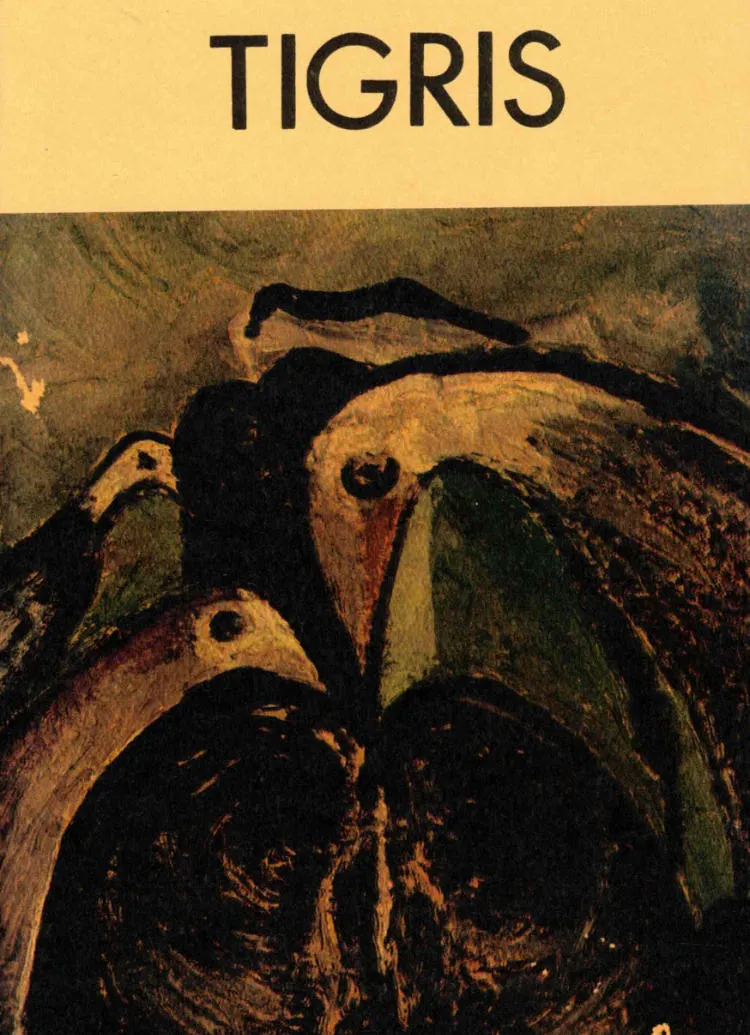
The Great River—Translating the Beats into Arabic traces the literary encounters of Sargon Boulus (1944-2007), an Iraqi poet who was part of the vibrant literary scene of late 60’s San Francisco. His life was marked by a period of restless traveling, that he would later describe as an attempt to pursue a poetic imaginary. This project continues to map his proximity to the Beat poets, his short-lived Bay Area poetry journal, Tigris, and his other English language publications. 

This publication includes a facsimile reproduction of Tigris, featuring a long poem “Jebu” by Boulus’ good friend Etel Adnan.

Cover of Mother Reader

Seven Stories Press

Mother Reader

Moyra Davey

Fiction €27.00

'My aim for Mother Reader has been to bring together examples of the best writing on motherhood of the last sixty years, writing that tells firsthand of the mother's experience.

Many of the writings in Mother Reader comment on and interpolate one another, in citations, in footnotes, in direct homage. As I was assembling this collection one text would lead to one another, treasure-hunt fashion, the clue provided by an acknowledgement or bibliography. And just as often the writing circles back.

In Mother Reader chapters are excerpted from autobiographies, memoirs, and novels; entries are lifted from diaries; essays and stories are culled from collections, anthologies, and periodicals. My project has been to assemble a compendium or sampler of these ''kindred spirit'' works on motherhood, so that readers, and especially mothers with limited time on their hands, can access in one volume the best literature on the subject and know where turn to continue reading." [Moyra Davey in the introduction]

Writings by Margaret Atwood, Susan Bee, Rosellen Brown, Myrel Chernick, Lydia Davis, Buchi Emeta, Annie Ernaux, Mary Gaitskill, Susan Griffin, Nancy Hutson, Mary Kelly, Jane Lazarre, Ursula K. Le Guin, Doris Lessing, Ellen McMahon, Margaret Mead, Vivian Montgomery, Toni Morrison, Tillie Olsen, Alicia Ostrker, Grace Paley, Sylvia Plath, Adrienne Rich, Sara Ruddick, Lynda Schor, Mira Schor, Dena Schottenkirk, Mona Simpson, Elizabeth Smart, Joan Snyder, Elke Solomon, Susan Rubin Suleiman, Alice Walker, Joy Williams, Martha Wilson, Barbara Zucker.

Cover of Lost & Found: The CUNY Poetics Document Initiative, Series VI

CUNY Center for the Humanities

Lost & Found: The CUNY Poetics Document Initiative, Series VI

CUNY

Lost & Found: The CUNY Poetics Document Initiative publishes unexpected, genre-bending works by important 20th century writers. Unearthed from personal and institutional archives in the United States and abroad, these materials are edited by doctoral students at the Graduate Center, CUNY.

LOST & FOUND SERIES VI presents work by Gregory Corso, Judy Grahn, Bobbie Louise Hawkins, and Ted Joans. While the styles and experiences of these writers are radically different, each project presented here enacts a commitment to the exploration of knowledge unbound by disciplinary constraints.

Gregory Corso: Naropa Lectures 1981, introduced by Anne Waldman, includes two transcribed and annotated lectures that illustrate Corso's vast storehouse of cultural knowledge, animating his poetics both on the page and in the classroom.

Bobbie Louise Hawkins: The Sounding Word presents two very different lectures from the Jack Kerouac School of Disembodied Poetics, and a new interview with the author. Whether looking at iconic French novelist Colette or examining the poetics of prose, The Sounding Word describes an unflinching empirical approach to knowledge and its transmission through direct experience.

Judy Grahn: Selections from Blood, Bread, and Roses explores mythic, societal, and personal relationships to menstruation throughout time, and is accompanied by a recent interview with the legendary poet, teacher, scholar, and activist.

Ted Joans: Poet Painter / Former Villager Now / World Traveller, introduced by Diane di Prima, presents an array of previously unpublished texts on jazz, surrealism, travel guides to Africa and Paris, his inimitable Negative Cowboy, and photographs from his life and times. As writers, each considers and refigures the malleable conditions of historical truth and the pursuit of knowledge as part of their creative process. And as readers, we are encouraged to do the same.

SERIES VI includes:

Gregory Corso: Naropa Lectures 1981 (Part I & II) (ed. William Camponovo, Mary Catherine Kinniburgh, Öykü Tekten)

Bobbie Louise Hawkins: The Sounding Word (ed. Iris Cushing)

Judy Grahn: Selections from Blood, Bread, and Roses (ed. Iemanjá Brown & Iris Cushing)

Ted Joans: Poet Painter / Former Villager Now / World Traveller (Part I & II) (ed. Wendy Tronrud & Ammiel Alcalay)

Cover of After Sex

Silver Press

After Sex

Alice Spawls, Edna Bonhomme

Essays €18.00

Who decides what happens after sex? The last decade has seen many significant changes to the laws governing women’s reproductive rights around the world, from liberalisation in Ireland to new restrictions in the USA. After Sex offers personal and political perspectives from the mid-20th century to the present day, setting feminist classics alongside contemporary accounts. These essays, short stories and poems trace the debates and tell the stories; together, they ask us to consider what reproductive justice might look like, and how it could reshape sex.

The writers pay special attention to people — both fictional and real — who have sought control over their sexual lives, and the joy, comedy, difficulties and disappointments that entails. But above all, After Sex testifies to the power of great writing to show us why that freedom is worth pursuing — without shame and without apology.

With contributions from: 
Lauren Berlant, Joanna Biggs, Edna Bonhomme, Gwendolyn Brooks, Beverley Bryan, Stella Dadzie and Suzanne Scafe, Storm Cecile, Lucille Clifton, Rachel Connolly, T.L. Cowan, ’Jane Does’, Maggie Doherty, Nell Dunn, Andrea Dworkin, Anne Enright, Deborah Friedell, Tracy Fuad, Kristen Ghodsee, Vivian Gornick, Donna Haraway, bell hooks, Barbara Johnson, Jayne Kavanagh, Lisa Hallgarten and Angela Poulter, Jamaica Kincaid, Patricia Knight, R.O. Kwon, Ursula K. Le Guin, Natasha Lennard, Sophie Lewis, Audre Lorde, Amelia Loulli, Erin Maglaque, Holly Pester, Adrienne Rich, Denise Riley, Sally Rooney, Loretta J. Ross, Madeleine Schwartz, SisterSong, Sophie Smith, Annabel Sowemimo, Amia Srinivasan, Keeanga-Yamahtta Taylor, Judith Jarvis Thomson, Alice Walker and Bernard Williams.

Cover of The Power of Adrienne Rich: A Biography

Nan A. Talese

The Power of Adrienne Rich: A Biography

Hillary Holladay

Biography €30.00

The first comprehensive biography of Adrienne Rich, feminist and queer icon and internationally revered National Book Award winning poet.

Adrienne Rich was the female face of American poetry for decades. Her forceful, uncompromising writing has more than stood the test of time, and the life of the woman behind the words is equally impressive. Motivated by personal revelations, Rich transformed herself from a traditional, Radcliffe-educated lyric poet and married mother of three sons into a path-breaking lesbian-feminist author of prose as well as poetry. In doing so, she emerged as both architect and exemplar of the modern feminist movement, breaking ranks to denounce the male-dominated literary establishment and paving the way for the many queer women of letters to take their places in the cultural mainstream. Drawing on a wealth of unpublished materials, including Rich's correspondence and in-depth interviews with numerous people who knew her, Hilary Holladay digs deep into never-before-accessed sources to portray Rich in full dimension and vivid, human detail.

Cover of Wound Building: Dispatches from the Latest Disasters in UK Poetry

Punctum Books

Wound Building: Dispatches from the Latest Disasters in UK Poetry

Danny Hayward

Poetry €24.00

Wound Building is a volume of essays, with digressions, on one group of contemporary poets active in a self-organizing political poetry scene in the UK, most of whom have little to no audience outside of the little magazines that they publish and the reading series they put on. The book is a front-line report on the rapid development of this poetry in the period between 2015 and 2020, with a particular focus on the relationship of poetry to violence and its representation. The poets discussed here write violent love poems and violent elegies as well as violent fantasies composed in stabs of violent verse and violet prose. The poems themselves comprise fantasies of killing David Cameron, dreams of being split open along a seam, basement songs, hundreds of pages of notes on working life in a privatized care home in Hove, East Sussex, a four-line slogan about the Cologne groping scandal of New Year 2016, variations on the Refugees Medical Phrasebook, a life wasted in a factory in Guangzhou, an autobiographical sci-fi internet fever dream, an anarchist elegy, and a refusal to argue. Ultimately, Hayward argues that the lessons this poetry teaches is never to write a "worthy" narrative when a fucked up collage will do. Rather than a cohesive "account" of a "school" of poets, or a "contribution" to the boring tittle-tattle of aesthetic debates over British poetry as an institution, Wound Building is a front-line report on the local disasters of a contemporary UK poetry caught in the grip of the historical cataclysm of capitalist culture.

Wound Building is further concerned with aesthetic problems related to Marxism, anarchism, contemporary trans politics, and class, though its "theoretical" preoccupations are subordinated to its desire to provide a ground-level view on the writing itself, its production, its intellectual aporia, and the ways it finds itself outstripped by the ongoing "march of events." The book will be of interest not only for those concerned with contemporary British political and experimental poetry, but also more generally for anyone who wishes to think carefully about what it means to make art about present-day history and its many horrible enormities.

The book's title is derived from the idea of sublime woundedness that subtends the context of the poets discussed here: the impressions of wounds opening up like LED-lit shopfronts in the night, in a parallel universe in which injury is intoxicatingly impersonal and structural, and which forms the environment in which the poems fight to absolutize the value of every last breath, or face into the reality of extravagantly violent wish fulfillment, or dissolve themselves in a search for new ways of professing love, or transform into a kind of expressionism of vomiting up medical-diagnostic categories found in abstract social labor, or pump their verses full of the convulsive rhythms of surprise and sudden relief, without any guarantee that this is the right thing to do or that anyone will even fucking hear. Wound Building does not historicize this state of affairs as much as it attempts to live alongside the immediacy of this work, in order to see what is still possible for poetry, and criticism, to make and do.

Cover of The Site of Memory

Silver Press

The Site of Memory

Toni Morrison

All water has a perfect memory and is forever trying to get back to where it was. Writers are like that: remembering where we were, what valley we ran through, what the banks were like, the light that was there and the route back to our original place. 

The Site of Memory describes Toni Morrison’s work of literary archaeology. She offers insights into how she arrives at a text through the act of imagination bound up with memory and shows how she explores two worlds – the actual and the possible – via the nimbus of emotion surrounding the journey of an image: from picture to meaning to text. 

Exploring the radical possibilities of literature and the limits of history, Morrison finds a truth deeper than documentation in the silences and omissions in African American narratives of the past. Fiction, for Morrison, is a practice of ethical restoration: a means to recover what history has neglected through the ‘flooding’ of a rush of imagination. In The Site of Memory, ancestral presence, emotion and imagination converge. 

If writing is thinking and discovery and selection and order and meaning, it is also awe and reverence and mystery and magic.

Cover of Theory for Moving Houses

Wave Books

Theory for Moving Houses

Renee Gladman

Essays €22.00

You are asking me where I live and it’s making me think all these things about space, where I start and end in space and where space starts and ends in me and when, in space, I am a body and when I’m a book, in space.

So begins Renee Gladman's Theory for Moving Houses, and with these lines we are invited into a liminal space of imagination and investigation, as Gladman guides us through the architectures of her poetics. Foundational here is a sense of fluidity, a slippage of time, a devotion to “non-linear and hyper gestural movement,” a communal spirit. Gladman’s inquiry into her intersecting practices of writing and drawing reveals a deep commitment to uncertainty and “fictional knowing.” Yet again, Gladman upends traditional expectations of prose, as she leads us through landscape of her Ravicka series novels, ultimately surprising us with a novel within nonfiction. The latest volume in Wave’s Bagley Wright Lecture Series, Theory for Moving Houses is not only visionary in its contemplations but also is a virtuosic example of the ways in which language can shape utopian sites of possibility.

Cover of The Letters of Audre Lorde and Pat Parker 1974-1989

the87press

The Letters of Audre Lorde and Pat Parker 1974-1989

Julie R. Enszer

Poets Audre Lorde and Pat Parker first met in 1969; they began exchanging letters regularly five years later. Over the next fifteen years, Lorde and Parker shared ideas, advice, and confidence through the mail. They sent each other handwritten and typewritten letters and postcards often with inserted items including articles, money, and videotapes.

The Letters of Audre Lorde and Pat Parker 1974-1989 gathers this unique correspondence in which Lorde and Parker discuss their work as writers as well as the intimate details of their lives, including periods when each lived with cancer. These letters are a rare opportunity to glimpse inside the minds and friendship of two great twentieth century poets.

Introduction by Mecca Jamilah Sullivan.