rile*books

Search books

Search books by title, author, publisher, keywords...

Cover of SIAHKAL 2.0: An A.I. resurrected discourse on Marxism & Islam

becoming press

SIAHKAL 2.0: An A.I. resurrected discourse on Marxism & Islam

Parham Ghalamdar ed.

€15.00

This is a limited edition book. The author trained an LLM on the texts of a deceased theorist, and then proceeded to interact with the LLM and produce simulations of what the theorist may have said in regards to various pertinent topics. The book is primarily a free online resource, but a few copies are being printed to commemorate the work. It has a foreword and afterword by the Editors. 

At the core of this project is a translation of “Marxist Islam or Islamic Marxism,” a groundbreaking text written by Bizhan Jazani during his imprisonment in the 1970s under the Shah’s oppressive regime. Translated by Parham Ghalamdar, this work is accompanied by an introduction contextualizing Jazani’s radical vision. Ghalamdar also contributes a series of ASCII-style illustrations and diagrams—AI-assisted reinterpretations of Jazani’s original paintings and photographs—that bridge the past and present, offering a new perspective on his revolutionary artistry. 

Siahkal names a place in the forests of Gilan and a threshold in revolutionary time. In 1971 a guerrilla action near Siahkal shook the order of the Shah. The action failed militarily yet seeded a myth for the People’s Fedai Guerrillas. Bizhan Jazani, a founding thinker, wrote and painted in prison and was executed in 1975. His work teaches that strategy rather than sentiment endures. // This book treats Siahkal as a Deep Object, a persistent attractor that gathers memory, images, and tactics. An AI model trained on Jazani’s writings and paintings translates his essay on Islamic Marxism and proposes annotations. The machine functions as a probe that widens attention while remaining accountable to the source. Parham Ghalamdar trained the AI, wrote the introduction, and composed ASCII diagrams and diagrammatic readings from Jazani’s artworks. Parsa Esmaeilzadeh contributes an essay that reads Jazani through Karatani and left accelerationism. // It is a call to reimagine and export revolution as a Deep Object that asks for Deep Time to unfold. This clandestine edition invites the reader to study, test, and build strategy that can outlast the news cycle and meet the future head on. 

Parham Ghalamdar is a multidisciplinary artist currently based in the UK. Ghalamdar’s work traces forgotten mythologies, buried philosophies, and visual ruins, reconfiguring them into speculative worlds where memory, fiction, and futurism collapse into one another. Drawing on cybernetic theory and generative AI, he explores how systems of feedback, simulation, and machine vision mediate our understanding of history and possibility. Through painting, film, and writing, he builds narratives that feel both ancient and yet-to-come, haunted by lost histories and animated by possible futures.

Published in 2025 ┊ 124 pages ┊ Language: English

recommendations

Cover of Semiotics of the End: Essays on Capitalism and the Apocalypse

becoming press

Semiotics of the End: Essays on Capitalism and the Apocalypse

Alessandro Sbordoni

Philosophy €12.00

The apocalypse as such will not take place, as it is already finished. Today, there is no longer any difference between the end of the world and capitalism itself: from Britney Spears’ Till the World Ends to The Caretaker’s Everywhere at the End of Time, from Avenger’s Endgame to Donnie Darko, and all the way down to the internet’s Backrooms, the world never ends but is reproduced again and again according to the semio-logic of capital. 

In contrast with Mark Fisher’s Capitalist Realism, Semiotics of the End is a manifesto for the imagination of another relationship with the end. If it is easier to imagine the end of the world than the end of capitalism, as Slavoj Žižek, Fredric Jameson, and Mark Fisher put it, it is only because we have not imagined anything yet. The end is just the beginning.

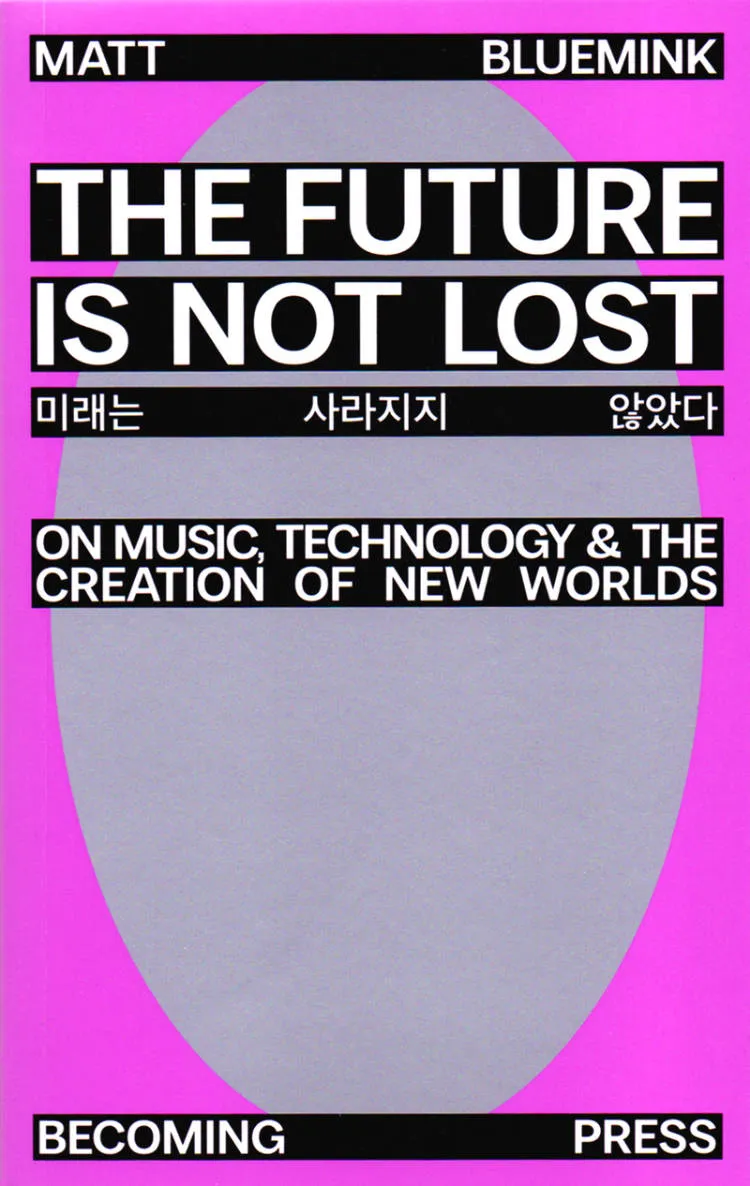
With an Afterword by Matt Bluemink 

Cover of Empires Over Skin: How we Fashioned our World

becoming press

Empires Over Skin: How we Fashioned our World

MYB

Philosophy €15.00

Meltdown Your Books, the author of Where Does A Body Begin? (2023), returns to Becoming Press for their second book, focusing not, this time, on the body itself, but what comes next. Whether in the sense of Dress, Clothing or Fashion, there is not much beyond the body itself that better signifies humanity than the act of adorning a body with garments, because we have no fur, or because of social codes, whether religious or class-oriented, because of beauty, or because of industrial capital; because, because, because. 

“The mounds of clothing that adorn my floor and the foot of my bed sometimes grow too large, and suddenly I am sinking into the matted mess of fabrics. On days like these I can’t help but feel that clothing, not just my clothing, but the very idea of clothing, is swallowing me up. Clothing is this immensity looming over me, yet somehow a microscopic itch in my brain, prodding me and twisting itself into knots–an irritation I accept for the temporary bliss of scratching it.”

To be human is to wake up, every morning, and to don the costume that completes your identity, for better or worse, by choice or by coercion. 

The task this book undertakes requires a particular kind of author, one who can recognise and sort through the contradictions on a theoretical level, but also someone who does not abstract the topic from their position as a subject—a critical book of fashion must be written by someone who lives it, someone who is passionate enough to write in good faith, because fashion isn’t just Gucci and Sweatshops—which themselves are rightly condemned for all kinds of reasons—because fashion itself is merely the tip of what may be one of the biggest, deepest ice bergs of all—Fashion is a philosophical black hole, one which drags everything into its infinite stomach, from semiotics to psychoanalysis, to art, design and craftsmanship, to economics and production chains, to speculation and historicising, to algebra, journalism and so on. 

Yet, this isn’t a philosophy book because it is simply too down-to-earth and relatable; it is just as celebratory and excited as it is critical. M.Y.B. begins by simply looking down, and beginning to describe the shoes upon their feet—it unravels dialectically and uncovers long chains of connections that stretch back through time.  

Meltdown Your Books (M.Y.B.), the pen name, was made as a portmanteau of the seminal essay Meltdown by Nick Land, and the landmark film Throw Away Your Books, Rally in the Streets by Shuji Terayama. I chose the name, almost 3 years ago now, to reflect the political and digital black hole I saw hovering at the edge of contemporary media experience, and to present my work without the muddy veneer of personal identity. It has remained, since its inception, an anonymous project in only the loosest terms. The dedicated could always find my real identity, and some have, and so its anonymous character existed primarily as an element of presentation. Its anonymity existed to emphasize its deindividuated character. The things I discuss and emphasize under the M.Y.B. label are not items with definitive characteristics, they are collective experiences. M.Y.B. is something I cherish beyond self.

Cover of Dialogues on CoreCore & the Contemporary Online Avant-Garde

becoming press

Dialogues on CoreCore & the Contemporary Online Avant-Garde

OnMyComputer, 0nty

Philosophy €25.00

Featuring contributions from various artists and authors, including Louis Morelle, Persis Bekkering & Crisis Acting. 

Dialogues on CoreCore & the Contemporary Online Avant-Garde gathers the work of over forty artists, writers, and philosophers to address the trajectories of the underground avant-garde digital art-world. A variety of topics and visual styles are represented in this anthology, but particular attention is paid to CoreCore, the DIY experimental filmmaking meta-trend which emerged on TikTok in the dusk of 2020. In part an anthology of critical and experimental essays, in part a curatorial artbook, in part a volume of conference proceedings, this text invites the viewer to explore the grassroots conference of a particular cybercultural moment. 

This book follows on from the proceedings of All Things are Nothing to Us, a symposium on CoreCore and the Contemporary Online Avant-Garde, held on December 2nd. 2023, at the School of Visual Arts, NYC; organized by 0nty and OnMyComputer (Dylan Smith). 

FEATURES WORK FROM:
0nty - Dylan Smith (OnMyComputer) - John-Robin Bold - Bebe_Crotte - Societyiftextwall - Aemmonia - Emonie Fay Chetwin (Xleepyfay) - Alice Aster - Anastasija Pavić - Anastasiia Pishchanska (shelestvetrovki) - Ash Ingram - ChaoticRhizomatic - Crisis Acting - Dana Dawud - Daniel Neeman - Edson Javier Rogil - Hunter Thompson - Joe Iovino (Levels of Nuance) - John DeSousa - John Michael - Jomel - Liam Harding (X._.pulp) - Louis Higgins - Louis Morelle - Maria Puglisi - Mason Noel - Mischa Dols - i0 xen0 - Nicholas Sanchez (Wonderful Cringe) - Nick Vyssotsky - Nikolaos Sakkadakis - Orion Arnold - Persis Bekkering - Redacted Cut - Reed McDonaldson - Rokas Vaičiulis - Rozzlyn Agnes K - Soham Adhikari - Uba - Zoey Solomon - Machine Yearning - Jordi Viader Guerrero - Tommaso Campagna - Kali Masoch  

Cover of Multiplication of Organs (Manifesto) – Body, Technology, Identity, Desire

becoming press

Multiplication of Organs (Manifesto) – Body, Technology, Identity, Desire

Christian Nirvana Damato

Philosophy €13.00

A queering of psychoanalysis put together by the forerunner of Inactual Magazine. 

Organ Multiplication Manifesto is an essay that delves into the transformations of sociality and sexuality in the context of digital technologies. Using an interdisciplinary approach that blends philosophy, erotic literature, media theory, psychoanalysis, gender studies, and neuroscience, the text explores how devices, platforms, and technologies shape and produce normative systems that influence our perceptions, desires, and relationships with others. By examining the interplay between desire and digital mediation and drawing comparisons with authors such as Deleuze, Ballard, Žižek, Butler, Preciado, Bataille, and others, this book aims to present a new theoretical, critical, and philosophical perspective in the contemporary discourse on the relationship between humans, technology, and society.

This book begins with an analysis of three iconic erotic texts from Masoch, Ballard and Bataille, and uses this analysis as the departure point for its main theoretical work on the four topics listed in the subtitle. The book passes through a lot of interesting phases, including an analysis of Phenomenology and Gucci, class struggle and OnlyFans and much more, until eventually arriving at the actual manifesto for Organ Multiplication and the beautifully named notion of the "Caged Sun". 

Foreword by Vincenzo Estremo.
Afterword by Franco "Bifo" Berardi.

"One may think that the history of the human culture is going to be enormously impoverished by the disappearance of the body, one may think that, on the contrary, human culture has been enriched by the renounce to presence and physical contact. It is not the intention of Damato to save this dilemma, His intention is rather to open a new field of investigation, and possibly to start a reflection on a more advanced dilemma: will the change of perception make possible the emergence of a new ontology, or is the disappearance of the body going to mark the final dissolution of human life itself?" — Franco "Bifo" Berardi

Christian Nirvana Damato is a writer, curator, and independent researcher working in the fields of philosophy, technology, psychoanalysis, and visual culture. He teaches media theory at the IED in Turin and runs various workshops on publishing and writing. He writes for and collaborates with various magazines and publishing houses. He is the founder and editorial director of Inactual. He has also published Medial Disorders. Interpretive and Non-statistical Compendium of Technological Disorders. Vol I, with contributions by Geert Lovink, Alfie Bown, Isabel Millar, Eyal Weizman (Forensic Architecture) et al. (ed. by, Inactual, 2024), Wearable Statistical Desires. Re-programming the performativity of the body through digisexuality (Mimesis 2025; Everyday Analysis, 2025) and Medial Disorders Vol II.

Cover of Where does a Body begin? Biology's function in contemporary capitalism

becoming press

Where does a Body begin? Biology's function in contemporary capitalism

MYB

Non-fiction €12.00

While presented as a contiguous work, the book is formed of different essays that have been dissected, recomposed with artificial connective tissue. The result lies somewhere between the rhizomatic continuity of a Body-without-Organs, and the disjointed assemblage of roadkill; either way, the question of where to even begin remains the same. 

These essays each grow out of a particular resentment that developed through years of experience as a working-student of biology, but the task of the book was to transform this into something productive, something that sticks granular propositions into Biology like acupuncture needles. Inherent sexism within Biological research is, after all, not entirely disconnected to Pharmaceutical giants flooding the streets with opiates—and it is simply a writer’s hope that some well positioned words can remind enough people of how its all connected. 

In what could be perceived as a philosophical turn, the importance of talking about science, as much as doing it, is re-entering the popular scientific consciousness, and it is high time, too. What was already getting bad under Biden, became catastrophic under Trump, and the infiltration into public research by private institutions and capitalist enterprises, which this book highlights, is proving dire. The capitalisation of all things bio, whether -yoghurt, -metric data or -logical institutions, is necrotic—MeltdownYourBooks didn’t flinch, they just grabbed the scalpel, dowsed the flesh in ethanol, and asked the question we all forget needs answering: where first, Doc? 

Meltdown Your Books (M.Y.B.), the pen name, was made as a portmanteau of the seminal essay Meltdown by Nick Land, and the landmark film Throw Away Your Books, Rally in the Streets by Shuji Terayama. I chose the name, almost 3 years ago now, to reflect the political and digital black hole I saw hovering at the edge of contemporary media experience, and to present my work without the muddy veneer of personal identity. It has remained, since its inception, an anonymous project in only the loosest terms. The dedicated could always find my real identity, and some have, and so its anonymous character existed primarily as an element of presentation. Its anonymity existed to emphasize its deindividuated character. The things I discuss and emphasize under the M.Y.B. label are not items with definitive characteristics, they are collective experiences. M.Y.B. is something I cherish beyond self.

Cover of Weaving Language I

Essay Press

Weaving Language I

Francesca Capone

Essays €18.00

Weaving Language I: Lexicon is the first book in the Weaving Language series, which examines the poetics of weaving traditions through historical research as well as contemporary practices. Attempting to dismantle and rebuild commonplace understandings of the history of writing, Weaving Language focuses on fiber-based forms as a longstanding but often overlooked medium for record-keeping, storytelling, and poetry.

In Weaving Language I: Lexicon, weaving processes are mapped onto English grammar to suggest a method for reading woven works. Offering visual vocabularies as both discrete concrete poems as well as a collection of translatable terms, this book invites readers, writers, and weavers to participate by considering weaving as a system that can be decoded. Textile forms are broken into the basic building blocks of language, presented as a visual/textual lexicon.

Weaving Language I: Lexicon was initially self-published by Capone in 2012 and in 2015 re-issued in an edition of five as an artists’ book, which was awarded the Frances Mason Harris ’26 Prize from Brown University.

Essay Press’s edition makes this important work available for the first time in a trade edition. The edition has also been newly edited and significantly expanded into a multivocal work that represents the contributions of a small collective of artists including Martha Tuttle, Allison Parrish, Sarah Zapata, Adjua Gargi Nzinga Greaves, Amaranth Borsuk, and Imani Elizabeth Jackson, thanks to funding from the Oregon Arts Commission and the Ford Family Foundation. The book also includes an afterword by Kit Schluter and diagrams by Anni Albers (with permissions from the Josef and Anni Albers Foundation).

Plans are underway to similarly expand and reissue the two additional books in the series both previously published in limited editions currently out of print: Weaving Language II: Language is Image, Paper, Code, & Cloth (information as material, York, UK, 2018) and Weaving Language III: Writing in Threads (Center of Craft, Asheville, NC, 2017). The Weaving Language project has been accompanied by numerous gallery shows, including “Material Memory,” a show running from October 7 through November 9, 2022, at Nationale in Portland, Oregon, to accompany the release of the Essay Press edition of Weaving Language I.

Artists’ books from the Weaving Language series are held by the collections of the Museum of Modern Art Library in New York, NY; the Thomas J. Watson Library at the Metropolitan Museum of Art in New York, NY; the Harris Collection of American Poetry and Plays at the John Hay Library at Brown University in Providence, RI; and at the Joan Flasch Artists’ Book Collection at the School of the Art Institute of Chicago in Chicago, IL.

Cover of And Then Comes the Chorus

Varamo Press

And Then Comes the Chorus

Jon Refsdal Moe

Essays €8.00

In the high-octane essay And Then Comes the Chorus, Jon Refsdal Moe pursues the imagination of theatre opened up by Alfred Jarry when he slipped an ‘r’ into a profanity as he exclaimed ‘Merdre!’ on stage. ‘What matters is that the words became flesh and that this flesh exploded right in the world’s face. What matters is that literature stood up at the Théâtre de l’Œuvre on December 10, 1896 and cried FUCK! and all hell broke loose and the world has never been the same since.’

Jon Refsdal Moe is a writer and dramaturg from Oslo. He has written two novels, one doctoral dissertation, several essays and a lot of criticism. He was artistic director of Black Box teater in Oslo from 2009 to 2016 and is now professor of dramaturgy at Stockholm University of the Arts.

Published by Varamo Press in the essay series Gestures
First edition November 2022
48 pages, 11.0 x 16.5 cm, sewn perfect binding
ISBN: 978-82-691492-8-9
Graphic design by Michaël Bussaer

Cover of Tripwire 16

Tripwire Journal

Tripwire 16

David Buuck, Kevin Killian

Poetry €18.00

A special issue focused on performance writing, with work by Tanya Lukin Linklater (with Michael Nardone), Jibade-Khalil Huffman & Simone White, Jean-Thomas Tremblay, Claudina Domingo (trans. Ryan Greene), Kim Rosenfield, Nathan Walker, Liz Knox, Rona Lorimer, Léo Richard, & Hector Uniacke, Mohamed A. Gawad & Dalia Neis, Mei-mei Berssenbrugge & Teddy Yoshikami, interviewed by Michelle N. Huang, Kyoo Lee and Jocelyn Saidenberg, Adriana Garriga-López, Gabrielle Civil, plus a Kevin Killian Tribute, with Eileen Myles * Scott Hewicker * Cliff Hengst * Karla Milosevich * Craig Goodman * Michelle Rollman * Anne McGuire * Wayne Smith * Tanya Hollis * Steve Orth * Lindsey Boldt * Maxe Crandall * Arnold J. Kemp * Carla Harryman, Lee Ann Brown & Tony Torn * Susan Gevirtz * Laynie Browne * Patrick Durgin * Norma Cole * Jo Giardini. & reviews: Jessica Lopez Lyman & Jocelyn E. Marshall on Gabrielle Civil, alex cruse on Merce Cunningham, Rob Stanton on Anne Boyer, Jack Chelgren on Miyó Vestrini, David Grundy on Stephen Jonas, Virginia Konchan on Sarah Vap.