rile*books

Search books

Search books by title, author, publisher, keywords...

Cover of Near to the Wild Heart

New Directions Publishing

Near to the Wild Heart

Clarice Lispector

€17.00

Near to the Wild Heart, published in Rio de Janeiro in 1943, introduced Brazil to what one writer called "Hurricane Clarice" a twenty-three-year-old girl who wrote her first book in a tiny rented room and then baptized it with a title taken from Joyce: "He was alone, unheeded, near to the wild heart of life."

Narrative epiphanies and interior monologue frame the life of Joana, from her middle-class childhood through her unhappy marriage and its dissolution to transcendence, when she proclaims: "I shall arise as strong and comely as a young colt."

Language: English

recommendations

Cover of Água Viva

New Directions Publishing

Água Viva

Clarice Lispector

Fiction €15.00

In Água Viva Clarice Lispector aims to 'capture the present'. Her direct, confessional and unfiltered meditations on everything from life and time to perfume and sleep are strange and hypnotic in their emotional power and have been a huge influence on many artists and writers, including one Brazilian musician who read it one hundred and eleven times. Despite its apparent spontaneity, this is a masterly work of art, which rearranges language and plays in the gaps between reality and fiction.

Clarice Lispector (December 10, 1920 – December 9, 1977) was a Brazilian writer acclaimed internationally for her innovative novels and short stories. Born to a Jewish family in Podolia in Western Ukraine, as an infant she moved to Brazil with her family, amidst the disasters engulfing her native land following the First World War. 

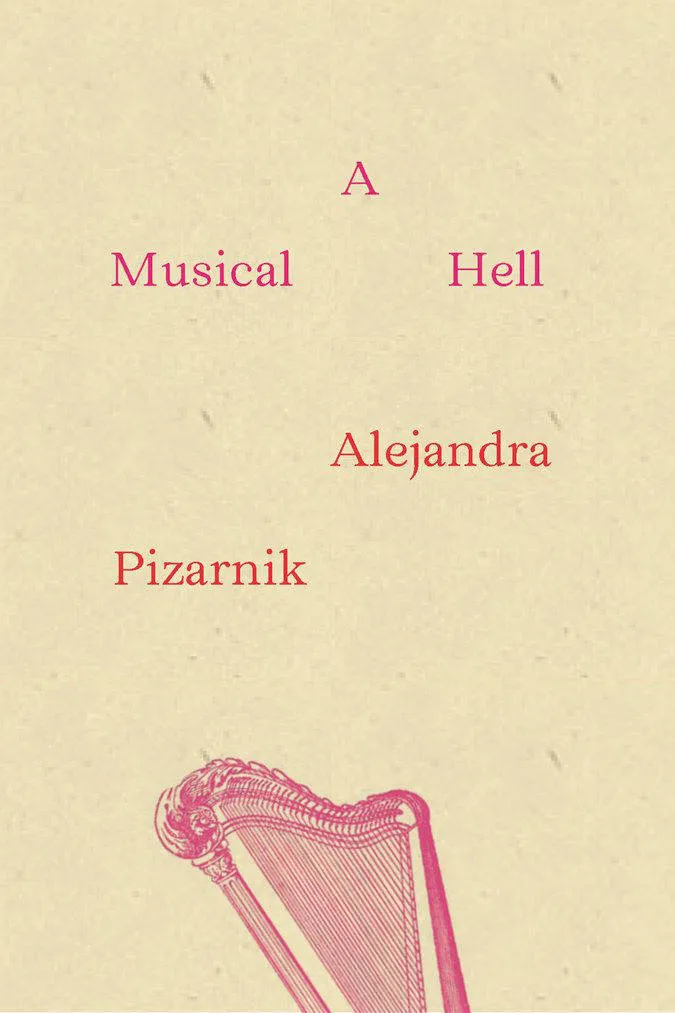
Cover of A Musical Hell

New Directions Publishing

A Musical Hell

Alejandra Pizarnik, Yvette Siegert

Poetry €13.00

“An aura of legendary prestige surrounds the work of Alejandra Pizarnik,” writes César Aira. Her last collection to be published before her suicide in 1972, A Musical Hell is the first book of poems by Pizarnik to be published in its entirety in the U.S. Pizarnik writes at the edge of poetic impossibility, opening with a blues singer, expanding into silence, and closing into a theater of shadows and songs of the drowned.

Cover of Nightwood

New Directions Publishing

Nightwood

Djuna Barnes

Nightwood, Djuna Barnes' strange and sinuous tour de force, "belongs to that small class of books that somehow reflect a time or an epoch" (Times Literary Supplement). That time is the period between the two World Wars, and Barnes' novel unfolds in the decadent shadows of Europe's great cities, Paris, Berlin, and Vienna—a world in which the boundaries of class, religion, and sexuality are bold but surprisingly porous.

The outsized characters who inhabit this world are some of the most memorable in all of fiction—there is Guido Volkbein, the Wandering Jew and son of a self-proclaimed baron; Robin Vote, the American expatriate who marries him and then engages in a series of affairs, first with Nora Flood and then with Jenny Petherbridge, driving all of her lovers to distraction with her passion for wandering alone in the night; and there is Dr. Matthew-Mighty-Grain-of-Salt-Dante-O'Connor, a transvestite and ostensible gynecologist, whose digressive speeches brim with fury, keen insights, and surprising allusions. Barnes' depiction of these characters and their relationships (Nora says, "A man is another persona woman is yourself, caught as you turn in panic; on her mouth you kiss your own") has made the novel a landmark of feminist and lesbian literature.

Cover of Midwinter Day

New Directions Publishing

Midwinter Day

Bernadette Mayer

Poetry €17.00

Midwinter Day, as Alice Notley noted, is an epic poem about a daily routine. A poem in six parts, Midwinter Day takes us from awakening and emerging from dreams through the whole day-morning, afternoon, evening, night-to dreams again:...

a plain introduction to modes of love and reason/ Then to end I guess with love, a method to this winter season/ Now I've said this love it's all I can remember/ Of Midwinter Day the twenty-second of December// Welcome sun, at last with thy softer light/ That takes the bite from winter weather/ And weaves the random cloth of life together/ And drives away the long black night!

Cover of Unfit

New Directions Publishing

Unfit

Ariana Harwicz, Jessie Mendez Sayer

Mothering €16.00

A bracing novel that asks how far we would go for the ones we love—and what we would do to destroy the ones we hate. 

Lisa has lost custody of her young twin boys. Caught between the French legal system’s sluggish bureaucracy and her sinister, scheming in-laws, she’s alone and lost, an Argentine migrant in rural France picking grapes for a pittance, only allowed to see her children in supervised visits once a month. Scapegoated and outcast, destitute and desperate, Lisa decides to take radical action: early one morning, she sneaks into her in-laws’ farmhouse, takes back her children, sets the barn ablaze, and makes her escape.

What follows is a white-knuckled road trip that explores human beings pushed to the edge. Clearly, Lisa is not in her right mind, and as Harwicz deftly mingles a chorus of contradictory voices into her very unreliable narration, the reader comes to regard the protagonist with an unsettling mixture of sympathy and suspicion. Written in savage, chiseled prose, Unfit shoots off, a gripping chase that questions all our assumptions—and points out our hypocrisies— about motherhood, custody rights, love, violence, anti-semitism, and migration. The latest novel by the acclaimed author of Die, My Love (soon to be adapted to a film starring Jennifer Lawrence), Unfit is addictively terrifying, savagely sophisticated, and shockingly brilliant.

Translated from Spanish by Jessie Mendez Sayer

Cover of The Obscene Madame D

Pushkin Press

The Obscene Madame D

Hilda Hilst

Fiction €15.00

A wickedly funny work of depraved genius by one of Brazil’s most radical twentieth-century writers; imagine the Marquis de Sade as written by Clarice Lispecter.

An electrifying masterpiece by one of modern Brazilian literature’s most significant and controversial writers, Hilda Hilst takes us into the disorder and beauty of a mind restlessly testing its own limits.

Every month I ingested the body of God, not in the way one swallows green peas or agrostis, or swallows swords, I ingested the body of God the way people do when they know they are swallowing the More, the All, the Incommensurable, for not believing in finitude I would lose myself in absolute infinity…

The Obscene Madame D tells the story of Hillé, a sixty-year-old woman who has decided to abandon conventional life and spend the rest of her days in contemplation in a recess under the stairs. There, she is haunted by the perplexity of her recently deceased lover, Ehud, who cannot understand her rejection of common sense, sex and a simple life in favour of metaphysical speculations that he considers delusional and vain. 

In a stream-of-consciousness monologue that’s part James Joyce, part Clarice Lispector, and part de Sade, Hillé speaks of her search for spiritual fulfilment from a space of dereliction, as she searches for answers to great questions of life, death and the relationship between body and soul.

Translated by Nathanaël and Rachel Gontijo Araujo

Cover of Grandma’s Story

Silver Press

Grandma’s Story

Trinh T. Minh-ha

Essays €11.00

‘May my story be beautiful and unwind like a long thread . . .’, she recites as she begins her story. 

The storyteller is the living memory of her time: at once an oracle, weaver, healer, warrior, witch, protectress, teacher and great mother. Her powers are to do with passing on – not only the stories but transmission itself: ‘what grandma began, granddaughter completes and passes on to be further completed.’

In contrast to the idea that a story is ‘just a story’, pioneering postcolonial feminist theorist and filmmaker Trinh T. Minh-ha recodes ideas about truth and fantasy to tell a different story about power, civilisation, history, medicine and magic. Grandma’s Story shows how creative speech is connected to women’s powers of enchantment, drawing upon and speaking with storytellers including Theresa Hak Kyung Cha, Clarice Lispector, Maxine Hong Kingston, Leslie Marmon Silko and Zora Neale Hurston – all who may be known as ‘she who breaks open the spell’. 

The story as a cure and a protection is at once musical, historical, poetical, ethical, educational, magical, and religious.

Cover of Pasts, Futures, and Aftermaths: Revisiting the Black Dada Reader

DABA

Pasts, Futures, and Aftermaths: Revisiting the Black Dada Reader

Adam Pendleton

Essays €40.00

The sequel to Pendleton's acclaimed Black Dada Reader, compiling an anti-canon of radical experimentation and thought.

In 2011, artist Adam Pendleton (born 1984) assembled Black Dada Reader, a compendium of texts, documents and positions that elucidated a practice and ethos of Black Dada. Resembling a school course reader, the book was a spiral-bound series of photocopies and collages, originally intended only for personal reference, and eventually distributed informally to friends and colleagues. The contents - an unlikely mix of Hugo Ball, W.E.B. Du Bois, Adrian Piper, Gertrude Stein, Sun Ra, Stokely Carmichael, Gilles Deleuze -formed a kind of experimental canon, realized through what Pendleton calls radical juxtaposition. In 2017, Koenig Books published the Reader in a hardcover edition, with newly commissioned essays and additional writings by the artist. A decade later, Pendleton has composed another reader, building upon the constellation of writers, artists, filmmakers, philosophers and critics that emerged in the first volume.

Source texts by Sara Ahmed, Mikhail Bakhtin, Toni Cade Bambara, Amiri Baraka, Augusto de Campos, Hardoldo de Campos, and Décio Pignatari, Angela Davis, Gilles Deleuze, Julius Eastman, Adrienne Edwards, Clarice Lispector, Achille Mbembe, Philippe-Alain Michaud, Charles Mingus, Piet Mondrian, Leslie Scalapino, Leonard Schwartz and Michael Hardt, Juliana Spahr, Cecil Taylor and Malcolm X.

Cover of Tripwire 15 - Narrative/Prose

Tripwire Journal

Tripwire 15 - Narrative/Prose

Renee Gladman, David Buuck

Poetry €20.00

Narrative/Prose issue, featuring a special section: I was writing, but it was drawing: a Renee Gladman mini-feature with work by Renee Gladman * Earl Jackson, Jr. * Bruna Mori * Alexis Almeida on Renee Gladman & Julie Carr * Lewis Freedman & Vanessa Thill on Renee Gladman & Mirtha Dermisache. as well as work by Isabel Waidner * sissi tax (translated by Joel Scott & Charlotte Theißen) * Susan Hefuna * Mira Mattar * Lital Khaikin * Maryam Madjidi (translated by Ruth Diver) * Omer Wasim & Saira Sheikh * Ilse Aichinger (translated by Christian Hawkey & Uljana Wolf) * Bronka Nowicka (translated by Katarzyna Szuster) * Maude Pilon (translated by Simon Brown) * Mehmet Dere * Syd Staiti * Jena Osman * Germán Sierra * Natani Notah * Julia Bloch on Bernadette Mayer * Robert Glück on Clarice Lispector * Rob Halpern on Bruce Boone & Dennis Cooper *Dylan Byron on/after Bruce Boone * Linda Bakke on Communal Presence: New Narrative Writing Today * Anna Fidler * Corey Zielinski on Bob Glück & Writers Who Love Too Much: New Narrative 1977-97 * Jackie Kirby on From Our Hearts to Yours: New Narrative as Contemporary Practice * David W. Pritchard on Kevin Killian * Dale Enggass on Simone White * Allison Cardon on Anne Boyer * Robert Balun on Leslie Kaplan * Marco Antonio Huerta on Omar Pimienta * Allison Grimaldi Donahue on Josué Guébo * Sara Florian on Lasana Sekou * Louis Bury on Allison Cobb * Hugo Gibson on Annie Ernaux.

Cover of Girlbeast

Prototype Publishing

Girlbeast

Cecilie Lind, Hazel Evans

Fiction €16.00

Highly acclaimed in Denmark, Girlbeast is a fearless, unsettling, and poetic reimagining of the Lolita narrative, where power shifts unpredictably, and desire and coercion become indistinguishable. In a world that fetishises girlhood, it asks whether a girl be blamed for internalising the roles imposed upon her? Can she wield her youth as power in a system designed to render her powerless?

With sharp, fast-paced prose and an addictive plot, Cecilie Lind crafts a daring examination of female agency, sexuality, and the complexities of consent. The novel evokes the idea of the girl as animal – a creature conditioned to be both docile pet and wild beast, torn between submission and rebellion, innocence and desire.

Brave, provocative, and unflinching, Girlbeast is a gripping, vital novel for our times.

WINNER OF THE 2023 DANISH CRITICS PRIZE, SHORTLISTED FOR THE DR NOVEL PRIZE, MONTANA’S LITERATURE PRIZE & THE JYLLANDS-POSTEN FICTION PRIZE

Cecilie Lind (b. 1991) studied at Forfatterskolen (The Danish Academy of Creative Writing), and debuted in 2010 with The Wolf Ate My Eyeliner. Lind’s breakthrough in Denmark came with the publication of the highly acclaimed book-length poem My Child, which was shortlisted for the 2020 Critic’s Prize and the Politiken’s Literary Award. She was awarded The Native Language Prize in 2020, and Girlbeast won the Danish Critics Prize in 2023. Lind’s most recent novel, Bristefærdig (Ripe), was published to critical acclaim in 2025.

Hazel Evans (b. 1994) is an artist, writer and literary translator based near Aarhus, Denmark. She was the 2022/23 emerging translator for Danish to English at the National Centre for Writing, and her debut translation, Into a Star by Puk Qvortrup, was published by Hamish Hamilton. In 2024, she received The Inger and Jens Bruun Translation Prize for her translation of Rasmus Daugbjerg’s Troll, forthcoming from Penguin Press.

Cover of Gertrude Stein: Selections

University of California Press

Gertrude Stein: Selections

Gertrude Stein, Joan Retallack

Poetry €30.00

This selection of Gertrude Stein's work is taken from the period between 1905 and 1936, when the iconic modernist poet was engaged in an astounding number of still-surprising literary experiments, whose innovations continue to influence all the arts. Editor Joan Retallack has chosen complete texts or selections that lend themselves to a clarified vision of Stein's oeuvre. 

In her brilliant introduction, Retallack provides the historical and biographical context for Stein's lifelong project of composing a "continuous present," an effort which parallels many of the most important technological and scientific developments of her era—from moving pictures to Einstein's revision of our understanding of space and time. Retallack also addresses persistent questions about Stein's work and the best way to read it in our contemporary moment. In suggesting a performative "reading poesis" for these works, Retallack follows Stein's dictum by arguing that to actively experience the work is to enjoy it, and to enjoy it is to understand it. 

TEXTS
Melanctha (excerpt, from Three Lives, 1905)
The Making of Americans (excerpt, 1911)
Picasso (1911)
Flirting at the Bon Marche (1911)
Bon Marche Weather (1911)
Orta or One Dancing (excerpt, 1912)
Susie Asado (1912)
Tender Buttons: Objects, Food (1913)
Scenes from the Door (from Useful Knowledge, 1918)
Photograph (1920)
A Movie (1920)
An Elucidation (1923)
If I Told Him, A Completed Portrait of Picasso (1923)
Fourteen Anonymous Portraits (1923)
Are There Arithmetics (1923)
Business in Baltimore (1925)
Composition as Explanation (1926)
Patriarchal Poetry (excerpt, 1927)
Sentences and Paragraphs (from How to Write, 1930)
History or Messages from History (1930)
We Came. A History (1930)
Stanzas in Meditation (excerpt, 1932)
Lecture I (from Narration, 1934)
Identity a Poem (1935)
What Are Master-pieces and Why Are There So Few of Them (1936)

DOCUMENTS
“With Apologies to Gertrude Stein,” newspaper advertisement
Two love notes from Stein to Toklas (n.d.): “Dear dainty
delicious darling” and “Ir/Re/Sis/Ti /Belle”
Virgil Thomson, Letter to Gertrude Stein (May 30, 1933)
“Stein Opera Sung by All-Negro Cast,” New York Times (February 9, 1934)
Thornton Wilder, Introduction to Narration (1935)

Cover of Across the Acheron

Winter Editions

Across the Acheron

Monique Wittig

Fiction €20.00

In her darkly funny 1985 take on Dante’s Divine Comedy, acclaimed French writer and activist Monique Wittig restages the journey through the circles of hell, limbo, paradise from a lesbian feminist perspective. 

Never-before published in the US, Across the Acheron follows the adventures of “Wittig” and her anti-Virgilian guide through laundromats, billiard parlors, dyke bars, and picnic grounds of a 1980s San Francisco populated by hunters and their prey, lost souls, and fantastical beasts, including a robotic eagle and angelic bikers. Wittig reimagines Dante’s epic poem through a feminist and queer lens, subverting his cosmological order and upending gender identities and literary traditions. This edition brings the English translation of Wittig’s final novel back into print for the first time since the early-1990s, revised according to the author's notes, and with a new introduction by Sophie Lewis.

Across the Acheron is a work of lesbian struggle and triumph across two kinds of hell. The hell of the classic western literary canon—and the hell of San Francisco. Monique Wittig brings all of her writerly powers and political experience to bear here, as witness to the horrors of heterosexual patriarchy and also to the possibility of another world for another life. Her work is a rare combination of deeply felt materialism and radical linguistic freedom. If we're to have another world, we'll need to create another language. She knew that, and she lived it.” McKenzie Wark

“Even in fiction Monique Wittig’s writing is critical, prescient, brilliant, satirical, searing, and way ahead of its time. I’m so glad this work is back in circulation to revisit and revel in.” Pamela Sneed

“In this unendurable yet compelling journey through the circles of patriarchal hell, Wittig encounters hordes of tortured women who do not struggle against their oppressors. Their brainwashing is as difficult to witness as their bloodied flesh. Only through communal activism does the seeker’s soul becomes tough enough to enter Paradise, where bare-breasted angels dismount motorcycles and offer baskets of 'cherries, strawberries, raspberries, apricots, peaches, plums, tomatoes, avocados, green melons, cantaloupes, watermelons, lemons, pawpaws, pineapples and coconuts.’ The bounties of Across the Acheron are lush and many.” Dodie Bellamy

“A Guernica of the human (feminist) condition, a blacker, bleaker, more vengeful Alice’s tea party, this is a novel as graphic as a painting, whose brilliance its translators have creditably preserved.” Publishers Weekly

Introduction by Sophie Lewis
Translated by David Le Vay with Margaret Crosland