rile*books

Search books

Search books by title, author, publisher, keywords...

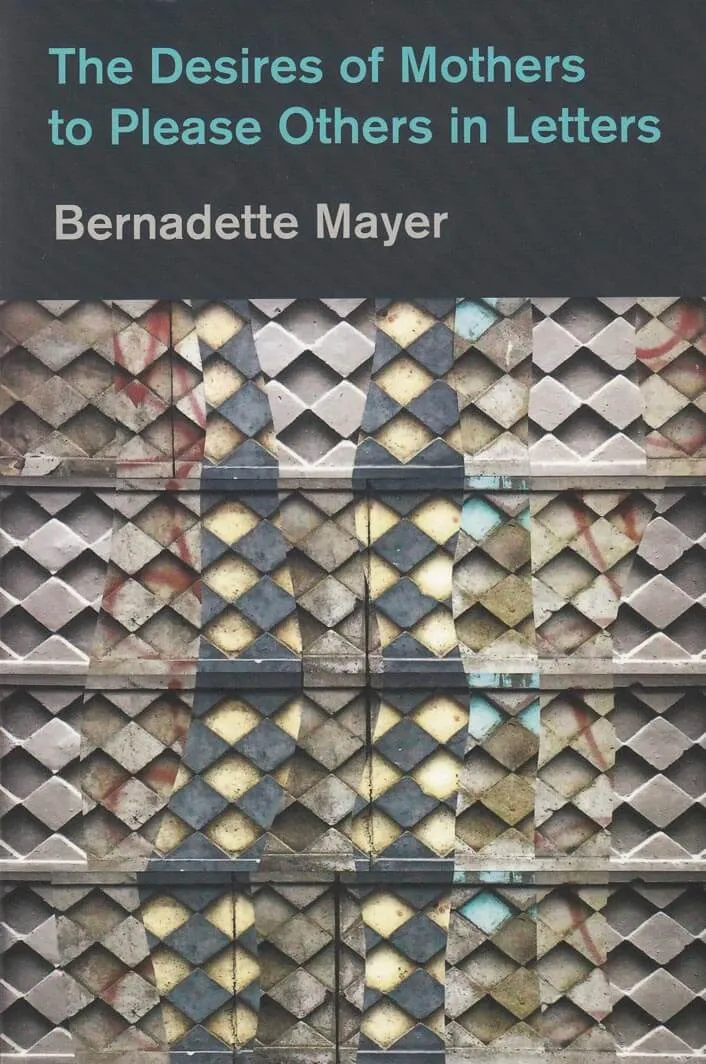
Cover of Midwinter Day

New Directions Publishing

Midwinter Day

Bernadette Mayer

€17.00

Midwinter Day, as Alice Notley noted, is an epic poem about a daily routine. A poem in six parts, Midwinter Day takes us from awakening and emerging from dreams through the whole day-morning, afternoon, evening, night-to dreams again:...

a plain introduction to modes of love and reason/ Then to end I guess with love, a method to this winter season/ Now I've said this love it's all I can remember/ Of Midwinter Day the twenty-second of December// Welcome sun, at last with thy softer light/ That takes the bite from winter weather/ And weaves the random cloth of life together/ And drives away the long black night!

Published in 1999 ┊ 128 pages ┊ Language: English

recommendations

Cover of Unfit

New Directions Publishing

Unfit

Ariana Harwicz, Jessie Mendez Sayer

Fiction €16.00

A bracing novel that asks how far we would go for the ones we love—and what we would do to destroy the ones we hate. 

Lisa has lost custody of her young twin boys. Caught between the French legal system’s sluggish bureaucracy and her sinister, scheming in-laws, she’s alone and lost, an Argentine migrant in rural France picking grapes for a pittance, only allowed to see her children in supervised visits once a month. Scapegoated and outcast, destitute and desperate, Lisa decides to take radical action: early one morning, she sneaks into her in-laws’ farmhouse, takes back her children, sets the barn ablaze, and makes her escape.

What follows is a white-knuckled road trip that explores human beings pushed to the edge. Clearly, Lisa is not in her right mind, and as Harwicz deftly mingles a chorus of contradictory voices into her very unreliable narration, the reader comes to regard the protagonist with an unsettling mixture of sympathy and suspicion. Written in savage, chiseled prose, Unfit shoots off, a gripping chase that questions all our assumptions—and points out our hypocrisies— about motherhood, custody rights, love, violence, anti-semitism, and migration. The latest novel by the acclaimed author of Die, My Love (soon to be adapted to a film starring Jennifer Lawrence), Unfit is addictively terrifying, savagely sophisticated, and shockingly brilliant.

Translated from Spanish by Jessie Mendez Sayer

Cover of It Lasts Forever and Then It's Over

New Directions Publishing

It Lasts Forever and Then It's Over

Anne de Marcken

Fiction €16.00

Co-winner of the 2022 Novel Prize, this incredible life-after-death novel asks us to consider how much of our memory, of our bodies, of the world as we know it ― how much of what we love can we lose before we are lost? And then what happens?

The heroine of the spare and haunting It Lasts Forever and Then It’s Over is voraciously alive in the afterlife. Adrift yet keenly aware, she notes every bizarre detail of her new reality. And even if she has forgotten her name and much of what connects her to her humanity, she remembers with an implacable and nearly unbearable longing the place where she knew herself and was known―where she loved and was loved.

Traveling across the landscapes of time and of space, heading always west, and carrying a dead but laconically opinionated crow in her chest, our undead narrator encounters and loses parts of her body and her self in one terrifying, hilarious, and heartbreaking situation after another.  A bracing writer of great nerve and verve, Anne de Marcken bends reality (and the reader’s mind) with throwaway assurance.

It Lasts Forever and Then It’s Over plumbs mortality and how it changes everything, except possibly love. Delivering a near-Beckettian whopping to the reader’s imagination, this is one of the sharpest and funniest novels of recent years, a tale for our dispossessed times.

Cover of The Employees: A Workplace Novel of the 22nd Century

New Directions Publishing

The Employees: A Workplace Novel of the 22nd Century

Olga Ravn

Sci-Fi €15.00

Shortlisted for the International Booker Prize, The Employees reshuffles a sci-fi voyage into a riotously original existential nightmare. Aboard the interstellar Six Thousand Ship, the human and humanoid crew members complain about their daily tasks in a series of staff reports and memos. When the ship takes on a number of strange objects from the planet New Discovery, the crew becomes deeply attached to them, even as tensions boil toward mutiny, especially among the humanoids. In chilling, crackling, and exhilarating prose, The Employees probes into what makes us human, while delivering a hilariously stinging critique of life governed by the logic of productivity.

Cover of Glass, Irony & God

New Directions Publishing

Glass, Irony & God

Anne Carson

Poetry €16.00

Known as a remarkable classicist, Anne Carson weaves contemporary and ancient poetic strands with stunning style in Glass, Irony and God. This collection includes: "The Glass Essay," a powerful poem about the end of a love affair, told in the context of Carson's reading of the Bronte sisters; "Book of Isaiah," a poem evoking the deeply primitive feel of ancient Judaism; and "The Fall of Rome," about her trip to "find" Rome and her struggle to overcome feelings of a terrible alienation there.

Anne Carson was born in Canada and teaches ancient Greek for a living.

Cover of A Key Into the Language of America

New Directions Publishing

A Key Into the Language of America

Rosmarie Waldrop

Poetry €16.00

The legacy of cultural imperialism, the consequences of gender, and the marginalization of the conquered are themes that combine and comment, one on the other, in Rosmarie Waldrop's remarkable new work, A Key into the Language of America. As "formally adventurous" (A.L. Nielson, Washington Review) as ever, German-born Waldrop has based her new collection on Rhode Island founder Roger Williams's 1643 guide (of the same name) to Narragansett Indian language and lore.

Rosmarie Waldrop, born in Germany in 1935, is the author of several books of poetry, fiction, and essays, and a noted translator of French and German poetry. Her most recent books are The Nick of Time, Gap Gardening: Selected Poems(winner of the Los Angeles Book Prize), and Driven to Abstraction. She is a member of the American Academy of Arts of Letters, and is a Chevalier of the Ordre des Arts et des Lettres. For fifty-six years, she and her husband Keith Waldrop ran one of the country's most vibrant experimental poetry presses, Burning Deck, in Providence, Rhode Island.

Cover of Help

Tenement Press

Help

Steven Zultanski

Poetry €25.00

Death-obsessed, disengaged and overinvested—the four long poems assembled in Steven Zultanski’s Help theatricalise morbid fascinations, self-protective impulses, and unfocused desire. Help is, at its core, a set of conversations; the result of games played between friends that were then transcribed, edited, and embellished. Participants were asked to talk about loss, the death of acquaintances, secret hiding places, mislaid time, and unmet demands. The resulting poems read like meandering scripts for unrealised plays; incidental excavations of persona and place.

Somewhat reminiscent of Linda Rosenkrantz’s Talk (1968) or Alice Notley’s transcription poems of the 1970s, in Help the poet pretends to be a recording device, and the poem an act of remembering. Zultanski’s writing is at once skeletal and overstuffed, dryly unsentimental and yet dripping with melodrama. Help foregrounds its own contradictions in a collection that is at once both extremely personal and distinctly artificial.

Help brilliantly extends Steven Zultanski’s current phase of writing—looser, more documentary, more situational. In setting up explicit objects of inquiry and conversation—love, death, childhood—the book shows that to know these things is to also know our friends and ourselves. Sustained by an orchestration of relation and memory (and thus reality), affect here is modular, the product of what happens when we transform things by talking about them. A careful and astute experiment in writing and living.
 — Jennifer Soong

Cover of Slips of the Mind: Poetry as Forgetting

University of Chicago Press

Slips of the Mind: Poetry as Forgetting

Jennifer Soong

Poetry €30.00

An audacious account of what happens when forgetting becomes a way of writing and writing becomes a way of forgetting.  

In Slips of the Mind, poet and critic Jennifer Soong turns away from forgetting’s long-standing associations with suppression, privation, and error to argue that the absence or failure of memory has often functioned as a generative creative principle. Exploring forgetting not as the mere rejection of a literary past or a form of negative poetics, Soong puts to the test its very aesthetic meaning. What new structures, forms of desires, styles, and long and short feelings do lapses in time allow? What is oblivion’s relationship to composition? And how does the twentieth-century poet come to figure as the quintessential embodiment of such questions? 

Soong uncovers forgetting’s influence on Gertrude Stein, Lyn Hejinian, Tan Lin, Harryette Mullen, Lissa Wolsak, and New York School poets John Ashbery, James Schuyler, Bernadette Mayer, and Ted Berrigan, among others. She reveals that forgetting’s shapeshifting produces differences in poetic genre, interest, and degrees of intentionality—and that such malleability is part of forgetting’s nature. Most provocatively, Soong shows how losing track of things, leaving them behind, or finding them already gone resists overdetermination and causality in the name of surprise, as poets leverage forgetting in order to replace identity with style. Slips of the Mind is the kind of literary criticism that will reward all readers of modern and contemporary poetry.

Cover of Tripwire 15 - Narrative/Prose

Tripwire Journal

Tripwire 15 - Narrative/Prose

Renee Gladman, David Buuck

Poetry €20.00

Narrative/Prose issue, featuring a special section: I was writing, but it was drawing: a Renee Gladman mini-feature with work by Renee Gladman * Earl Jackson, Jr. * Bruna Mori * Alexis Almeida on Renee Gladman & Julie Carr * Lewis Freedman & Vanessa Thill on Renee Gladman & Mirtha Dermisache. as well as work by Isabel Waidner * sissi tax (translated by Joel Scott & Charlotte Theißen) * Susan Hefuna * Mira Mattar * Lital Khaikin * Maryam Madjidi (translated by Ruth Diver) * Omer Wasim & Saira Sheikh * Ilse Aichinger (translated by Christian Hawkey & Uljana Wolf) * Bronka Nowicka (translated by Katarzyna Szuster) * Maude Pilon (translated by Simon Brown) * Mehmet Dere * Syd Staiti * Jena Osman * Germán Sierra * Natani Notah * Julia Bloch on Bernadette Mayer * Robert Glück on Clarice Lispector * Rob Halpern on Bruce Boone & Dennis Cooper *Dylan Byron on/after Bruce Boone * Linda Bakke on Communal Presence: New Narrative Writing Today * Anna Fidler * Corey Zielinski on Bob Glück & Writers Who Love Too Much: New Narrative 1977-97 * Jackie Kirby on From Our Hearts to Yours: New Narrative as Contemporary Practice * David W. Pritchard on Kevin Killian * Dale Enggass on Simone White * Allison Cardon on Anne Boyer * Robert Balun on Leslie Kaplan * Marco Antonio Huerta on Omar Pimienta * Allison Grimaldi Donahue on Josué Guébo * Sara Florian on Lasana Sekou * Louis Bury on Allison Cobb * Hugo Gibson on Annie Ernaux.