rile*books

Search books

Search books by title, author, publisher, keywords...

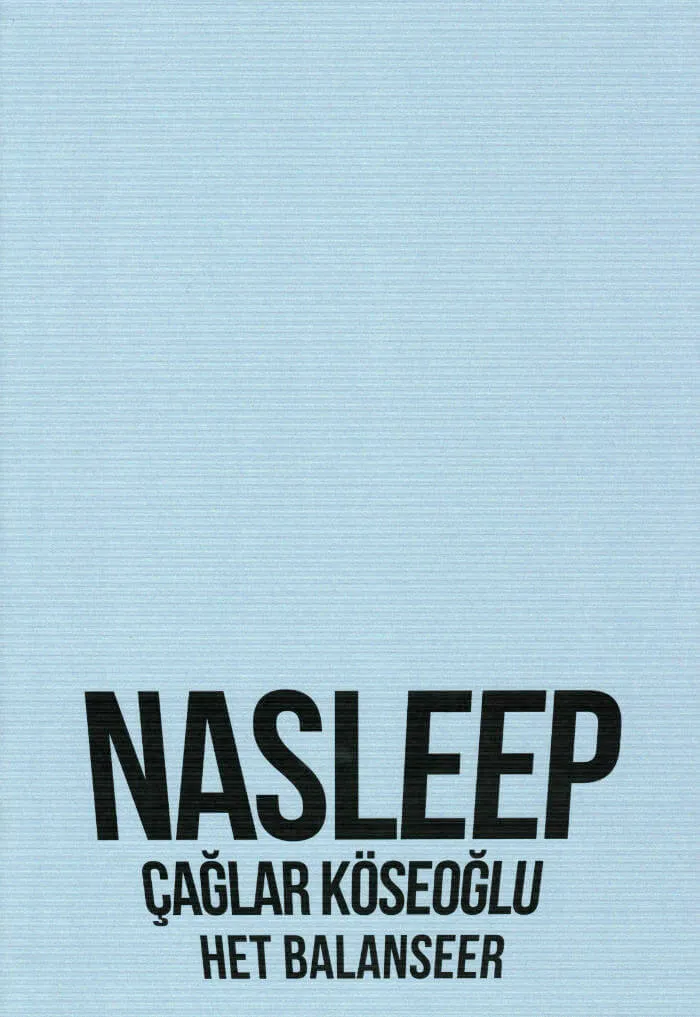
Cover of Nasleep

het balanseer

Nasleep

Çağlar Köseoğlu

€19.00

Nasleep neemt de protesten rondom het Gezi Park in 2013 als vertrekpunt en verkent gaandeweg wat er is overgebleven van dit historische moment waarin een andere wereld voor het grijpen leek. Het zijn gedichten die laveren tussen ritmische, conceptuele en kritische noise enerzijds en postrevolutionaire affecten anderzijds, tussen politise­ring enerzijds en onmacht en radeloosheid anderzijds.

48 pages ┊ Language: Dutch

recommendations

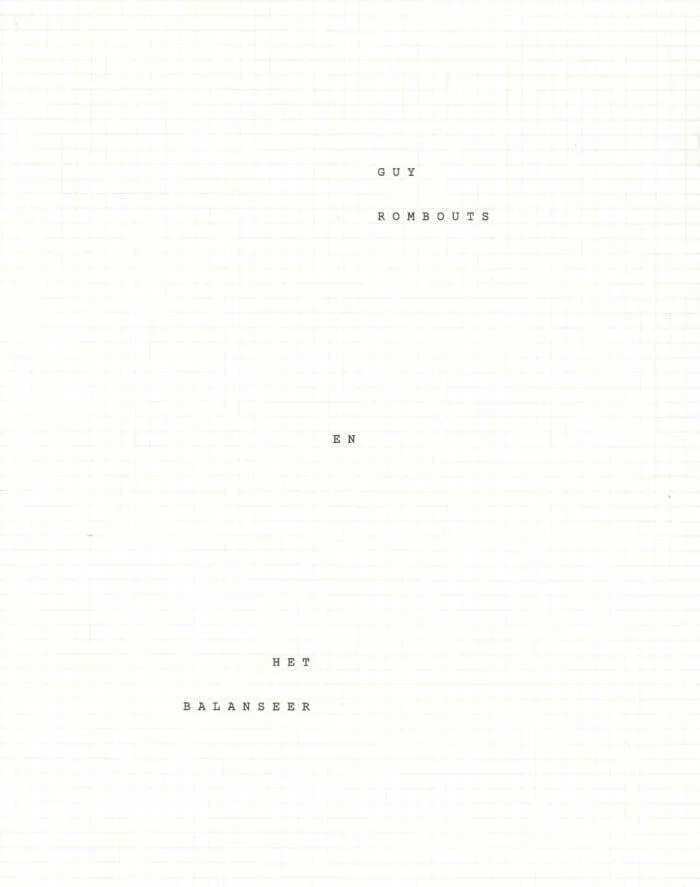
Cover of EN

het balanseer

EN

Guy Rombouts

Poetry €25.00

In het begin van de jaren 1970, hield Guy Rombouts een notaboekje bij waarin hij alle woorden, bijvoeglijk naamwoorden en werkwoorden bijhield die hij tegenkwam tijdens het lezen en die met elkaar verbonden waren door het voegwoord ‘en‘.

Ongeveer 50 jaar later en met de hulp van de grafische vormgever Jeroen Wille, is de transcriptie van zijn aantekeningen gepubliceerd als een boek dat gelezen kan worden in twee richtingen (en als enige boek coronaproof met twee tegelijkertijd).

Het boek bevat 2158 verzen met in totaal 4316 EN-combinaties.

De kortste verzen met evenveel letters:

A EN Z

4 EN 6

De langste verzen met evenveel letters:

ONUITSPREKELIJKHEDEN EN IMPONDERABILIA

ONEVENWICHTIGHEID EN ZELFOVERSCHATTING

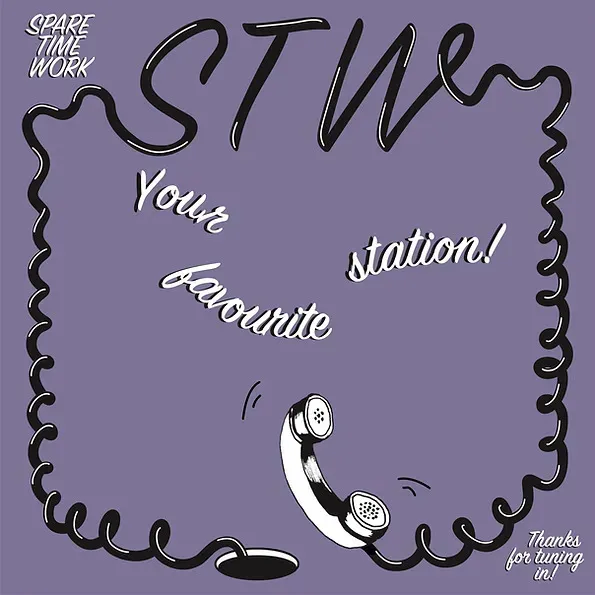
Cover of STW, your favourite station!

het balanseer

STW, your favourite station!

buren

STW, your favourite station! functioneert als een radioprogramma. Een boek dat lyrisch proza uitzendt van We make stuff up for a living (een CV medley) tot COMPUTER_SONG, een ceremoniële quiz met Adult Hood & Young als protagonisten, een grillige anekdote van iemand die zich ergert aan een Call Service, en meer! Thanks for tuning in!

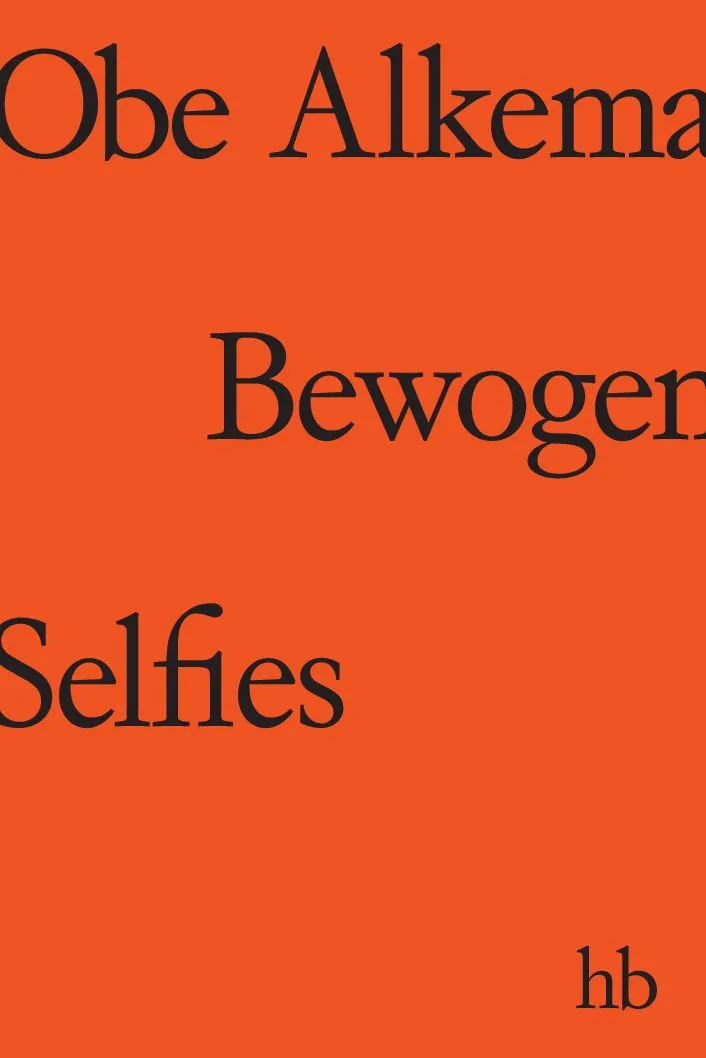
Cover of Bewogen selfies

het balanseer

Bewogen selfies

Obe Alkema

Poetry €24.50

In Bewogen selfies onderzoekt Obe Alkema de verhouding tussen landschap en herinnering. Wat treft hij aan bij terugkeer naar belangrijke plaatsen uit zijn geheugen? Wat herinnert hij zich niet, maar Google wel? Is er een gedenkschrift te puren uit zijn metadata?

Memoires, rechtstreeks verteld en met omwegen, uit eerste hand en van horen zeggen. Archieven en herinneringen eisen spreektijd, houden het niet meer droog of worden tot spreken gebracht. Wat hebben ze eigenlijk te melden? Ze lopen helemaal leeg, net als Alkema zelf. Een leven zoals zovele, poedelnaakt en geretoucheerd, vol zin en onzin.

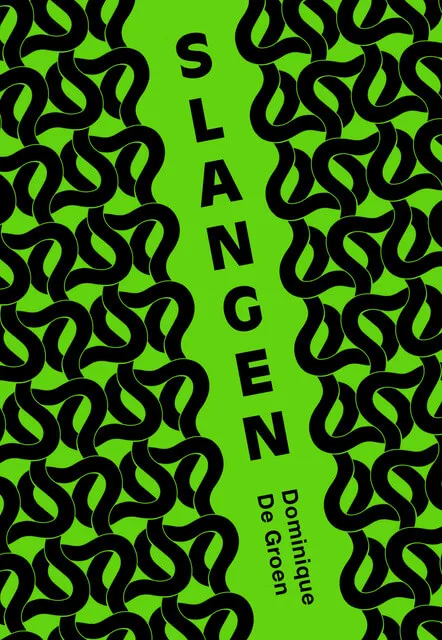
Cover of Slangen

het balanseer

Slangen

Dominique De Groen

Poetry €19.50

Slangen krioelen in de sarcofaag van het heden, in de krochten van de popcultuur, in de mummie van de natuur, in wondes en rot vlees, in artificiële woestijnen en op geoliede dad bods. Ze wentelen zich rond beursgrafieken, raken verstrengeld met wurgende algoritmes, orkestreren een trage ondergrondse revolutie. Een meisje snijdt zich aan een nepdiamanten piramide en werpt haar slangenvel van zich af.

Dominique De Groen is schrijver en beeldend kunstenaar. Ze publiceerde de dichtbundels Shop Girl (2017), Sticky Drama (2019) en offerlam (2020). Ze werd genomineerd voor de Poëziedebuutprijs Aan Zee 2018, de Herman de Coninckprijs 2020 en de Fintroliteratuurprijs 2021 en won de Frans Vogel Poëzieprijs 2019 en de Fintropublieksprijs 2021.

Cover of exit ambition

Dostoyevsky Wannabe

exit ambition

Jake Reber

Poetry €7.50

Exit Ambition is a catalogue of practices, documents, videos, and other projects - virtual & actual. The book operates as an incomplete index of a series of installations, instructions, anti-plays, performance scores, descriptions, etc.

Jake Reber lives and works in Buffalo, NY, where he co-curates hystericallyreal.com.

Cover of Slow Mania

Futurepoem

Slow Mania

Nazareth Hassan

Poetry €22.00

Nazareth Hassan’s devastatingly brilliant Slow mania is a powerful document of senses and sense-making where estrangement and ugliness meets longing and beauty. The artist begins with a photographic sequence: two white-blue sky panels; a shattered glass storefront window; a street gutter clutching leaves, smashed straw sleeves and plastic lids; then snow holding a disassembled red stained chest of drawers. These are the writer’s plinths where form as waste is configured: “smoggy breath thru burnt-edged holes tracking acid mucous inside your home.” Slow mania provokes through enumerative structures, for instance, “screening bodies” who keep a sex club’s gates open only to some: “…197 mmm maybe lemme think / 151 yes / 162 yes / 197 ok yes, but keep your shirt on.” The poet deftly folds human intimacy into interspecies metaphor: “The rat torso twitches in agreement. Across / the street, the flies continue to starve,” where “…you’re lost in your own hole: what did you find?” Hassan attends to this painful search, bearing witness to the disturbingly exultant, offering a radical state of being, in and out of which the stunning and timely Slow mania lives and thrives. — Ronaldo V. Wilson

Slow mania is resistance to resolution, it’s pointillistic magic, it’s Seurat in Bed-Stuy: the tighter you zoom, the more undifferentiated beauty you encounter. It’s kinky (the kinked-up curls of somebody’s greased-up chops). It’s tender (bruised and brown, like the overripe fruit that haunts your summer kitchen waiting to be crumbled into a crumble). The colors are blurry, the edges are soft, the stakes are high, and everything—everything!—shimmers in the space between life and afterlife. Hassan’s gaze is a hot summer steam that sneaks into the skinniest, stinkiest crevices; the grimiest seams, the most miraculous cracks. Breathe into the abyss, that’s the invitation. Take it in, let it in. Be a wit(h)ness to every single being. — Steffani Jemison

This amazing book reads like a synesthetic performance, the only thing missing is the smell of sweat, of streets, of loss. A book of choreographed pages, scores, movements, image blur, hand-scribbles. The bleak, unsparing texts hidden among the materials turn out to be the record of sudden eruptions, violent street scenes, pick-up scenes, unclear dialogues, insults, self-debasing verbal injuries on repeat. The performers are racialized, sexualized, anonymized “persons,” “meats,” numbers, lovers, passers-by, all caught up in these dangerous yet desperately emotional and triggering dances at the limit. It will leave you raw, spaced-out, both roused and alarmed as though coming out of an intoxicating show, and wanting more. — Caroline Bergvall

Cover of Autobiography of Red

Vintage Contemporaries

Autobiography of Red

Anne Carson

Poetry €20.00

Geryon, a young boy who is also a winged red monster, reveals the volcanic terrain of his fragile, tormented soul in an autobiography he begins at the age of five. As he grows older, Geryon escapes his abusive brother and affectionate but ineffectual mother, finding solace behind the lens of his camera and in the arms of a young man named Herakles, a cavalier drifter who leaves him at the peak of infatuation. When Herakles reappears years later, Geryon confronts again the pain of his desire and embarks on a journey that will unleash his creative imagination to its fullest extent.

By turns whimsical and haunting, erudite and accessible, richly layered and deceptively simple, Autobiography of Red is a profoundly moving portrait of an artist coming to terms with the fantastic accident of who he is.

Cover of A Catalogue of Risk

Wendy's Subway

A Catalogue of Risk

Alisha Mascarenhas

Poetry €18.00

Alisha Mascarenhas’s A Catalogue of Risk is a volte-face of the neoliberal market economy’s construction of isolated, individual safety. In her debut book of poems, Mascarenhas lingers in the question of risk as it arises in daily life and intimacy. Through a close study and partial translation of philosopher-psychoanalyst Anne Dufourmantelle’s Éloge du risque (2011), her poems posit risk as a fissure, through which we might imagine yet-unknown futures.

Alisha Mascarenhas’s A Catalogue of Risk is the recipient of the 2022 Carolyn Bush Award.

Alisha Mascarenhas (b. 1989) is a poet and translator and the author, most recently, of the chaplet Contagion Fields (Belladonna* 2021). She has contributed writing to Pamenar Press, The Poetry Project Newsletter, The Recluse, Peripheral Review, and The Felt, among others. Alisha was a 2023 resident at La Baldi Artist’s Residency in Montegiovi, Italy. She holds an MFA in Writing from Pratt Institute in Brooklyn, where she now lives.

There is a body lying across Alisha Mascarenhas’s A Catalogue of Risk. Here is a book of generosity and perdition, that could not anticipate the death of its author, the one these works are addressed to, written for, dreamt by, in a stream of proximities. A strange dismantling of time occurs as a result of quiet reversals in which light is diffracted across belated syntaxes, reaching past life to the living. Though A Catalogue of Risk is “running past the flowers,” it is a slow text that grieves the day’s illuminations. It is a lesson in transmission in which we, readers, are the apprentices of grace, at the edge also of drowning. Here is a book that has been “hungering to be emptied.” So, too, is it a book of promise.
Nathanaël

A Catalogue of Risk is a book of luminous attention. Alisha Mascarenhas gives us the language of a mind tracking both internal and external weathers, tuning and returning herself to beauty, fear, grief and desire. Attending a cascade of emotions, the poet dwells in questions, knowing that to keep open to difficult questions is to keep open to desire. That she risks such openness, thinking always with others, through pain and love, is an astonishment. 
— Madhu Kaza

A Catalogue of Risk poses an evocative challenge, one of prismatic nuance: to pursue multiple angles of intimacy along the life-death continuum of how risk holds, unfolds, and makes one whole. “The definition” of what risk is “is shaded in questions” and runs a gamut of desires and sensations at once libidinal and cerebral. Alisha Mascarenhas risks risk itself with this generous offering of exquisite phenomenology and experiential trace in the form of a full-saturation poetics glowing in amplitude and intensity.
— Brenda Iijima