Books
Books
published in 2025

EURO—VISION: Undergrounding the Critical Mineral
'EURO—VISION: Undergrounding the Critical Material' explores extraction beyond the removal of minerals, delving into their financialization, management, and policy-driven circulation through the lens of the EU’s Critical Raw Materials Act. This volume examines resource extraction’s genealogies, valuation paradigms, and structural entanglements, offering a critical reassessment of extractive practices. Part of K. Verlag’s Processing Process series, the book features interviews with scholars, activists, and journalists, alongside commissioned texts and visual essays from FRAUD’s research. By interrogating the “extractive gaze” embedded in EUpolicies, it unveils the material poetics and transformative potential of minerals, fostering reflections on their complex entanglements.
Lithium, copper, uranium, child labor, and the bed of the deep sea—the mining sector is one of the most contested and problematic arenas of consumer complicity today. EURO—VISION: Undergrounding the Critical Mineral begins not with a location or a specific resource, but with a fundamental question: what counts as extraction today? While we might picture drills and quarries, the deeper story unfolds across financial markets, trade policies, legal frameworks, and the metrics used to define what is “critical” in the first place. Taking the EU’s Critical Raw Materials Act as a point of departure, this richly layered volume traces the hidden infrastructures and governing logics that shape how the mining industry moves substances from and across the Earth—and what these minerals, in turn, move with them.
Developed by the artist duo FRAUD (Francisco Gallardo & Audrey Samson) in close collaboration with environmental humanities scholar Michaela Büsse, the book gathers a wide range of voices—artists, scholars, economists, activists, lawyers, and journalists—to reflect on the long genealogies of resource extraction, the valuation paradigms that uphold them, and the terminologies that give them legitimacy. But the story doesn’t stop there. In the context of EURO–VISION, “undergrounding” becomes a tactic: a means of unsettling the structural violence concealed behind seemingly neutral data, and of turning toward the mineral itself—its material presence, its histories, its speculative potential.
Published in K. Verlag’s Processing Process series, EURO—VISION draws on FRAUD’s ongoing, research-led inquiry into critical mineral governance. Combining interviews, visual essays, and commissioned texts, it opens new pathways for thinking about the entanglements between geology, economy, and power. At once analytical and imaginative, the book invites us to see the subterranean anew—not simply as a resource, but as a site of resistance, relation, and possible futures.
Edited by Francisco Gallardo & Audrey Samson (FRAUD) in collaboration with Michaela Büsse. With essays and visual contributions by Adekeye Adebajo, Michaela Büsse, Liam Campling, Stephen Cornford, Jeff Diamanti, FRAUD, Matthew Fuller, Iman Ganji, Peo Hansen, Stefan Jonsson, Bahar Noorizadeh, Sophia Pickles, Ndongo Samba Sylla, Jennifer Telesca, Aleksandra Wojewska, and Mi You. Design by K. Verlag with Wolfgang Hückel & Katharina Tauer. Processing Process series editors: Anna-Sophie Springer & Etienne Turpin.

A Series Of Attempts #3: Loving Women aka Le Poney
"We didn’t have anything & we hadn’t seen much. So, naturally we understood less & felt owed something. We weren’t entirely wrong, though. It was 2011."
Part archival remix, part recruitment manual, this pamphlet’s cast of BAD HORSEY GIRLS will teach you how to neigh, dance and flirt until the vampires come home. A Series of Attempts #3 opens with Jordan/_Hell’s new manifesto ☆ LOVING WOMEN ★, that takes the Nomadic Sisters 1976 publication by the same name as a departure point. From here, ★ LE PONEY ☆ then follows a string of lesbian ponies through a dimensional split. A dimensional split that looks suspiciously like the L.A./Parisian+ queer scene… (͠≖~≖ ͡ )
About the author:
Jordan/_ Hell is a Black trans(2s) artist, writer, & scholar. Hell is the author of CONSTANT VIOLINS (Arcadia Missa, 2021) & AUTOLINGO DIDACTICA (Monitor Press, 2023), amount others. Hell’s writing has been internationally published in multiple languages in press, interdisciplinary projects, & exhibitions by Kunstverein Grafschaft Bentheim (DE), Arcadia Missa Gallery & Publishing (UK), Monitor Books (UK), Real Review (UK), Soft Opening (UK), Mousse Magazine (DE), 032c (DE), Rosie’s Disobedient Press (UK), Sticky Fingers Publishing (UK), The Bittersweet Review (UK), Pratt Institute’s The Felt (US), & others. Hell studied at Hochschule für Bildende Künste–Städelschule (DE) & Cooper Union School of Art (US). Currently, Hell is a doctoral candidate in the School of the Arts at Queen Mary University of London.
CUNY Center for the Humanities
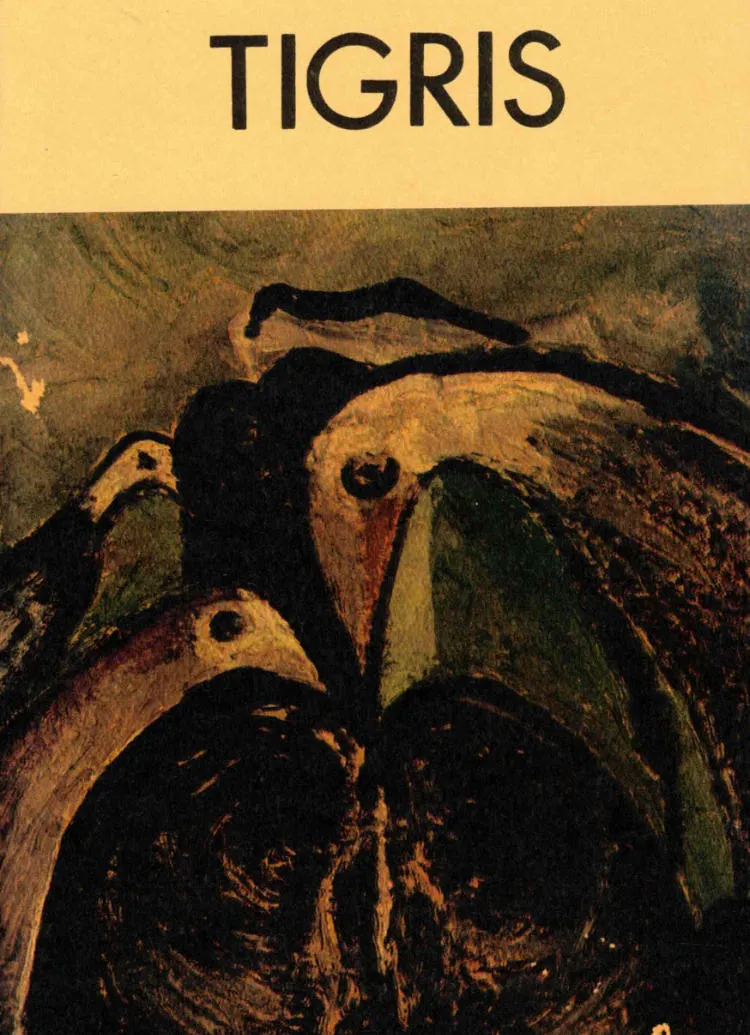
Tigris Vol. 1
In 1971, the great Iraqi poet Sargon Boulus (1944-2007) published a single issue of an English-language literary anthology that he called Tigris. The magazine—a whisper on the literary landscape that appeared three years after Boulus’s arrival in the US—brings together work by Boulus and several of his literary friends, in translation by Boulus and Etel Adnan.
Tigris was not an end in itself, but rather a temporary solution to the lifelong problem of how to devote oneself to poetry across different countries, eras, and styles: how to live poetry. Yet, in so doing, the small anthology includes significant work: Etel Adnan’s “Jebu,” translated by Adnan, and poetry by Boulus, Fouad Rifkah, Yusuf al-Khal, Mouayad al-Rawi, and Riadh Fakhouri, all in Boulus’s translations, as well as a work by Ankido, a “street-activist poet-café worker of importance to the Palestinian Liberation Movement.”
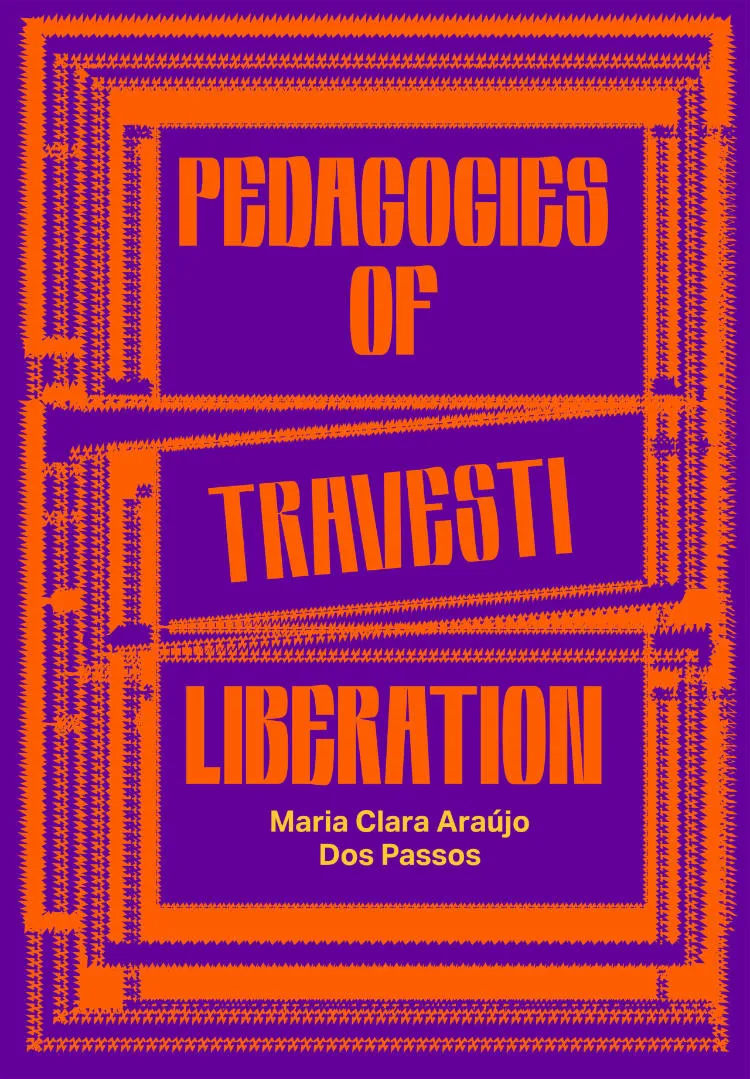
Pedagogies of Travesti Liberation
Maria Clara Araújo dos Passos examines the interplay of education, identity, and liberation in Brazil's travesti community.
In Pedagogies of Travesti Liberation, Maria Clara Araújo dos Passos critiques traditional pedagogical frameworks that marginalize gender nonconforming narratives and highlights the effects of systemic discrimination on travestis' psychosocial well-being. The book advocates for inclusive educational practices and emphasizes the need for affirmative curricula.
Newly translated from Portuguese, this work contributes towards connecting political struggles globally and navigating the complexities of translation—particularly of the term "travesti"—across various geographical and political contexts, featuring a conversation between Araújo dos Passos and translator Natália Affonso.
Maria Clara Araújo dos Passos (born 1996 in Recife) is a Brazilian Afro-transfeminist educator and sociologist, and an activist for LGBT rights.
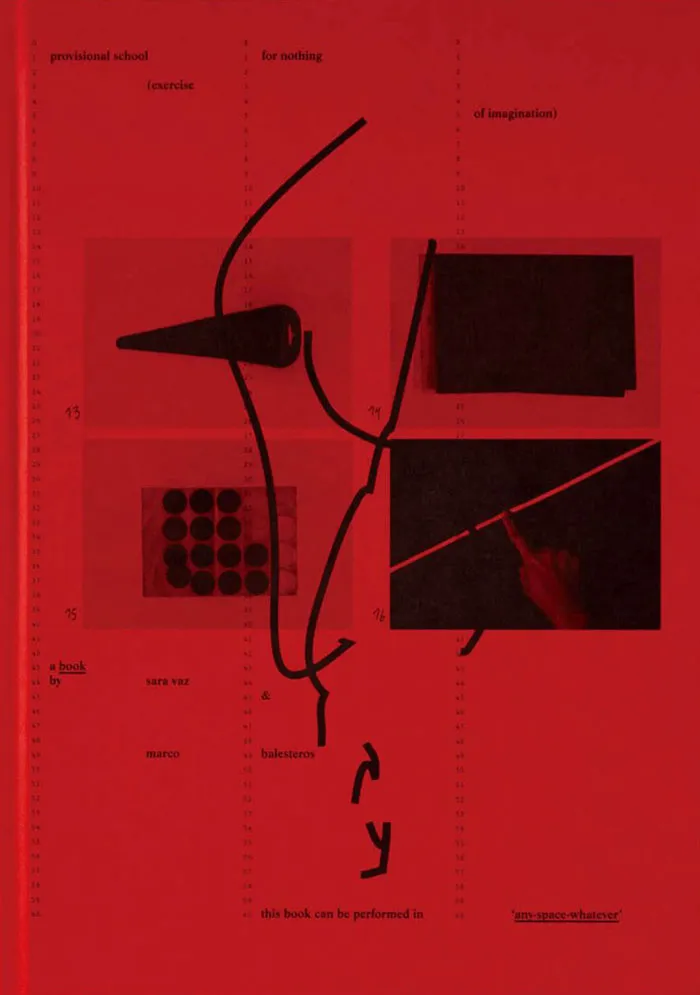
provisional school for nothing—exercise of imagination
‘Provisional School for Nothing—exercise of imagination’ aims to explore forms of parallel education such as self-learning, self-organized schools, unschooling, inner schools, and more. This book is a choir of around 30 invited guests (artists, choreographers, dancers, graphic designers, writers, thinkers and so on). We use the word ‘choir’ since we decided to explore the concept of authorship. The book functions like a language score —comprising words, fragments, and loose ideas that develop throughout a series of conversations we’ve had with our guests via Zoom during the pandemic.
with Marco Balesteros Sara Vaz Alexandru Balgiu Ana Jotta Bráulio Amado Cracked Bolos Igor Dobricic Isabel Carvalho Ivan Martinez João Fiadeiro João dos Santos Martins] Karel Martens Maki Suzuki & Lppl Marco Bene Maria Duarte Marion Cachon Miguel Bonneville Nelson Guerreiro Olivier Lebrun Olga Mesa Francisco Ruiz de Infante Paul Elliman Paul Faure Pedro Barateiro Pedro Rogado Ricardo Nicolau Sara & André Sara Graça T.I.M.E. Tomás Cunha Ferreira Von Calhau! the missing person a man in silence
designed by Sara Vaz Marco Balesteros
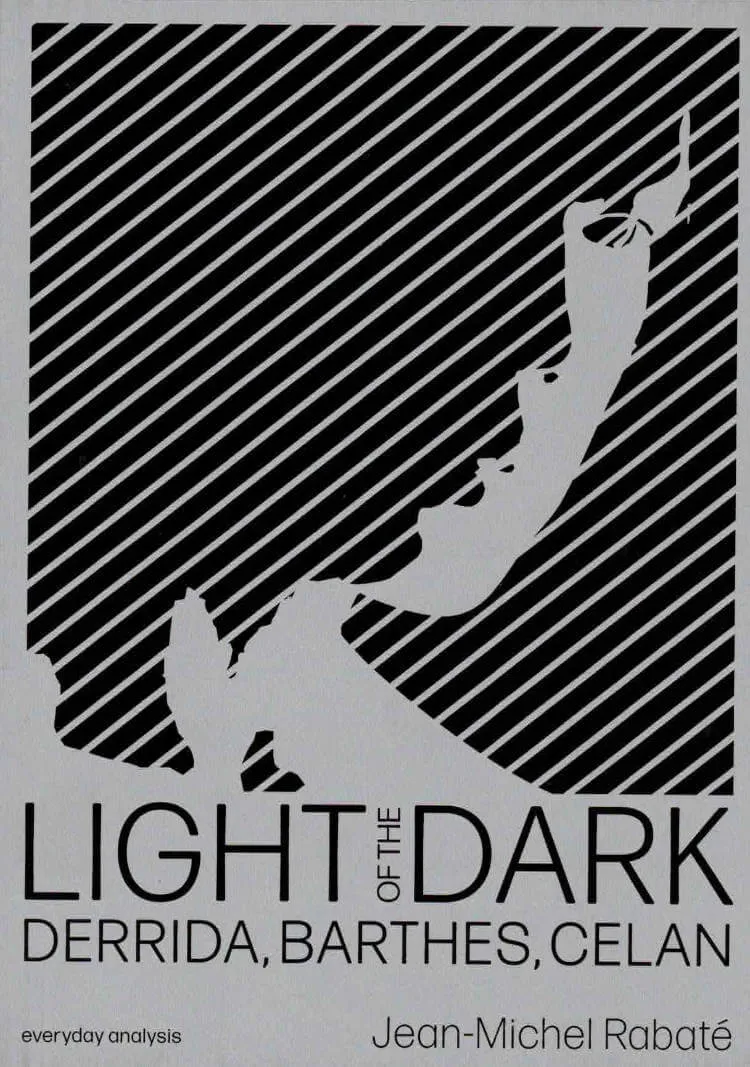
Light Of The Dark: Derrida, Barthes, Celan
Derrida’s essay “Aletheia” discusses the work of Japanese photographer Kishin Shinoyama. Reading Derrida, Rabaté investigates how, behind the classical concept of truth as a beautiful naked woman, Derrida argues that any photographic image tells the Truth, but a truth obscured as it comes to light: “nothing is more black than the visibility of light.” Staging a critical conversation with Roland Barthes’s theses in Camera Lucida and Paul Celan’s poems from Breathturn to Lightduress, Rabaté argues for a theoretical approach to truth that counters the prevailing truth-discourses of today.
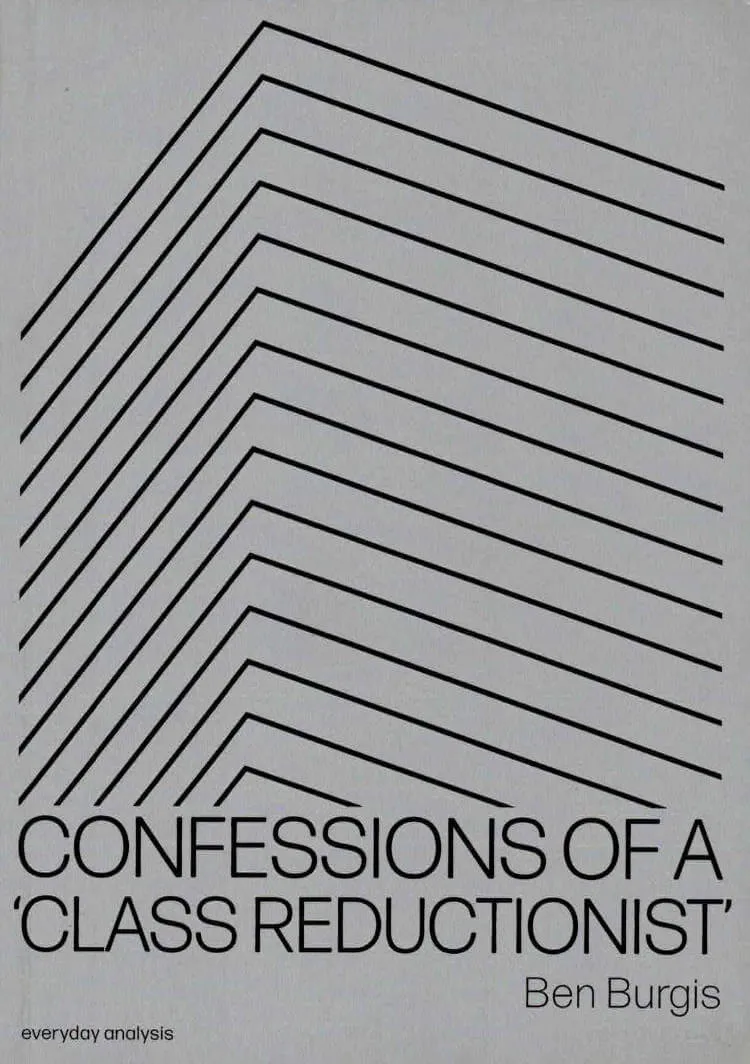
Confessions Of A Class Reductionist
In these essays, Ben Burgis criticizes fashionable radical-liberal identity politics and makes the case for universalism about rights and an unabashedly “class-first” approach to socialist political strategy. This may sound to some ears like a call for abandoning marginalized people. On the contrary, he argues, focusing on economic inequality empowers the victims of bigotry and retrograde social practices the resources and material security to stand up for themselves far more effectively than any diversity trainer or “anti-racism” consultant could represent their interests. As we face a rising tide of reactionary authoritarianism, it’s more important than ever to ditch the identitarian pieties of the recent past and think hard about how the Left can actually win.

The Completion
In The Completion, legendary philosopher Franco 'Bifo' Berardi offers his analysis of cognitive automation and artificial intelligence. Of the possible worlds imagined in Silicon Valley and in the media discourse around tech boosterism, none will likely materialise. Instead, the unpredictable will intervene in the future of predictive technology.
In this new edition, in a new venture for Everyday Analysis, Berardi's essay is accompanied by an introduction by Alfie Bown and a series of artworks and illustrations, new and historic- from Borges's labyrinths to the I-ching - offering a reading experience in the spirit of Berardi's work.

Manifest ( ) gathered angry woman loving
Chiara Di Luca, Emma Burel and 2 more
Words gathered from The Carrier Bag Theory of Fiction (Ursula K. Le Guin, 1986), Natural Enemies of Books (MMS, 2020), Non credere di avere dei diritti (Libreria delle donne di Milano, 1987), Dada Cannibalistic Manifesto (Francis Picabia, 1920) and WITCH (Rebecca Tamás, 2019). A first version of this poem/pamphlet was made in the context of See What I Mean, a workshop by Phil Baber at Antwerp’s Royal Academy of Fine Arts, october 2024.

Foraging Fireflies
Foraging Fireflies is a publication rooted in archiving, memory, and refusal amid ongoing violence and erasure in Palestine. Through personal stories, recipes, and reflections on foraging, farming and land-based knowledge, it insists on the presence of Palestinian lives, histories, and enduring connections to the land.
Gathering voices across generations, the publication documents practices of care, sustenance, and resistance—countering dispossession, greenwashing and colonial narratives. In a moment of attempted annihilation, preserving memory and knowledge becomes an act of defiance, continuity, and hope.
The publication naturally gives priority to Arabic in the design, allowing it to fully spread on the page, while English appears on narrower pages at the end of each contribution, unfolding like a booklet. The magazine is organized into four color-coded sections, each comprising multiple contributions that open with a full-page illustration by Aude Aboul-Nasr, portraying the land and its keepers. Printed in risograph, the colors gain a rich, vibrant texture. The publication also includes a poster and two postcards.
Creative Direction: SuperMelon | Besma Ben Said
Graphic Design: Chiara Vincenti Zakhia
Illustration: Aude Aboul-Nasr

Postmortem issue 1
Marina Mardas, François Peyroux and 1 more
How can we define and document our present?
Postmortem is a sensitive yet critical metaphor for a world suspended between collapse and reinvention—a diary of the now. Drawing together writers and artists from Europe and the SWANA region, this issue locates areas of tension that define our era. Far from a mere dialogue between regions, it exposes the inner and outer fractures of Western hegemony, unearthing shared emotions.
From reclaiming histories and narratives in the Arab world to deconstructing digital spaces as arenas of control and resistance—even exposing systemic exclusions embedded in blood donation policies—contributors reveal these tensions as a fertile terrain for dialogue and reflection.
Through critical essays, narrative writing, poetry, interviews, and contemporary art, the concept of Postmortem unfolds an in-between state where death and rebirth occur simultaneously. Across three interwoven chapters—Metaconnexion, Dissociation, and Fragmentation—the issue engages radically with body politics, othering, post-orientalism, surveillance, decoloniality, freedom, and resistance.
Both a chronicle and a hybrid object where text, design, and image interact, Postmortem archives a world in flux. Rather than prognosticate, it dissects the present as the essential site for reimagining our future.
Contributors : Sara El-Jazara, François Peyroux, Nadine Makarem, Soukaina Melhaoui, Louise Mervelet, Manon Schaefle, Marina Mardas, Irina Breitenstein, Amer Al-Dakar

From Palestine to "Xinjiang": Forced Labour and Capitalist rule
For a long time, Israel and the West, led by Europe and the United States, have used hasbara and neoliberal discourses to hide their colonial plunder of Palestine, while today China and Russia are also whitewashing their own imperialist practices by aligning themselves with authoritarin government and projecting an image of leading resistence to western hegemony.
This publication analyzes the structural similarities and differences between forced labor and capital exploitation of Palestinians and Uyghurs from left-wing perspective. The author hopes to dispel the myth of campism and call for inter-racial/-ethnic/-national proletarian solidarity against oppression of colonization, capital and totalitarianism.

Testimony From A West Bank Village: ‘Illegal Life’ Under Occupation
Resistance dispatch 002
In 2024, the documentary No Other Land, co-produced by Palestinian and Jewish activists from Masafer Yatta drew internattional attention at film festivals, bringing the long-standing occupation, demolitions, and violence in the region into broader public view.
The starting point of this publication emerged from an impromptu decision to draw a family tree covering roughly five hundred villagers of Umm al-Kheir. The author follows two threads simultaneously: one traces verifiable institutional and geographic transformations, tracking how a community is systematically rendered illegal through planning regimes and court rulings; the other comes from lived encounters, oral testimony, and the moments when people entrusted me with their names, their kinship ties, and their past.
Printed by Bleed Print

A Letter from a Tehran Prison
This story was written by a Chinese activist/writer about her arrest and detention during the waves of resistance in China in late 2022. To evade censorship, she disguised it as a translation—told through the voice of an Iranian Kurdish woman amid the “Woman, Life, Freedom” uprising happening at the same time.
After fleeing China, the author reclaimed the story through footnotes—uncovering hidden meanings and restoring its Chinese context. What first read as an Iranian story became, on re-reading, a coded Chinese narrative. Iran stood as both real and metaphorical—a displaced symbol, through which the interconnected struggles in different movements echoed.
The two waves of reading, months apart, became part of the story’s form. This “non-nonfiction” reveals a paradox: in China, truth must appear as fiction or elsewhere to be told—making the fiction more real than reality itself.
Two years later, the piece was translated “back” into Persian by an Iranian Kurdish activist. And now, it arrives here, in this zine of tripped, layered languages.
Author: Wu Qin
English Translation: Aaris WOO and Yixi
Farsi Translation: Somayeh Rostampour
Visual & Layout: Maoyi, If A, Hu Jiamin
Interior illustrations: Hu Jiamin
Published by Tofu Stand (Tofulogy 002)

Heatwave #2
In an era when many “radical” theorists were seeking out the peaceable expression of politics in “everyday utopias,” Joshua Clover stressed that politics was always, at root, a fiery confrontation with the powers that be. To these ends, he not only helped bring together a new generation of young communists but also pushed them to engage directly with the rising tide of class conflict, understanding full well that the street and the shopfloor are the true classrooms of the partisan.
Heatwave is, in a sense, an attempt to embody this spirit at a larger scale. Like Joshua, we hope to serve as an engine of engagement, linking our readers to their own history and to one another. Like Joshua, we adopt a principle of ecumenicism, refusing the false dividing lines inherited from the long dissolution of the last global communist movement. At the same time, like Joshua, we also insist on a theoretically rigorous approach that invokes the real complexity of revolutionary theory and history, actively seeks evidence for its claims, and engages in good faith with opposing positions. And, like Joshua, we maintain that the partisan project is inherently incendiary, requiring confrontation with the rulers of the world, rather than gradualist compromise or secessionist retreat. Finally, communism requires an unambiguous commitment to internationalism. Although our project is currently anglophone, we recognize that elaborating a partisan politics requires learning from the self-activity of the dispossessed at the global scale.
The name "Heatwave" echoes that of an old Situationist magazine ("Britain's most incandescent journal" of 1966), but with added urgency in an era where every summer is the hottest on record. While the statistical certainty of catastrophe is inescapable, "revolt" names many species of conflagration, including that peculiar variety we call communism. We must sift through the ashes to find it.

Survival Is a Promise: The Eternal Life of Audre Lorde
A bold, innovative biography that offers a new understanding of the life, work, and enduring impact of Audre Lorde.
We remember Audre Lorde as an iconic writer, a quotable teacher whose words and face grace T-shirts, nonprofit annual reports, and campus diversity-center walls. But even those who are inspired by Lorde's teachings on "the creative power of difference" may be missing something fundamental about her life and work, and what they can mean for us today.
Lorde's understanding of survival was not simply about getting through to the other side of oppression or being resilient in the face of cancer. It was about the total stakes of what it means to be in relationship with a planet in transformation. Possibly the focus on Lorde's quotable essays, to the neglect of her complex poems, has led us to ignore her deep engagement with the natural world, the planetary dynamics of geology, meteorology, and biology. For her, ecological images are not simply metaphors but rather literal guides to how to be of earth on earth, and how to survive—to live the ethics that a Black feminist lesbian warrior poetics demands.In Survival Is a Promise, Alexis Pauline Gumbs, the first researcher to explore the full depths of Lorde's manuscript archives, illuminates the eternal life of Lorde. Her life and work become more than a sound bite; they become a cosmic force, teaching us the grand contingency of life together on earth.

Terra Nova
Esther De Soomer, Rudolph Glitz
Terra Nova combines fragments from a novel in the making by Esther De Soomer, in which she explores the parallels between the loss of language and forest dieback, between climate grief and linguistic mourning. Reflecting on her own relationship with language and multilingualism, she traces the feelings of grief that accompany the loss of German, one of her mother tongues. Drawing on existing narratives — such as fairy tales and family stories — she examines the critical state of the disappearing Hambacher Wald in Western Germany and presents language as a means to name and hold on to things.

Fair: The Life-Art of Translation
Fair: The Life-Art of Translation, is a satirical, refreshing and brilliantly playful book about learning the art of translation, being a bookworker in the publishing industry, growing up, family, and class.
Loosely set in an imagined book fair/art fair/fun fair, in which every stall or ride imitates a real-world scenario or dilemma which must be observed and negotiated, the book moves between personal memories and larger questions about the role of the literary translator in publishing, about fairness and hard work, about the ways we define success, and what it means – and whether it is possible – to make a living as an artist.
Fair is also interested in questions of upbringing, background, support, how different people function in the workplace, and the ways in which people are excluded or made invisible in different cultural and creative industries. It connects literary translation to its siblings in other creative arts to show how creative and subjective a practice it is while upholding the ethics and politics at play when we translate someone else’s work.
Blurring the lines between memoir, autofiction, satire and polemic, Fair is a singularly inventive and illuminating book by one of the UK’s most original and admired writers and translators.

Mirror Nation
Much like Proust’s madeleine, a spinning Mercedes Benz ring outside Choi’s Berlin window prompts a memory of her father on the Glienicker Bridge between Berlin and Potsdam, which in turn becomes catalyst for delving into the violent colonial and neocolonial contemporary history of South Korea, with particular attention to the massacre by Korean government forces of hundreds of students taking part in the Gwangju Uprising of May 1980. Here, photographs, news footage, and cultural artefacts commingle with a poetry of grief that is both personal and collective. Inspired in part by W. G. Sebald and Walter Benjamin, Mirror Nation is a sorrowful reflection on the ways in which a place can hold a ‘magnetic field of memory’, proving that history doesn’t merely repeat itself; history is ever present, chiming the hours in a chorus against empire.
Don Mee Choi draws on friendships, literature and documentary materials to elucidate the personal griefs we suffer under the assaults of empire. Formally explosive and emotionally harrowing, Mirror Nation is a riveting investigation into the coded images that fuse memories of different times and places.
— Forrest Gander

SABR N°02 - Un scorpion dans l’épicerie
« Jusqu’à ce soir-là, je ne me doute pas qu’il y a des scorpions en France. Dans mon esprit, tous les scorpions vivent en Algérie. Je ne sais pas exactement ce qu’est l’Algérie, je n’y suis jamais allée, mais je sais, grâce à ma mère, que je suis scorpion “du deuxième décan”. »
Lydia Amarouche est directrice éditoriale, autrice et curatrice. Son travail puise dans l'exploration de documents d'archives, une matière première qui lui permet en particulier d’aborder la question du passé et du présent colonial. En 2020, elle fonde Shed publishing, une maison d'édition indépendante publiant des essais de critique sociale et politique ainsi que de la littérature jeunesse.
SABR/Collection est une série de publications qui rassemble des œuvres littéraires de format court et de genres variés. Dirigée par Nesrine Salem, la collection souhaite mettre en avant les macro-réalités des auteur·ices choisi·es pour rendre visible le caractère intersectionnel des luttes.

Pourquoi les chats sont dans la rue?
Manuel d’actions et réactions adaptées aux différentes situations, dessiné à partir de l’expérience d’Edwige Ehlinger.

Crassiers, une chronologie des luttes stéphanoises
"Ces deux collines jumelles sont pour moi des contre-monuments : un héritage industriel délaissé, en friche, conservant une puissance symbolique et politique. Les messages et les crassiers sont indissociables."
La première partie de cette édition est une collecte d'images intégrant des messages sur les crassiers (1948-2024). Ces images ont été récupérées principalement sur internet, complétées par un appel à collecte public sur les réseaux sociaux, ainsi que par la distribution de flyers et le collage d'affiches. Les images sont rassemblées chronologiquement et chaque message est recontextualisé dans son événement politique. La seconde partie présente les crassiers jumeaux en croisant plusieurs perspectives ; historique, géologique, urbaine, écologique et politique. Enfin je définis les crassiers en tant qu'outils et supports tactiques d'affichage public. Ce travail a abouti à cette première impression en janvier 2025.
Cette édition continuera à se développer au fil du temps grâce à des rééditions régulières, intégrant des messages découverts ou récemment apparus.

Ends
Lotte L.S.’s ‘selected poems’ (the scare quotes and lower case are important), which begin and end with standardised gaps produced by hitting the tab key with prefabricated empty space symbolising other gaps produced by other textual means, also associates those standardised gaps, these absences, wit acts of what she calls ‘seeing’, meaning seeing as self-seeing; a seeing that is often impossible to distinguish from blindness. The second line of her book ‘she could not see to see’, is modified by its last: ‘o I am so thankful for the seeing’; and the rhyme across distance upholds, if only just, a transitio in grammatical person, a transition in grammar that may also be, or that may represent, though these verbs too are contested—‘she went (an unconvincin verb: went)’—that may also be or represent a transition in experienced subjecthood The suggestion anyway is of development, passage, narrative; of motion towards completion; though the development is no way self-explanatory, and it is punctuated by double takes.
— from Danny Hayward's Preface: A note on Ends

Anarcadia
An epic poem in miniature, Anarcadia attempts to navigate the stark disintegration of the very world from which it’s made, mapping a catastrophe that seems both on its way and already occurring. Offering a collage of collapsing fragments – whirling ‘like bitstreams / in a blizzard’ – this sequence freefalls through a landscape of freak storms and surveillance satellites, ‘bio- / metric insects’ and ‘full- / body scanner[s]’, ‘leaving nothing left / undamned’. Continuing the sleek work of the previous collections, Hand’s command of language generates a livable terrain, humming with echoes of the pastoral tradition – from Sidney to Shelley, from Geoffrey Hill to J.H. Prynne. Hand’s poetry renders ‘an animate / climate’, through which we are forced to face the debris of a system that has failed us and a planet we, in turn, have failed. Nevertheless, the poet shows us a glimpse of the future. At the heart of Anarcadia is something of a love poem, revealing beauty in the art of losing, a way to ‘Re-salvage / sylvan camouflage / out of obscure selvage’, attempting a recovery. ‘Rife with hybrid vigour’, this book confirms Dominic Hand to be a poet of singular, clear-sighted vision, unafraid to see things as they are, ‘risking / bewilderment’.
– Rowland Bagnall