Books
Books
in random order

Jokes
Jokes is a crash course in psychic disintegration for the genocide generation. Ever wondered what a spoonbill thinks of peremptory norms? Or what a hippo can do with an egg-slice? What’s the secret of the success of men like David Papazian and Johnnie Moore, who get to run the Gaza Humanitarian Foundation, while poetry-reading demographics, from the higher and intermediate managerial and professional occupations down to the footwells of unskilled manual self-erasure, lie around standing up for themselves and fornicating with the void? An Author’s a Joke, to all manner of Folk, wherever he pops up his Head, his Head, wherever he pops up his Head, according to Fielding. But why? The 27 jokes of Jokes unfold over the course of a duration-block, in an exclusive interior, under new management, in the capable trotters, paws, hooves, claws, tentacles, jaws, beaks, and blowholes of a fabulous parliament of beasts, some drunk, some dead, some leery, some high, some tender, in the tradition of Boccaccio or Isaiah. They are all funny.
Designed and typeset by Phil Baber.

Vampyroteuthis Infernalis
L'édition inédite et définitive (établie à partir des tapuscrits originaux en français) du traité fabuleux du philosophe tchéco-brésilien Vilém Flusser (1920-1991), une fiction philosophique et poétique qui, par des chemins détournés, nous confronte à la violence et à l'impasse des sociétés contemporaines.
Un monstre venu des profondeurs de l'océan, un poulpe vampire. Sa violence rappelle les nazis, ses mœurs sont libertaires et libidineuses. C'est une créature infernale, cannibale et brutale, pouvant changer de couleur à volonté, et dotée de trois pénis.
Et c'est notre cousin.
Dans cette fable fantastique, Vampyroteuthis infernalis émerge, non des abysses de l'océan, mais du plus profond de nous-mêmes pour nous tendre un miroir, nous montrer à quel point nous, les hommes, sommes ses proches parents et que nos histoires, nos sociétés, nos modes de vie ne sont, au fond, pas si différents.
Ce texte délibérément provocateur du philosophe tchéco-brésilien Vilém Flusser (1920-1991) n'est ni scientifique, ni objectif : c'est une fiction philosophique et poétique qui, par des chemins détournés, nous confronte à la violence et à l'impasse des sociétés contemporaines.
Flusser avait écrit ce texte en français (outre des versions en allemand et en portugais), et ce livre est la première édition du texte original en français. Il est accompagné des fantastiques dessins de son ami l'artiste et « zoosystémicien » français Louis Bec (1936-2018), co-auteur du livre, traduisant en images pseudo-scientifiques les chimères vampyroteuthiques.
Des essais de Marc Lenot, Élise Rigot et Florent Barrère éclairent la démarche de Flusser et de Bec.

Celebrating the Michigan Womyn's Music Festival
Sinister Wisdom 103: Celebrating the Michigan Womyn's Music Festival honors the forty-year legacy of the Michigan Womyn’s Music Festival (1976–2015). Sinister Wisdom 103: Celebrating the Michigan Womyn's Music Festival celebrates this embodiment of radical feminist separatist collaboration, transformational self-defined autonomous spaces, a commitment to sisterhood and matriarchal culture, and a musical city sprung from the earth for one week in the woods.
A collective of five womyn each with a deep connection to Fest operated by consensus to create this issue. Striving to represent a range of womyn’s voices, values, traditions, and experiences of Fest, the collective highlighted what Fest has meant to generations of womyn, documented its chronology, and bore witness to the power of this community. Sinister Wisdom 103: Celebrating the Michigan Womyn's Music Festival includes womyn from multiple races, geographies, sexualities, generations, and gender and other social identities. Just as Fest brought together womyn from various backgrounds, our collection includes a range of artistic experience, from seasoned authors and photographers to those womyn new to publishing.
Sinister Wisdom 103: Celebrating the Michigan Womyn's Music Festival remembers the transformations, possibilities, and hopes for spaces cultivating the ongoing empowerment of womyn.

We, the Heartbroken
What do we do when the world breaks our hearts? Racial capitalism in the age of pandemic continues to crush ever more lives and spirits. Yet, we are told repeatedly to master, to overcome, to be resilient. Beneath this fragile pretence of coping, many of us have grown used to living with profound and fathomless sorrow.
In graceful prose, Gargi Bhattacharyya navigates collective grief and how it mingles with personal tragedy. Alongside love and joy, perhaps grief is what makes us human―and while its pain scrapes our wounds, its presence can help us renounce that which exists and build anew.
Heartbreak is the class consciousness of our times. So, it is up to us, the heartbroken, to learn again to heal—and remake the world.
"We, the Heartbroken reckons with loss and grief’s fullness and its surprising abilities to make us alive to one another … entranced by one another again. We are called upon to do this work, to allow for heartbreak to engender capaciousness and collectivity."
— Full Stop
Gargi Bhattacharyya lives and works in London. Their work includes writing on racism, racial capitalism, austerity and war.

The Almond
“Today is the day with the letter,” Celan writes to Bachmann on October 30, 1957. Theadora Walsh’s essay-poem, The Almond concerns, for I hesitate to write “about” or “is in relation to”, the love between Paul Celan and Ingeborg Bachmann. Two Austrian writers flung across Europe by the atrocities of the Holocaust, excavating the narrows of a language not theirs, or taken from them. An almond is the closest two people can be, and becomes the binding structural conceit of the book, two segments reaching across the blank page to each other, across history, time and language.

It Was Like Watching
Dear ____,
I happened to look for a while out of “my” window on the 17th floor Palliativstation of the Wiener Allgemeinen Krankenhauses last night, where an enormous orange moon was hanging about, consorting with a lick of dark cloud, near to the tiny gaggle of skyscrapers. I didn’t have much to say for myself and so it just sort of looked back at me.
Every day friends and well-wishers come here and as always I want to run to my room and read a book until they’ve left but for the first time in my life my room is also the room they want to visit, and so I can’t. I wrote down yesterday as best as I could the words of my last long conversation with Marina: there might be more, but the words are running away from her now, which only makes you realise how small and insignificant they are, fleeing from something (from someone) who remains exactly who they were even in their absence: like dust falling from the sun.
*
A voyage in the insight which comes as a kiss and follows as a curse, made after you ran out of things to say.——first halting efforts at mutual understanding——love letters from twelve years ago. journal entries from fifteen years before lick at the edges like flames. Opaque coloured shadows, projected in three dimensions——of a——future that——has. never ceased to exist and which——Doesn’t——.——.——arrive to speak about their fears.—— Beginning with a naked bathroom selfie.
An attempt to live nonjudgmentally and without fear, against the desire to be something other than who you were, as a basic form of class hatred, a fear of the common and of everything that happens there, near speechlessness, trailing off, only sometimes coming back to life again, shame dies so that everything else can be saved, and everything else remains present against the background of this absence, beneath the harsh overhead light, as you pull on the pathetic, unassuming string of the pullcord.
Dedicated to one person, written by one another. “Poems written by / different poets / are my nakedness.”

les petites histoires
Sam Buouffandeau, S. M. Drogo and 2 more
les petites histoires sont quatre courtes fictions contemporaines. Entre le lonely langoureux New York des années deux mille, le pont poétique et capricieux de Louis 2 de Bavière, l'histoire vraie de Sandy Stone dans les seventies et la satire cinglante et drôle d'une galerie d'art, ces livres sont de brefs univers vivants et curieux.
En 2025, quatre petites histoires sont racontées par quatre auteurices dans quatre livres : L'effondrement du pont de Sam Bouffandeau ; The Gallery de S. M. Drogo ; Exit de Juli Le Nahelec; «Que faire de Sandy Stone?» de Mia Trabalon.
L'édition des petites histoires a été imaginée par Élise Comte, Chloé Delchini, Perrine Estienne, Gabriel René Franjou, Justine Gensse, Bastien Hauser, et Cyprien Muth. Ce collectif d'éditeurices est né à Bruxelles, où les petites histoires ont été imprimées, chez Graphius.
La maquette, réalisée par Chloé Delchini, à été composée avec Otto, une typographie dessinée par Sam de Groot et Laura Opsomer Mironov, chez Dinamo Typefaces.

this simulation sux
Jr Ting Ding, DeForrest Brown Jr.
this simulation sux is a collection of speculative essays and personal observations commissioned by global cultural institutions and local counterculture zines between February 2020 and April 2021.
"During the moment of pause brought on by the initial lockdown, we chose to write as a form of self care and mediated therapy; writing, for us, is a way to process, orient, and grasp for a moment of clarity in the ever changing media and cultural landscape. In this informational era, in which our attention is in very high demand, the amount of content we are expected to consume is endless. Beset with political unrest, economic uncertainty, and waning emotional bandwidth, we have become datapoints in the vast and saturated marketplace presented to us as “society.”
[...]
Flânerie, the French term describing the act of walking and observing, became a part of our daily ritual; we lapped the outer edges of the island of Manhattan and exploring various neighborhoods during the peak of the pandemic. The images presented on this book’s jacket were captured on these walks, documenting the absurdities of everyday life in this fraying simulation. Personal, anecdotal narratives of an imagined reality are represented through the images, which are placed alongside our speculative observations derived from historical data.
We hope that these writings can provide others with prose and information that can be applied like an antidotal balm to treat our communal ailment of future shock."
—Ting Ding 丁汀 & DeForrest Brown, Jr.

The Letters of Rosemary & Bernadette Mayer, 1976-1980
Bernadette Mayer, Rosemary Mayer
This collection of the correspondence between artist Rosemary Mayer (1943-2014) and poet Bernadette Mayer (born 1945) occurs between the years of 1976 and 1980, a period of rich creativity in New York's artistic avant-garde, and one which includes the development of major bodies of work by the two women.
Rosemary Mayer was creating sculptures, watercolors, books and temporary monuments from weather balloons and snow, while Bernadette Mayer was working on some of her best-known publications, including the book-length poem Midwinter Day and the poetry collection The Golden Book of Words.
Spanning the worlds of Conceptual art, Postminimalism, feminism, the New York School, Language poetry and more, these letters elucidate the bonds of sisterhood through intimate exchanges about art, relationships and everyday life.

Au fort les âmes sont
Exclusive works designed by Laure Prouvost for her carte blanche at the Mucem in Marseille, a series of immersive and poetic installations in the heart of Fort Saint-Jean, photographed by Raphaël Massart for this cut-out book, between an artist's book and an exhibition catalogue, accompanied by drawings and critical texts.
For the Mucem, Laure Prouvost has created a series of immersive installations in the heart of Fort Saint-Jean. Repurposed everyday objects, glass sculptures, sound mirages, and underwater videos shot in the depths of the calanques and around Frioul compose a sensitive and poetic universe. Between fiction and reality, the artist invites visitors on a sensory journey where everything is transformed: forms, narratives, and life itself.
The book was conceived as a visual journey leading from the Old Port of Marseille to Fort Saint-Jean and into the very heart of each work. To recreate this encounter between artist Laure Prouvost and the Mucem, there is a constant dialogue between the exterior—the sea, the stone of the fort—and the interior—the intimacy of the installations that unfold in the air, in the bowels of the earth, and underwater... Designed in close collaboration with the artist, the book captures this moment through photographic work carried out especially by Raphaël Massart and an evocative form designed by the artist: like a book that also floats in the Mediterranean. To accompany this visual unfolding, a booklet embedded in the heart of the book contains texts by Hélia Paukner, curator of the exhibition, and Mathilde Roman, art historian.
Published on the occasion of the eponymous exhibition at the Mucem, Marseille, in 2025.

Of · The · Abyss
A sequence of ten poems; in separated continuance, an outcry that ventriloquises and manifests languages of exclusion and yet with dogged persistence protests them.
“Oh strike the light, float the boat, for sake of common peril they are fallen away as gathered up in sight of lamentable in- difference and will go down against us”.

SIXFINGERAFTERWARDS
William Rowe, the poet, and eminent translator of Latin American poetry from Vallejo to Raul Zurita & others presents his latest book of poems, Sixfingersafterwards, in six sections. The title word ‘afterwards’, which refers to a large part of the first section of poems takes inspiration from an Ayahuasca session. According to Freud, Afterwardness or Nachtraglichkeit as originally harmless memory can later be re-experienced as traumatic through the lens of new mature understanding. The Marxists view the capitalist state as inherently connected to a ‘death culture’ where the pursuit of profit overrides the human life, turning the system into a form of a vampirism that consumes the living labour. All the sections are written with a deep commitment, elaborating a painful truth in a remarkable open poetic sensitivity. Our language ravaged by ‘vampirism’ where ‘Language itself seemed to form death communiques.’ Other sections are about love, ‘when my daughter says she loves me very much.’ Or a section of Quechua poems translated by Rowe, which shed light on the extensive range of his writing and interconnectedness of his creativity. The poems in this collection leave nothing out of the traumatic pain from capitalism nor its ‘dark dark shine of money.
I dreamt of Rowe, reading these poems to the track called Walking on the ceiling, by the late Chicago blues guitarist, who played with six fingers. I renamed it to Walking the ceiling toward eternity, to honour the Sixfingersafterwards. A must-read!
- Ulli Freer

Civilization #7
Richard Turley, Lucas Mascatello
The occasionally-published broadsheet Civilization was founded in New York in 2018 by Richard Turley, Lucas Mascatello, and Mia Kerin. Its origin was as a response to New York City life, but has now transformed into an art project that gathers language, overheard conversations, secret recordings transcribed by rapid-capture software to produce a dense, rhythmic assemblage of texts from both public and private spaces alike. As a result, Civilization’s design texture has found fans in the fashion world, leading to collaborations with Calvin Klein and Junya Watanabe.
The publication has also enjoyed contributions from a wide array of artists, writers and personalities including: Aaron Maine, Alis Atwell, Amos Poe, Amalia Ulman, Aria Dean, Alicia Novella Vasquez, Bill Drummond, Biz Sherbert, Babak Radboy, Carly Busta, Darcie Wilder, Echo Wu, Ella Plevin, Eric Johnson, Honor Levy, Iris Luz, Mel Ottenberg, Isabelle Rea, Joey LaBeija, Jordan Barse, Lovefoxx, Maddie Quinn, Patrick McMullan, Rachel Rabbit White, Sybil Prentice, Thom Bettridge, and Zans Brady Krohn.

Weird Fucks
A brilliant novella from a legendary figure in American fiction.
A young woman drifts through dimly lit bars and rented rooms, reporting from the erogenous zones of New York and Europe. Encountering increasingly bizarre sexual situations, she turns her curious, comic, and fierce eye onto the contemporary world of sex and desire.
The men of this world evade and simper, they prey, preen, and fall hopelessly in love. In the narrator’s deadpan portraits, we see young women indulging their freedom through hope and disappointment, and young men wearing various guises of masculinity.
This novella surprises with unlikely fucks, disturbing fucks, outlandish fucks, and some truly weird fucks – all written with the smart, elegant, and tough style which could only be that of Lynne Tillman.

That They Were at the Beach
For this collection of poems and prose, Leslie Scalapino has gathered four sequences into what she calls an “aeolotropic series.” The poems reflect each other like crystals and change like highly polished glass illuminated by a shifting light. They follow the mind from thought and observation to afterthought, reflection, and obsession.
Leslie Scalapino (1947-2010) is the author of thirty books of poetry, prose, inter-genre fiction, plays, and essays, including numerous collaborations with artists, writers, and dancers. Her long poem way (North Point Press, 1988) won the Poetry Center Award, the Lawrence Lipton Prize, and the American Book Award from the Before Columbus Foundation. Scalapino taught at the Naropa Institute, Bard College, Mills College, and UC San Diego. She was the editor and founder of O Books.

ROT
ROT is a publication reflecting the research “Wicked technology/Wild fermentation,” by Sara Manente that focuses on forms and practice of fermentation as ways to rethink bodies and their making. This glossy magazine performs research, aiming to infect the reader, and questioning how to spread, publish, and help the work survive.
Sara Manente is a performance artist, dance maker and researcher born in Italy and living in Brussels. She is interested in narrowing the distance between the performer, the audience, and the work. Her research starts from a dance practice that problematizes perception, translation, and ways of doing. Her work comes out in hybrid forms: book launch, 3Dfilm, written text, interview, choreographic piece, workshop, telepathic experience, collaboration, et al.

49 Venezuelan Novels
Sebastian Castillo, Elisa Díaz Castelo
This new bilingual edition of Sebastian Castillo's long-out-of-print first book reintroduces a classic of American microfiction and features a translation into Spanish by acclaimed Mexican author Elisa Díaz Castelo.
Forty-nine pages of unique and surreal micro-fiction, Sebastian Castillo’s 49 Venezuelan Novels is a magical book with a new story on every page. Full of depth and imagination, Castillo uses imagery in a simple yet intense way. From stories of fish markets to spiteful violins, it almost seems that these novels are snippets of family stories long passed down, just now put to paper. With the nature of a born storyteller, Sebastian Castillo provides the readers of this fantastic read with gorgeous stories that define micro-fiction.

Retail Vérité
Once upon a time there was a shopping center just off Dam Square, a stone’s throw from the Madame Tussauds, not far from Primark, two streets across De Bijenkorf overshadowing the Magna Plaza, and just a couple doors down the Royal Palace in the middle of Amsterdam. It was the place where drag queen Tuu Lipa performed and Yeung sold eau de car engine oil. It was also where Mr. R looked for his human lover, where Inez became a millionaire, and where Yahoo launched its metaverse. “Welcome to the YAniverse,” greeted the Yahoo assistant…
Retail Vérité is the outcome of writing workshops organized by A Maior at San Serriffe. Through a blend of improvisation, larping and speed dating, the participants sketched characters and dialogues on-site.
This cohort featured Anouk Asselineau, Alva Bücking, Katherina Gorodynska, Chieri Higa, SeungJi Jo, Simon Marsiglia, Christina Ntanovasili, Young Eun Park, Ignacy Radtke, Matthew Senkowycz, Maja Simisic, Mehmet Süzgün, Simone Wegman, Bruno Zhu and others.
A Maior is a clothing and home goods store located in the outskirts of Viseu, Portugal. Since 2016, an eponymous exhibition program has taken place within the shopping environment. A Maior is managed by the staff, the artist Bruno Zhu and his family. A Maior has been featured in exhibitions at Melly, Rotterdam; Frans Hals Museum, Haarlem; Kunsthalle Freeport, Porto; X Museum, Beijing; Life Sport and BQ, both Berlin. In 2022, A Maior was the writer-in-residence at San Serriffe in Amsterdam, who commissioned Retail Verité, A Maior’s first novella.
With A Maior, Anouk Asselineau, Alva Bücking, Katherina Gorodynska, Chieri Higa, SeungJi Jo, Simon Marsiglia, Christina Ntanovasili, Young Eun Park, Ignacy Radtke, Matthew Senkowycz, Maja Simisic, Mehmet Süzgün, Simone Wegman, Bruno Zhu.
Designed by Elisabeth Klement
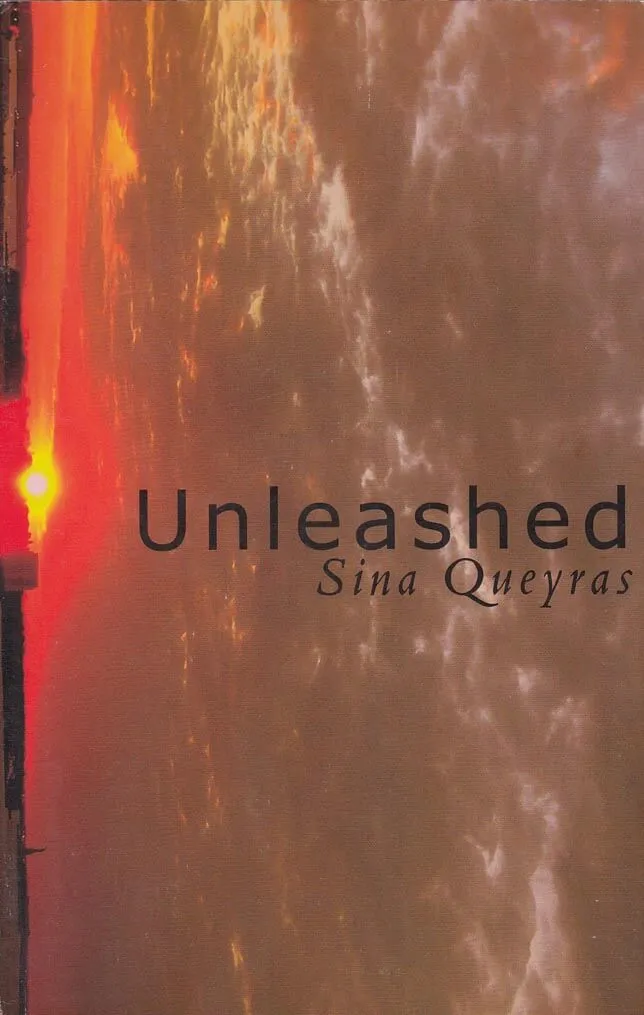
Unleashed
05/09/04 Now she is blogging. Now she is sitting on the black couch listening to the sirens wail and the rain fall. Now she is thinking of oysters. Now she is wondering why this is worth sharing. Now she is thinking, how decipher what is worth reading? Who is to say? Sifters. She thinks we have become a nation of sifters. So began a three-year experiment in blogging. An experiment begun for many reasons—a way for an expat to keep in touch with fellow Canadian writers and artists, a way to come to terms with the increasing relevance of the internet in literary lives, and a way to figure out why, after decades of gains, women writers are still grossly underrepresented in critical dialogues.
With an afterword by Vanessa Place.

Sung Hwan Kim: A Record of Drifting Across the Sea
A richly illustrated exploration of Sung Hwan Kim’s complex record of migrant stories, displacement and belonging, border-crossings and translation.
In A Record of Drifting Across the Sea (2017–), Sung Hwan Kim looks at histories of migration. The artist parses the traces –archival and bodily – left by undocumented Korean migrants who came to the US by way of Hawai’i at the turn of the twentieth century, and ponders over their impact on other migrant and indigenous communities. As an ongoing film and installation series, comprising two chapters and a third in progress, A Record unsettles the limits of the ‘one work’ with its distributive, open-ended and collaborative nature.
In this speculative inquiry, Janine Armin explores each chapter in Kim’s multi-layered work as a mycelial network of feelers entangling and extending the wider work in-process. Engaging history through embodiment, folklore and myth, as much as through archival material, Kim navigates and crosses the boundaries between displacement and belonging. Focusing on the artist’s attempt to escape from representation, Armin illuminates and attends to the different stories and non-sovereign ways of being together towards which his work points us.
This title is part of the One Work book series, which focuses on artworks that have significantly changed the way we understand art and its history.

Les Voies du Paradis
Les Voies du Paradis rassemble ce qui subsiste d’une œuvre perdue : les seules notes de bas de page d’un texte manquant, laissées par un chercheur après son décès et éditées par Peter Cornell. Ces notes et leurs illustrations forment un ensemble incomplet, qui se donne ici à lire à travers ses manques. Un fil – d’Ariane ? – se tisse entre les diagrammes, les figures de spirales et de labyrinthes – de Cesare Ripa à Ernst Josephson et Robert Smithson, des Templiers aux spirites et aux surréalistes – qui parcourent le texte et se font écho, comme les éléments d’une énigme ou des figures ésotériques. Le « Paradis » dont il est question ici, c’est le rêve de la connaissance absolue, la saisie de l’ordre caché des choses, à laquelle aspirent autant poètes et artistes que mystiques et scientifiques…
Paru en Suède en 1987, Les Voies du Paradis y a acquis la réputation d’un livre culte. Peter Cornell y propose une perspective inédite sur les liens entre art, littérature, spiritualité et occultisme, dans un texte à mi-chemin de l’essai et de la fiction, de l’érudition et de la mystification. La volonté de savoir y est mise en scène comme une quête prise au piège de l’irrationnel ; les notes s’assemblent par logique associative, programme éclectique qui tente encore de retrouver un centre perdu – comme les algorithmes auxquels est confiée aujourd’hui la tâche fantasmée de mettre en ordre les connaissances humaines.

University of California Press
Novel Palestine
Palestinian writing imagines the nation, not as a nation-in-waiting but as a living, changing structure that joins people, place, and time into a distinct set of formations. Novel Palestine examines these imaginative structures so that we might move beyond the idea of an incomplete or fragmented reality and speak frankly about the nation that exists and the freedom it seeks. Engaging the writings of Ibrahim Nasrallah, Nora E. H. Parr traces a vocabulary through which Palestine can be discussed as a changing and flexible national network linking people across and within space, time, and community. Through an exploration of the Palestinian literary scene subsequent to its canonical writers, Parr makes the life and work of Nasrallah available to an English-language audience for the first time, offering an intervention in geography while bringing literary theory into conversation with politics and history.
NORA E. H. PARR is a Research Fellow at the University of Birmingham and at the Center for Lebanese Studies. She coedits Middle Eastern Literatures.

Language Arts
Justin Allen’s Language Arts takes up writing as an integral part of an interdisciplinary art practice. Across poems, essays, lyrics, screenwriting, and drawings, works touch on themes of music and subculture, African diasporic language, visual art, and more, bringing together Allen's numerous influences into one collection.
Justin Allen's Language Arts is the 2022 Open Reading Period Editors' Pick.
About the author
Justin Allen is a writer and performer from Northern Virginia. With a background in tap dancing and creative writing, his work often combines a variety of art forms. He has been commissioned by The Chocolate Factory Theater and The Shed and has held residencies at ISSUE Project Room and the Center for Afrofuturist Studies. He has received support from Franklin Furnace, Foundation for Contemporary Arts, and the Jerome Foundation, and shared his work both stateside and abroad.
"In Hatnaha, Justin Allen has reinvented the myth of Atlantis for our postlapsarian age. His art of language cannibalizes the American grammar book, spawning gorgeous new idiolects. Through the buzz and rumble of Afro-diasporic sound clash, Allen hears the frequency of bodies becoming ungovernable. Set to a soundtrack of punk phonotactics, Language Arts is just the book to toss over the barbed wire fences that cordon us off from our post-Reparations future." —Tavia Nyong’o
"Language Arts shares a name with an elementary school class I always wished was more “art” and less rote memorization, and it fully delivers on that desire with its spellbinding assortment of prose poetry, screamo lyricism, screenplay, conlang, and Black political fiction as vibrant as any comp on physical media or stream. nunats nen-tuk nutaks dipa. Justin Allen creates an executable file, one that's bound to spread like Soulja Boy's "Crank That" renamed “britney_spears-hitmebabyonemoretimeremix.mp3," but without the need for tricknology." —Devin Kenny

BRICKS FROM THE KILN #8
Matthew Stuart, Andrew Walsh-Lister
This eighth instalment of BFTK is on letters and letters. It takes the double meaning of this word as its point of dispatch, inviting recipients to think through and respond to — directly and indirectly — ideas around correspondence, addressing and alphabets. What it means to be in correspondence with somebody, the initiation and continuation of this communicative exchange and what happens when it is severed or lost. How to write directly towards a you, to you; to a particular reader, object, locale. The volume is littered with letters. There are letters about letters, letters to letters, letters that crease, fold, tear and rip, letters that are sent and lost, found and read. There are letters that pile up, their combinations arranged and rearranged to form comprehensive linguistic logics, and there are letters that are simply letters. Contributions sit in eight-page signatures, of which there are twenty-six in total. Of the eight hundred bound copies, twenty-six are left unbound, returned to discrete correspondence, loose abécédaire units for exchange — letters to be leafed through and addressed once more.
PLEASE TAKE A LOOK AT YOUR
SHADOW IN THAT MIRROR
Chang Yuchen
(pp.1–8, A)
BESTIARY FOR A NON-GENETIC DESCENDANT
Bhanu Kapil
(pp.9–16, B)
THROW STUFF AWAY
Hannah Regel
(pp.17–24, C)
THE MOON HATH XXX DAYS:
LETTERS FOR LETTERS
Helen Marten
(pp.25–32, D)
WHAT DOES THE LOSS FEEL LIKE?
Meg Miller
(pp.33–48, E, F)
LIGHT UP THE A
Kate Briggs
(pp.49–56, G)
THE POSTCODE CONNECTION
Rebecca Ross
(pp.57–72, H, I)
(LETTER) TO S… LABYRINTH-CORTEX
Michèle Métail, trans. Thea Petrou
(pp.73–80, J)
RACKETY CORRESPONDENCES /
A CORRESPONDING RACKET
Nisha Ramayya
(pp.81–96, K, L)
THE COIN OF THE REALM
Lucie Elven
(pp.97–104, M)
UNFOLDING FOLDED FANTASIES:
A CORRESPONDENCE WITH THE SEATED SCRIBE
Fatema Abdoolcarim
(pp.105–112, N)
DEAR DEAREST DEAR MOTHER
Alice Butler
(pp.113–120, O)
/ DON’T BOTHER THE CREASE
Tice Cin
(pp.121–128, P)
FEELING LETTERS, SEEING BLUE
Gemma Blackshaw
(pp.129–144, Q, R)
LINES OF GRACE AND DISGRACE
Francis Haselden
(pp.145–152, S)
AN ABC OF MIMICRY
Jeffrey Stuker & Jan Tumlir
(pp.153–176, T, U, V)
ADDRESS
Céline Mathieu
(pp.177–184, W)
MY VOICE FOLDS YOU
Thea Petrou
(pp.185–192, X)
A LONG DISTANCE LULLABY
Vibeke Mascini
(pp.193–200, Y)
DEBT OF GOLD CAN BE PAID OFF,
DEBT OF KINDNESS IS CARRIED OVER DEATH
Chang Yuchen
(pp.201–208, Z)
LETTERS ON LETTERS
FROM LETTERS ON LETTERS
Matthew Stuart
(covers)