rile*books

Search books

Search books by title, author, publisher, keywords...

Cover of The Hungering Years

Host Publications

The Hungering Years

Summer Farah

€20.00

Utterly magnetic, Summer Farah’s debut poetry collection The Hungering Years is a rush of breathless song, voicing confessions so often left unsung amidst personal and collective crisis. “I am afraid of asking the right questions,” Farah admits. But through intimate conversations with fellow Arab-American writer and literary ancestor Etel Adnan, this work finds the courage to ask: What is art? An escape? A reflection? Another unhealthy attachment? Though the answers are elusive, what steps into the light is a collective of friends whose genuine care and companionship anchor these poems through their spiraling search. 

“I am always looking for Palestine, and yes, I am always looking for love,” these poems croon, holding so much of the world even as they trace an inheritance of displacement. The Hungering Years conjures startling landscapes where we may also experience what it is to be consumed by obsession, echoing with songs by Mitski, iconic scenes from Supernatural, and the sound of the Mediterranean Sea. But as Lena Khalaf Tuffaha writes in her introduction, Farah’s repetitions “are more than echo. They are a vernacular of this unspeakable era,” anchored in “questions that keep us reaching toward life,” and questions toward each other.

Building glass structures from her questions, Farah pushes their architecture almost to breaking. Then breaking, the spirit—luminous, actualized—reveals itself through the cracks. Through the landscapes of California, Palestine, and all of the distances in between, there emerges a new sense of devotion to what is possible which might thrust us, together, “off the edge, / in love, towards God.”

With an introduction by poet, essayist, and translator Lena Khalaf Tuffaha.

Summer Farah’s debut collection The Hungering Years bubbles with language, is desirous, sensitive, and hysterically (ferociously) human. “I” is I, is mother, is the guiding wisdom of Etel Adnan, is Palestine, is the work that writes Palestine into the future, is the epistolary thread of love that holds this daring young poet’s work together. “i am an enemy of dust i am an amalgamation of everyone i have ever loved …” writes Farah, enlisting us in this vital poetry against the death cult, lush with solidarity, teeming with the futurity we need. — Wendy Xu, author of The Past

What I most adore about Summer Farah's work, and what most comes alive in The Hungering Years is that there is no such thing as an unworthy affection, nothing unworthy of close and careful attention, nothing unworthy of being pressed up against the undeserving world and becoming something greater. This is a gift and a delight, and through that gift, these poems are richly and generously populated, and teeming with beauty. — Hanif Abdurraqib, author of There’s Always This Year

Summer Farah's words ease me, compel me, motivate me. Her work is agile and brilliant, her mind potent and illustrious—like air, a song, rhythmic and concise. These poems move me to my core, rupturing something deep inside of me about place, Palestine and Etel Adnan. "I memorize no language/but their voices," she writes as I memorize her words again and again, uttering gratitude that I get to be alive and read Summer's words. This book is both a spell and an oracle. — Fariha Róisín, author of Survival Takes a Wild Imagination

Published in 2026 ┊ 88 pages ┊ Language: English

recommendations

Cover of they/she/he: ritual to forget your (un)becoming

Host Publications

they/she/he: ritual to forget your (un)becoming

dezireé a. brown

Poetry €20.00

they/she/he: ritual to forget your (un)becoming by dezireé a. brown is a momentous debut, tracking a self-proclaimed anti-hero’s quest for liberation through the transformative ritual of writing through the past, present, and future. Influenced by video game worlds, choose-your-own adventures, and a multifaceted collective of Mesopotamian goddesses, this collection is a conjuring of selves encountered through gender, and they arise to meet one another in all their Black queer joy and rage. 

Communing with an ancestry of writers, healers and found family, brown's collection maps the odyssey of a life lived in transition and serves as an archive of Black transmasc experience, of every burning crucible, and every hard-won survival. “NO SPECTATORS ALLOWED” they/she/he asserts, insisting on our implication in this narrative, inviting us to traverse the intricate worlds crafted through its experimental poetic forms. 

Cover of Black Bedouin

1080 Press

Black Bedouin

Mohammed Zenia, Tenaya Nasser

Poetry €30.00

Black Bedouin, by Mohammed Zenia and Tenaya Nasser is a book of the IMMEDIATE — written immediately (in the span of five days, very literally at the printing press at 1080PRESS) in response to the current genocide against, and in solidarity with, the people of Sudan and in the context of immediate echoes in Palestine, Congo, Pakistan, and more — and throughout it all imbued with the immediacy that the global situation demands of us and our moral consciences. Black Bedouin rings in the creative immediacy of New York School all-night-writing-to-mimeograph-next-day with the political immediacy of a this-is-happening-right-now Crass single or Etel Adnan's incomparable (but here spiritually correlated) The Arab Apocalypse. In other words, Black Bedouin hits every star in a very cool and specific constellation. — Dave Morse

Cover of Love Is Colder Than the Lake

Nightboat Books

Love Is Colder Than the Lake

Liliane Giraudon

Poetry €18.00

Searing in its energies and mysterious in its icy depths, Love is Colder than the Lake is a tour-de-force of the experimental French poet Liliane Giraudon's power and range. 

Love is Colder than the Lake weaves together stories dreamed and experienced, fragments of autobiographical trauma, and scraps of political and sexual violence to create an alchemical and incantatory texture that is all Giraudon's own. In its feminist attention and allusive stylistic registers, Love is Colder than The Lake claims a unique position among contemporary French literature. The heroes (or anti-heroes) in this collection include Rainer Werner Fassbinder, Lorine Niedecker, Emma Goldman, Chantal Akerman, the Marquis de Sade, and the unnamed lake itself. Giraudon's writing, editing, and visual work have been influential in France for decades, and English-speaking readers will thrill to this challenging, important voice.

Liliane Giraudon was born in Marseille in 1946. She continues to live and work in Marseille, and her writing is inseparable from the place, shaped by the vibrant community of poets and writers and artists Giraudon has herself shaped, as well as by the city's gritty and diverse cosmopolitanism. Giraudon's many books have, since 1982, been primarily published by France's P.O.L. editions. Giraudon has also been instrumental as an editor for influential reviews such as Banana Split, Action Poétique, and If. She performs and collaborates widely, including with Nanni Balastrini, Henri Delui, Jean-Jacques Viton, and many others. Two of her books ( Fur and Pallaksh, Pallaksh) were published in English by Sun & Moon Press in 1992 and 1994, respectively. She lives in Marseille, France.

Lindsay Turner is the author of the poetry collections Songs & Ballads (Prelude Books, 2018) and The Upstate (University of Chicago Press, 2023). She has twice received French Voices awards for her translations from the French, which include books of poetry and philosophy by Stéphane Bouquet, Souleymane Bachir Diagne, Anne Duforumantelle, Ryoko Sekiguchi, and others. She is Assistant Professor of English and Creative Writing at Case Western Reserve University in Cleveland, Ohio.

Sarah Riggs is a poet and multivalent artist. Her most recent book The Nerve Epistle appeared in 2021. Translation is one of her arts, for which she received a Griffin prize with Etel Adnan, and Best Translated Book Award, also for Adnan's Time (Nightboat, 2019). Riggs lives in Brooklyn, after many years in Paris. Author residence: Marseille, France.

Cover of Positions of the Sun

Belladonna* Collaborative

Positions of the Sun

Lyn Hejinian

Poetry €18.00

The second work in Belladonna* Collaborative’s Germinal Texts series, Lyn Hejinian’s Positions of the Sun is a book of twenty-six interlocking “essays with characters” that explores the mid-2000s financial “crisis” through the movements and daily lives of a wide-ranging cast of characters located in the Bay Area.

In Positions, Hejinian plays the bricoleur, bringing together whatever’s needed in her to approach to the subject—whether the paratactic tactics of poetry, scholarship’s critical patchwork, or dramatis personae set in time that evokes but frustrates narrative.

Earlier iterations of essays 4, 14, and 17 appeared in Belladonna*’s Elders Series #5, edited by Jennifer Scappettone with work by Etel Adnan, Lyn Hejinian, and Jennifer Scappettone.

Cover of “This Great River”—Translating the Beats into Arabic

CUNY Center for the Humanities

“This Great River”—Translating the Beats into Arabic

Sargon Boulus, Khaled al-Hilli

Poetry €16.00

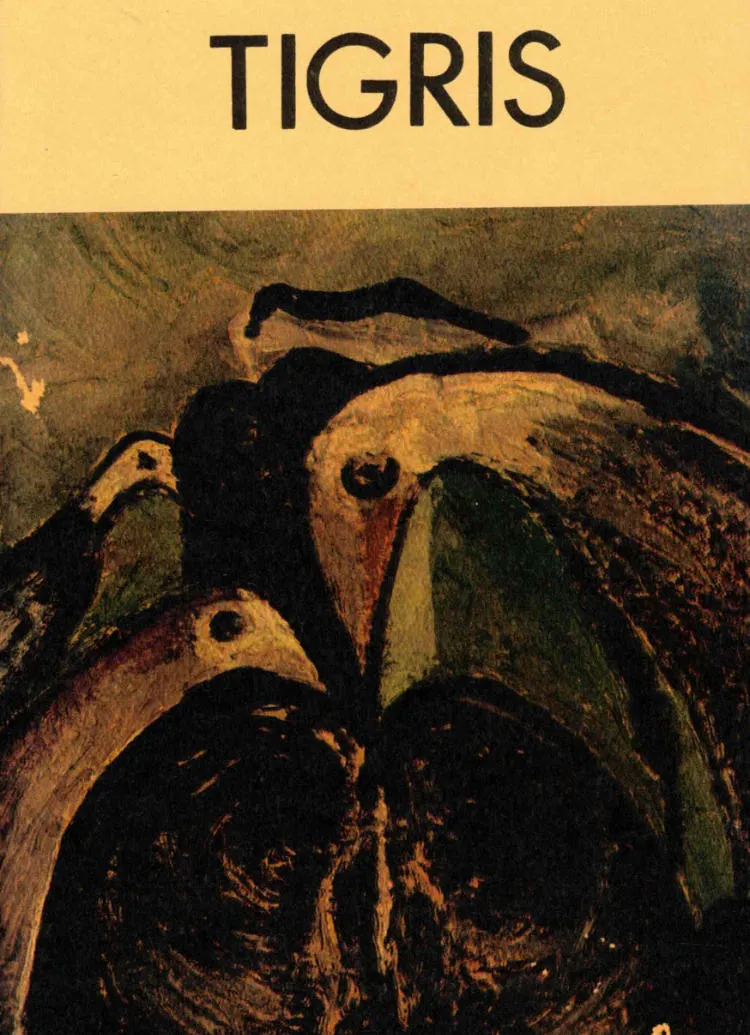
The Great River—Translating the Beats into Arabic traces the literary encounters of Sargon Boulus (1944-2007), an Iraqi poet who was part of the vibrant literary scene of late 60’s San Francisco. His life was marked by a period of restless traveling, that he would later describe as an attempt to pursue a poetic imaginary. This project continues to map his proximity to the Beat poets, his short-lived Bay Area poetry journal, Tigris, and his other English language publications. 

This publication includes a facsimile reproduction of Tigris, featuring a long poem “Jebu” by Boulus’ good friend Etel Adnan.

Cover of Survival Takes a Wild Imagination: Poems

Andrews McMeel Publishing

Survival Takes a Wild Imagination: Poems

Fariha Róisín

Poetry €17.00

In the powerful follow up to her critically acclaimed debut collection, poet and activist Fariha Róisín is writing, praying, clawing, and scratching her way out of the grips of generational trauma on the search for the freedom her mother never received and the kindness she couldn’t give.

This collection of poetry asks a kaleidoscope of Who is my family? My father? How do I love a mother no longer here? Can I see myself? What does it mean to be Bangladeshi? What is a border? Innately hopeful and resolutely strong, Fariha's voice turns to the optimism and beauty inherent in rebuilding the self, and in turn, the world that the self moves through. Ubiquitous to the human experience, Survival Takes a Wild Imagination is an illuminating breath of fresh air from a powerful poetic voice.
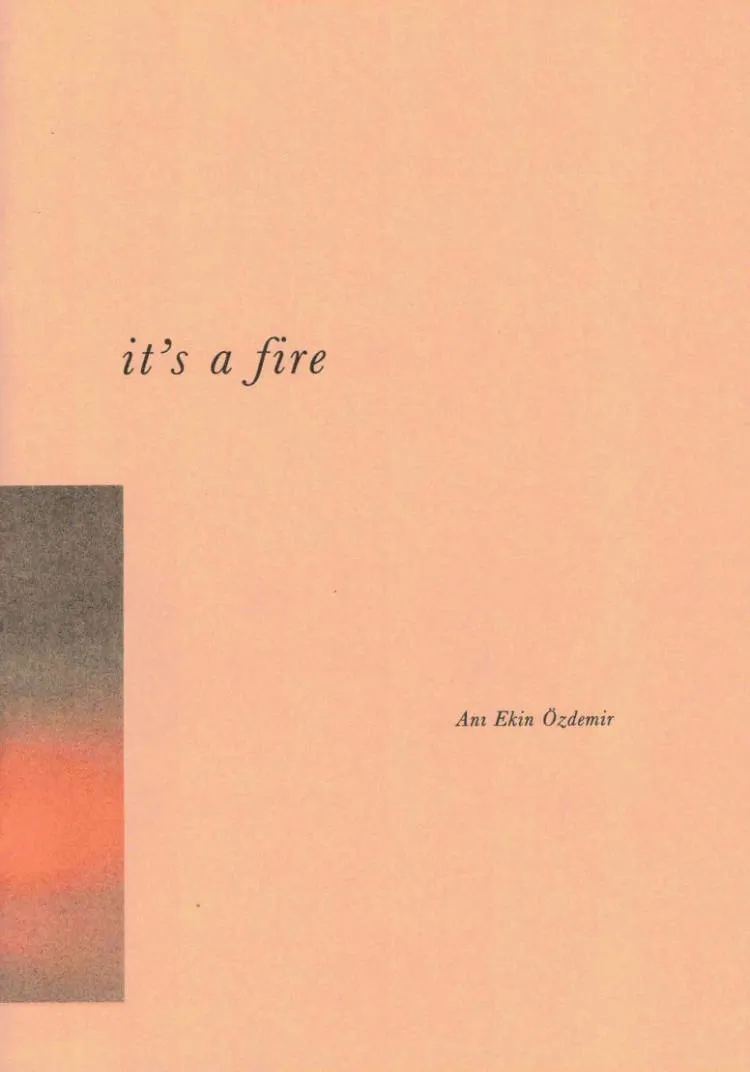
Cover of Cyclamen

Tenement Press

Cyclamen

Alix Chauvet

Poetry €25.00

A debut collection from the poet, artist and designer, a suite of unfaithful translations/transversions of works drawn from Baudelaire’s Les Fleurs du mal / Flowers of Evil, a bunch of flowers in decay, pressed and frayed, ‘a flock of pockmarked words.’

Through these creative ‘translations’ of Charles Baudelaire, Alix Chauvet—artist, designer, poet—refuses fidelity in favour of flirtation: her ‘flowers of evil’ line Amsterdam’s canals, drink from the same rainclouds as Rachel Ruysch’s bewitching bouquets, sprout through peat, and are tended by a distinctly feminist and nomadic sensibility. Chauvet—akin to Olive Moore, Sean Bonney and Lisa Robertson—takes the nineteenth-century French decadent as a contemporary accomplice for aesthetic and linguistic misbehaviour. Walter Benjamin once wrote of Baudelaire that he is ‘der geheime Architekt der Moderne,’ and in Chauvet’s hands, those foundations are made porous, unbuilt into cast shadows, into ribbons, into veins streaming across the page. Accompanied by scans of the French poems and Chauvet’s shadow photography, what Cyclamen ultimately offers us is a regenerative rewilding of the English language: a wondrous terrain ringed by vines of unruly syntax and dotted with the fruit of words refusing domestication by any single tongue. Mia You

Alix Chauvet is a Swiss-French poet and graphic designer based in Amsterdam, taking pleasure in the possibilities of translation. She received her BA in Graphic Design from the Gerrit Rietveld Academie (Amsterdam, 2020), and has since been working independently and in collaboration with contemporary artists. Investigating the relationships between language and body, intimacy and collectivity, past and contemporary, her hybrid practice covers a wide range of visual and linguistic experiments from artist’s book design to experimental translation. Her method is rooted in decelerating the creative process through the use of analogue and unprofitable techniques such as cut-outs, letterpress, linocut, handwriting and painting. Chauvet’s poetic approach follows the same logic, prioritising English over her mother tongue as a way to revise language with both critical detachment and a degree of identification. Her poems have appeared in literary magazines such as Blackbox Manifold, and Cyclamen is her debut collection.

Cover of And most of all I would miss

Veer2

And most of all I would miss

Mira Mattar

Poetry €13.00

Picture a pencil curved, implausibly, parabolically. An implement bending back on itself (core straining) so as to be drawing the surest line, even as its eraser-end is simultaneously rubbing that graphite out. What remains almost never was: mark as memorial to foreclosure. Examined from a certain angle, the un-line flickers in and out of thereness. On registration, it lives, it goes forth. Sub rosa, it knows never to clear its throat. It has learnt to calibrate its signature; it can evade infra-red. Propelling itself through the narrowest channels, it proceeds with resolve, flayingly. Mattar’s And most of all I would miss the shadows of the tree’s own leaves cast upon its trunk by the orange streetlight in the sweet blue darks of spring is taut as writing can be. The tone she makes sound is singular and desperately (gloriously) intent.
- Sarah Hayden

Piercing and lucid in its exposition of atmospheric violence and total erasure, Mira Mattar gets to the grain of how the languages of selfhood, mediated but also inhibited by the force of the ‘un-universal’, become complicit in forming the sovereign imperative to self-determination, ‘oh arrogant ambition / to transform / you & keep myself / plumed’, through the reproduction of a ‘contested field / of meaning’, one both marked by the lure and ruse of psychic stability as the real fantasy of occupation, and immanent to concrete, unknown modes of personal resistance and collective recovery thread like a ‘rope / in a knot in a line / of knots’, an inherited ‘excess of memory / mostly portal.’ Mattar carefully gleans in its undecidability, given over to moments of precarious decision without ties or duplicity.
- James Goodwin