rile*books

Search books

Search books by title, author, publisher, keywords...

Cover of Notes on Conceptualisms

Ugly Duckling Presse

Notes on Conceptualisms

Vanessa Place, Robert Fitterman

€16.00

What is conceptual writing, how does it differ from Conceptual Art, what are some of the dominant forms of conceptualism,where does an impure or hybrid conceptualism fit in, what about the baroque, what about the prosody of procedure, what are the links between appropriation and conceptual writing, how does conceptual writing rely on a new way of reading, a “thinkership” that can shift the focus away from the text and onto the concept, what is the relationship between conceptual writing and technology or information culture, and why has this tendency taken hold in the poetry community now? What follows, then, is a collection of notes, aphorisms, quotes and inquiries on conceptual writing. We have co-authored this text through correspondence, shared reading interests, and similar explorations. Notes on Conceptualisms is far from a definitive text, and much closer to a primer, a purposefully incomplete starting place, where readers, hopefully, can enter so as to participate.

Language: English

recommendations

Cover of The Close Chaplet

Ugly Duckling Presse

The Close Chaplet

Laura Riding

Poetry €23.00

Long out of print, The Close Chaplet is Laura Riding's first book, originally published in 1926. Riding deliberately ceased writing poems after 1940, when she came to see poetry as irrevocably flawed as a means of expression. These poems demonstrate Riding's early desire to depart from the close and well-tilled ground of traditional lyric poetry. According to her biographer, Elizabeth Friedman, many of the poems for THE CLOSE CHAPLET were brought in typescript from New York, a few were added in Egypt, and the entire text was carefully edited by Robert Graves.

In his introduction, Mark Jacobs writes that Riding was identifying herself with the pre-moment, the 'what-was-there' before Creation. How did the world, the universe, come to exist, why does it exist, why does it die, why do we? From these questions, Riding begins to develop a theory about the role of women as the origin of all human beings, the only animals with written language. This edition also includes Riding's essay A Prophecy or a Plea, a statement of her poetics initially published in 1926.

Laura Riding was a poet, novelist, short-story writer, essayist, and publisher. While primarily known for the critical works that she co-authored with Robert Graves — A Pamphlet Against Anthologies and A Survey of Modernist Poetry — Riding also left behind an incredibly powerful body of poetry and prose works that, regrettably, remain little read today. These include THE CLOSE CHAPLET (Ugly Duckling Press, 2020), EXPERTS ARE PUZZLED (Ugly Duckling Presse, 2018), CONVALESCENT CONVERSATIONS (Ugly Duckling Presse, 2018), The Lives of Wives, and The Progress of Stories. Famously rejecting poetry early in her career, she spent the last decades of her life co-writing a theoretical work on linguistics, Rational Meaning, with her husband Schuyler Jackson. She was awarded the Bollingen Prize in 1991, the very same year she died.

Cover of The Book of Advice

Ugly Duckling Presse

The Book of Advice

Ghazal Mosadeq

Poetry €20.00

The Book of Advice, an experiment in self-translation, stems from the andarznameh tradition of classical Persian literature, a form that moves between verse and prose as it engages invented or familiar sayings and folktales. Originally written in Persian between 2018-2020, the book now speaks in both English and Persian, opening at once from the back and the front, in a voice both distanced and familiar. The vicissitudes of the everyday preoccupy its intimately impersonal speaker as she wrestles with the inadequacy and mobility of language. 

Ghazal Mosadeq is a poet, editor and translator. She is the founder of Pamenar Press, an independent publisher of poetry, translation, hybrid and critical writing. Her own work has been published by Sheirsman, Fence, Arc Poetry, Fiddlehead, Asymptote, Modern Poetry In Translation and Words Without Borders, among others. She is a member of the editorial advisory board for the Journal of British and Irish Innovative Poetry.

The Book of Advice knows 'we didn’t have to break the flower stem/ to let the/ light pass through,' even as it knows we have already broken everything we could. Here, no one knows our names, nor the name of our horse, though someone did once ask. From the sliver between a face and its forgettable name, from the sliver between what’s been said and what’s yet to be said, slightly but exactly differently, Ghazal Mosadeq offers a chasm. The floor is deep, but, when you land, very tender. No one hails us, but the well wishes, oh, open your mouth for the well wishes." —Farid Matuk

Cover of Sonnet(s)

Ugly Duckling Presse

Sonnet(s)

Ulises Carrión

Poetry €20.00

A lost gem of permutational conceptualism from a key figure in artist's book culture, available again

Known internationally as one of Mexico's most important conceptual artists, Ulises Carrión (1941-89) played a decisive role in defining and conceptualizing the genre of the artists' book through his manifesto, The New Art of Making Books (1975), which he wrote soon after the 1972 publication of SONNET(S) and his move from Mexico City to Amsterdam, where he opened the legendary bookshop gallery, Other Books and So, the first space dedicated exclusively to artists' publications and an important precursor to such artists' book hubs as Printed Matter.

One of Carrión's earliest bookworks, SONNET(S) represents a landmark shift in the artist's output from poetry to artists' books. Here, Carrión takes a single poem by Dante Gabriel Rossetti through 50 typographic and procedural permutations. This republication is supplemented by new essays on Carrión's bookworks by contemporary artists, writers, and scholars from Mexico, Europe and the US. 

Published March 2021

Cover of The Narco-Imaginary: Essays Under the Influence

Ugly Duckling Presse

The Narco-Imaginary: Essays Under the Influence

Ramsey Scott

Essays €23.00

Written according to its own dictum, "language is the universal inebriant," these epistolary essays, personal narratives, meditations on avant-garde writers, and unorthodox forays into the "narco-imaginary"—the habits and conventions surrounding literary and cultural representations of drug use—attend to the residue of transient impressions that remain, long after the delirium of creative activity subsides.

Ramsey Scott teaches at Brooklyn College, CUNY. His essays, poems, and fiction have appeared in various print and online publications, including the Southwest Review, the Seneca Review, The Massachusetts Review, Shampoo, Tarpaulin Sky, Confrontation, and Mirage #4/Period(ical). The Narco-Imaginary is his first book.

Cover of Invisible Oligarchs

Ugly Duckling Presse

Invisible Oligarchs

Bill Berkson

Poetry €19.00

Bill Berkson's Invisible Oligarchs is like a book jotted on the back of a poet's hand—a hand that picks up everything that sings to it, from gold-leaf proverb to chopstick sheath, on its quick trip through a few places in urban Russia, 2006. Across faintly ruled Japanese paper, many pages reproduced here in facsimile, snapshots change hands, new poems blink, and poetry politics meet political gossip over lunch in St. Petersburg. Berkson's educated guesswork about that elusive quality once known the Great Russian Soul, is framed here by letters from his friend Kate Sutton and encompassing encounters with poets and cab drivers, Moscow conceptualists and a White Night at the Mariinsky Ballet. As a sharply observant poet and the most soulful art critic alive, Berkson knows how to get us behind the set, and reading this book is as nice as taking a high dive with him into a perfectly mixed White Russian.

Bill Berkson was born in New York in 1939. He moved to Northern California in 1970 and now divides his time between San Francisco and New York. He is a poet, critic, sometime curator, and professor emeritus at the San Francisco Art Institute, where he taught art history and literature for many years. A corresponding editor for Art in America, he has contributed to such other journals as Artforum, Aperture, Modern Painters, and artcritical.com. His recent books include PORTRAIT AND DREAM: NEW & SELECTED POEMS (Coffee House Press, 2009); BILL, a words-and-images collaboration with Colter Jacobsen; Lady Air; Not an Exit with drawings by Léonie Guyer; REPEAT AFTER ME (Gallery Paule Anglim, 2011), with watercolors by John Zurier; and a collection of his art writings, FOR THE ORDINARY ARTIST (BlazeVOX books, 2010), as well as a new collection of his poems, Expect Delays, from Coffee House Press in 2014 and INVISIBLE ORLIGARCHS out from Ugly Duckloing Presse in 2016.

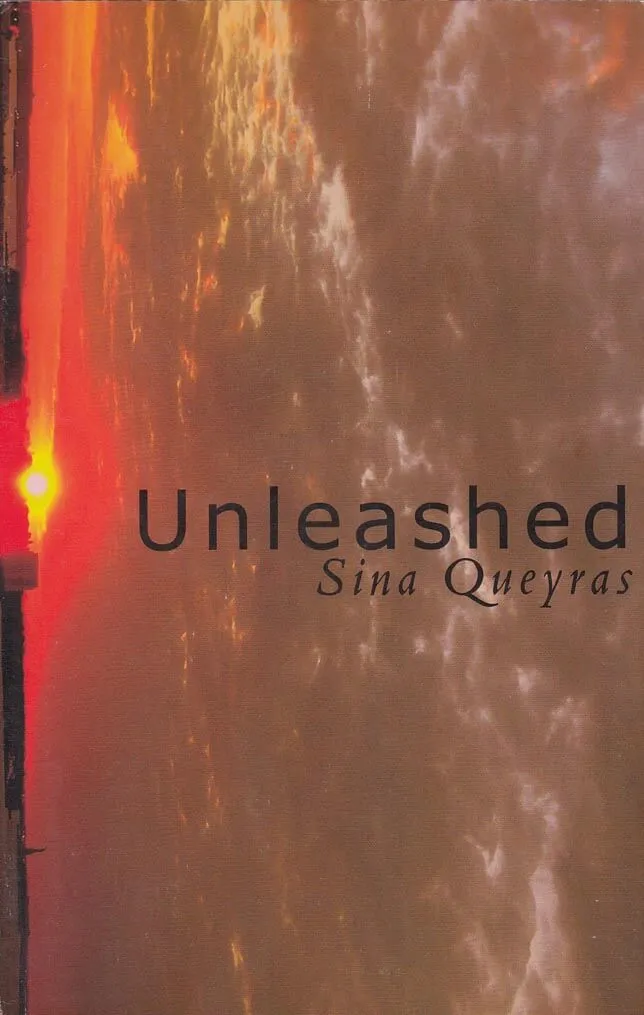
Cover of Unleashed

Book*hug Press

Unleashed

Sina Queyras

Poetry €20.00

05/09/04 Now she is blogging. Now she is sitting on the black couch listening to the sirens wail and the rain fall. Now she is thinking of oysters. Now she is wondering why this is worth sharing. Now she is thinking, how decipher what is worth reading? Who is to say? Sifters. She thinks we have become a nation of sifters. So began a three-year experiment in blogging. An experiment begun for many reasons—a way for an expat to keep in touch with fellow Canadian writers and artists, a way to come to terms with the increasing relevance of the internet in literary lives, and a way to figure out why, after decades of gains, women writers are still grossly underrepresented in critical dialogues.

With an afterword by Vanessa Place.

Cover of Freud and the Non-European

Verso Books

Freud and the Non-European

Edward W. Said

In this influential lecture, Edward Said explores Freud’s foundational work Moses and Monotheism to rethink the relationship between identity, politics and psychoanalysis. The result is a study illuminating both Freud’s thinking and that of Said, on whom the great psychoanalyst was a formative influence.

Was Moses Jewish or an Egyptian? The question undermines any simple ascription of identity, highlighting the limits of these categories. Said suggests that such an unresolved, nuanced sense of identity might, if embodied in political reality, form the basis for a new understanding between Jews and Palestinians. In contrast, Israel's relentless march towards an exclusively Jewish state denies any sense of a more complex, inclusive past.

With an introduction by Christopher Bollas and a response by Jacqueline Rose. 

Cover of The World After Rain

Silver Press

The World After Rain

Canisia Lubrin

Poetry €17.00

In her signature epic vision, Canisia Lubrin distils a radiant elegy for her mother along an interwoven and unresolvable axis of astonishment, belonging as much to history as to today. Grief, tender and searing, is the channel through which the poet refracts the realm of contemporary life to reveal the paradox of its private and public entanglements. This is poetry of haunting gravity and resonance, with meditations on love, time, and loss, at once meticulously far-seeing, interior and inexpressible.

‘How incandescent the language is, each line emitting light through the membrane of time and anticipated grief. The work has a rigorousness, the poet pushing through the ache of experience from the first to the last word.’ – Dionne Brand 

Cover of New and Selected Poems of Cecilia Vicuña

Kelsey Street Press

New and Selected Poems of Cecilia Vicuña

Cecilia Vicuña

Poetry €40.00

New and Selected Poems of Cecilia Vicuña is a telling of old cultures, modern nation states and lives in exile. Rodrigo Toscano calls Vicuña's poetry the outer out, beyond nation states, passed 'inter state' affairs, in other words, close in, as close as we get to our fair planet's sources, and to each other. In this bilingual collection, Vicuña and her translator, Rosa Alcalá, are artist witnesses to a natural world that is a storehouse of sacred words, seeds, threads and songs. Present everywhere, they are sources for a rebalancing in human relationships and for new forms of grace and healing. In Vicuña's vision, art is life and intimacy with it is transformative.

Cecilia Vicuña is a Chilean poet, artist and filmmaker. The author of twenty poetry books published in Europe, Latin America and the U.S., she performs and exhibits her work widely. A precursor of conceptual, impermanent art and the improvisatory oral performance, her work deals with the interactions between language, earth and textiles. Her recent books are NEW AND SELECTED POEMS OF CECILIA VICUÑA (Kelsey Street Press, 2018), SPIT TEMPLE: THE SELECTED PERFORMANCES OF CECILIA VICUÑA (Ugly Duckling Presse, 2012), Chanccani Quipu, a new artist book by Granary Books, and SABORAMI (ChainLinks, 2011). She co-edited The Oxford Book of Latin American Poetry (2009). Since 1980 she divides her time between Chile and New York.

Cover of See What Life Is Like IV

Rough Trade Books

See What Life Is Like IV

Dorothy Spencer

Poetry €8.00

Fifteen new poems form the fourth instalment in Dorothy Spencer’s See What Life Is Like poetry series. Newfound motherhood, pollution, tragedy and going fishing are all covered in a series of ethereal and eternal verses, told with acerbic wit.

Cover of The Dogs

Krupskaya Books

The Dogs

Noah Ross

Poetry €21.00

In Noah Ross's new book THE DOGS, Ross opens the question of authority and possession in what he deems an illicit act of translation. THE DOGS may begin with Herve Guibert's Les Chiens, but through multiple reiterations of translation, Guibert's text ultimately meets Ross to celebrate, among other sources, Marie de France, Teen Wolf, Auden, and Dom Orejudos in establishing a unique pack of hungry werewolves. You know what happens when werewolves get together: the play can get a little rough. THE DOGS empowers these snarls and yips, growls and howls, on the level of the sentence in translation as much as the embodied erotogenic zones of the body.