rile*books

Search books

Search books by title, author, publisher, keywords...

Cover of Milkweed Smithereens

New Directions Publishing

Milkweed Smithereens

Bernadette Mayer

€17.00

Milkweed Smithereens gathers lively, wickedly smart, intimate, and indelible Bernadette Mayer poems: the volume ranges from brand-new nature poems, pastiches, sequences, epigrams, and excerpts from her Covid Diary and Second World of Nature to early poems and sonnets found in the attic or rooted out in the UC San Diego archive. The world of nature and the pandemic loom large, as in her “The Lobelias of Fear”:

…but how will we, still alive, socialize
in the winter? wrapped in bear skins
we’ll sit around pot-bellied stoves eating
the lobelias of fear left over from desperation,
last summer’s woodland sunflowers and bee balm remind us of black
cherries eaten in a hurry
while the yard grows in the moonlight
shrinking like a salary …

Bernadette Mayer (1945–2022) published her first book when she was twenty-three years old. For many year she lived and worked on Manhattan’s Lower East Side. She was the Director of St. Mark’s Poetry Project from 1980 to 1984. Mayer taught at Naropa Poetics Institute, New School for Social Research, College of Staten Island, and New England College.

Published in 2022 ┊ 96 pages ┊ Language: English

recommendations

Cover of Lili Is Crying

New Directions Publishing

Lili Is Crying

Hélène Bessette, Kate Briggs

Fiction €17.00

A forgotten mid-century genius, recently rediscovered in France and never before translated into English, Hélène Bessette is a treasure and a bracing force to reckon with.

With a contribution by Eimear McBride
A New Yorker Best Book of 2025

Lili Is Crying, Hélène Bessette’s debut novel, conveys with singular force the fraughtness and depth of the troubling relationship between Lili and her mother, Charlotte. With a near-mythic quality, Bessette's stripped-back prose evokes at once the pain of thwarted love—of desire run cold—and the promise of renewal. Lauded by critics on its initial 1953 publication for its boundary-pushing style, Lili Is Crying catapulted Bessette to cult status in France. The novel is moving and maddening in turns, with its characters trapped in their own cruelties and sorrows, but in its spareness and strength it feels true. "Show me a woman who's chosen something." Bessette's books were hailed for their unusual economy of expression, rarity, strange humor, and sheer vivacity. She characterized her new kind of novel as "a freshly cut slice of life, whose force comes from its lack of commentary."

Cover of Exophony

New Directions Publishing

Exophony

Yoko Tawada

Non-fiction €17.00

Yoko Tawada's first essay collection in English presents and electrifying new side of the National Book Award-winner as she dives deep into her lifelong fascination with cross-hybridizing languages. The accent here, as in her fiction, is on the art of drawing closer to the world through defamiliarization. Tawada famously writes in both Japanese and German, but her interest in language reached beyond any mere dichotomy. 

The term "exophonic," which she first heard in Senegal, has a special allure for the author: "I was already familiar with similar terms. 'immigrant literature,' or 'creole literature,' but 'exophonic' had a much broader meaning, referring to the general experience of existing outside of one's mother tongue." Exophony opens a new vista into Yoko Tawada's world and delivers more of her signature erudite wit—at once cross-grained and generous, laser-focused and multidimensional, slyly ironic and warmly companionable.

A New Yorker Best Book of 2025. Translated from Japanese by Lisa Hofmann-Kuroda.

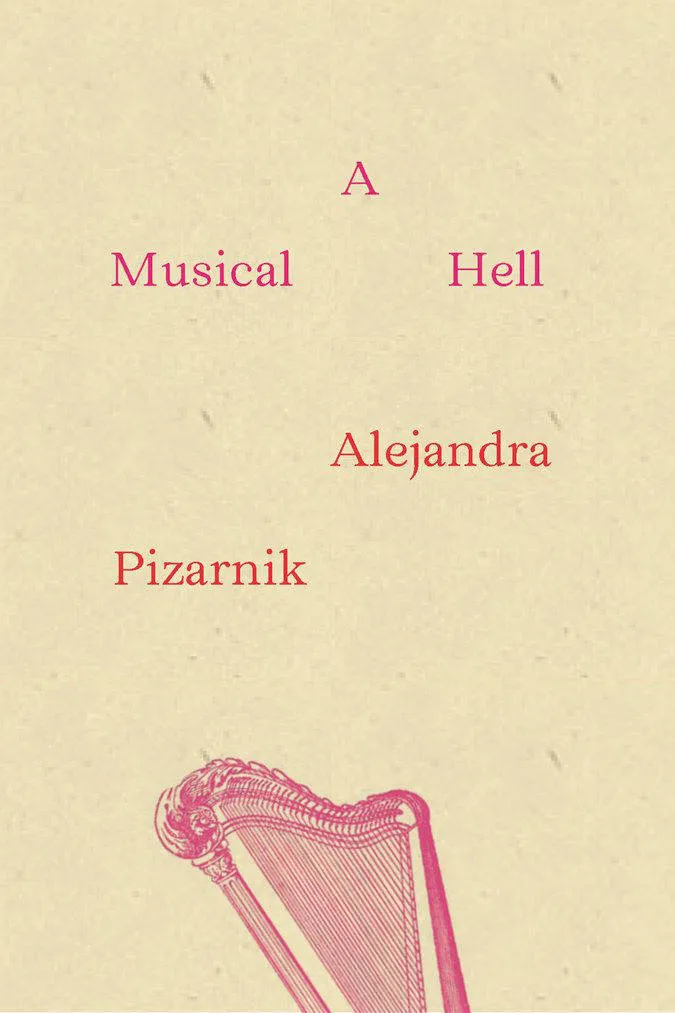
Cover of A Musical Hell

New Directions Publishing

A Musical Hell

Alejandra Pizarnik, Yvette Siegert

Poetry €13.00

“An aura of legendary prestige surrounds the work of Alejandra Pizarnik,” writes César Aira. Her last collection to be published before her suicide in 1972, A Musical Hell is the first book of poems by Pizarnik to be published in its entirety in the U.S. Pizarnik writes at the edge of poetic impossibility, opening with a blues singer, expanding into silence, and closing into a theater of shadows and songs of the drowned.

Cover of Água Viva

New Directions Publishing

Água Viva

Clarice Lispector

Fiction €15.00

In Água Viva Clarice Lispector aims to 'capture the present'. Her direct, confessional and unfiltered meditations on everything from life and time to perfume and sleep are strange and hypnotic in their emotional power and have been a huge influence on many artists and writers, including one Brazilian musician who read it one hundred and eleven times. Despite its apparent spontaneity, this is a masterly work of art, which rearranges language and plays in the gaps between reality and fiction.

Clarice Lispector (December 10, 1920 – December 9, 1977) was a Brazilian writer acclaimed internationally for her innovative novels and short stories. Born to a Jewish family in Podolia in Western Ukraine, as an infant she moved to Brazil with her family, amidst the disasters engulfing her native land following the First World War. 

Cover of The Hour of the Star

New Directions Publishing

The Hour of the Star

Clarice Lispector

Fiction €14.00

The devastating final work by Brazil’s greatest modern writer, The Hour of the Star tells the haunting tale of Macabéa—a typist who lives in the slums of Rio—underfed, sickly, and unloved, yet inwardly free.

Translated from the Portuguese by Benjamin Moser. With a contribution by Paulo Gurgel and Valente Colm Tóibín.

The Hour of the Star, Clarice Lispector's consummate final novel, may well be her masterpiece. Narrated by the cosmopolitan Rodrigo S.M., this brief, strange, and haunting tale is the story of Macabéa, one of life's unfortunates. Living in the slums of Rio de Janeiro and eking out a poor living as a typist, Macabéa loves movies, Coca-Cola, and her rat of a boyfriend; she would like to be like Marilyn Monroe, but she is ugly, underfed, sickly, and unloved. Rodrigo recoils from her wretchedness, and yet he cannot avoid realization that for all her outward misery, Macabéa is inwardly free. She doesn't seem to know how unhappy she should be. Lispector employs her pathetic heroine against her urbane, empty narrator—edge of despair to edge of despair—and, working them like a pair of scissors, she cuts away the reader's preconceived notions about poverty, identity, love, and the art of fiction. In her last novel she takes readers close to the true mystery of life, and leaves us deep in Lispector territory indeed.

Cover of Day Book

Ma Bibliotheque

Day Book

Gill Houghton

Non-fiction €17.00

Looking at pictures, she was reminded of the lack of time. And anyway, where did all the time go?

In Day Book a woman artist looks at time in an address to quotidian events and their unfolding. Exploring motherhood, unpaid labour, childcare, and the time of the artist, she reads the work of contemporary women filmmakers through the earlier works of filmmakers, writers, and photographers, including Chantal Akerman and Marguerite Duras, Natalia Ginzburg and Christa Wolf, Bertien van Manen and Bernadette Mayer. The inability to capture the accumulation of days emerges—a form without form, day after day after day.

Cover of The Letters of Rosemary & Bernadette Mayer, 1976-1980

Swiss Institute

The Letters of Rosemary & Bernadette Mayer, 1976-1980

Bernadette Mayer, Rosemary Mayer

This collection of the correspondence between artist Rosemary Mayer (1943-2014) and poet Bernadette Mayer (born 1945) occurs between the years of 1976 and 1980, a period of rich creativity in New York's artistic avant-garde, and one which includes the development of major bodies of work by the two women.

Rosemary Mayer was creating sculptures, watercolors, books and temporary monuments from weather balloons and snow, while Bernadette Mayer was working on some of her best-known publications, including the book-length poem Midwinter Day and the poetry collection The Golden Book of Words.

Spanning the worlds of Conceptual art, Postminimalism, feminism, the New York School, Language poetry and more, these letters elucidate the bonds of sisterhood through intimate exchanges about art, relationships and everyday life.

Cover of Slips of the Mind: Poetry as Forgetting

University of Chicago Press

Slips of the Mind: Poetry as Forgetting

Jennifer Soong

Poetry €30.00

An audacious account of what happens when forgetting becomes a way of writing and writing becomes a way of forgetting.  

In Slips of the Mind, poet and critic Jennifer Soong turns away from forgetting’s long-standing associations with suppression, privation, and error to argue that the absence or failure of memory has often functioned as a generative creative principle. Exploring forgetting not as the mere rejection of a literary past or a form of negative poetics, Soong puts to the test its very aesthetic meaning. What new structures, forms of desires, styles, and long and short feelings do lapses in time allow? What is oblivion’s relationship to composition? And how does the twentieth-century poet come to figure as the quintessential embodiment of such questions? 

Soong uncovers forgetting’s influence on Gertrude Stein, Lyn Hejinian, Tan Lin, Harryette Mullen, Lissa Wolsak, and New York School poets John Ashbery, James Schuyler, Bernadette Mayer, and Ted Berrigan, among others. She reveals that forgetting’s shapeshifting produces differences in poetic genre, interest, and degrees of intentionality—and that such malleability is part of forgetting’s nature. Most provocatively, Soong shows how losing track of things, leaving them behind, or finding them already gone resists overdetermination and causality in the name of surprise, as poets leverage forgetting in order to replace identity with style. Slips of the Mind is the kind of literary criticism that will reward all readers of modern and contemporary poetry.

Cover of  Memory

Semiotext(e)

Memory

Dorothea Lasky

Poetry €18.00

A spiritual homage to Bernadette Mayer's monumental artwork of the same title, Dorothea Lasky's Memory is a cycle of "poet's essays" stirred by two profound questions. What constitutes personhood and consciousness? What memories get lost, and why?

Expansive in her quest for answers, Lasky launches an inspired investigation of the forces that form our lives and deepest senses of ourselves. She identifies three dimensions of memory—ancestral, personal, and poetic—and in her singularly clear voice, undertakes to enter into their mysteries. From those recesses, she returns with a wide-ranging collection of essays that like lyric poems find the universal inside the particular. Memory reflects on the banal; private emotions and historical trauma; dear departed poets (Diane di Prima, Lucie Brock-Broido); her father's battle with Alzheimer's; and cultural events that have become charged sites of collective reminiscence (the moon landing, the music of Neutral Milk Hotel). Other pieces face the flip side of memory, asking what's left where memory is absent, and what's "real" beyond the horizon of death. The book closes with "Time, the Rose, and the Moon," an ars poetica published here in English for the first time, which offers the ancient symbol of the Ouroboros as a figure for the nonlinear processes of time, memory, and art.

Like Mayer before her, Lasky reveals memory to be huge and haunting, as she accumulates impressions that challenge the very possibility of fixed meaning. "Every rose has the scent of death," she writes. "And poetry is a perfume. That will stay on your body forever.... Whatever happens this time around, remember that."

Dorothea Lasky is the author of six full-length collections of poetry, including, most recently, The Shining (2023). She is also the author of the prose book Animal (2019) and a forthcoming book about Sappho, as well as the editor of Essays (2023) and a coeditor of Open the Door: How to Excite Young People About Poetry (2013). Her writing has appeared in POETRY, The New Yorker, The Paris Review, The Atlantic, and Boston Review, among other places.

Cover of Studying Hunger Journals

Station Hill Press

Studying Hunger Journals

Bernadette Mayer

Non-fiction €27.00

In 1972 Bernadette Mayer began this project as an aid to psychological counseling, writing in parallel journals so that, as she wrote in one (in bed, on subways, at parties, etc.), her psychiatrist read the other. Using colored pens to “color-code emotions,” she recorded dreams, events, memories, and reflections in a language at once free-ranging and precise—a work that creates its own poetics. She sought “a workable code, or shorthand, for the transcription of every event, every motion, every transition” of her own mind and to “perform this process of translation” on herself in the interest of evolving an innovative, inquiring language. STUDYING HUNGER JOURNALS registers this intention within a body of poetry John Ashbery has called “magnificent.”

Cover of Love Is Colder Than the Lake

Nightboat Books

Love Is Colder Than the Lake

Liliane Giraudon

Poetry €18.00

Searing in its energies and mysterious in its icy depths, Love is Colder than the Lake is a tour-de-force of the experimental French poet Liliane Giraudon's power and range. 

Love is Colder than the Lake weaves together stories dreamed and experienced, fragments of autobiographical trauma, and scraps of political and sexual violence to create an alchemical and incantatory texture that is all Giraudon's own. In its feminist attention and allusive stylistic registers, Love is Colder than The Lake claims a unique position among contemporary French literature. The heroes (or anti-heroes) in this collection include Rainer Werner Fassbinder, Lorine Niedecker, Emma Goldman, Chantal Akerman, the Marquis de Sade, and the unnamed lake itself. Giraudon's writing, editing, and visual work have been influential in France for decades, and English-speaking readers will thrill to this challenging, important voice.

Liliane Giraudon was born in Marseille in 1946. She continues to live and work in Marseille, and her writing is inseparable from the place, shaped by the vibrant community of poets and writers and artists Giraudon has herself shaped, as well as by the city's gritty and diverse cosmopolitanism. Giraudon's many books have, since 1982, been primarily published by France's P.O.L. editions. Giraudon has also been instrumental as an editor for influential reviews such as Banana Split, Action Poétique, and If. She performs and collaborates widely, including with Nanni Balastrini, Henri Delui, Jean-Jacques Viton, and many others. Two of her books ( Fur and Pallaksh, Pallaksh) were published in English by Sun & Moon Press in 1992 and 1994, respectively. She lives in Marseille, France.

Lindsay Turner is the author of the poetry collections Songs & Ballads (Prelude Books, 2018) and The Upstate (University of Chicago Press, 2023). She has twice received French Voices awards for her translations from the French, which include books of poetry and philosophy by Stéphane Bouquet, Souleymane Bachir Diagne, Anne Duforumantelle, Ryoko Sekiguchi, and others. She is Assistant Professor of English and Creative Writing at Case Western Reserve University in Cleveland, Ohio.

Sarah Riggs is a poet and multivalent artist. Her most recent book The Nerve Epistle appeared in 2021. Translation is one of her arts, for which she received a Griffin prize with Etel Adnan, and Best Translated Book Award, also for Adnan's Time (Nightboat, 2019). Riggs lives in Brooklyn, after many years in Paris. Author residence: Marseille, France.

Cover of I have brought you a severed hand

Divided Publishing

I have brought you a severed hand

Ghayath Almadhoun, Catherine Cobham

Poetry €15.00

Fluid and unselfconscious, Ghayath Almadhoun writes love poems in the shape of nightmares: I have brought you a severed hand is a surreal mix of absurd humour, heteroerotic lust and dead seriousness. Caught between two exiles, the one inherited from his Palestinian father and the one he chose and lives, Almadhoun attempts to explain water and tame hope.

This book never misses the defiant beat of an exile’s haunted footing across wars, seas and memory. Almadhoun turns the genocidal logic of colonialism upside down, emptying out the crumbs of humanity and civilisation. —Don Mee Choi

Almadhoun uses every possible means of silence to make the total devastation palpable. —Alfred Schaffer

Many poets attempt to traverse the gulf between the experience of tragedy and the ability to relay its magnitude to anyone else. But few living have done it with such flourish, such sustained passion and formal precision as Ghayath Almadhoun. —Kaveh Akbar

Ghayath Almadhoun (born 1979, Damascus) is a Syrian-Palestinian poet who moved to Sweden in 2008. He has published five collections of poetry in Arabic, the latest being Adrenalin (Almutawassit, 2017) and I have brought you a severed hand (Almutawassit, 2024). In 2017, Adrenalin was translated into English by Catherine Cobham and published by Action Books. In 2023, Almadhoun curated, edited and translated the poetry anthology Kontinentaldrift: Das Arabische Europa (Verlag Das Wunderhorn and Haus für Poesie), which includes thirty-one Arabic poets living in Europe. The English translation of I have brought you a severed hand is published simultaneously by Divided in the UK and Europe and by Action Books in the USA. Almadhoun currently lives between Berlin and Stockholm. His work has been translated into nearly thirty languages.

Catherine Cobham taught Arabic language and literature at the University of St Andrews, Scotland, for many years and was head of the department of Arabic and Persian from 2011 until 2021. She has translated the work of a number of Arab writers, including poetry by Adonis, Mahmoud Darwish, Ghayath Almadhoun, Tammam Hunaidy and Nouri al-Jarrah, and novels and short stories by Yusuf Idris, Naguib Mahfouz, Hanan al-Shaykh, Fuad al-Takarli and Jamal Saeed. She has written articles in academic journals and co-written with Fabio Caiani The Iraqi Novel: Key Writers, Key Texts (Edinburgh University Press, 2013).