rile*books

Search books

Search books by title, author, publisher, keywords...

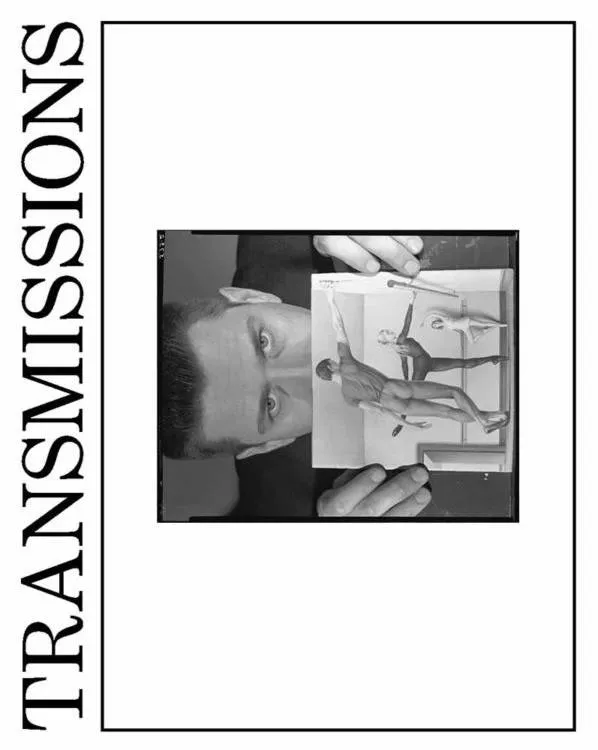
Cover of Michael Clark: Cosmic Dancer

Prestel Publishing

Michael Clark: Cosmic Dancer

Florence Ostende ed.

€45.50

Hailed as British dance's true iconoclast, Michael Clark is a defining cultural figure in the contemporary dance world. Since emerging in the early 1980s as a prodigy at London's Royal Ballet School, Clark has remained at the forefront of innovation in dance, working in close collaboration with a broad range of pioneering artists such as Sarah Lucas, Leigh Bowery, Charles Atlas, Cerith Wyn Evans, Peter Doig, Elizabeth Peyton, Wolfgang Tillmans and musicians such as Mark E. Smith, Wire, Scritti Politti, and Relaxed Muscle.

As a young choreographer, Clark brought together his classical ballet training with London's club culture, fashion, and punk rock to establish himself as one of the most innovative artists working in modern dance. His work, variously referencing punk, rock, and pop—is marked by a mixture of technical rigor and experimentation in a way that disrupts and reimagines our understanding of dance.

This book features a series of enlightening essays and vivid illustrations of Clark's best-known performances, alongside archival material. Loosely tracing the chronological evolution of his career, a variety of cultural figures, ranging from Jarvis Cocker to Charles Atlas, write about the countercultural undercurrents with which Clark's work connects.

Language: English

recommendations

Cover of Bruce Baillie: Somewhere from Here to Heaven

La Fabrica

Bruce Baillie: Somewhere from Here to Heaven

Bruce Baillie

A scrapbook on Baillie's life and career, with stills, ephemera and writings by filmmakers across generations.

This is the first book on the West Coast avant-garde filmmaker Bruce Baillie (1931-2020), famed for the films Mass for the Dakota Sioux (1964), Castro Street (1966) and All My Life (1966) and for his influence on directors such as George Lucas (one of Lucas' charitable foundations helped fund the digital transfer of Baillie's films) and Apichatpong Weerasethakul. Alongside stills from Baillie's films, the book fosters a dialogue between Baillie and filmmakers and writers across several generations, including experimental filmmaker Peter Hutton, filmmaker and anthropologist J.P. Sniadecki and Jonas Mekas, along with suites of images by the Thai director Apichatpong Weerasethakul, British artist and experimental filmmaker Ben Rivers and Brazilian artist and filmmaker Ana Vaz, among others. Reproductions of correspondence and other ephemera are also included.

Cover of A Body with More Tongues is a Mythical Creature

Self-Published

A Body with More Tongues is a Mythical Creature

Laura Cemin

Performance €27.00

A Body with More Tongues is a Mythical Creature is a small publication accompanied by a set of playing cards. It builds upon Paper Notes and Pinecones, a solo exhibition I presented in May 2024 at HAM Gallery, Helsinki, and marks the culmination of my research into how living in a foreign country reshapes the way we move and physically relate to the world around us.

Contributors: Chen Nadler, Daniela Pascual, Francesca Berti, Giorgio Convertito, Giorgia Lolli, Isabella Covertino, Tashi Iwaoka, and others
Edited by: M. Winter
Music by: Jenny Berger Myhre
Illustrations by: Valentina Černiauskaitė
Design by: Ran-Re Reimann
Supported by: Kone Foundation, Nordic Culture Point, and the Finnish Art Society

Cover of sawing a plank is like going for a walk

Posture Editions

sawing a plank is like going for a walk

Kato Six

With texts by Phillip Van den Bossche, Filarowska and a conversation between Eva Wittocx and the artist (NL/EN)


Nº 48 / October 2022

sawing a plank is like going for a walk by Kato Six (b. 1986) is published on the occasion of Kato’s solo exhibition at M Leuven this autumn. This book encapsulates 10 years of her quest as an artist.


The work of Kato Six (b. 1986) balances between abstract and figurative art. She works on different themes which she develops into series or ensembles. Architecture, design, domesticity and utensils all act as important references. Starting there, she uses recognisable and everyday materials such as MDF, stone, plastic or textiles.
Kato wants to question certain affinities and let the viewer look at familiar objects or images from a different perspective. As a viewer, you feel connected to the object or image but the actual meaning or function no longer applies.

Some of my works refer to the domestic, especially the most recent ones, such as ‘Carpet Beater Carpet’ and ‘Striped Knitwear’. The invisible work done by “housewives”, but also by workers or maintenance staff, is certainly one of the themes addressed in ‘Carpet Beater Carpet’. The above works are textile works, created with so-called “soft skills”. In the arts, these “soft skills” are often attributed to female artists — women often being assigned a certain medium.
Kato Six in conversation with Eva Wittocx in “sawing a plank is like going for a walk”

Cover of Cue the Cue

Bierke Verlag

Cue the Cue

Jack O’Brien

Monograph €39.00

This publication accompanying his most comprehensive exhibition to date exhibition is Jack O’Brien’s first monograph. Conceived by the artist himself, it complements the exhibition in both form and content, documenting his practice from 2021–2025 and transfers it into a different medium. Developed as an artist’s book it stands in direct relation to the magazine collages in the exhibition. The torn book cover, perforated paper pages, and a shoelace sealed under cellophane make the publication itself a sculptural gesture.

O’Brien negotiates themes such as staging, visibility, queer identity, and the circular dynamic between consumption, body, and performance. The title refers to the English “cue”—a theatrical cue—and at the same time to its repetition. This double meaning reflects O’Brien’s working method, in which material, form, and gesture continually oscillate between suggestion and withdrawal, presence and dissolution. O’Brien works with found and discarded objects, which he transforms through gestures of wrapping, binding, and perforation. His sculptures, installations, and collages use industrial materials such as cellophane, shrink wrap, and synthetic textiles.

The catalogue brings together the first substantial essays on O’Brien’s work. Alexander Wilmschen introduces the exhibition, in which chance becomes the driving force of reordering, and situates O’Brien’s work within the context of queer phenomenology. Kristian Vistrup Madsen examines the sadomasochistic dimensions of the work. Juliette Desorgues reads the sculptures as embodied punctuation. In conversation with Jeppe Ugelvig, O’Brien reflects on his artistic methodology and language.

The result is a monograph which also formally works with the moments of controlled instability that are so striking in the exhibition: floating, supported and warped.

Texts: Juliette Desorgues, Kristian Vistrup Madsen, Jack O’Brien & Jeppe Ugelvig (Interview) and Alexander Wilmschen

Cover of Dance as Moving Pictures

X Artists' Books

Dance as Moving Pictures

Blondell Cummings

The first monograph dedicated to the pivotal work of African American postmodern dancer, choreographer and video artist Blondell Cummings.

A foundational figure in dance, Blondell Cummings bridged postmodern dance experimentation and Black cultural traditions. Through her unique movement vocabulary, which she called "moving pictures," Cummings combined the visual imagery of photography and the kinetic energy of movement in order to explore the emotional details of daily rituals and the intimacy of Black home life. In her most well-known work Chicken Soup, Cummings remembered the family kitchen as a basis for her choreography.

This book draws from Cummings's personal archive and includes performance ephemera and numerous images from digitized recordings of Cummings's performances and dance films; newly commissioned essays by Sampada Aranke, Thomas F. DeFrantz, and Tara Aisha Willis; remembrances by Marjani Forté-Saunders, Ishmael Houston-Jones, Meredith Monk, Elizabeth Streb, Edisa Weeks, and Jawole Willa Jo Zollar; a 1995 interview with Cummings by Veta Goler; and transcripts from Cummings's appearances at Jacob's Pillow and the Wexner Center for the Arts. Bringing together reprints, an extended biography, a chronology of her work, rarely seen documentation, and new research, this book begins to contextualize Cummings's practice at the intersection of dance, moving image, and art histories.

Blondell Cummings (1944-2015) was a choreographer and video artist who mined everyday experiences like washing, cooking and building to create works celebrated for their rich characterizations and dramatic momentum. According to Wendy Perron, Cummings crossed over from modern to postmodern, from the Black dance community to the avant-garde community. Cummings referred to her stop-motion movement vocabulary as "moving pictures," which combined her interests in the visual imagery of photography and the kinetic energy of movement. Her dances drew from an accumulation of character studies that often began with photography and workshops, and included poetry, oral histories, and projection. Her interest in moving pictures is also evidenced in her commitment to dance films. She both supported the documentation of dance, and created many experimental dance films.

Edited by Kristin Juarez, Rebecca Peabody, Glenn Phillips.
Texts by Sampada Aranke, Thomas F. DeFrantz, Tara Aisha Willis, Marjani Forté-Saunders, Ishmael Houston-Jones, Meredith Monk, Elizabeth Streb, Edisa Weeks, Jawole Willa Jo Zollar, Blondell Cummings, Veta Goler.