rile*books

Search books

Search books by title, author, publisher, keywords...

Cover of Drive It All Over Me

S*I*G

Drive It All Over Me

Paige K. Bradley

€12.00

Paige Bradley’s Drive It All Over Me was commissioned by the artists Jay Chung and Q Takeki Maeda and concerns their work Bad Driver, 2023, Jack Goldstein’s Selected Writings, and Vanessa Place’s Gone with the Wind and concerns broad themes of subtextual narrative, authorship, and identity in text-based visual artworks while also touching upon allegory, elaborately subtle jokes, and writing as a sculptural material.

Published in 2023 ┊ Language: English

recommendations

Cover of Family Picture

S*I*G

Family Picture

Tom Humphreys

Essays €6.00

An essay in the form of painting studies - including persons, dogs, a frog, a hoofed animal, fish, hare, trees and plants.

Cover of Although

S*I*G

Although

Bernadette Van-Huy

CSV Edition + CSV Edition (Extended Version)

Cover of Hey Maus!

S*I*G

Hey Maus!

Kamilla Bischof

€8.00

Essay #16

Editor: M. Sullivan
Design in collaboration with S. De Bondt

Cover of Notes on Conceptualisms

Ugly Duckling Presse

Notes on Conceptualisms

Vanessa Place, Robert Fitterman

Poetry €16.00

What is conceptual writing, how does it differ from Conceptual Art, what are some of the dominant forms of conceptualism,where does an impure or hybrid conceptualism fit in, what about the baroque, what about the prosody of procedure, what are the links between appropriation and conceptual writing, how does conceptual writing rely on a new way of reading, a “thinkership” that can shift the focus away from the text and onto the concept, what is the relationship between conceptual writing and technology or information culture, and why has this tendency taken hold in the poetry community now? What follows, then, is a collection of notes, aphorisms, quotes and inquiries on conceptual writing. We have co-authored this text through correspondence, shared reading interests, and similar explorations. Notes on Conceptualisms is far from a definitive text, and much closer to a primer, a purposefully incomplete starting place, where readers, hopefully, can enter so as to participate.

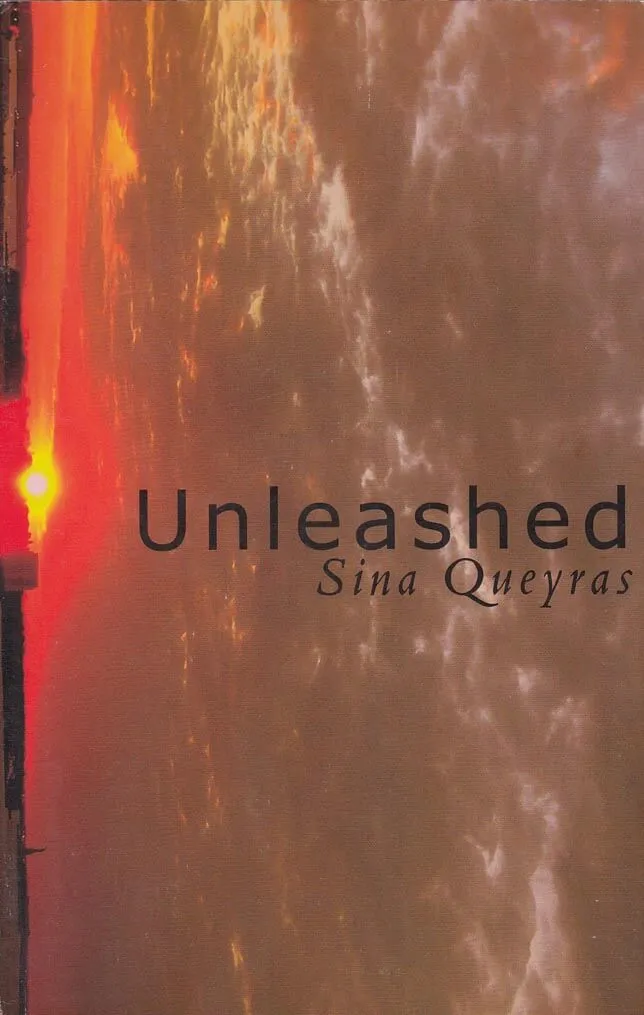
Cover of Unleashed

Book*hug Press

Unleashed

Sina Queyras

Poetry €20.00

05/09/04 Now she is blogging. Now she is sitting on the black couch listening to the sirens wail and the rain fall. Now she is thinking of oysters. Now she is wondering why this is worth sharing. Now she is thinking, how decipher what is worth reading? Who is to say? Sifters. She thinks we have become a nation of sifters. So began a three-year experiment in blogging. An experiment begun for many reasons—a way for an expat to keep in touch with fellow Canadian writers and artists, a way to come to terms with the increasing relevance of the internet in literary lives, and a way to figure out why, after decades of gains, women writers are still grossly underrepresented in critical dialogues.

With an afterword by Vanessa Place.

Cover of SIAHKAL 2.0: An A.I. resurrected discourse on Marxism & Islam

becoming press

SIAHKAL 2.0: An A.I. resurrected discourse on Marxism & Islam

Parham Ghalamdar

Essays €15.00

This is a limited edition book. The author trained an LLM on the texts of a deceased theorist, and then proceeded to interact with the LLM and produce simulations of what the theorist may have said in regards to various pertinent topics. The book is primarily a free online resource, but a few copies are being printed to commemorate the work. It has a foreword and afterword by the Editors. 

At the core of this project is a translation of “Marxist Islam or Islamic Marxism,” a groundbreaking text written by Bizhan Jazani during his imprisonment in the 1970s under the Shah’s oppressive regime. Translated by Parham Ghalamdar, this work is accompanied by an introduction contextualizing Jazani’s radical vision. Ghalamdar also contributes a series of ASCII-style illustrations and diagrams—AI-assisted reinterpretations of Jazani’s original paintings and photographs—that bridge the past and present, offering a new perspective on his revolutionary artistry. 

Siahkal names a place in the forests of Gilan and a threshold in revolutionary time. In 1971 a guerrilla action near Siahkal shook the order of the Shah. The action failed militarily yet seeded a myth for the People’s Fedai Guerrillas. Bizhan Jazani, a founding thinker, wrote and painted in prison and was executed in 1975. His work teaches that strategy rather than sentiment endures. // This book treats Siahkal as a Deep Object, a persistent attractor that gathers memory, images, and tactics. An AI model trained on Jazani’s writings and paintings translates his essay on Islamic Marxism and proposes annotations. The machine functions as a probe that widens attention while remaining accountable to the source. Parham Ghalamdar trained the AI, wrote the introduction, and composed ASCII diagrams and diagrammatic readings from Jazani’s artworks. Parsa Esmaeilzadeh contributes an essay that reads Jazani through Karatani and left accelerationism. // It is a call to reimagine and export revolution as a Deep Object that asks for Deep Time to unfold. This clandestine edition invites the reader to study, test, and build strategy that can outlast the news cycle and meet the future head on. 

Parham Ghalamdar is a multidisciplinary artist currently based in the UK. Ghalamdar’s work traces forgotten mythologies, buried philosophies, and visual ruins, reconfiguring them into speculative worlds where memory, fiction, and futurism collapse into one another. Drawing on cybernetic theory and generative AI, he explores how systems of feedback, simulation, and machine vision mediate our understanding of history and possibility. Through painting, film, and writing, he builds narratives that feel both ancient and yet-to-come, haunted by lost histories and animated by possible futures.

Cover of OEI #86/87 Publishing Practices, Publishing Poetics

OEI editör

OEI #86/87 Publishing Practices, Publishing Poetics

Tobi Maier, Cecilia Grönberg and 1 more

Essays €40.00

Once more, an astonishing issue of OEI – a thrilling, compelling, stimulating feast of ideas regarding publishing and the book: the perfect big companion to read and hug in bed while the virus spreads outside.

Bringing together contributions from circa 130 publishing structures, publishing communities, magazines, small press endeavors, artists, poets, writers, editors, theoreticians, curators, scholars, and art bookstores, OEI # 86–87 reflects upon the challenges, pressures and possibilities of publishing and creating publics in different contexts and places in a time of far-reaching – economical, medial, political, social, technological – transformations.

The potential and the versatility of publishing open it to a diversity of practices and approaches in the arts, but as an eminently social form of art, a collective or micro-collective work with shared responsibilities, it is also a never-ending process of “crafting a variegated approach to how you create, publish, distribute, and build a social ecosystem around your efforts”, of trying to “build up and strengthen the community around these printed forms” (Temporary Services).

It is the conviction of OEI #86–87 that print has the power to play an important part in the construction of social spaces, of a social world. As Benjamin Thorel puts it in one of the essays in the issue, “conceiving of the dynamics of publishing as making publics as well as making things public is not a pun – insofar as the artists/publishers encompass, beyond the book itself, its possible ‘lives’, imagining the different spaces, and the different people, amongst whom a publication will circulate.” This is what Michael Warner has called “a public [as] poetic worldmaking”, implying “that all discourse or performance addressed to a public must characterize the world in which it attempts to circulate, projecting for that world a concrete and livable shape, and attempting to realize that world through address.”

This is also, as stressed by Annette Gilbert and others, what can make publishing such an active force, a force co-constituting texts and publications and publics. Indeed, with Michalis Pichler, it is tempting to say that in publishing as practice – perhaps more than in any other art field – “artists have been able to assert the aesthetic value of their own socio-politically informed concerns and to engage, often under precarious conditions, in cultural activities fully aligned with their political values.”

OEI #86–87 also includes sections on and with contemporary poetry from Canada; Fluxus publishing; Krister Brandt/Astrid Gogglesworth; Kalas på BORD (Öyvind Fahlström); Lars Fredrikson; Claude Royet-Journoud’s poetry magazines; Carl Einstein; Gail Scott; Ållebergshändelser; OEI #79: edit/publish/distribute!; “det offentligas försvinnande” and many many other things. [publisher’s note]

Design by Konst & Teknik

Cover of We are not where we need to be, but we ain't where we were.

L’Amazone & Privilege

We are not where we need to be, but we ain't where we were.

Tiphanie Blanc, Lili Reynaud-Dewar and 1 more

We are not where we need to be but, we ain't where we were is the first volume of a new series of publications by the collective Wages For Wages Against that reports on active research engaged within the artistic professions and institutions since 2017. Its aim is to question the underlying neoliberal logics in the contemporary art world, by orienting our object of study towards the struggles that impact it. With this publication, our hope is to put into practice various values specific to the campaign: the existence of a systematic and fair remuneration, a desire for transparency, the sharing of knowledge, and the visibilization of demands proper to the field of the visual arts and concomitant struggles. It is the result of militant experiences, at the convergence of our individual experiences and collective questionings.

With texts by Tiphanie Blanc, Antonella Corsani, Fanny Lallart, Lili Reynaud-Dewar, Ramaya Tegegne and an interview with Outrage Collectif.