rile*books

Search books

Search books by title, author, publisher, keywords...

Cover of Polyamorous Love Song

Book*hug Press

Polyamorous Love Song

Jacob Wren

€23.00

From interdisciplinary writer and performer Jacob Wren comes Polyamorous Love Song, a novel of intertwined narratives concerning the relationship between artists and the world. Shot through with unexpected moments of sex and violence, readers will become acquainted with a world that is at once the same and opposite from the one in which they live. With a diverse palette of vivid characters - from people who wear furry mascot costumes at all times, to a group of New Filmmakers that devises increasingly unexpected sexual scenarios with complete strangers, to a secret society that concocts a virus that only infects those on the political right - Wren's avant-garde Polyamorous Love Song (finalist for the 2013 Fence Modern Prize in Prose) is great.

Language: English

recommendations

Cover of Unleashed

Book*hug Press

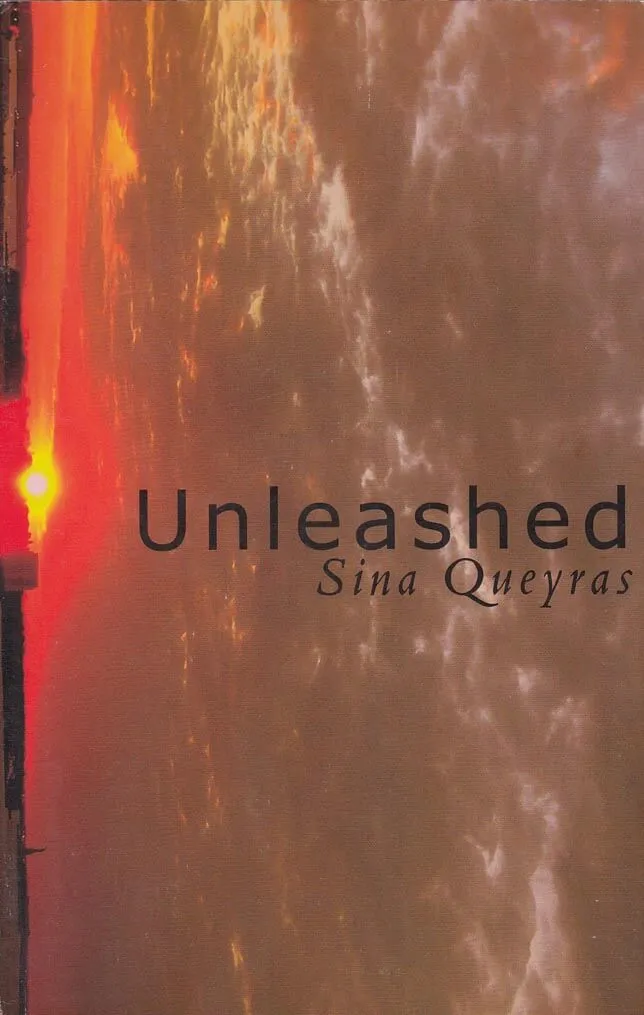
Unleashed

Sina Queyras

Poetry €20.00

05/09/04 Now she is blogging. Now she is sitting on the black couch listening to the sirens wail and the rain fall. Now she is thinking of oysters. Now she is wondering why this is worth sharing. Now she is thinking, how decipher what is worth reading? Who is to say? Sifters. She thinks we have become a nation of sifters. So began a three-year experiment in blogging. An experiment begun for many reasons—a way for an expat to keep in touch with fellow Canadian writers and artists, a way to come to terms with the increasing relevance of the internet in literary lives, and a way to figure out why, after decades of gains, women writers are still grossly underrepresented in critical dialogues.

With an afterword by Vanessa Place.

Cover of Pillage Laud

Book*hug Press

Pillage Laud

Erín Moure

Poetry €18.00

First published in 1999 in an edition of 300 perfectbound copies and 26 spiralbound copies lettered A-Z and signed, Pillage Laud is a lost cult item that now returns to print. As the 1999 edition announced, Pillage Laud selects from pages of computer-generated sentences to produce lesbian sex poems (cauterizations, vocabularies, cantigas, topiary and prose) by pulling through certain found vocabularies, relying on context: boy plug vagina library fate tool doctrine bath discipline belt beds pioneer book ambition finger fist flow. 

It used MacProse, a freeware designed by American poet and jazz musician Charles O. Hartman as a generator of random sentences based on syntax and lexicon instructions internal to the program; the program worked on Apple systems prior to OSX and is now in the dustbins of computer history. In 1999, the news was shocking: Moure’s poems are written by a computer. In 2011, now that everyone is a computer, the book can be read anew.

Cover of The Men

Book*hug Press

The Men

Lisa Robertson

Poetry €16.00

The Men explores a territory between the poet and a lyric lineage among men. Following a tradition that includes Petrarch's Sonnets, Dante's work on the vernacular, Montaigne, and even Kant, Robertson is compelled towards the construction of the textual subjectivity these authors convey-a subjectivity that honors all the ambivalence, doubt and tenderness of the human. Yet she remains angered by the structure of gender these works advance, and it is this troubled texture of identity that she examines in The Men.

Cover of Nilling

Book*hug Press

Nilling

Lisa Robertson

Poetry €18.00

NILLING: PROSE is a sequence of five loosely linked prose essays about noise, pornography, the codex, melancholy, Lucretius, folds, cities and related aporias: in short, these are essays on reading.

"I have tried to make a sketch or a model in several dimensions of the potency of Arendt's idea of invisibility, the necessary inconspicuousness of thinking and reading, and the ambivalently joyous and knotted agency to be found there. Just beneath the surface of the phonemes, a gendered name rhythmically explodes into a founding variousness. And then the strictures of the text assert again themselves. I want to claim for this inconspicuousness a transformational agency that runs counter to the teleology of readerly intention. Syllables might call to gods who do and don't exist. That is, they appear in the text's absences and densities as a motile graphic and phonemic force that abnegates its own necessity. Overwhelmingly in my submission to reading's supple snare, I feel love."

Cover of Reverse Cowgirl

Semiotext(e)

Reverse Cowgirl

McKenzie Wark

Biography €16.00

McKenzie Wark invents a new genre for another gender: not a memoir but an auto-ethnography of the opacity of the self.

Another genre for another gender.

What if you were trans and didn't know it? What if there were some hole in your life and you didn't even know it was there? What if you went through life not knowing why you only felt at home in your body at peak moments of drugs and sex? What if you expended your days avoiding an absence, a hole in being? Reverse Cowgirl is not exactly a memoir. The author doesn't, in the end, have any answers as to who she really is or was, although maybe she figures out what she could become.

Traveling from Sydney in the 1980s to New York today, Reverse Cowgirl is a comedy of errors, chronicling the author's failed attempts at being gay and at being straight across the shifting political and media landscapes of the late twentieth century. Finding that the established narratives of being transgender don't seem to apply to her, Wark borrows from the genres of autofiction, fictocriticism, and new narrative to create a writing practice that can discover the form of a life outside existing accounts of trans experience: an auto-ethnography of the opacity of the self.

Cover of Oraison funèbre pour Zelda1990

Dépense Défensive

Oraison funèbre pour Zelda1990

Romane Constant

Fiction €15.00

D’eux, il ne reste que les mots de celle qui a croisé leur route. Le crissement de pneus qui sifflent avant un malheur qui tarde à se produire. Sanctification plus que célébration, Oraison funèbre pour Zelda1990 est une tentative de communication au-delà de la matière physique de l’énonciation, un dialogue interne qui convoque « par moment le frère, par moment l’ami parti », toujours la ruine, la consommation de la séparation avec le tout. À travers quatre parties qui font écho à la structure des éloges funèbres de la Grèce antique, Romane Constant réouvre la poésie des plaies larges et profondes que les vers lapidaires d’Hélène Bessette – sur qui l’autrice mène un travail de recherche – ont laissé dans l’histoire moderne de la littérature, et signe un texte bouleversant sur la difficulté des choses qui ne (se) passent pas, la force de celles que l’on voit suspendues par le cou au bord d’une paix impossible à trouver. Oraison funèbre pour Zelda1990 est une douleur croissante, avec écoulement et rougeur.

Romane Constant vit et travaille à Paris. Elle explore à travers différents supports les questions relationnelles, d’intimité, du corps et du genre. Attachée aux Ardennes où elle a grandi, elle s’intéresse également à l’héritage de la classe ouvrière et aux traumatismes intergénérationnels.

Cover of Blood and Guts in High School

Grove Press

Blood and Guts in High School

Kathy Acker

Fiction €17.00

A masterpiece of surrealist fiction, steeped in controversy upon its first publication in 1984, Blood and Guts in High School is the book that established Kathy Acker as the preeminent voice of post-punk feminism. With 2017 marking the 70th anniversary of her birth, as well as the 10th year since her death this transgressive work of philosophical, political, and sexual insight—with a new introduction by Chris Kraus—continues to become more relevant than ever before.

In the Mexican city of Merida, ten-year-old Janey lives with Johnny—her "boyfriend, brother, sister, money, amusement, and father"—until he leaves her for another woman. Bereft, Janey travels to New York City, plunging into an underworld of gangs and prostitution. After escaping imprisonment, she flees to Tangiers where she meets Jean Genet, and they begin a torrid affair that will lead Janey to her demise. Fantastical, sensual, and fearlessly radical, this hallucinatory collage is both a comic and tragic portrait of erotic awakening.

Cover of London-rose — Beauty Will Save the World

Divided Publishing

London-rose — Beauty Will Save the World

Fanny Howe

Fiction €15.00

The story of failure asks one question only: What do people who lose do next? “Let the best one win.” War is one way. The other way is religion. Let me at the stakes. It’s so much a matter of patience. No fury, beyond all reason, no sequence broken, but diverted. Nothing seems to cooperate when you lose control. Blue becomes violet. Bend your head to the blank. The solution is so simple: don’t identify yourself with your description of yourself.

"It feels we aren’t reading prose but language that oscillates between liturgy and prayer." — Eugene Lim

Cover of Gertrude Stein: Selections

University of California Press

Gertrude Stein: Selections

Gertrude Stein, Joan Retallack

Fiction €30.00

This selection of Gertrude Stein's work is taken from the period between 1905 and 1936, when the iconic modernist poet was engaged in an astounding number of still-surprising literary experiments, whose innovations continue to influence all the arts. Editor Joan Retallack has chosen complete texts or selections that lend themselves to a clarified vision of Stein's oeuvre. 

In her brilliant introduction, Retallack provides the historical and biographical context for Stein's lifelong project of composing a "continuous present," an effort which parallels many of the most important technological and scientific developments of her era—from moving pictures to Einstein's revision of our understanding of space and time. Retallack also addresses persistent questions about Stein's work and the best way to read it in our contemporary moment. In suggesting a performative "reading poesis" for these works, Retallack follows Stein's dictum by arguing that to actively experience the work is to enjoy it, and to enjoy it is to understand it. 

TEXTS
Melanctha (excerpt, from Three Lives, 1905)
The Making of Americans (excerpt, 1911)
Picasso (1911)
Flirting at the Bon Marche (1911)
Bon Marche Weather (1911)
Orta or One Dancing (excerpt, 1912)
Susie Asado (1912)
Tender Buttons: Objects, Food (1913)
Scenes from the Door (from Useful Knowledge, 1918)
Photograph (1920)
A Movie (1920)
An Elucidation (1923)
If I Told Him, A Completed Portrait of Picasso (1923)
Fourteen Anonymous Portraits (1923)
Are There Arithmetics (1923)
Business in Baltimore (1925)
Composition as Explanation (1926)
Patriarchal Poetry (excerpt, 1927)
Sentences and Paragraphs (from How to Write, 1930)
History or Messages from History (1930)
We Came. A History (1930)
Stanzas in Meditation (excerpt, 1932)
Lecture I (from Narration, 1934)
Identity a Poem (1935)
What Are Master-pieces and Why Are There So Few of Them (1936)

DOCUMENTS
“With Apologies to Gertrude Stein,” newspaper advertisement
Two love notes from Stein to Toklas (n.d.): “Dear dainty
delicious darling” and “Ir/Re/Sis/Ti /Belle”
Virgil Thomson, Letter to Gertrude Stein (May 30, 1933)
“Stein Opera Sung by All-Negro Cast,” New York Times (February 9, 1934)
Thornton Wilder, Introduction to Narration (1935)