rile*books

Search books

Search books by title, author, publisher, keywords...

Cover of plot twist ii

Self-Published

plot twist ii

Jo Kali, Georgie Sinclair

€12.00

plot twist ii is a collection of 11 essays and short stories from the hosts of plot twist’s 2019 - 2020 programme of reading groups and workshops. It includes meditations on privacy, work, and failure; a sci-fi tale in four acts; a story on dizziness and giddiness; two essays on the cultural politics of disgust; and a musing on the peculiar ways language and words stay with us, lodged for a lifetime in our memories. also included are the full reading lists from the year’s programme, and a limited edition riso printed poster (A3) by Lucie de Bréchard (@journal2bor). plot twist is a literary collective, reading group, and experiment in self-organised learning, founded in 2018 by Jo Kali and Georgie Sinclair. plot twist ii is their second publishing project.

Contributions from Andreea Breazu, Angelica Sgouros, Elisa Grasso, Georgie Sinclair, Jo Kali, Juliette Lizotte, Loren Ewart, Lucia Dove, Naomi Credé, Rosie Haward and Sarah Eskens. Designed by Juliette Lizotte and Lucie de Bréchard.

Language: English

recommendations

Cover of Comme des œufs, comme des pierres

Self-Published

Comme des œufs, comme des pierres

Yedan Yang

Zines €8.00

Dans l’imaginaire collectif, l’œuf évoque la fragilité et la promesse de vie, tandis que la pierre renvoie à la permanence et à la disparition. Cette édition tente de déplacer cette opposition à travers une forme fragmentaire. Il rassemble des notes écrites au fil du temps. Sa production suit cette logique : imprimé en offset, le projet prend en compte les formats de papier afin d’en optimiser l’usage. Les chutes sont utilisées dans un cahier complémentaire, rassemblant textes et images laissés en marge. La reliure, cousue à la main au fil de coton, reste simple et légère. L’objet se conçoit comme quelque chose à manipuler et découvrir, entre publication et transmission plus intime. 

« J’ai donc cherché une forme simple, en évitant tout formalisme superflu. Le projet repose sur une question : est-il nécessaire de produire ce type d’objet, et pourquoi ? » 

In the collective imagination, the egg suggests fragility and the promise of life, while stone evokes permanence and disappearance. This edition seeks to move beyond this opposition through a fragmentary form. It gathers notes written over time. Its production follows the same logic: printed in offset, the project takes paper formats into account in order to optimize their use. Offcuts are used in a supplementary section, gathering texts and images left aside. The binding is hand-sewn with cotton thread, remaining simple and lightweight. The object is conceived as something to handle and discover, between publication and a more intimate form of transmission. 

“So I sought a simple form, avoiding unnecessary formalism. The project rests on a question: is it necessary to produce this type of object, and why?”

Cover of Notes on a life not lived

Self-Published

Notes on a life not lived

Despina Vassiliadou

Poetry €30.00

This publication is based on a project by Despina Vassiliadou that ran from 2015-16. It presents a collection of photographs taken during the period, accompanied by fictional short stories.

Cover of touxs mes queers sont des poéte·sses

Self-Published

touxs mes queers sont des poéte·sses

saël teukam tamo

LGBTQI+ €8.00

Car archiver nos écrits et nos paroles n'a jamais été aussi important, car il faut rendre compte de nos existences, de ce moment, pour nous et pour les futurs queers en recherche de repères oui, nous avons écrit, donc oui vous pourrez écrire aussi ! oui, nous avons existé, donc oui, vous existerez aussi ! car oui, nous sommes toustes poéte·sses ! car nos vies sont des poèmes et être queer est de la poésie car touxs mes queers sont des poéte·sses! 

Because preserving our writings and our words has never been more important, because we must bear witness to our lives, to this moment, for ourselves and for future queers in search of guidance yes, we have written, so yes, you can write too! yes, we have existed, so yes, you will exist too! because yes, we are all poets! because our lives are poems and being queer is poetry because all my queers are poets!

Cover of Economy as Intimacy (vol.2)

Self-Published

Economy as Intimacy (vol.2)

Eric Peter

Poetry €8.00
I I C / The Contract / Ellipsis / Delbaram / Booos / U OK?
Cover of Simurgh Self-Help

JRP Editions

Simurgh Self-Help

Slavs and Tatars

The 2025 Ringier annual report (artist's book).

Since 1998, Ringier, the Swiss-based global media company, has traditionally commissioned an artist to design its annual report. Publisher Michael Ringier and curator Beatrix Ruf initiated this series as a means of reinforcing the links between art and the activities of the company.

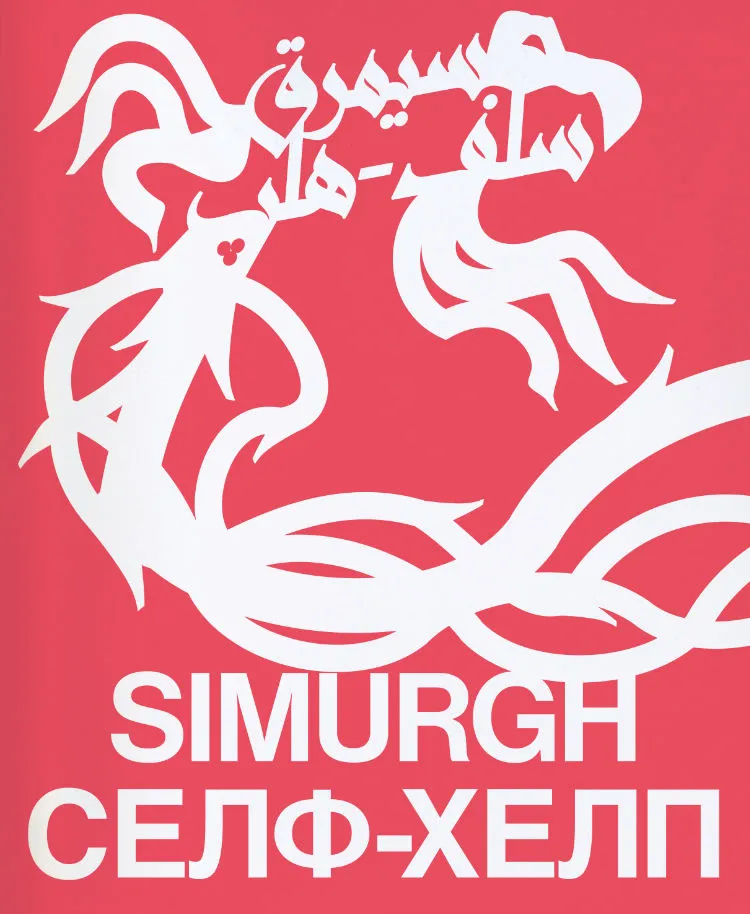
For the 2025 edition, Slavs and Tatars' Simurgh Self-Help revisits Marcel Broodthaers' seminal work Musée d'Art Moderne: Département des Aigles (1968–1972), replacing or "translating" the eagle—a symbol of power and empire that is used to challenge our understanding of authority and value—with the Simurgh, a mythical bird found across the Turkic-Persianate world. Whilst the eagle is often associated with nation-states and masculinity, the Simurgh is decidedly transnational, metaphysical, and flamboyant, if not gender-fluid.

Much like the collective's geographic remit—between the former Berlin Wall and the Great Wall of China—this publication attempts to shift our focus elsewhere, eastwards, to regions which too often fall through the cracks of historiography and art history. If modern and contemporary art institutions in Broodthaers' time were largely situated between the Rhineland and Northeast United States, the multipolarity of today's art world is a fait accompli: with biennials in Uzbekistan and museums in Kazakhstan, amongst others, rivalling the traditional centers of power.

Once too a sacred bird—accompanying Zeus, for example—the eagle has, over the past two millennia, undergone a thorough profanation: a brawny, secular flex of nationalism. It would be remiss not to see the parallels in the world of media: print itself and the act of reading, once an activity for the few and anointed, has undergone a similar dynamic of democratization over the past several centuries and, especially in recent years with the internet, a vulgarization which would make medieval Church elders wag their shriveled fingers at us in an I-told-you-so meme meant for the ages. This profanation has challenged the very institution of media and the narratives it disseminates, much as important works of institutional critique challenged contemporary art in the 1970s and beyond—akin to Slavs and Tatars' genre-bending mix of high and low, East and West, sacred and profane does today.

Slavs and Tatars' (founded 2006) extensive publishing activity—some 15 books in 20 years—has treated subjects as diverse as alphabet politics, Uighur literary culture, political satire in the Muslim world, and German anti-Enlightenment thinkers. Alongside sculptures, textile works, installations, sound pieces, and even a brick-and-mortar Pickle Bar in Berlin, the collective's books have cleared new paths for contemporary discourse via a wholly idiosyncratic form of knowledge production that draws on popular culture, spiritual and esoteric traditions, oral histories, modern myths, as well as scholarly research.

Slavs and Tatars is a faction of polemics and intimacies devoted to an area east of the former Berlin Wall and west of the Great Wall of China known as Eurasia. The collective's work spans several media, disciplines, and a broad spectrum of cultural registers (high and low) focusing on an oft-forgotten sphere of influence between Slavs, Caucasians and Central Asians. 

Slavs and Tatars has published Kidnapping Mountains (Book Works, 2009), a celebration of complexity in the Caucasus, Love Me, Love Me Not: Changed Names (onestar press, 2010) and are currently preparing solo engagements at Vienna's Secession,  Museum of Modern Art, New York and Künstlerhaus Stuttgart.

Cover of PRESCRIPTIONS: A Collection for Many Evils of the Body and the Mind, Also for Witchcraft

Hildegard Press

PRESCRIPTIONS: A Collection for Many Evils of the Body and the Mind, Also for Witchcraft

Lyndl Hall

PRESCRIPTIONS is a transcription of a handwritten manuscript, dated to approximately 1650, containing a wide range of medicinal and magical remedies. Currently housed in the Cornell University Witchcraft Collection, it is assumed this practical handbook was a reference for healing, midwifery, and other medical/magical advice. Recipes and instruction cover various methods of purging, ointments for swellings, fevers, and pain reduction, lotions for venereal disease, advice for childbirth, and dilemmas such as “worms in the ear.” Accompanying these medicinal prescriptions are a series of magical prescriptions: charms, rituals, and spells recorded to fortify the ailing body, induce amorous desire, or seek revenge.

With its mix of Latin words, Early Modern English parlance, colloquial plant names, apothecary weights, and archaic medical terms, the recipes can at first appear opaque, but with sustained engagement one can begin to decipher the logics and structures within the writer(s)' shorthand. The original manuscript, in having its own detailed glossary, index, and citations, exhibits a meticulous cataloging of knowledge and resources, and reveals an earnest desire to hold onto the integrity and sanctity of the body in the face of 'many evils.'

The transcription is accompanied by a glossary of terms, an explanation of the various apothecary measurements used, and expanded citations of the medicinal/magical treatises that were abbreviated within the original text.

Cover of Unbidden Tongues #9: Potty Mouth

Unbidden Tongues

Unbidden Tongues #9: Potty Mouth

Violet Bartley

Unbidden Tongues #9: Potty Mouth is a collection of what could be described as concrete poetry, written over the past two years by our niece Violet Bartley, now aged five. Typed at a computer and sent exclusively via e-mail, the poems stand as clear evidence of a person in the beginnings of grasping (at) language. Throughout, characters are repeated uninterrupted until margins break them, keys pushed down by a finger not yet strong enough to lift itself up.

Over the years, as her written vocabulary grew and these attempts at communication slowly stacked up into the collection printed here, Violet delivered poem after poem within which different mutations of the word ‘poo’ were uttered in type: poo, poobum, bum poo, ipoo, poop. While simple, often illegible and definitely isolated utterances (she never replies when you send a poem back in turn), they are decipherable examples of someone learning defiance through language.

Cover of Poster Edition (bundle)

Self-Published

Poster Edition (bundle)

etaïnn zwer

4 poèmes-affiches, format A3, impriméx en risographie au studio Colorama (Berlin), sur papiers variés, tirage à 150 exemplaires

«GASOLINE, Apocalypse 1998», «the category is: phone sex», «zona nudista», «(fête) sentimental-e-s» : étés d'apocalypse, émojis banane, cruising transocéanique, SMS en short, sales coeurs, baraques à frissons et grand-huit sentimental... ces poèmes courent toustes ~ à genoux, à nu ou en solex ~ après la question du désir, après l'amour aussi, avec une tendre obsession

Design graphique signé Auriane Preud’homme, Enz@ Le Garrec, Roxanne Maillet & Martha Salimbeni, avec des dessins de Gaëlle Loth

Cover of The Almond

1080 Press

The Almond

Theadora Walsh

Poetry €25.00

“Today is the day with the letter,” Celan writes to Bachmann on October 30, 1957. Theadora Walsh’s essay-poem, The Almond concerns, for I hesitate to write “about” or “is in relation to”, the love between Paul Celan and Ingeborg Bachmann. Two Austrian writers flung across Europe by the atrocities of the Holocaust, excavating the narrows of a language not theirs, or taken from them. An almond is the closest two people can be, and becomes the binding structural conceit of the book, two segments reaching across the blank page to each other, across history, time and language.