rile*books

Search books

Search books by title, author, publisher, keywords...

Cover of DMZ Colony

Wave Books

DMZ Colony

Don Mee Choi

€23.00

Woven from poems, prose, photographs, and drawings, Don Mee Choi's DMZ Colony is a tour de force of personal and political reckoning set over eight acts. Evincing the power of translation as a poetic device to navigate historical and linguistic borders, it explores Edward Said's notion of "the intertwined and overlapping histories" in regards to South Korea and the United States through innovative deployments of voice, story, and poetics. Like its sister book, Hardly War, it holds history accountable, its very presence a resistance to empire and a hope in humankind.

Published in 2020 ┊ 132 pages ┊ Language: English

recommendations

Cover of Supplication: Selected Poems of John Wieners

Wave Books

Supplication: Selected Poems of John Wieners

John Wieners

Poetry €22.00

Supplication: Selected Poems of John Wieners gathers work by one of the most significant poets of the Black Mountain and Beat generation. Includes poems that have previously never been published, the full text of the 1958 edition of his influential The Hotel Wentley Poems, plus poems from rare sources, facsimiles, notes, and collages by Wieners. An invaluable collection for new and old fans.

John Wieners (1934-2002) was a founding member of the New American poetry that flourished in America after the Second World War. Upon graduating from Boston College in 1954, Wieners enrolled in the final class of Black Mountain College. Following Black Mountain's closure in 1956, he founded the small magazine Measure (1957-1962) and embarked on a peripatetic life, participating in poetry communities in Boston, San Francisco, New York, and Buffalo throughout the late 1950s and 1960s, before settling at 44 Joy Street in Boston in 1972. He is the author of seven collections of poetry, three one-act plays, and numerous broadsides, pamphlets, uncollected poems, and journals. Robert Creeley described Wieners as the greatest poet of emotion of their time.

Cover of Plans for Sentences

Wave Books

Plans for Sentences

Renee Gladman

"These sentences—they—will begin having already been sentences somewhere else, and this will mark their afterlife, and this will be their debut." So begins Renee Gladman’s latest interdisciplinary project, Plans for Sentences. A tour de force of dizzying brilliance, Gladman’s book blurs the distinctions between text and image, recognizing that drawing can be a form of writing, and vice versa: a generative act in which the two practices not only inform each other but propel each other into futures. In this radical way, drawing and writing become part of a limitless loop of energy, unearthing fertile possibilities for the ways we think about poetry. 

If Gladman ascribes to any particular type of poetics, here in Plans for Sentences, we are sure to find that it is robustly grounded in a poetics of infinite language.

Cover of The Tiniest Muzzle Sings Songs of Freedom

Wave Books

The Tiniest Muzzle Sings Songs of Freedom

Magdalena Zurawski

Poetry €18.00

Taking readers from suburban carports to wintry Russian novels, from summer tomato gardens to the sublime interiors of presleep thoughts, Magdalena Zurawski's poems anchor the complexities of our interconnected world in the singularity of the human experience. Balancing artistic experimentation with earnest expression, achingly real detail with dazzling prismatic abstraction, humor with frustration, light with dark, she offers a book of great human depth that is to be carried around, opened to anywhere, and encountered.

Magdalena Zurawski is the author of the novel The Bruise, which won the Ronald Sukenick Award from FC2 in 2008 and a LAMBDA literary award in 2009, and the collection of poems Companion Animal, which was published by Litmus Press in 2015 and won a Norma Faber First Book Award from the Poetry Society of America. She attended Brown University where she studied with poets Rosmarie and Keith Waldrop, C.D. Wright, and Peter Gizzi. She has lived in Berlin, New York, Philadelphia, San Francisco, and Durham, NC where she ran the Minor American Reading Series. She is currently Assistant Professor of English and Creative Writing at the University of Georgia.

Published April 2019

Cover of Listen to the Golden Boomerang Return

Wave Books

Listen to the Golden Boomerang Return

CAConrad

Poetry €20.00

Following their book AMANDA PARADISE: Resurrect Extinct Vibration (winner of the PEN and the Ruth Lilly Prize for Poetry), CAConrad's Listen to the Golden Boomerang Return shifts its attention from the previous book’s focus on communing with animals who are extinct toward communicating and caring for animals still living among us. 

Recalling the historical and symbolic significance of the boomerang as an instrument of return, these poems emerged from a (soma)tic poetry ritual in which the author wrote with animals who have found ways to thrive in the Anthropocene, resulting in sculptural poems that are uninhibited and mysterious as they emerge organically from the bottom of each page. Guided by the urge “to/desire/the world/as it is/not as/it was,” CAConrad writes from an ecopoetics that is generous and galvanizing, reminding us of how our present attentions collectively shape a future humanity.

Cover of Theory for Moving Houses

Wave Books

Theory for Moving Houses

Renee Gladman

You are asking me where I live and it’s making me think all these things about space, where I start and end in space and where space starts and ends in me and when, in space, I am a body and when I’m a book, in space.

So begins Renee Gladman's Theory for Moving Houses, and with these lines we are invited into a liminal space of imagination and investigation, as Gladman guides us through the architectures of her poetics. Foundational here is a sense of fluidity, a slippage of time, a devotion to “non-linear and hyper gestural movement,” a communal spirit. Gladman’s inquiry into her intersecting practices of writing and drawing reveals a deep commitment to uncertainty and “fictional knowing.” Yet again, Gladman upends traditional expectations of prose, as she leads us through landscape of her Ravicka series novels, ultimately surprising us with a novel within nonfiction. The latest volume in Wave’s Bagley Wright Lecture Series, Theory for Moving Houses is not only visionary in its contemplations but also is a virtuosic example of the ways in which language can shape utopian sites of possibility.

Cover of Translation is a Mode = Translation is an Anti-neocolonial Mode

Ugly Duckling Presse

Translation is a Mode = Translation is an Anti-neocolonial Mode

Don Mee Choi

Essays €12.00

Don Mee Choi is the author of three books of poetry and hybrid essays, and an award-winning translator of contemporary Korean women’s poetry. In this pamphlet, Translation is a Mode=Translation is an Anti-neocolonial Mode, she explores translation and language in the context of US imperialism—through the eyes of a “foreigner;” a translator; a child in Timoka, the made-up city of Ingmar Bergman’s The Silence; a child from a neocolony.

This pamphlet is part of UDP’s 2020 Pamphlet Series: twenty commissioned essays on collective work, translation, performance, pedagogy, poetics, and small press publishing. Each offers a different approach to the pamphlet as a form of working in the present, an engagement at once sustained and ephemeral.

Cover of Mirror Nation

And Other Stories

Mirror Nation

Don Mee Choi

Poetry €23.00

Much like Proust’s madeleine, a spinning Mercedes Benz ring outside Choi’s Berlin window prompts a memory of her father on the Glienicker Bridge between Berlin and Potsdam, which in turn becomes catalyst for delving into the violent colonial and neocolonial contemporary history of South Korea, with particular attention to the massacre by Korean government forces of hundreds of students taking part in the Gwangju Uprising of May 1980. Here, photographs, news footage, and cultural artefacts commingle with a poetry of grief that is both personal and collective. Inspired in part by W. G. Sebald and Walter Benjamin, Mirror Nation is a sorrowful reflection on the ways in which a place can hold a ‘magnetic field of memory’, proving that history doesn’t merely repeat itself; history is ever present, chiming the hours in a chorus against empire.

Don Mee Choi draws on friendships, literature and documentary materials to elucidate the personal griefs we suffer under the assaults of empire. Formally explosive and emotionally harrowing, Mirror Nation is a riveting investigation into the coded images that fuse memories of different times and places.
 Forrest Gander

Cover of BFTK — Issue 4: On Translation, Transmission & Transposition

Bricks from the Kiln

BFTK — Issue 4: On Translation, Transmission & Transposition

Andrew Walsh‐Lister, Matthew Stuart and 2 more

Periodicals €23.00

Bricks from the Kiln is an irregular journal edited by Andrew Lister and Matthew Stuart, sometimes with guest editors, that presents graphic design and typography as disciplines activated by and through other disciplines and lenses such as language, archives, collage, and more. It borrows its title from the glossary notes of Ret Marut’s "Der Ziegelbrenner," which was the ‘size, shape and colour of a brick’, and ran for 13 issues between 1917 and 1921.

The latest installment, "#4: On Translation, Transmission & Transposition," was published as an event (and now) a publication, with events at London College of Communication, Burley Fisher Books & Pig Rock bothy, Socttish National Gallery of Modern Art, and Inga (in November, 2019).

GREENING
Helen Marten
(front / back flaps)

JOY & HAPPINESS, FIDELITY
& INTIMACY IN TRANSLATION
Sophie Collins
(pp.4–13)

PLANETARY TRANSLATION
Don Mee Choi
(pp.15–19)

TRANSLATION AND A LIPOGRAM:
OR, ON FORMS OF AGAIN-WRITING
AND NO- (OR NOT THAT-) WRITING
Kate Briggs
(pp.23–33)

UNHOMING (1 of 4):
FOLLOWING HÖLDERLIN’S ‘HEIMAT’
Phil Baber
(pp.35–47)

SNOW WHITE AND THE WHITE
OF THE HUMAN EYEBALLS
Joyce Dixon
(pp.51–62)

ALTAMIRALTAMIRALTAMIRA
Florian Roithmayr
(pp.65–116)

LEVEL UP, LEVEL DOWN
Jen Calleja
(pp.119–124)

TRANS.MISSION [A.DIALOGUE]:
A JAVASCRIPT FOR THREE VOICES
J.R. Carpenter
(pp.127–134)

THE MECHANISATION OF ART
Edgar Wind
(glosses / annotations / insertions by
Natalie Ferris & Bryony Quinn)
(pp.137–144)

UNHOMING (2 of 4)
Phil Baber
(p.147)

COMMISSION FOR A NOIR MOVIE
B IN THE BAY OF BISCAY
Rebecca Collins
(pp.151–157)

UNHOMING (3 of 4)
Phil Baber
(pp.150–162)

EVERY CONTACT LEAVES A TRACE;
TRANSCRIBING OSTEON
Naomi Pearce
(pp.165–170)

HOW DOES A WORK END?
Karen Di Franco
(pp.173–193)

METONYMY Op.1 & Op.2
James Bulley
(pp.197–201)

AFRIKAN ALPHABETS EXTENDED
Saki Mafundikwa
(pp.204–207)

SUSAN HILLER: 1983
Natalie Ferris
(pp.209–217)

EVERY TELLING HAS A TALING /
EVERY STORY HAS AN ENDING
Matthew Stuart
(pp.220–233)

GRAPHIC PROPRIOCEPTION
James Langdon
(pp.235–254)

UNHOMING (4 of 4)
Phil Baber
(pp.257–263)

TUNNELLING AND AGGREGATING
FOR DESIGN RESEARCH
Bryony Quinn (text) &
Peter Nencini (images)
(pp.265–272)

LET IT PERCOLATE:
A MANIFESTO FOR READING
Sophie Seita
(pp.275–280)

288 pgs, 22.4 × 17 cm, Softcover, 2020

Cover of This Part Is Silent: A Life Between Cultures

And Other Stories

This Part Is Silent: A Life Between Cultures

SJ Kim

Non-fiction €18.00

Born in Korea, raised in the American South, and trying her best to survive British academia, SJ Kim probes her experiences as a writer, scholar, and daughter to confront the silences she finds in the world. With curiosity and sensitivity, she writes letters to the institutions that simultaneously support and fail her, intimate accounts of immigration, and interrogations of rising anti-Black and anti-Asian racism. She considers the silences between generations―especially within the Asian diaspora in the West―as she finds her way back to her own family during the pandemic lockdown. Embracing the possibilities and impossibilities of language, Kim rejoices in the similes of Korean, her mother tongue, and draws inspiration from K-dramas and writers who sustain her, including Yusef Komunyakaa, Don Mee Choi, Toni Morrison, and Theresa Hak Kyung Cha.

Longlisted for the 2025 Andrew Carnegie Medal for Excellence in Nonfiction.

Cover of Hardly War

And Other Stories

Hardly War

Don Mee Choi

Memoir €18.00

Hardly War, first published in the USA in 2016 and finally published in the UK in 2025, splices the personal and political to dizzying effect in a poetry fluid with forms and genres including reportage, memoir, opera libretto, archival photos and drawings. Using artefacts from Choi’s father, a professional documentary photographer during the Korean and Vietnam wars, she explores her paternal relationship and heritage. Here poetry and geopolitics are inseparable twin sisters, conjoined to the belly of a warring empire.

Choi’s KOR-US Trilogy (Hardly War and the subsequent DMZ Colony and Mirror Nation) brings us a new poetic language to learn. Suggestive and subtle in its connections and allusions, there is an exhilarating freedom in its playful form, all while looking straight at the brutality of colonialism and dictatorship.

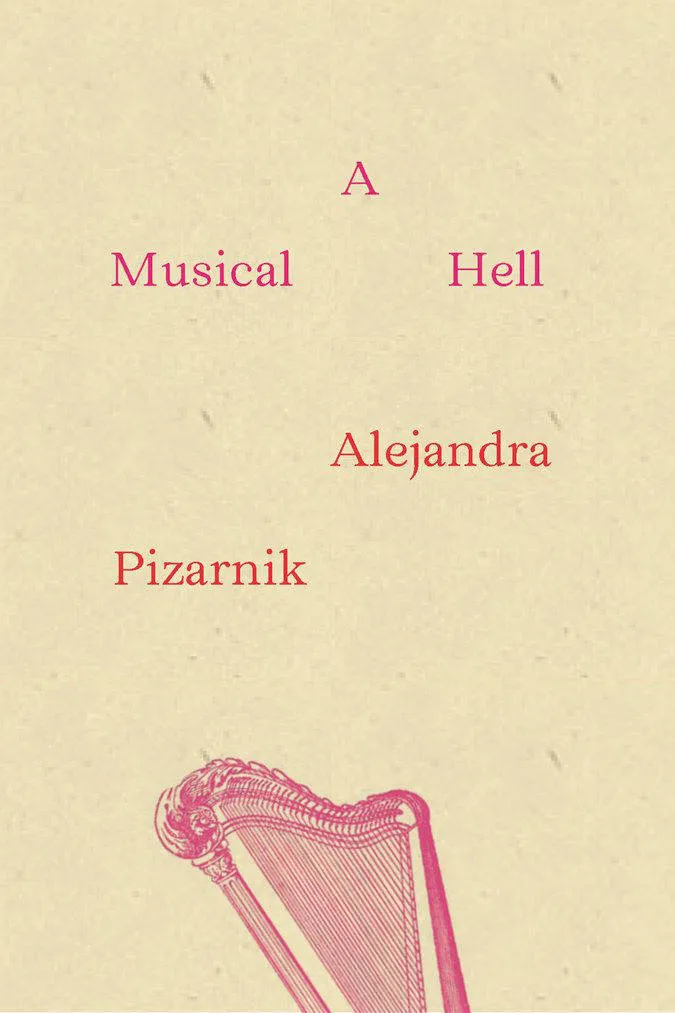
Cover of A Musical Hell

New Directions Publishing

A Musical Hell

Alejandra Pizarnik, Yvette Siegert

Poetry €13.00

“An aura of legendary prestige surrounds the work of Alejandra Pizarnik,” writes César Aira. Her last collection to be published before her suicide in 1972, A Musical Hell is the first book of poems by Pizarnik to be published in its entirety in the U.S. Pizarnik writes at the edge of poetic impossibility, opening with a blues singer, expanding into silence, and closing into a theater of shadows and songs of the drowned.

Cover of Thirty-Odd Functions of Voice in the Poetry of Alice Notley

Ugly Duckling Presse

Thirty-Odd Functions of Voice in the Poetry of Alice Notley

Steven Zultanski

Poetry €15.00

Alice Notley has consistently peopled her poetry with the voices of those around her: kids, friends, husbands, strangers, and the dead. Thirty-Odd Functions of Voice in the Poetry of Alice Notley offers an array of interpretations of this technique. While not aspiring to completeness, and limiting its attention to one formal aspect of a single author's work, this poem-essay sketches relationships between intimate speech and literary language.