rile*books

Search books

Search books by title, author, publisher, keywords...

Cover of Bl_nk: essays and interviews

Book*hug Press

Bl_nk: essays and interviews

M. NourbeSe Philip

€18.00

BLANK is a collection of previously out-of-print essays and new works by one of Canada's most important contemporary writers and thinkers. Through an engagement with her earlier work, M. NourbeSe Philip comes to realize the existence of a repetition in the world: the return of something that, while still present, has become unembedded from the world, disappeared. Her imperative becomes to make us see what has gone unseen, by writing memory upon the margin of history, in the shadow of empire and at the frontier of silence.

In heretical writings that work to make the disappeared perceptible, BLANK explores questions of race, the body politic,timeliness, recurrence, ongoingness, art, and the so-called multicultural nation. Through these considerations, Philip creates a linguistic form that registers the presence of what has seemingly dissolved, a form that also imprints the loss and the silence surrounding those disappearances in its very presence.

M. NourbeSe Philip is a poet, essayist, novelist, playwright, and former lawyer who lives in Toronto. She is a Fellow of the Guggenheim and Rockefeller (Bellagio) Foundations, and the MacDowell Colony. She is the recipient of many awards, including the Casa de las Americas prize (Cuba). Among her best-known works are: She Tries Her Tongue, Her Silence Softly Breaks, Looking for Livingstone: An Odyssey of Silence, and Zong!, a genre-breaking poem that engages with ideas of the law, history, and memory as they relate to the transatlantic slave trade.

published 2017

Language: English

recommendations

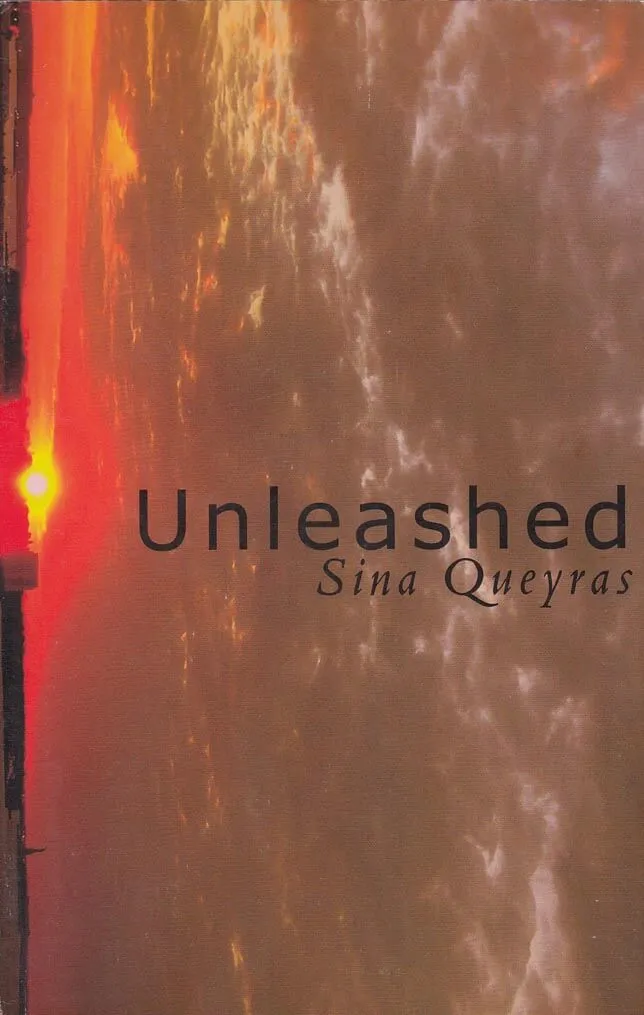
Cover of Unleashed

Book*hug Press

Unleashed

Sina Queyras

Poetry €20.00

05/09/04 Now she is blogging. Now she is sitting on the black couch listening to the sirens wail and the rain fall. Now she is thinking of oysters. Now she is wondering why this is worth sharing. Now she is thinking, how decipher what is worth reading? Who is to say? Sifters. She thinks we have become a nation of sifters. So began a three-year experiment in blogging. An experiment begun for many reasons—a way for an expat to keep in touch with fellow Canadian writers and artists, a way to come to terms with the increasing relevance of the internet in literary lives, and a way to figure out why, after decades of gains, women writers are still grossly underrepresented in critical dialogues.

With an afterword by Vanessa Place.

Cover of The Men

Book*hug Press

The Men

Lisa Robertson

Poetry €16.00

The Men explores a territory between the poet and a lyric lineage among men. Following a tradition that includes Petrarch's Sonnets, Dante's work on the vernacular, Montaigne, and even Kant, Robertson is compelled towards the construction of the textual subjectivity these authors convey-a subjectivity that honors all the ambivalence, doubt and tenderness of the human. Yet she remains angered by the structure of gender these works advance, and it is this troubled texture of identity that she examines in The Men.

Cover of A Grammar Built with Rocks

Wendy's Subway

A Grammar Built with Rocks

Shoghig Halajian, Suzy Halajian

Ecology €30.00

Featuring writing and artistic practices that trace the racialized and gendered relationship between bodies and land, A Grammar Built with Rocks explores artists’ engagement with sites of physical dispossession and socio-ecological crisis, highlighting how creative research methodologies can serve as radically new place-making practices. The publication brings together a range of feminist-decolonial texts and visual contributions that explore how movement, transience, and improvisation offer alternative ways of being-together while being-in-place.  

Contributions by: Basel Abbas and Ruanne Abou-Rahme with Fawz Kabra, Jheanelle Brown and Julien Creuzet, Carolina Caycedo, Ryan C. Clarke and Cauleen Smith, DAAR—Decolonizing Architecture Art Research with Nicola Perugini, Sandra de la Loza, Demian DinéYazhi’, rafa esparza, Mashinka Firunts Hakopian, Tia-Simone Gardner, Raquel Gutiérrez, Suzanne Kite with Mahpíy̌a Nážinn, Candice Lin, Jumana Manna, K-Sue Park, Christine Rebet, Susan Silton, and Asiya Wadud.

The book also includes a reader, with grounding texts, sources of inspiration, and research references, by Jason Allen-Paisant, Dionne Brand, Suzanne Césaire, Lisa Lowe, Camila Marambio and Cecilia Vicuña, Robyn Maynard and Leanne Betasamosake Simpson, M. NourbeSe Philip, and K. Wayne Yang.

About the editors

Shoghig Halajian is a curator, writer, and artist whose work explores queer and diasporic imaginaries, place-based practices, and experiments in collectivity and collaboration. She is co-editor of the online journal, Georgia, which is supported by a Creative Capital | Andy Warhol Foundation Arts Writers Grant. Select curatorial projects include: A grammar built with rocks (Human Resources LA, One Archives at the USC Libraries, and REDCAT, 2018); At night the states (Hammer Museum, 2017); DISSENT: what they fear is the light (LACE, 2016); and rafa esparza: I have never been here before (LACE, 2015). She was a TBA21 Ocean Space Fellow in Venice (2021) and a curatorial fellow at École du Magasin in Grenoble (2011), where she co-curated the exhibition, The Whole World is Watching, on the the collective Vidéogazette (1973–76), which organized a public access television program in the city. She received her PhD in Art History, Theory, and Criticism with a specialization in Critical Gender Studies from the University of California, San Diego in 2024. 

Suzy Halajian is a curator and writer based in Los Angeles, where she serves as the Executive Director and Curator at JOAN. Her practice is invested in long-term collaborations with artists, critically engaging with the intersections of art, politics, and social histories. She explores strategies of image-making through the lens of colonial histories and contemporary surveillance states. Halajian has curated exhibitions and public programs at institutions such as Los Angeles Contemporary Exhibitions (LACE), ONE Archives at the USC Libraries, the Hammer Museum, and Human Resources Los Angeles, as well as Tanya Bonakdar Gallery (New York), Oregon Contemporary (Portland), Kunstverein (Amsterdam), UKS (Oslo), Galerie Hubert Winter (Vienna), and the Sursock Museum (Beirut). She also serves on the Programming Committee at Human Resources and has worked with nonprofit organizations including the MAK Center for Art and Architecture (Los Angeles) and Ashkal Alwan (Beirut). Her curatorial work and writing have been supported by the Graham Foundation, the Andy Warhol Foundation Arts Writers Grant—for Georgia, a journal she co-founded and co-edits with Anthony Carfello and Shoghig Halajian—and a Curatorial Research Fellowship from the Andy Warhol Foundation for the Visual Arts. Halajian’s writing has appeared in ArteEast, BOMB, X-TRA, Ibraaz, and other publications. She holds an MA from the Center for Curatorial Studies at Bard College and is currently a PhD candidate in the Film and Digital Media program at the University of California, Santa Cruz.

Cover of Aunonomic Reasoning

Black Sun Lit

Aunonomic Reasoning

Will Alexander

Poetry €18.00

Precipitous philosophies. Synaptic-nerve narrations. Syntactic spirals. Hyper-coiled horizons. Will Alexander’s mental range has arrived. An anomalous scripting of the word “automatic,” Aunonomic Reasoning is a whirlwind of lingual torrents triggered by creative mishearing that at once exposes the occupations of orthodox surrealism, summons a voice for the scathed populace of imperial affliction, and forges new paths of phonetic potentiality to mend semantic injury. Pushing prosaic margins beyond their boundaries, these texts take on the etymological condition of the essay as “attempt” with iridescent siege, prepositional frenzy, paratactic provocation, noetic disreckoning, and a critical demand to dismantle: all of which signatures of Alexander’s unilateral poetic innovations.

Cover of Typing...

Estonian Academy of Arts / EKA GD MA

Typing...

Lieven Lahaye

Essays €12.00

The fourth in a series of publications, featuring writing by graphic design students of EKA GD MA. Typing... includes essays, scripts, translations and stories on a wide range of topics: killing vowels and milling fonts, personal knowledge management, shortcuts, tedious/careful/tiring/joyful typesetting, type of Georgianness, typing in 3rab(izi) and typing in all lowercase.

With contributions by Anna Wittenkamp Rich, Archil Tsereteli, Fa(tima)-Ezzahra El Khammas, João (Juca) Pedro Nogueira, Karthik Palepu, Laura Martens, Linnea Lindgren, Rok Ifko Kranjc.

Designed by Fatima-Ezzahra El Khammas and Laura Martens
Cover by Hanafi Gazali

Cover of Trans Femme Futures: Abolitionist Ethics for Transfeminist Worlds

Pluto Press

Trans Femme Futures: Abolitionist Ethics for Transfeminist Worlds

Nat Raha, Mijke van der Drift

LGBTQI+ €23.00

'Femme' describes a constellation of queer, gendered expressions that uproot expectations of what it means to be feminine. Building upon experiences of transformation, belonging and harm, this book is a transfeminist call for collective liberation.

Trans Femme Futures envisions the future through everyday actions that revolutionise our lives. Nat Raha and Mijke van der Drift discuss struggles around trans healthcare, the need for collectives over institutions, the importance of mutual care, and transfeminism as abolition.

The authors show how social change can be achieved through transformative practices that allow queer life to thrive in a time of climate, health, political and economic crises.

'A brilliant, useful, and immensely moving book that deals a critical blow to the epistemic austerity of our times' - Jordy Rosenberg

Cover of Les Voies du Paradis

After 8 Books

Les Voies du Paradis

Peter Cornell

Essays €16.00

Les Voies du Paradis rassemble ce qui subsiste d’une œuvre perdue : les seules notes de bas de page d’un texte manquant, laissées par un chercheur après son décès et éditées par Peter Cornell. Ces notes et leurs illustrations forment un ensemble incomplet, qui se donne ici à lire à travers ses manques. Un fil – d’Ariane ? – se tisse entre les diagrammes, les figures de spirales et de labyrinthes – de Cesare Ripa à Ernst Josephson et Robert Smithson, des Templiers aux spirites et aux surréalistes – qui parcourent le texte et se font écho, comme les éléments d’une énigme ou des figures ésotériques. Le « Paradis » dont il est question ici, c’est le rêve de la connaissance absolue, la saisie de l’ordre caché des choses, à laquelle aspirent autant poètes et artistes que mystiques et scientifiques…

Paru en Suède en 1987, Les Voies du Paradis y a acquis la réputation d’un livre culte. Peter Cornell y propose une perspective inédite sur les liens entre art, littérature, spiritualité et occultisme, dans un texte à mi-chemin de l’essai et de la fiction, de l’érudition et de la mystification. La volonté de savoir y est mise en scène comme une quête prise au piège de l’irrationnel ; les notes s’assemblent par logique associative, programme éclectique qui tente encore de retrouver un centre perdu – comme les algorithmes auxquels est confiée aujourd’hui la tâche fantasmée de mettre en ordre les connaissances humaines.

Cover of Vampyroteuthis Infernalis

Atropos Press

Vampyroteuthis Infernalis

Vilem Flusser

Flusser introduces an infernal creature from the oceanic abysses, who slowly emerges, not from the oceans, but from man's own depths to gaze spitefully into his eyes and reflect back at his own existence.

Originally published only in German in 1987, this version has been edited and translated by Rodrigo Maltez Novaes, Ph.D. candidate at the European Graduate School, Saas-Fee, under the supervision of Prof. Dr. Siegfried Zielinski, from the original, unpublished and extended Brazilian-Portuguese version of the manuscript recently found at the Vilém Flusser Archive at the Universität der Kunst, Berlin. This edition is also accompanied by a selection of previously unpublished excerpts from Flusser's correspondence with Milton Vargas and Dora Ferreira da Silva, with whom he discussed the development of the present text.