rile*books

Search books

Search books by title, author, publisher, keywords...

Cover of Novel On Yellow Paper

New Directions Publishing

Novel On Yellow Paper

Stevie Smith

€18.00

I am a forward-thinking girl, and don’t stay where I am. ‘Left right, be bright.’

Pompey Casmilus, Stevie Smith’s loquacious alter ego, works as a secretary and writes down on yellow office paper this wickedly amusing novel. “Dear Reader,” she addresses us politely in the whirlwind of her opinions on death, sex, anti-Semitism, art, Greek tragedy, friendship, marriage, Nazism, gossip, and the suburbs. But most of all Pompey talks about love.

When Smith first tried to get her poems published in 1935, she was told by a publisher to “go away and write a novel.” Novel on Yellow Paper, the happy result of this advice, made its author an instant celebrity and was acclaimed as “a curious, amusing, provocative and very serious piece of work” (The London Times Literary Supplement, 1936).

Published 1936, 2022

Stevie Smith (20 September 1902 – 7 March 1971), was an English poet and novelist.

Published in 2022 ┊ 2 pages ┊ Language: English

recommendations

Cover of The Hour of the Star

New Directions Publishing

The Hour of the Star

Clarice Lispector

Fiction €14.00

The devastating final work by Brazil’s greatest modern writer, The Hour of the Star tells the haunting tale of Macabéa—a typist who lives in the slums of Rio—underfed, sickly, and unloved, yet inwardly free.

Translated from the Portuguese by Benjamin Moser. With a contribution by Paulo Gurgel and Valente Colm Tóibín.

The Hour of the Star, Clarice Lispector's consummate final novel, may well be her masterpiece. Narrated by the cosmopolitan Rodrigo S.M., this brief, strange, and haunting tale is the story of Macabéa, one of life's unfortunates. Living in the slums of Rio de Janeiro and eking out a poor living as a typist, Macabéa loves movies, Coca-Cola, and her rat of a boyfriend; she would like to be like Marilyn Monroe, but she is ugly, underfed, sickly, and unloved. Rodrigo recoils from her wretchedness, and yet he cannot avoid realization that for all her outward misery, Macabéa is inwardly free. She doesn't seem to know how unhappy she should be. Lispector employs her pathetic heroine against her urbane, empty narrator—edge of despair to edge of despair—and, working them like a pair of scissors, she cuts away the reader's preconceived notions about poverty, identity, love, and the art of fiction. In her last novel she takes readers close to the true mystery of life, and leaves us deep in Lispector territory indeed.

Cover of Água Viva

New Directions Publishing

Água Viva

Clarice Lispector

Fiction €15.00

In Água Viva Clarice Lispector aims to 'capture the present'. Her direct, confessional and unfiltered meditations on everything from life and time to perfume and sleep are strange and hypnotic in their emotional power and have been a huge influence on many artists and writers, including one Brazilian musician who read it one hundred and eleven times. Despite its apparent spontaneity, this is a masterly work of art, which rearranges language and plays in the gaps between reality and fiction.

Clarice Lispector (December 10, 1920 – December 9, 1977) was a Brazilian writer acclaimed internationally for her innovative novels and short stories. Born to a Jewish family in Podolia in Western Ukraine, as an infant she moved to Brazil with her family, amidst the disasters engulfing her native land following the First World War. 

Cover of Sea, Poison

New Directions Publishing

Sea, Poison

Caren Beilin

Fiction €16.00

Cumin Baleen is a forty-one-year-old writer living in Philadelphia—this city of hospitals—who works at the upscale grocery Sea & Poison and is navigating the onset of an autoimmune condition. To start a medication that may help, an eye exam is required and this leads to a nightmarish laser eye surgery. The laser shoots into her brain, making her language spare and her sentences clause-less, a vexing constraint that stalls her book on gynecological malpractice: she wants others, in the realm of our for-profit medical industry that "renders the Hippocratic Oath its opposite," to see poison.

Meanwhile, Cumin is kicked out of her boyfriend Mari's studio after he falls for Janine, their landlord, and starts renting a closet in Maron's bedroom—polyamorous Maron who is hooking up with Alix, whom Cumin lusts after. Disheveled from medicines and medical scams, Cumin declares, "I don't know what to say, I'm saying I have a cracked appearance. It's not a pity party, it's a character sketch. Insofar as you'll need to be looking at me, that your mind should fill me up with its own swaying cognitive and toxic reeds if we are to do this, your imagination should touch me with its ridiculous poison."

Caren Beilin's hypnotic and fractured story is at once an homage to Shusaku Endo's terrifying novel of human vivisection The Sea and Poison and the spirit of OuLipo, the pioneering French writing group that sought new literary potential through constraints.

Caren Beilin was born in Philadelphia in 1983. She is the author of the novel Revenge of the Scapegoat, which won the Vermont Book Award for Fiction. Her other books are Blackfishing the IUD, Spain, The University of Pennsylvania, and Americans, Guests, or Us. She lives in Cleveland and Philadelphia and teaches at Case Western Reserve University.

Cover of Exophony

New Directions Publishing

Exophony

Yoko Tawada

Non-fiction €17.00

Yoko Tawada's first essay collection in English presents and electrifying new side of the National Book Award-winner as she dives deep into her lifelong fascination with cross-hybridizing languages. The accent here, as in her fiction, is on the art of drawing closer to the world through defamiliarization. Tawada famously writes in both Japanese and German, but her interest in language reached beyond any mere dichotomy. 

The term "exophonic," which she first heard in Senegal, has a special allure for the author: "I was already familiar with similar terms. 'immigrant literature,' or 'creole literature,' but 'exophonic' had a much broader meaning, referring to the general experience of existing outside of one's mother tongue." Exophony opens a new vista into Yoko Tawada's world and delivers more of her signature erudite wit—at once cross-grained and generous, laser-focused and multidimensional, slyly ironic and warmly companionable.

A New Yorker Best Book of 2025. Translated from Japanese by Lisa Hofmann-Kuroda.

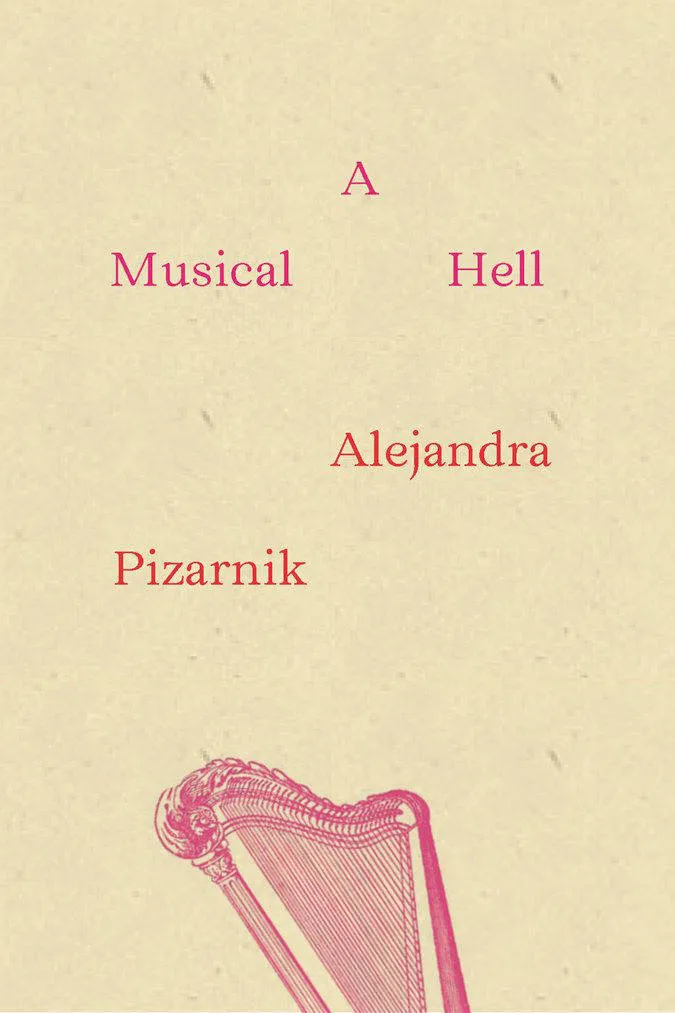
Cover of A Musical Hell

New Directions Publishing

A Musical Hell

Alejandra Pizarnik, Yvette Siegert

Poetry €13.00

“An aura of legendary prestige surrounds the work of Alejandra Pizarnik,” writes César Aira. Her last collection to be published before her suicide in 1972, A Musical Hell is the first book of poems by Pizarnik to be published in its entirety in the U.S. Pizarnik writes at the edge of poetic impossibility, opening with a blues singer, expanding into silence, and closing into a theater of shadows and songs of the drowned.

Cover of The Gadfly

Mandylion Press

The Gadfly

Ethel Lilian Voynich

Fiction €27.00

Religion, love and revolution collide in this swashbuckling saga of Risorgimento Italy. 

Set in Italy during the Risorgimento, The Gadfly is a thrilling tale of betrayal and revolution. It follows the adventures and misadventures of a mysterious satirist, a hardworking lady radical and a Catholic cardinal with a dark secret. Published in 1897 by Irish writer Ethel Lilian Voynich (or ELV, as she preferred to be known), The Gadfly sold millions of copies in the Soviet Union and the People's Republic of China, though it has been largely forgotten in the English-speaking world—until now. You'll laugh, you'll cry, you'll smuggle guns over the border and, if you're anything like the Gadfly, you'll do it all with incomparable style. Mandylion Press' second run of The Gadfly includes a new preface by Mandylion cofounder Madeline Porsella and a visual glossary illustrating the world of the novel.

Ethel Lilian (Boole) Voynich (1864–1960) was born in Cork, Ireland, and raised in Lancashire, England. Her peripatetic adult life was defined by passions for music and leftist politics. In 1902, she married Wilifrid Michael Voynich, a Polish revolutionary and antiquarian book dealer. She spent her final decades in New York City, where she worked in a music school and as a translator of Russian, Polish and French texts.

Edited by Mabel Capability Taylor, Madeline Porsella. Introduction by Madeline Porsella.

Cover of THEY LIED TO YOU ABOUT THE EUNUCHS

OUTLINE

THEY LIED TO YOU ABOUT THE EUNUCHS

Odete

Fiction €18.00

This book project introduces the history of eunuchism through auto-theory, historiography, historical fiction and poetry, exploring this identity in the ancient world and what kind of echoes can be heard in the present day. By overlapping various histories, and drawing the line between eunuchs in antiquity and contemporary gender discourse, Odete makes a case for a history of gender that hasn’t yet been written, asking what is the relevance of eunuchs to the history of art? And what does the study of the eunuch expose about the current world? 

Edited by Jan-Pieter ‘t Hart
Proofread by Callum Dean
Designed by Tjobo Kho & Vlad Omelianenko

Cover of Johnny Would You Love Me If My Dick Were Bigger

Feminist Press

Johnny Would You Love Me If My Dick Were Bigger

Brontez Purnell

Fiction €18.00

A dirty cult-classic put out in a small batch by an underground publisher (Rudos and Rubes) in 2015, Johnny Would You Love Me If My Dick Were Bigger recounts the life of an artist and "old school homosexual" who bears a big resemblance to author Brontez Purnell.

Our hero doesn't trust the new breed of fags taking over San Francisco, though. They wear bicycle helmets, seat belts, and condoms. Meanwhile, he sabotages his relationships, hallucinating affection while cruising in late night parks, bath-houses, and other nooks and crannies of a newly-conservative, ruined city.

Furiously original, vital, and messy, this funny "non-memoir" uncovers a revelatory truth for the age: there are things far scarier than HIV.

Cover of The Activist

Krupskaya Books

The Activist

Renee Gladman

Poetry €17.00

The Activist begins in the middle of a revolution. There is a protesting group of commuters with a missing leader. There is a bridge that may or may not have been bombed. People speak in nonsense and cannot stop themselves. In the midst of all this, the language of news reporters mixes with the language of confession. The art of this beautifully written book is in how it touchingly illustrates that relations between humans and cities are linked in a more complex interface than most realize. The book is full of entrances and exist, alternate routes and incommensurate geographies. The Activist does not analyze or explain the hopeful desires of protest at the turn of the century, but it does enable us to see them differently. — Juliana Spahr

"Whether this is a dream in which I'm captured or I've been captured and made to think I'm in a dream, I can't figure." Apropos to the rapturous tension The Activist evokes. A covert narrative operating as an event disguised as a repot. A grass trap glimpsed through the lashes of a sleepwalker. Topography of disrupted positionality, reflection girders flaccid memory against the romantic high up. Flea-bitten news and neuralgic placards. You are here**. Is dreaming the medium for crossing the ambiguous borders of talk, responsibility, collectivity, solitude? Or does reading anatomize a phantom bridge that carries you over to an unmappable reality and calls you by your secret name? Root, plan and faction, armed with tongue-tied intensity. You may ask how Renee Gladman knows that this city of slippage is your city, how she holds you within it, riveted. And therein lies the magic of this book. — Tisa Bryant

Cover of Godlike

New York Review of Books

Godlike

Richard Hell

Fiction €16.00

New York poet Paul Vaughn has a trick for enjoying poetry readings: He simply imagines the reader died a long time ago. Paul is twenty-seven, married, and an admired poet himself. R. T. Wode’s mission is to give offense. He’s also a poet, freshly landed in the city, and, at age sixteen, unknown.

Paul worships T. They embark on a tempestuous affair, dropping acid and crashing parties and perambulating the grit and grime of New York City circa 1972. Paul is in love with T., but T. is in love with experience. Their relationship disintegrates.

A novel of compelling originality and transcendent beauty by legendary musician and poet Richard Hell, Godlike transposes the notorious romance of Paul Verlaine and Arthur Rimbaud to the East Village in its squalid, glorious ’70s heyday. The book comprises a version of Paul’s 1997 hospital notebooks: diaries amidst poems and essays, along with, most pertinently, the poet’s third-person memoir-novelette of his youthful time with the now-famous T. Godlike is infused as well with evocations—and sometimes actual poems—of many New York poets of the era, from Ted Berrigan and Ron Padgett to Edwin Denby and James Schuyler. It achieves a lyricism both profane and profound as it conjures the frenetic vitality as well as the existential malaise of an era. It’s a searching meditation on art, life, love, and the impossibility of everything.